Cold Room Installation in Wakefield: Fast, Local and F-Gas Certified
Reliable refrigeration is not simply about keeping a room cold. For restaurants, food manufacturers, supermarkets, caterers, wholesalers and other businesses, the right cold room installation Wakefield service can protect stock, support food-safety procedures, reduce unnecessary energy consumption and prevent costly operational interruptions.
A properly designed cold room should match the products being stored, the required temperature, room dimensions, door usage, stock volume and working environment. Choosing an experienced installer therefore matters just as much as choosing the refrigeration equipment itself.
For businesses looking for cold room engineers in Wakefield, the priority should be straightforward: competent design, correct installation, appropriate certification and dependable aftercare.
Why Professional Cold Room Installation Matters
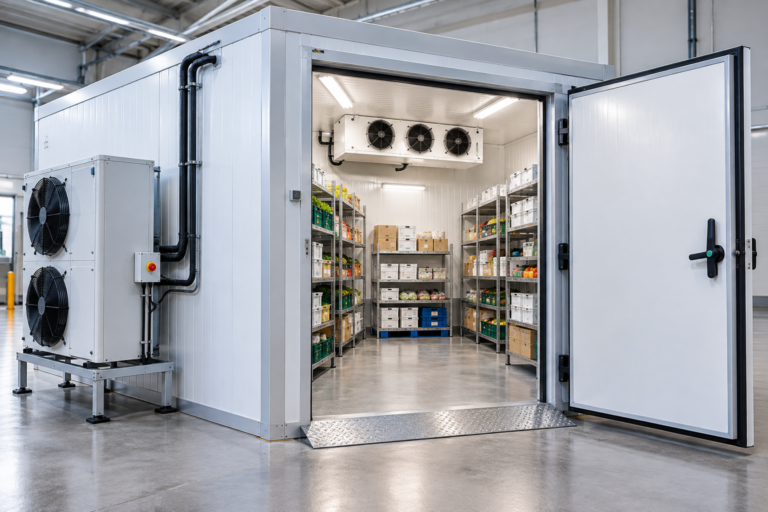
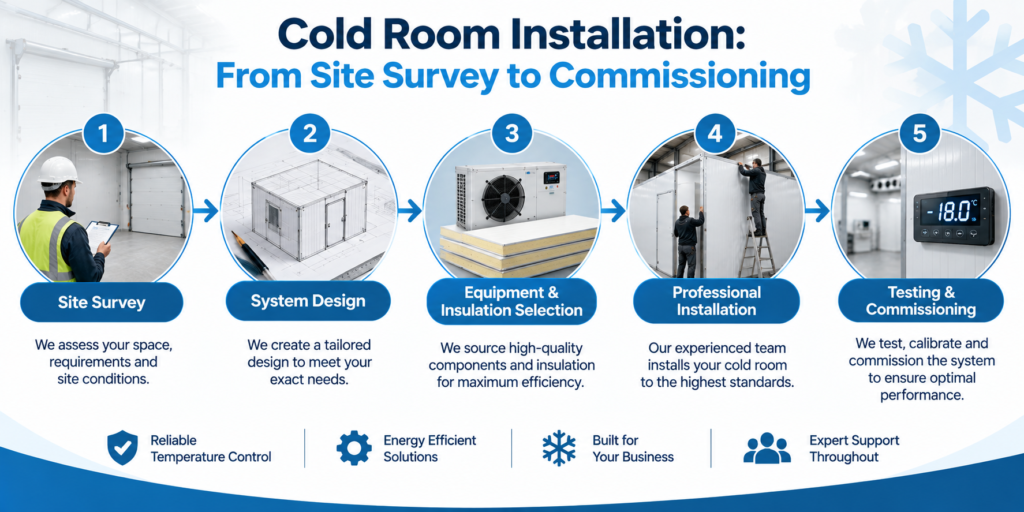
A cold room is a complete temperature-control system rather than simply an insulated box with a refrigeration unit attached.
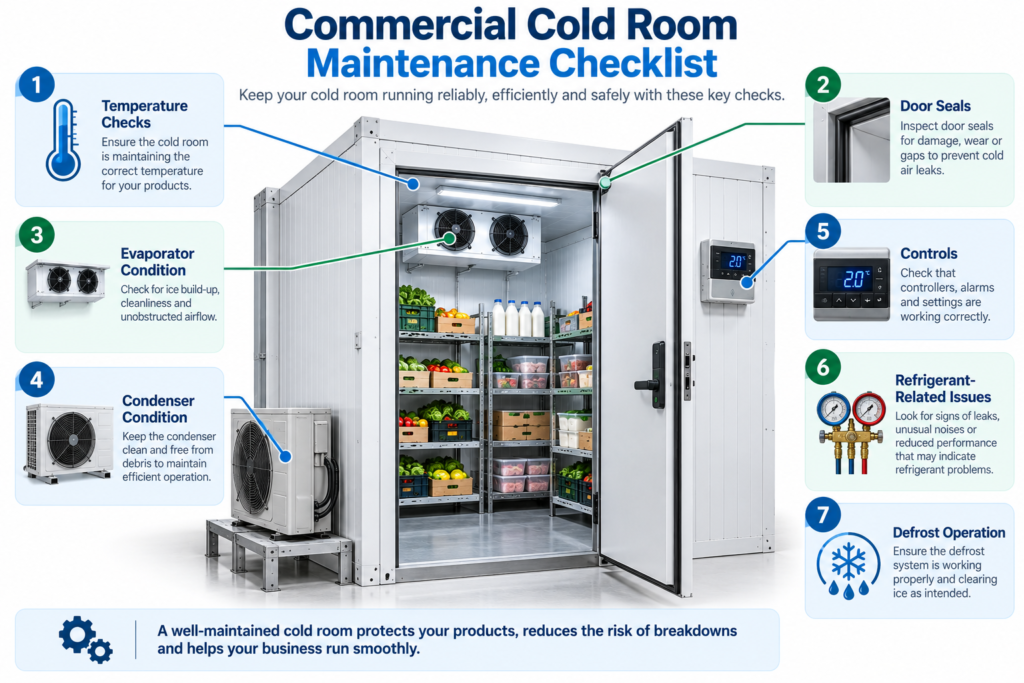
The insulation, refrigeration capacity, evaporator, condenser, doors, floor, controls, airflow and operating conditions all need to work together. If one element is poorly specified, the result can be temperature fluctuations, excessive energy consumption, condensation, ice formation or premature equipment failure.
This is particularly important for food businesses. UK government guidance requires food businesses to operate food-safety management procedures based on HACCP principles, including monitoring critical control points and maintaining appropriate records.
A professional installation should therefore begin with understanding how your business actually operates rather than simply measuring the available space.
What Should a Cold Room Installation Include?
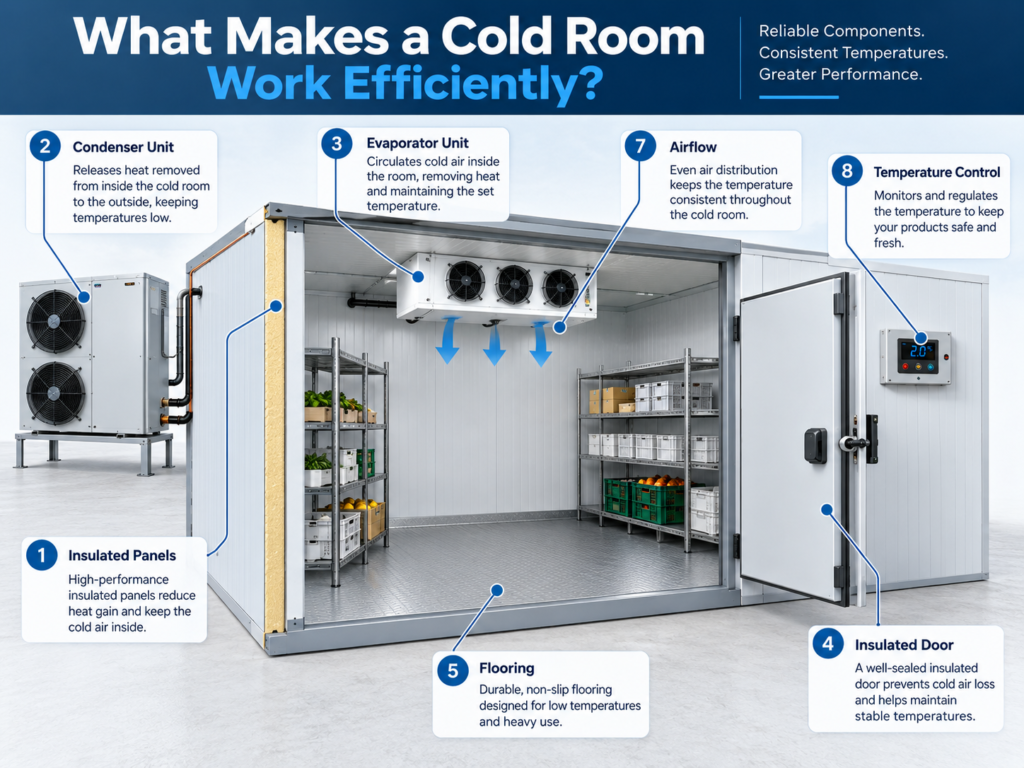
A good installation normally starts with a site assessment. The engineer should consider available space, access routes, electrical requirements, ventilation, drainage where relevant, ambient conditions, stock quantities and how frequently the door will be opened.
The next stage is refrigeration and insulation design. A cold room that is opened dozens of times each day may require a different specification from one opened only occasionally. Similarly, a freezer room has different insulation, vapour-control and defrost requirements from a chilled storage room.
The system should then be professionally installed, commissioned and tested. Temperature performance should be checked under realistic operating conditions rather than assuming that the system is working correctly simply because the refrigeration unit starts.
For businesses investing in cold room installation in Wakefield, it is also worth asking what documentation will be supplied after commissioning and what support is available if something goes wrong.
Chiller or Freezer: Which Do You Need?
The correct choice depends on the products and storage process.
| Requirement | Typical Application | Main Consideration |
|---|---|---|
| Chilled Storage | Meat, dairy, prepared foods, produce | Stable chilled temperature and airflow |
| Frozen Storage | Frozen food and ingredients | Lower temperatures, insulation and defrost |
| Multi-Temperature Storage | Distribution and larger operations | Separate temperature zones |
| Bespoke Cold Room | Unusual layouts or high-volume operations | Design around workflow and stock |
There is no universally “best” cold room. The best system is the one engineered around your actual operating requirements.
Why F-Gas Certification Matters in Wakefield
Refrigeration systems can contain fluorinated greenhouse gases, commonly referred to as F-gases. UK government guidance states that individuals working with F-gas equipment must hold the appropriate qualifications, while companies working on stationary equipment operated by others generally require company certification. This applies to activities including installation, repair, maintenance and decommissioning.
That makes certification an important question when comparing installers.
It is also worth remembering that compliance does not end when installation is complete. Depending on the refrigerant and its quantity expressed as CO₂ equivalent, certain equipment is subject to mandatory leak-check intervals. For equipment containing between 5 and less than 50 tonnes of CO₂ equivalent, for example, the maximum interval is generally 12 months; higher quantities can require more frequent checks.
Where applicable, operators also have record-keeping obligations covering refrigerant quantities, maintenance, leak checks and recovery.
For a business owner, the practical lesson is simple: do not select a refrigeration contractor based solely on price. Ask whether the people carrying out refrigerant work have the necessary qualifications and whether the company can provide appropriate compliance documentation.
Cold Room Installation and Food Safety Compliance
Temperature control is one of the most important parts of food safety.
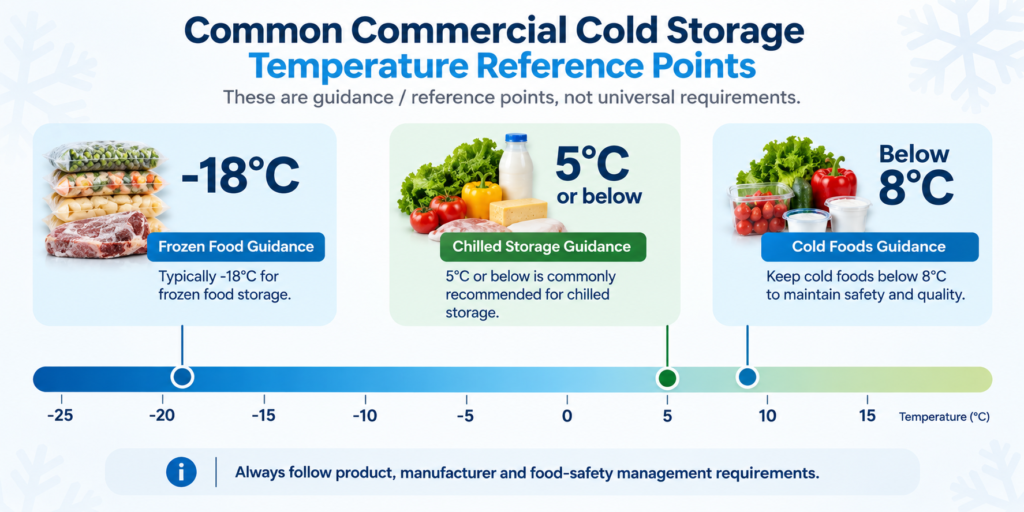
The Food Standards Agency states that, in England, Wales and Northern Ireland, food businesses must keep cold foods below 8°C, while its guidance recommends refrigeration at 5°C or below for appropriate chilled storage. Frozen food guidance commonly uses -18°C as the recommended freezer temperature.
However, the correct operating temperature for your cold room should always reflect the product, manufacturer’s storage instructions and your food-safety management system.
Temperature monitoring also matters. FSA research found that inconsistent temperature-checking routines were associated with incorrect refrigeration temperatures among some food businesses. The research highlighted the value of established routines for checking and recording temperatures.
Wakefield businesses should also be aware that local food businesses must register with Wakefield Council where required, and food operations need appropriate HACCP-based procedures. The council specifically highlights infrastructure, equipment, temperature control, preventative maintenance and documented food-safety procedures as important considerations.
A well-designed cold room can make those procedures easier to manage, but the refrigeration system itself does not replace your wider food-safety responsibilities.
What Makes a Good Cold Room Installer?
When comparing cold room engineers in Wakefield, look beyond claims such as “fast installation” or “competitive prices”.
Ask about refrigeration qualifications, F-Gas certification, experience with projects similar to yours, commissioning procedures, warranty terms, spare parts and emergency support. It is also sensible to ask whether the installer can provide a clear written specification rather than only a headline price.
The strongest installation companies understand that refrigeration performance is a combination of engineering, correct operation and ongoing maintenance.
For a Wakefield business, that can mean fewer unpleasant surprises after the installation is complete.
Key Takeaways
A successful cold room project starts with the application rather than the equipment catalogue. Room size, stock, temperature, door traffic, insulation, airflow and future requirements all influence the specification.
F-Gas compliance should also be treated as a fundamental requirement rather than an optional extra. UK rules place qualification and certification requirements on people and companies carrying out relevant work on stationary F-gas refrigeration equipment.
For food businesses, refrigeration should form part of a wider HACCP-based food-safety management system, with suitable temperature monitoring and records.
If you are planning a new cold room, replacing an unreliable system or expanding your chilled or frozen storage capacity, getting the design right before installation can save considerably more than trying to correct an unsuitable system afterwards.
Frequently Asked Questions
1. How much does cold room installation cost in Wakefield?
The price depends on room size, temperature range, insulation, refrigeration capacity, access, doors, flooring, controls and installation requirements. A professional site survey is the best way to obtain a realistic specification and quotation.
2. How long does a cold room installation take?
Installation time varies considerably between projects. A relatively straightforward modular room may be completed quickly, while larger bespoke installations involving structural, electrical or complex refrigeration work require more planning.
3. What temperature should a commercial cold room be?
The correct temperature depends on the products being stored and the business’s food-safety procedures. FSA guidance states that food businesses in England, Wales and Northern Ireland must keep cold foods below 8°C, with 5°C or below commonly recommended for chilled storage.
4. Do cold room engineers need F-Gas certification?
Personnel working with applicable F-gas refrigeration equipment need the appropriate qualifications. Companies carrying out installation, repair, maintenance or decommissioning of stationary equipment operated by others generally also require company certification.
5. Can a cold room be built around an unusual space?
Yes. Bespoke cold rooms can be designed around site dimensions, access restrictions, workflow and storage requirements. However, the available space must still allow appropriate insulation, refrigeration equipment access and safe operation.
6. Should I choose a chiller or freezer room?
Choose according to the products and required storage conditions rather than simply selecting the cheaper option. Chilled and frozen environments have different refrigeration, insulation, defrost and operating requirements.
7. How often should a commercial cold room be serviced?
There is no single service interval suitable for every installation. Maintenance should reflect the equipment manufacturer’s requirements, operating conditions and business risk, while statutory F-gas leak checks must be completed at the applicable intervals where the rules apply.
8. Why is cold room insulation so important?
Good insulation reduces unwanted heat transfer and helps the refrigeration system maintain the required temperature efficiently. Poor insulation, damaged panels or defective door seals can increase refrigeration load and running costs.
9. Does a food business need temperature records?
Food businesses need appropriate food-safety management procedures based on HACCP principles, including monitoring critical control points and keeping relevant records. Temperature monitoring is an important part of demonstrating that refrigeration controls are working properly.
10. What should I ask before hiring a cold room installer?
Ask about refrigeration qualifications, F-Gas certification, relevant project experience, the proposed specification, commissioning process, warranty, maintenance arrangements and emergency support. You should also make sure the quotation clearly explains what is included and excluded.