Cold Room Installation Leeds: What Size and Capacity Do You Need?
Choosing the right cold room is not just about fitting a unit into a spare space. It is about making sure the room can handle your stock, your workflow, and the temperatures your products demand. For businesses considering cold room installation Leeds, sizing errors are one of the most expensive mistakes you can make.
With UK cold storage demand rising and energy costs having surged significantly in recent years, getting the size right is no longer optional—it is essential for profitability and efficiency.
Why sizing your cold room properly matters
A cold room that is too small leads to overcrowding, poor airflow, and temperature fluctuations. On the other hand, an oversized room increases energy consumption and operating costs unnecessarily.
The UK cold storage sector now exceeds 40 million cubic metres, yet demand still outpaces supply. At the same time, energy costs for cold storage facilities have risen sharply, making efficiency a top priority for Leeds businesses.
How to calculate the size you need
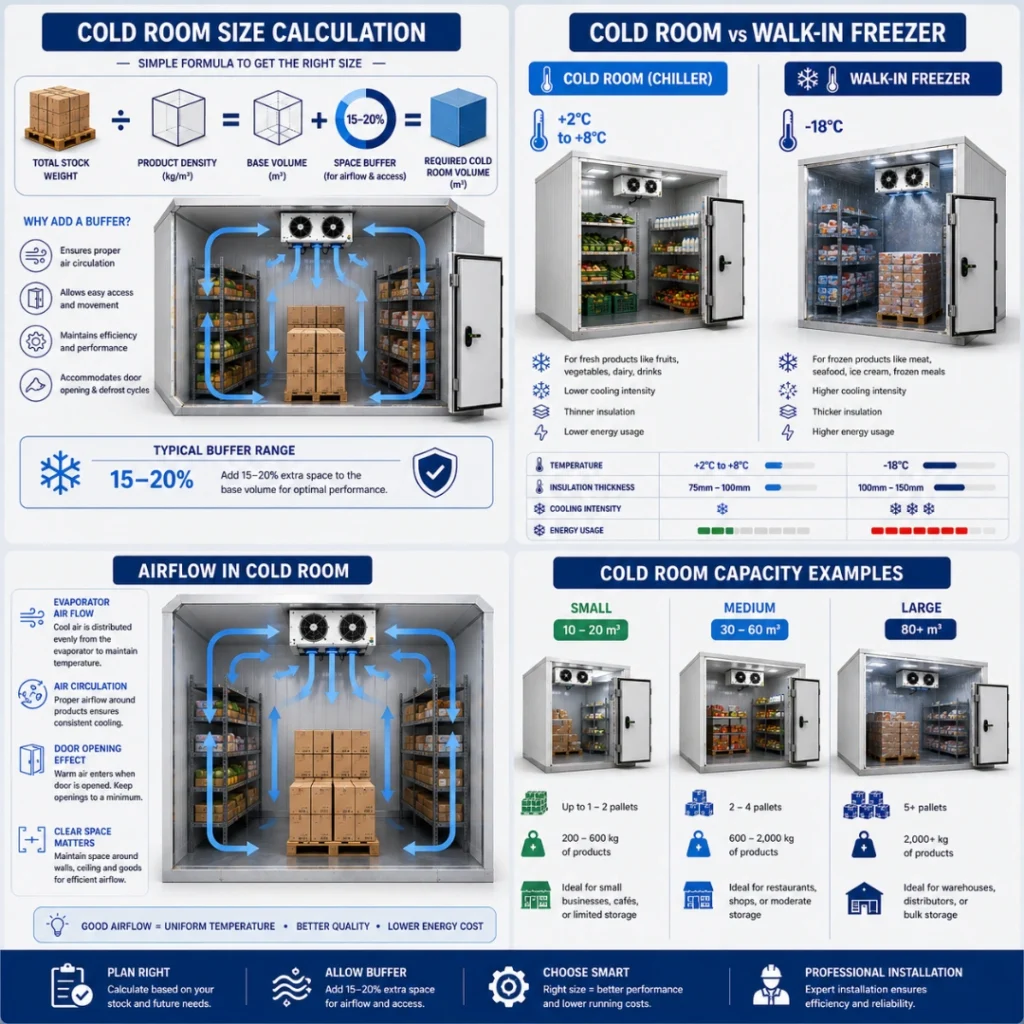
Sizing a cold room starts with a simple formula:
Required volume = total stock weight ÷ product density
For example, if you store 10,000 kg of products with an average density of 250 kg/m³, you will need approximately 40 m³ of storage space.
However, that is only the starting point.
You must also factor in:
- Air circulation
- Aisle space
- Shelving or racking
- Future growth (typically +15–20%)
This means your actual requirement could increase to around 50–60 m³.
A practical sizing example
Let’s bring this into a real-world Leeds scenario.
A restaurant or catering business may:
Receive daily deliveries
Store mixed products (meat, dairy, vegetables)
Require frequent access
In this case, the cold room must accommodate both storage and movement.
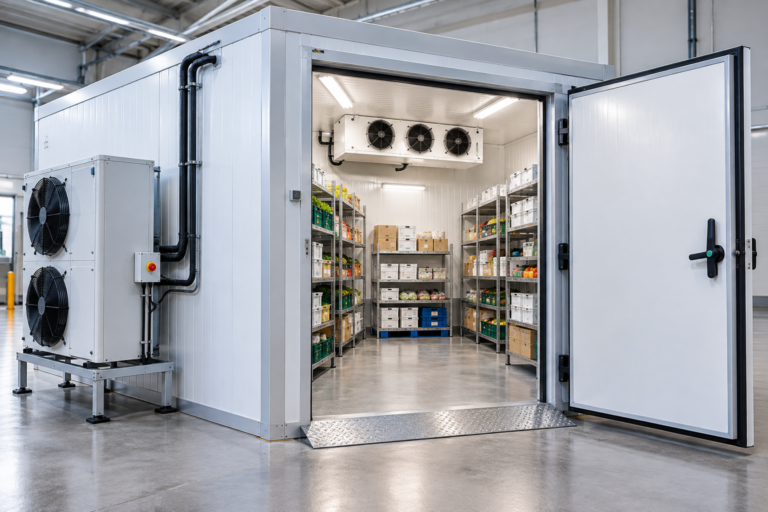
This is where professional cold room assembly Leeds becomes critical—because layout planning directly impacts performance, not just size.
Ceiling height also plays a key role. Many commercial cold rooms range between 2.4 m and 4.5 m depending on usage and storage systems.
Want a tailored recommendation or quick quote? Reach out today
Temperature type changes everything
Not all cold rooms are the same.
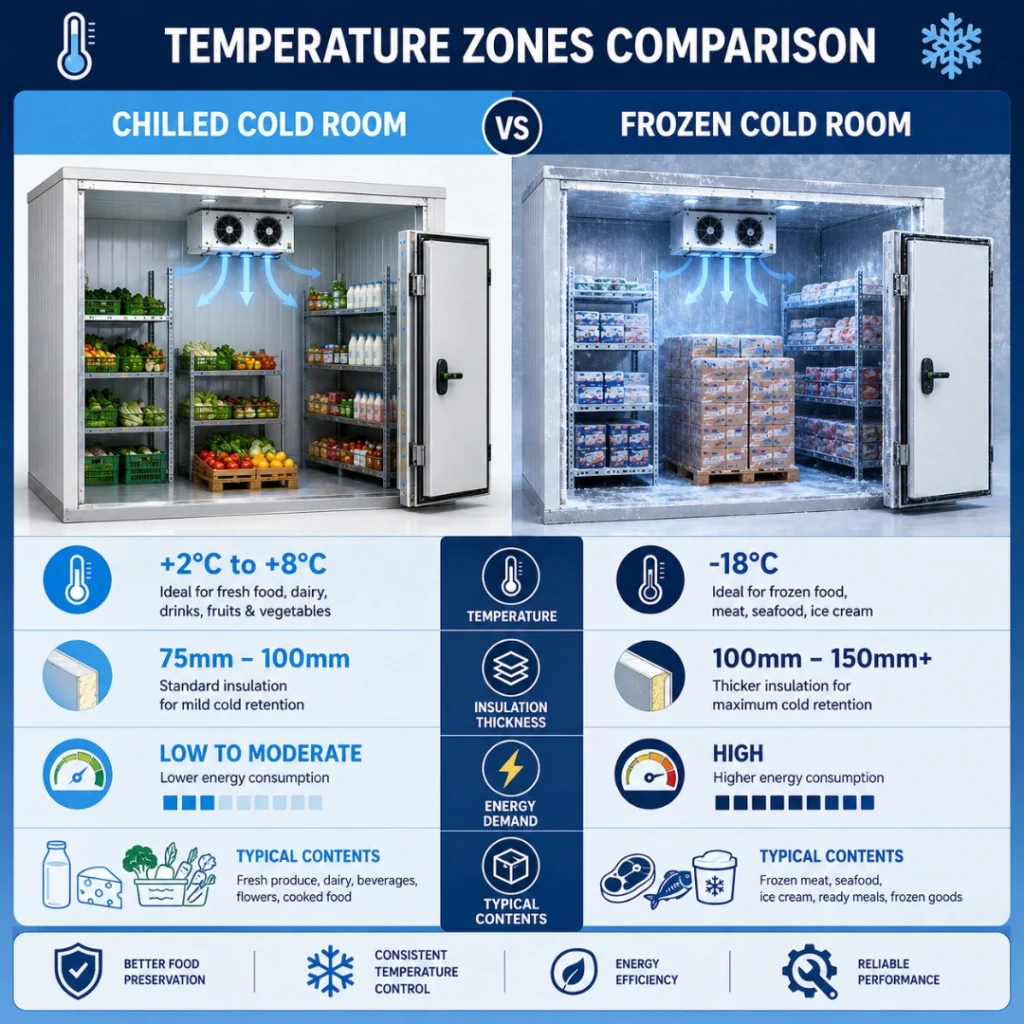
Different products require different temperature ranges:
Fresh produce: +2°C to +8°C
Meat and dairy: 0°C to +4°C
Frozen goods: -18°C or below
This directly affects insulation thickness and refrigeration capacity.
Typical UK standards suggest:
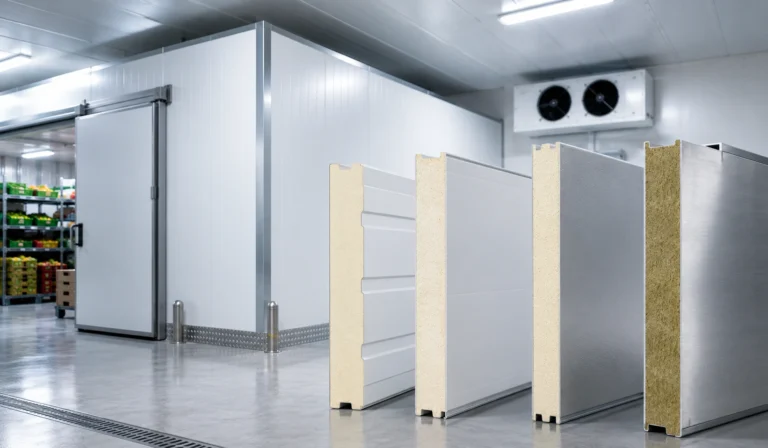
Chillers: ~80 mm insulation panels
Freezers: ~100 mm insulation panels
A freezer room will always require more power and better insulation than a chiller of the same size.
The hidden factors that affect capacity
Cold room performance is not only about dimensions—it is about total heat load.
This includes:
- Product load (how much you store)
- External heat entering through walls and doors
- Frequency of door openings
- Lighting and internal activity
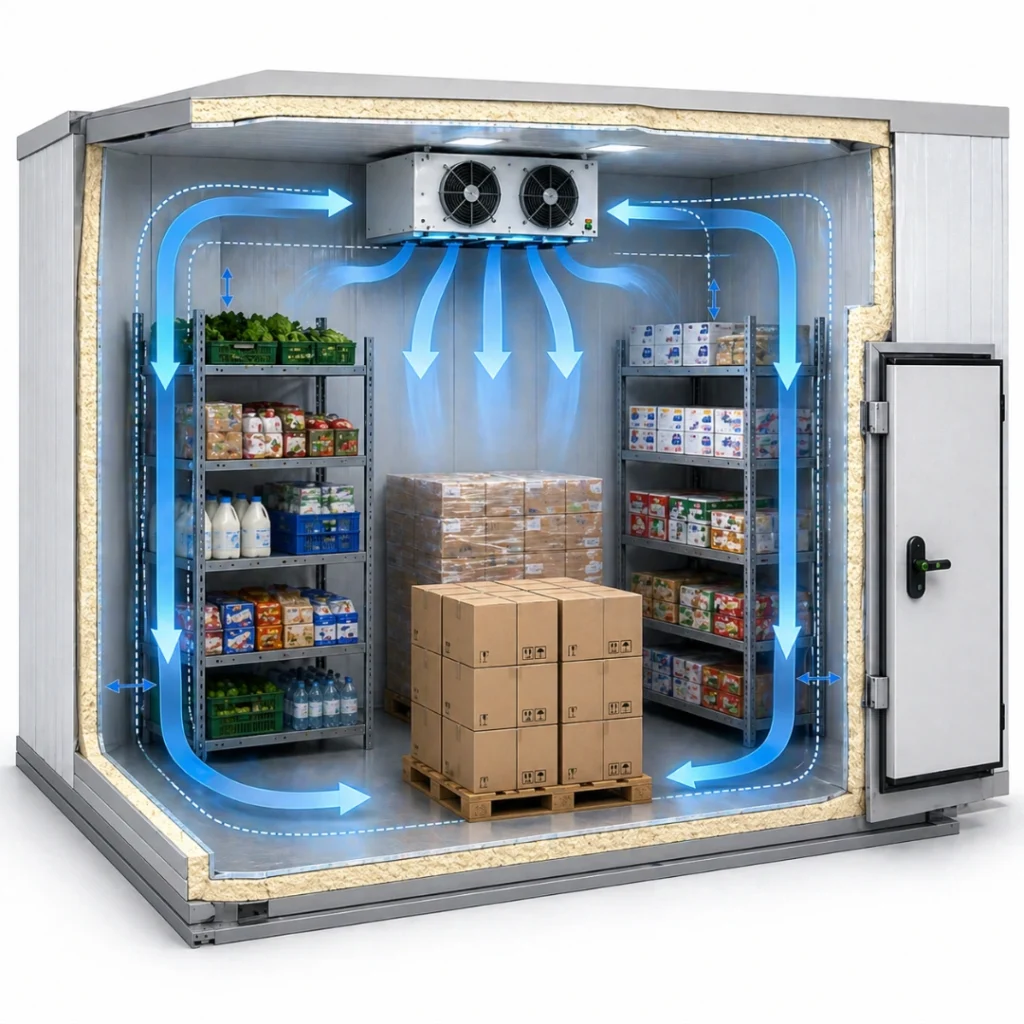
One overlooked detail is airflow. Stored goods should sit at least 30 cm below the evaporator unit to ensure proper circulation.
If airflow is blocked, even a well-sized cold room will struggle to maintain temperature.
Leeds businesses vs domestic users
Commercial cold rooms are designed for consistency, compliance, and high usage.
Domestic cold rooms, on the other hand, are typically used for:
- Bulk food storage
- Home-based food businesses
- Seasonal or specialist storage
That is why cold room installation Leeds should always be based on usage patterns—not just available space.
A home user opening the door a few times daily has very different requirements compared to a busy takeaway or restaurant.
Why proper sizing is more important than ever
The UK frozen food market reached approximately £8.5 billion in retail sales in 2024, showing strong growth year-on-year.
At the same time, many UK cold storage facilities are ageing, with a large proportion over 20 years old. This is pushing businesses to upgrade or install more efficient systems.
For Leeds businesses, this means one thing: efficiency and correct sizing are now key competitive advantages.
What a well-planned cold room should include
A properly sized cold room will:
- Allow smooth movement inside the space
- Maintain consistent temperature even with door openings
- Support correct airflow around stored goods
- Avoid wasted energy from unused volume
- Allow some room for future growth
Getting this balance right is what separates a good installation from an expensive mistake.
A quick self-check before choosing your size
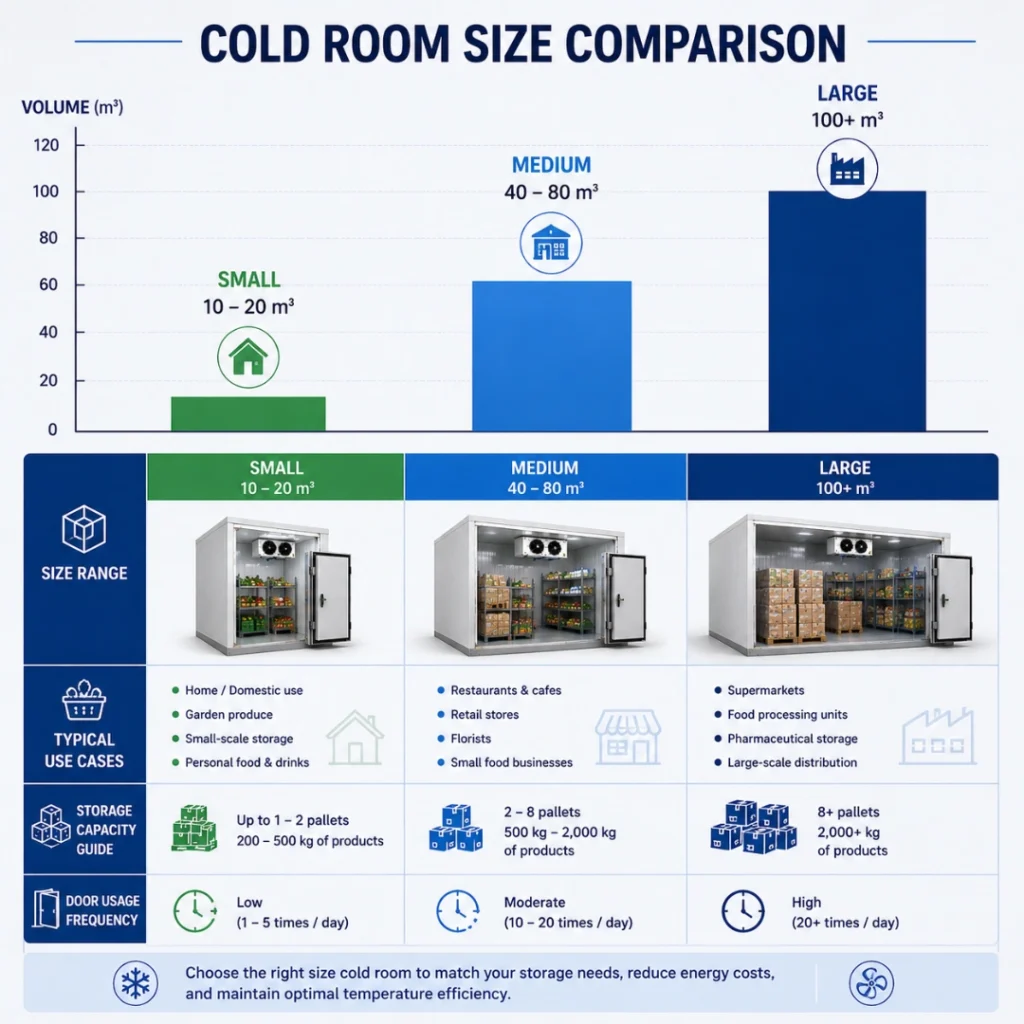
Before finalising your decision, think about:
- Your busiest storage day, not your average
- How often the door will be opened
- Whether stock arrives warm or pre-chilled
- Your future growth plans
If any of these are unclear, the size should not be finalised yet.
Want a tailored recommendation or quick quote? Reach out today
Get Fast Local Help Today
If you’re considering air conditioning installation Leeds, now is the perfect time to act. Whether you need a system for your business or home, the right installation can transform your indoor environment.
Want a tailored recommendation or quick quote? Reach out today and discover how efficient cooling can improve your space.
Cold Room Volume Estimator 🧊
Estimate the required storage volume based on your weekly stock levels.
Required Cold Room Volume:
Includes 20% buffer for shelving & airflow.
Check Availability & Pricing
Frequently Asked Questions (FAQs)
1. What size cold room do I need for my business?
The right size depends on your maximum stock levels, not your average usage. A simple method is to divide your total stock weight by product density, then add 15–20% extra space for airflow and access. For most small businesses in Leeds, this typically ranges between 20 m³ and 80 m³.
2. How do I calculate cold room capacity accurately?
Cold room capacity is calculated using this formula:
Stock weight (kg) ÷ density (kg/m³) = storage volume (m³)
You then factor in aisle space, shelving, and airflow clearance. A professional cold room assembly Leeds service will also calculate heat load to ensure correct refrigeration capacity.
3. What temperature should a cold room operate at?
It depends on what you are storing. Chilled products such as dairy and vegetables require temperatures between +2°C and +8°C, while frozen goods need -18°C or lower. Choosing the correct temperature is essential for food safety and energy efficiency.
4. How much space should be left inside a cold room?
You should always allow enough space for airflow and movement. Industry guidance recommends keeping at least 30 cm clearance below the evaporator unit and leaving aisle space for safe access. Overfilling a cold room can lead to uneven cooling and product spoilage.
5. Is it better to oversize a cold room?
No, oversizing can lead to higher energy costs and inefficient operation. A correctly sized cold room balances storage needs with cooling efficiency. The goal is to meet peak demand without creating unnecessary empty space.
6. How does door usage affect cold room size?
Frequent door openings increase heat load, meaning your refrigeration system must work harder. If your business has high traffic, you may need a slightly larger capacity or a more powerful cooling system to maintain consistent temperatures.
7. What is the difference between cold room installation and assembly?
Cold room installation Leeds refers to the complete setup, including refrigeration systems and performance testing. Cold room assembly Leeds focuses on building the insulated panels, doors, and structural components of the unit.
8. Can cold rooms be used in domestic settings?
Yes, cold rooms are increasingly used in homes for bulk food storage, home catering businesses, and specialist needs. Domestic cold rooms are typically smaller and have lower usage demands compared to commercial setups.
9. How energy-efficient are modern cold rooms?
Modern cold rooms are significantly more energy-efficient than older systems. With rising UK energy costs, choosing the right size and insulation can reduce running costs by a considerable margin while maintaining performance.
10. How long does a cold room installation take?
Most cold room installations take anywhere from a few days to a couple of weeks depending on size, complexity, and site conditions. Proper planning ensures faster installation and better long-term performance.