
How Much Does a Cold Room Cost to Run in the UK?
For many businesses across the UK, refrigeration is no longer just an operational necessity — it is one of the largest ongoing energy expenses. Whether you run a restaurant, supermarket, catering company, pharmacy, florist, or food production facility, understanding the true cold room cost is essential before investing in a system.
The challenge is that many buyers only focus on the installation price and overlook the long-term running costs. In reality, electricity consumption, insulation quality, room size, maintenance, and daily usage patterns often determine whether a cold room becomes cost-efficient or expensive over time.
This is particularly important as UK energy prices continue to fluctuate. According to the Department for Energy Security and Net Zero (DESNZ), average UK business electricity prices remained significantly higher than pre-2021 levels throughout 2025, placing more pressure on businesses to improve refrigeration efficiency.
For businesses considering new cold rooms UK solutions or planning cold room installation Leeds, understanding the ongoing operating cost can help avoid expensive surprises later.

What Impacts Cold Room Running Costs?
Several factors determine how much a cold room costs to run monthly or annually.
The biggest factor is electricity usage. Refrigeration systems operate continuously to maintain stable temperatures, meaning even small inefficiencies can create large energy bills over time.
However, power consumption is influenced by multiple variables including:
- Cold room size
- Temperature settings
- Frequency of door opening
- Ambient temperature
- Compressor efficiency
- Product load inside the room
- Installation quality
According to the Carbon Trust, refrigeration systems can account for up to 50% of total energy consumption in food businesses.
This is why energy-efficient refrigeration systems have become a major priority for UK business owners.
Average Cold Room Cost to Run in the UK
The exact running cost varies dramatically depending on the type of cold room.
Small domestic cold rooms may only cost a few pounds per day to operate, while large commercial cold rooms can cost hundreds or even thousands of pounds monthly.
Using current UK commercial electricity averages from DESNZ data and refrigeration industry benchmarks, estimated running costs may look something like this:
Cold Room Type | Estimated Monthly Running Cost |
Small Domestic Cold Room | £20–£60 |
Small Commercial Cold Room | £80–£250 |
Medium Commercial Cold Room | £250–£700 |
Large Industrial Cold Room | £700–£2,500+ |
These figures vary depending on operating temperatures and energy tariffs.
For example, freezer rooms operating at -18°C require significantly more energy than chilled rooms operating between 2°C and 5°C.
The British Refrigeration Association also notes that poor maintenance can increase refrigeration energy usage by over 20%.

Why Electricity Prices Matter So Much
Electricity prices directly affect refrigeration operating costs because refrigeration systems run continuously.
According to Ofgem and DESNZ reports, UK electricity prices remain considerably higher than historical averages due to energy market pressures and infrastructure costs.
This means inefficient refrigeration systems now cost far more to operate than they did several years ago.
For example:
A refrigeration system using an additional 10 kWh daily due to inefficiency could add hundreds of pounds annually to energy bills.
Over the lifespan of a cold room, inefficient operation may cost more than the original installation itself.
This is why businesses increasingly focus on:
- High-performance insulation panels
- Efficient compressors
- LED cold room lighting
- Smart temperature monitoring
- Preventative maintenance
Want a tailored recommendation or quick quote? Reach out today
How Insulation Affects Cold Room Cost
Insulation quality has one of the biggest impacts on refrigeration efficiency.
Poor insulation allows external heat to enter the cold room, forcing compressors to work harder and consume more electricity.
Modern insulated cold room panels significantly reduce thermal transfer and improve operational efficiency.
According to refrigeration efficiency studies from Star Refrigeration, energy-efficient cold storage systems can reduce energy consumption substantially when compared with poorly insulated older installations.
For businesses operating refrigeration 24/7, this difference becomes financially significant over time.


Does Cold Room Size Increase Running Costs?
Yes — but not always proportionally.
Larger cold rooms generally consume more electricity because they cool a larger internal space. However, modern large cold rooms often achieve better energy efficiency per cubic metre compared to smaller poorly optimised systems.
The actual operating cost depends more on system efficiency and usage patterns than room size alone.
For example:
A badly maintained small cold room may cost more per cubic metre to run than a professionally installed large cold room with modern refrigeration technology.
This is why professional refrigeration planning is critical before any cold room installation Leeds project.
Commercial vs Domestic Cold Room Costs
Commercial cold rooms typically have:
- Higher cooling loads
- More frequent door openings
- Greater product turnover
- Larger refrigeration systems
- Longer operating hours
Domestic cold rooms, meanwhile, usually experience lighter usage and lower storage demand.
However, residential demand for luxury cold rooms is increasing across the UK due to:
- Bulk food storage
- Meal prep convenience
- Home entertaining
- Garden room refrigeration
- Private chef requirements
Many homeowners now install compact refrigeration rooms to improve food storage capacity while reducing waste.

How Maintenance Reduces Cold Room Running Costs
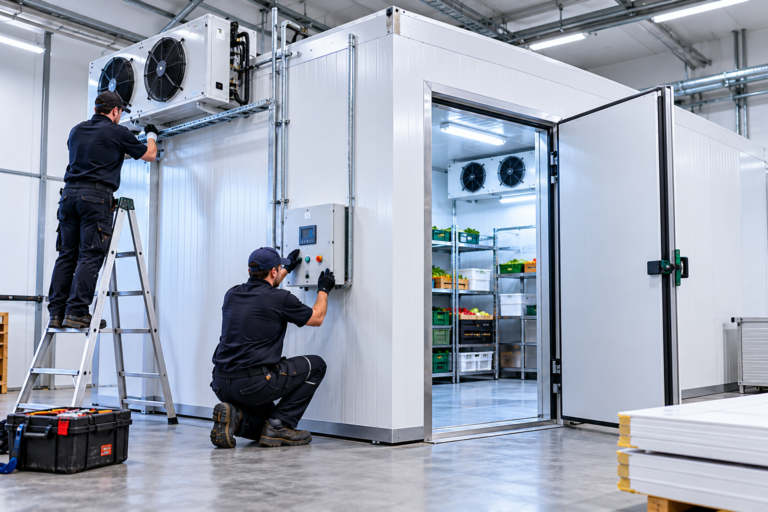
One of the biggest mistakes businesses make is ignoring refrigeration maintenance until breakdowns occur.
Dirty condensers, blocked airflow, worn door seals, and incorrect refrigerant levels all reduce system efficiency.
Preventative maintenance helps:
- Reduce electricity consumption
- Extend compressor lifespan
- Improve cooling performance
- Prevent temperature fluctuations
- Reduce expensive emergency repairs
The Carbon Trust estimates businesses can reduce refrigeration energy costs significantly through proper maintenance and operational controls alone.
For many businesses, maintenance is one of the fastest ways to reduce overall cold room cost without replacing equipment.

The Hidden Cost of Poor Installation
Installation quality directly affects long-term operating expenses.
Incorrectly installed refrigeration systems often suffer from:
- Air leaks
- Ice build-up
- Poor airflow
- Compressor strain
- Temperature instability
Professional cold room installation Leeds services help ensure refrigeration systems operate efficiently from day one.
Even minor installation issues can create ongoing energy waste over many years.
This is why experienced refrigeration engineers carefully calculate:
- Heat loads
- Air circulation
- Panel insulation performance
- Compressor sizing
- Ventilation requirements
before installation begins.
How Businesses Across Leeds Are Managing Refrigeration Costs
Businesses throughout Leeds are increasingly investing in energy-efficient refrigeration systems as energy costs continue to rise.
Restaurants, florists, supermarkets, and catering businesses are focusing more on:
- Energy-efficient upgrades
- Better insulation
- Smart refrigeration monitoring
- Preventative maintenance
- Lower-carbon refrigeration systems
For businesses operating refrigeration continuously, even modest efficiency improvements can create meaningful annual savings.
Understanding your expected cold room cost before installation helps create a far more sustainable long-term investment.
Want a tailored recommendation or quick quote? Reach out today
FAQs – Cold Room Cost
1. How much does a cold room cost to run in the UK?
The average cold room cost to run in the UK depends on room size, operating temperature, insulation quality, and electricity prices. Small domestic cold rooms may cost between £20 and £60 per month, while large commercial cold rooms can exceed £2,000 monthly depending on usage and refrigeration load.
2. What affects cold room running costs the most?
Electricity consumption is the biggest factor affecting cold room running costs. Other important factors include insulation quality, door opening frequency, ambient temperature, refrigeration system efficiency, compressor performance, and maintenance quality.
3. Are cold rooms expensive to run?
Modern cold rooms can be energy efficient when properly installed and maintained. However, poorly insulated or badly maintained refrigeration systems can become expensive due to higher electricity consumption and compressor strain.
4. Do freezer cold rooms cost more to run than chilled cold rooms?
Yes. Freezer cold rooms operating at around -18°C generally cost more to run than chilled cold rooms operating between 2°C and 5°C because lower temperatures require more compressor energy.
5. How can I reduce my cold room electricity costs?
Businesses can reduce cold room running costs by:
- Improving insulation
- Reducing door opening frequency
- Maintaining door seals
- Scheduling regular servicing
- Installing efficient compressors
- Using LED lighting
- Monitoring temperatures properly
Preventative maintenance can significantly reduce refrigeration energy usage over time.
6. How long do commercial cold rooms last?
A professionally installed and maintained commercial cold room can last between 15 and 25 years. Regular maintenance and efficient operation help extend refrigeration system lifespan.
7. Does cold room size affect running costs?
Yes. Larger cold rooms usually consume more electricity because they cool larger spaces. However, modern energy-efficient large cold rooms can sometimes operate more efficiently per cubic metre than smaller outdated systems.
8. Is professional cold room installation important?
Absolutely. Poor installation can lead to air leaks, ice build-up, inefficient airflow, compressor strain, and higher energy bills. Professional cold room installation helps ensure long-term efficiency and reliability.
9. What businesses commonly use cold rooms in the UK?
Cold rooms UK businesses commonly use include:
- Restaurants
- Supermarkets
- Catering companies
- Butchers
- Florists
- Pharmacies
- Warehouses
- Food manufacturers
Domestic cold rooms are also becoming more popular in luxury homes.
10. How much electricity does a cold room use daily?
Daily electricity consumption depends on room size and refrigeration load. Small cold rooms may use only a few kWh daily, while larger commercial systems can consume significantly more depending on operating temperatures and usage patterns.
11. Can domestic customers install cold rooms at home?
Yes. Domestic cold rooms are increasingly popular for bulk food storage, meal preparation, home entertaining, and reducing food waste. Compact refrigeration rooms are commonly installed in luxury kitchens and large residential properties.
12. Why do refrigeration maintenance checks matter?
Regular maintenance helps refrigeration systems run efficiently by preventing airflow restrictions, refrigerant issues, dirty condensers, and worn components. This reduces energy costs and lowers the risk of expensive breakdowns.