Cold Room Installation in Wigan: A Local Business Owner’s Guide
If you run a restaurant, butcher shop, bakery, food factory, catering company or supermarket in Wigan, reliable refrigeration is a basic business need. That is why choosing the right team for cold room installation Wigan businesses need can make a big difference.
A well-designed cold room protects food, helps control energy costs and gives your team enough space to store stock safely. A poorly designed room can do the opposite, causing high bills, uneven temperatures and costly breakdowns.
This guide explains what local business owners should know before buying a cold room, from temperature control and installation to costs, energy savings and F-Gas rules.
Why Wigan Businesses Need a Reliable Cold Room
A cold room is more than a large fridge. It is a working part of your business.
Think about a busy Wigan takeaway preparing food for a Friday night. Its cold room may be opened dozens of times as staff take out meat, dairy products, sauces and prepared food. Every door opening allows warmer air inside.
Now think about a food wholesaler holding large amounts of stock overnight. Its refrigeration system may run almost continuously.
Both businesses need dependable temperature control, but their systems may need very different designs.
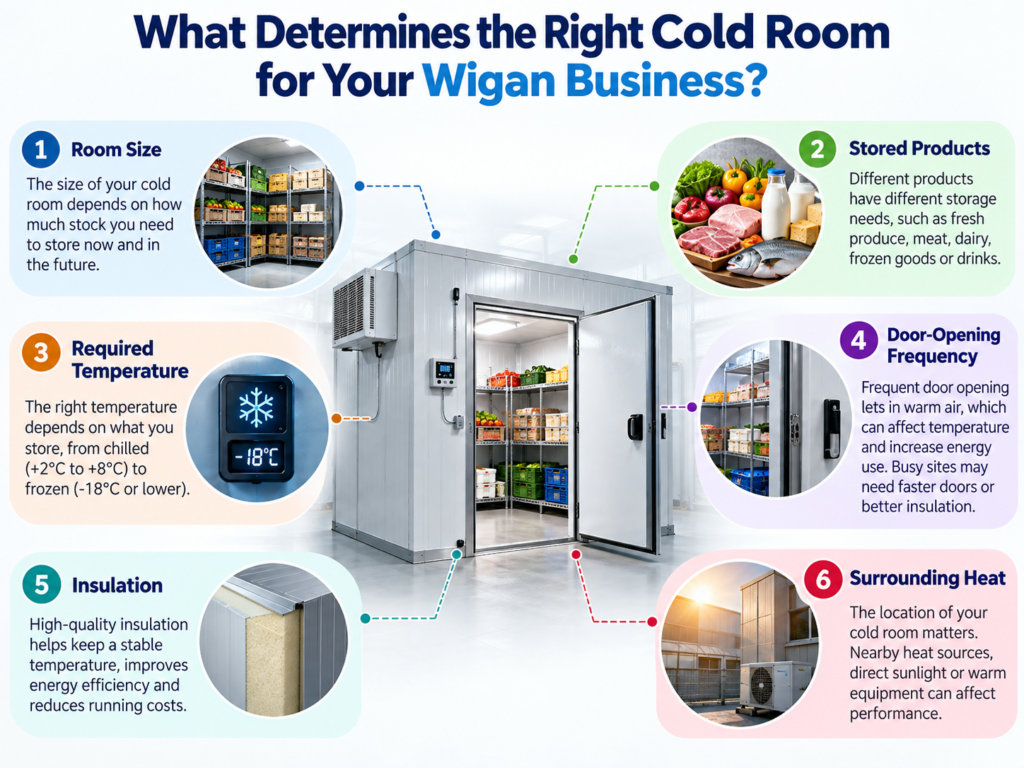
The right cold room should match the way your business works. The engineer should look at the size of the room, what you store, how often the door opens, room temperature, insulation and the amount of heat around the equipment.
This is why a proper site survey should come before choosing the equipment.
The Cost of Getting It Wrong
A cold room that cannot hold its target temperature can put food quality and safety at risk.
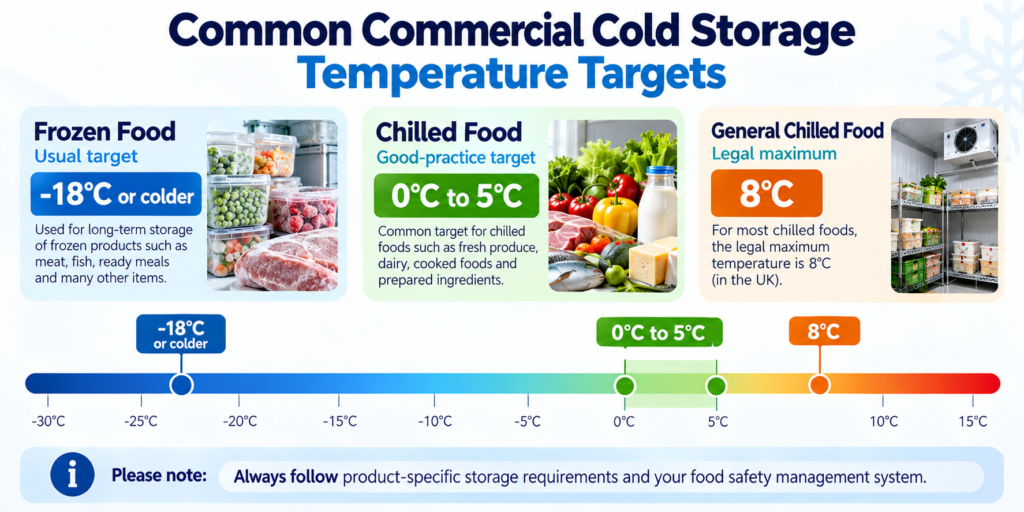
The Food Standards Agency says chilled food businesses should normally keep food at 5°C or below as good practice, while the legal limit for chilled food is generally 8°C or below. Frozen food should normally be kept at -18°C.
That difference is important.
The legal limit is not the same as the temperature you should aim for. Your food safety system and product requirements should determine the correct operating temperature.
What Temperature Should a Cold Room Be?
This is one of the first questions a business owner should ask before ordering a refrigeration system.
For many chilled foods, aiming for 5°C or below gives a useful safety margin. The FSA confirms that chilled food businesses commonly use the 0°C to 5°C range as good practice, while food must generally be kept at 8°C or below under the relevant food safety rules.
Frozen food is different.
For frozen products, the usual target is -18°C or colder. Running a freezer warmer than this can affect food quality and may lead to spoilage.
However, do not simply choose a temperature because another business uses it.
Different products can have different storage instructions. Always check the product requirements and your food safety management system.
What to Expect During Cold Room Installation Wigan
A professional cold room installation Wigan project should start with a detailed site survey.
The engineer needs to understand your business before choosing the equipment.
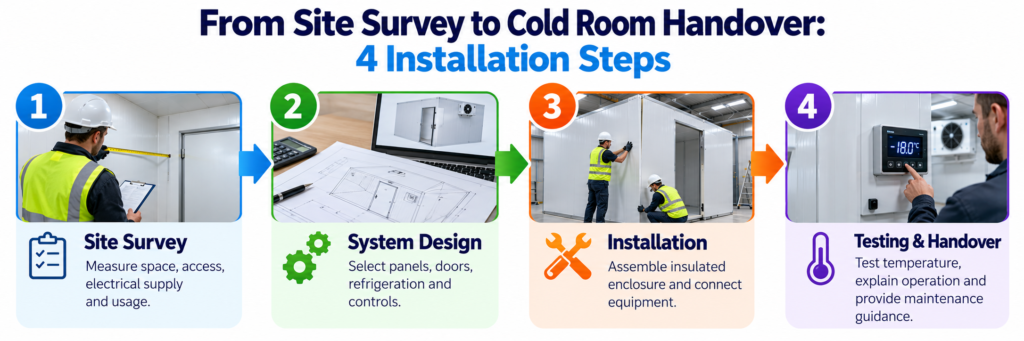
Step 1: Site Survey
The engineer measures the available space and checks access, electrical supply and the surrounding environment.
They should also ask what products you plan to store and how often the door will be opened.
A bakery with moderate chilled storage needs will not have the same cooling demand as a large food warehouse.
Step 2: System Design
The next step is designing the room.
This includes choosing suitable insulated panels, doors, refrigeration equipment and controls.
Freezer rooms normally need more insulation than standard chilled rooms because they have to maintain much lower temperatures.
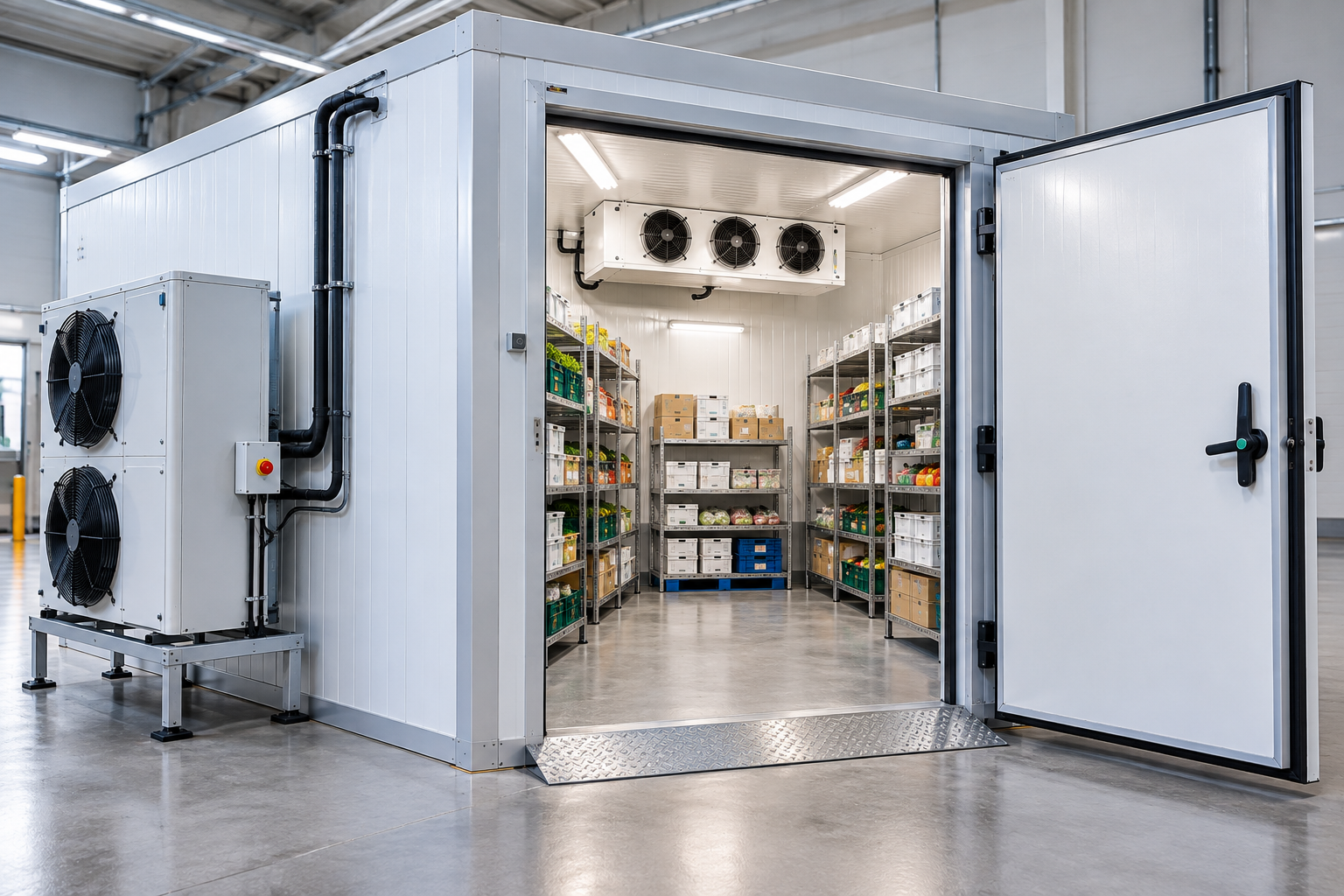
The location of the condenser and airflow also matters. Poor airflow around refrigeration equipment can reduce performance and increase running costs.
Step 3: Installation
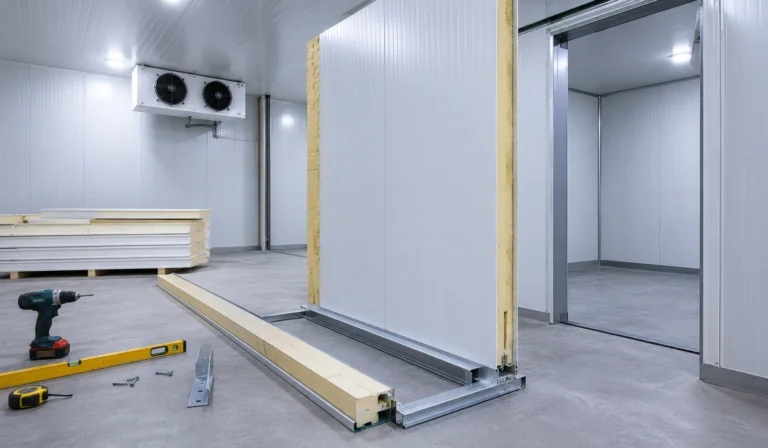
The insulated panels are assembled to create the room.
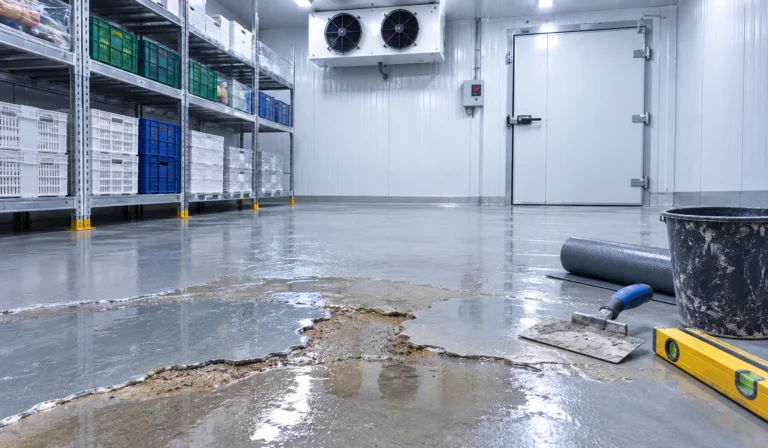
The floor, walls and ceiling need to form a suitable insulated enclosure. The refrigeration equipment is then installed and connected.
Electrical work should be completed safely by appropriately qualified professionals where required.
Step 4: Testing and Handover
The system should be tested before the room is put into normal use.
The engineer should check that the equipment reaches and maintains its intended temperature.
You should also receive clear instructions about operation, maintenance and servicing.
A good handover is important because your staff need to know how to use the room correctly.
How Much Does a Cold Room Cost?
There is no single price for a commercial cold room.
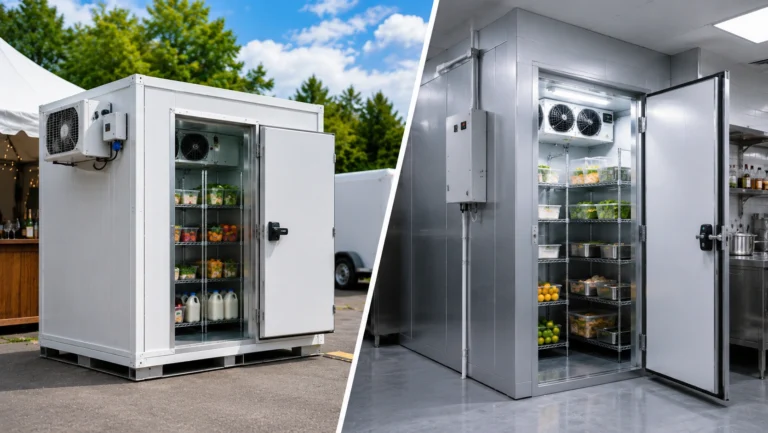
A small room for a local café may cost far less than a large freezer room for a food manufacturer.
The final price can depend on the room dimensions, insulation, refrigeration capacity, door type, electrical work, controls, installation difficulty and temperature requirements.
As a simple planning guide, smaller commercial cold rooms may start at several thousand pounds, while larger bespoke installations can move into the tens of thousands.
| Cold Room Type | Typical Planning Range |
|---|---|
| Small commercial cold room | £3,000–£6,000+ |
| Medium cold room | £6,000–£10,000+ |
| Large or bespoke system | £10,000–£25,000+ |
These figures should only be used as a starting point, not as a quotation.
How to Maintain Your Cold Room
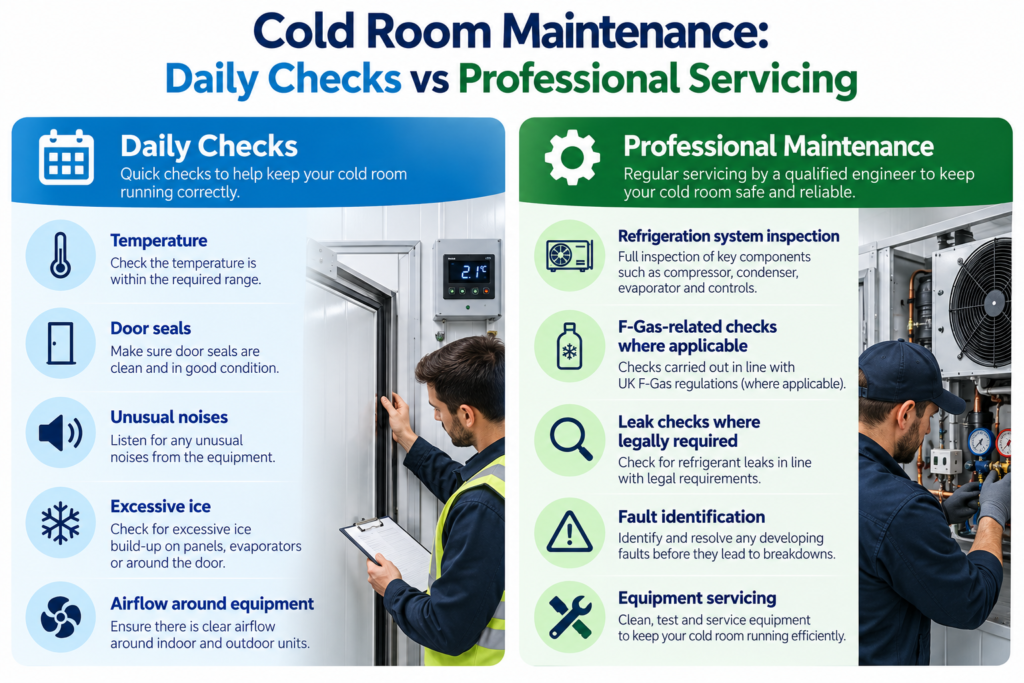
Good maintenance starts with simple daily checks.
Staff should watch for unusual noises, temperature changes, damaged door seals or excessive ice.
Do not ignore a small problem just because the room is still cold.
A strange noise today could become a compressor failure tomorrow.
Professional servicing should also form part of your maintenance plan.
The exact requirements depend on the equipment and refrigerant charge. The UK Government explains that leak-check frequency depends on the quantity and type of F-Gas in the system. For example, equipment containing F-Gas equivalent to 5 tonnes of CO₂ generally falls within the one-year maximum interval for mandatory leak checks, subject to the applicable rules and exceptions.
If a leak is found, it must be repaired as soon as possible and the repair checked again within one month under the relevant F-Gas requirements.
Key Takeaways
A successful cold room project starts before the equipment arrives.
The most important step is matching the room and refrigeration system to your actual business needs.
Remember that 5°C or below is commonly recommended as good practice for chilled food, while 8°C or below is generally the legal maximum for chilled food under the relevant rules. Frozen food is normally kept at -18°C or colder.
Always check the specific requirements for the products you store.
Choose appropriately qualified engineers, ask about F-Gas certification where relevant, and make sure you understand the maintenance and record-keeping requirements.
Finally, think about the full cost of ownership. Energy use, servicing, repairs and spare parts can matter just as much as the original installation price.
Is your Wigan business ready for a cold room that protects your stock, controls energy costs and is designed around the way you actually work?
Frequently Asked Questions
1. How long does cold room installation in Wigan take?
A small commercial cold room may be installed within a few days if the site is ready and the design is straightforward. Larger or bespoke projects can take longer because of building work, equipment size, electrical requirements and commissioning.
2. What temperature should a commercial cold room be?
For many chilled foods, businesses commonly aim for 5°C or below, while the general legal maximum for chilled food is 8°C. Frozen food should normally be kept at -18°C or colder, although individual products may have specific storage instructions.
3. Do I need an F-Gas certified engineer for a cold room?
If the work involves an activity covered by the F-Gas rules, the engineer needs the correct qualification. GOV.UK includes installation, servicing, maintenance, leak checking, refrigerant recovery and decommissioning among activities requiring appropriate qualifications.
4. How much does cold room installation cost in Wigan?
The cost depends on room size, temperature, insulation, refrigeration capacity and installation requirements. Smaller systems may cost several thousand pounds, while large bespoke cold rooms can cost £10,000 or more.
5. How can I reduce my cold room electricity bill?
Keep doors closed, check door seals, avoid blocking airflow and keep refrigeration equipment clean. Regular servicing can also help identify faults that make the system work harder than necessary.
6. How often should a commercial cold room be serviced?
There is no single service interval that applies to every cold room because equipment and usage vary. A planned maintenance schedule should be based on the manufacturer’s requirements, system condition, operating hours and applicable legal checks.
7. How do I know if my cold room is the right size?
The correct size depends on how much stock you store, the size and type of products, how often the door opens and how much working space your staff need. A professional site survey is the safest way to choose the right capacity.
8. Can a cold room be built to my exact requirements?
Yes. Commercial cold rooms can be designed around available space, required temperature, storage volume, door position and working conditions. Bespoke design is particularly useful when standard room sizes do not fit your premises.
9. What F-Gas records does my business need to keep?
Where the relevant F-Gas record-keeping rules apply, records can include the type and amount of refrigerant, refrigerant added during servicing, leak-check results and details of companies or technicians working on the equipment. GOV.UK says applicable records must generally be kept for five years.
10. What should I do if my cold room suddenly stops cooling?
Move or protect temperature-sensitive stock according to your food safety procedures and check the temperature rather than relying on how the room feels. Contact a qualified refrigeration engineer quickly, especially if the temperature is rising or an alarm has activated.