Cold Room Installation in Liverpool: A Local Business Owner’s Guide
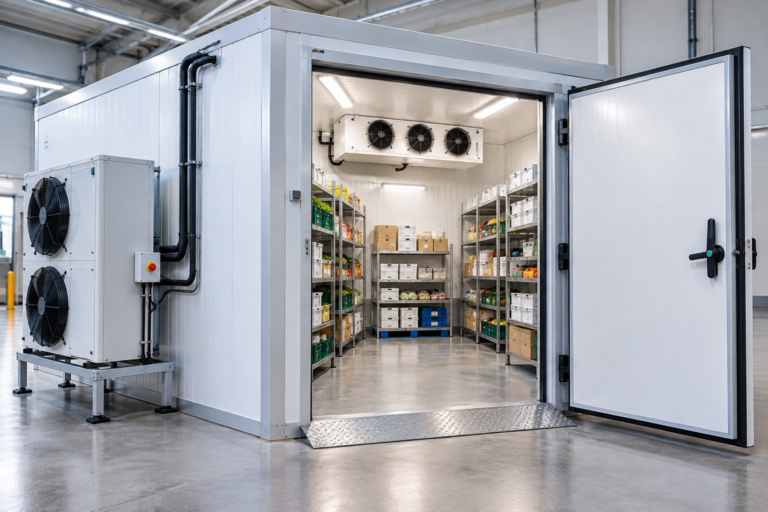
Running a food business means protecting stock every day. Meat, dairy, fish, fruit, vegetables and prepared food all need safe storage. That is why choosing the right team for cold room installation Liverpool businesses can trust is an important decision. The right cold room can protect your stock, support food safety, control energy use and make daily work easier.
Liverpool has a large mix of restaurants, takeaways, cafes, supermarkets, butchers, fishmongers, caterers, food producers and wholesalers. Each business has different cooling needs. A small restaurant may need a compact walk-in chiller, while a food wholesaler may need a much larger cold storage system.
The key is not simply buying the biggest or cheapest room. It is choosing a system designed around your products, space, working hours and future needs.
Why Liverpool Businesses Need Reliable Cold Storage
Cold storage is more than a place to put food.
It is part of your food safety system. Liverpool City Council requires food businesses to follow food hygiene rules, and some businesses that handle products of animal origin for supply to other food businesses may also need formal premises approval.
Temperature control is especially important.
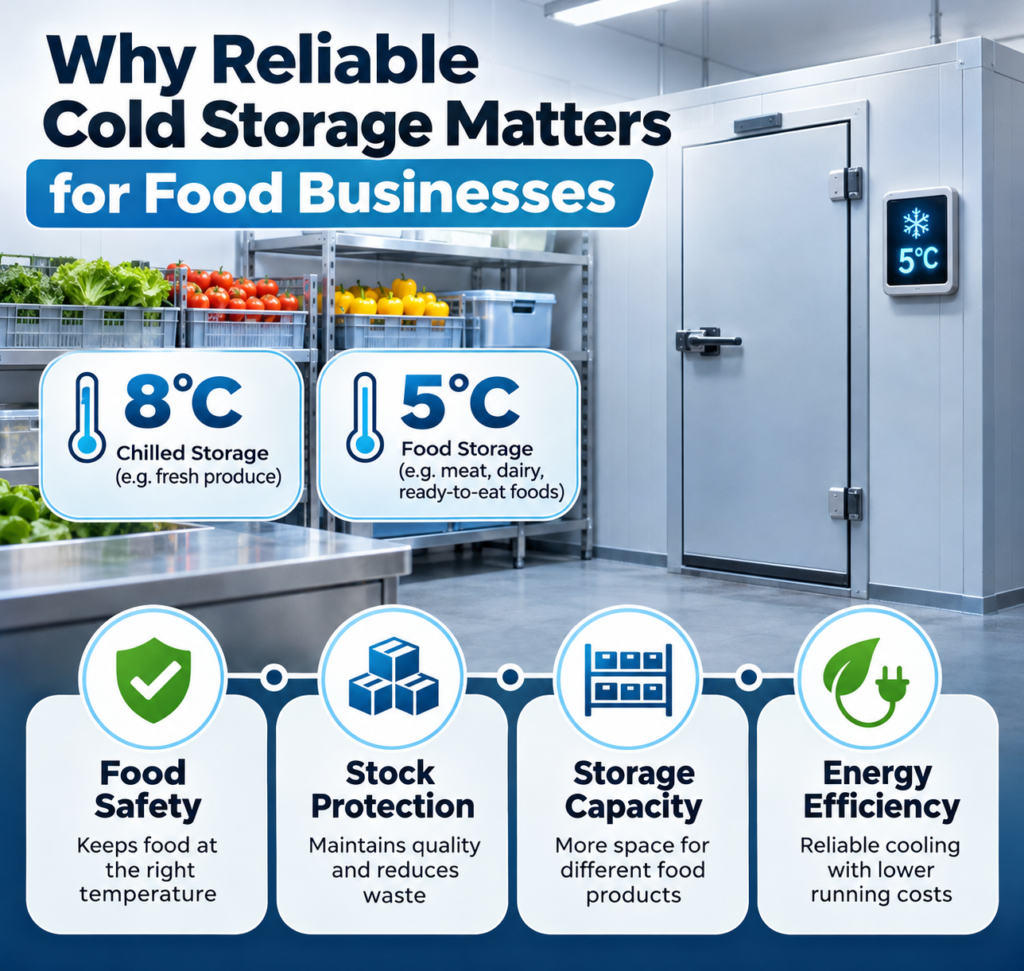
The Food Standards Agency says chilled food for food businesses in England, Wales and Northern Ireland must generally be kept below 8°C. It recommends keeping fridges at 5°C or below so there is a safety margin.
This is why a properly designed cold room matters.
Imagine a busy Liverpool restaurant receiving a large delivery on Friday afternoon. Staff need enough room to store the food safely without blocking airflow or leaving the door open for long periods. A room that is too small can quickly become difficult to manage.
A well-designed system considers both storage capacity and how your staff actually use the room.
How to Choose the Right Cold Room
The first question is not, “How much does a cold room cost?”
It is, “What does my business actually need?”
A professional cold room design should consider the type of food stored, required temperature, room size, product turnover, delivery patterns, door openings and the temperature around the refrigeration equipment.
The 2025 UK Government technical guide on walk-in cold rooms also stresses the importance of proper specification, component selection, energy efficiency and suitable refrigerants when planning a cold room.
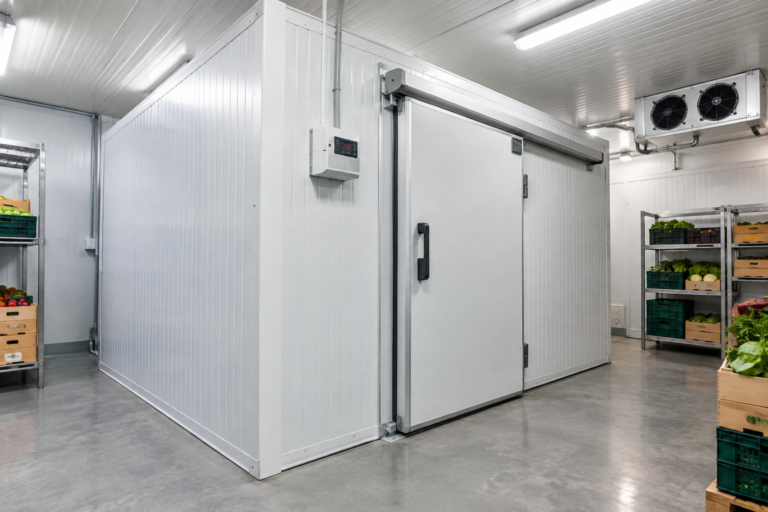
A chiller room is usually designed for fresh products that need refrigeration without freezing. A freezer room needs much lower temperatures and stronger insulation.
Your door choice matters too.
If staff enter the room many times each hour, a suitable door and good door-closing system can reduce warm air entering the room. This can help the refrigeration system work more efficiently.
The size matters just as much.
A room that is too small creates poor working conditions and limits stock capacity. A room that is much larger than needed can cost more to build and operate.
The best solution is a bespoke cold room designed around your real business needs.
What to Expect During Cold Room Installation Liverpool
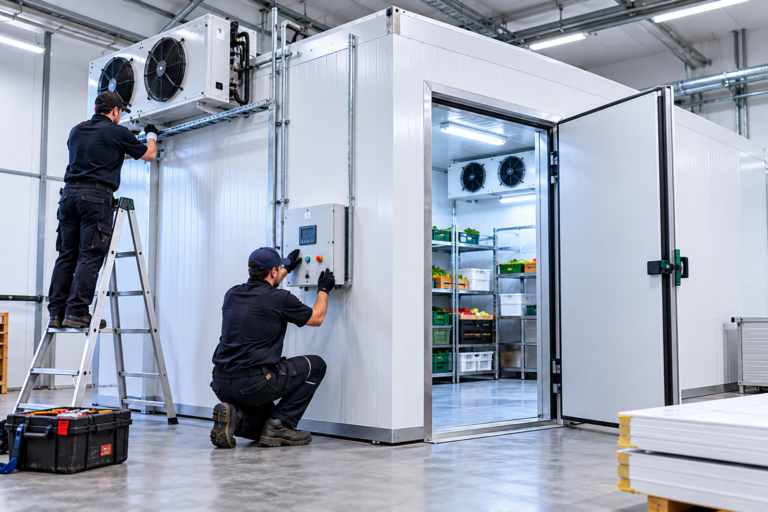
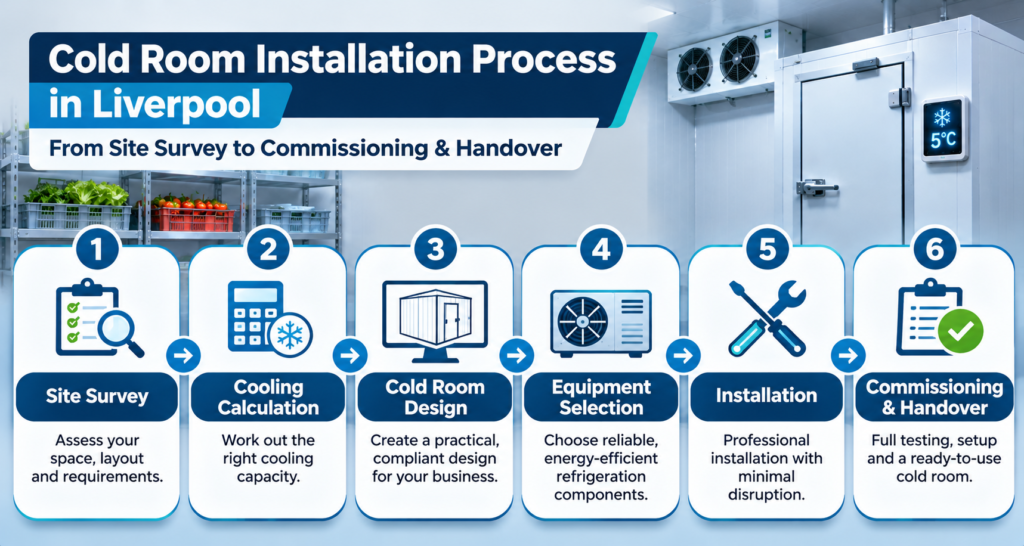
A professional cold room installation Liverpool project should begin with a site survey.
During this visit, the engineer should inspect the available space, access routes, electrical supply, ventilation, drainage where relevant and the way your business uses the room.
The next stage is the cooling calculation.
This is important because refrigeration capacity cannot be chosen from room size alone. Product temperature, stock turnover, door openings, room construction and surrounding temperature can all affect the cooling load.
The design can then be prepared.
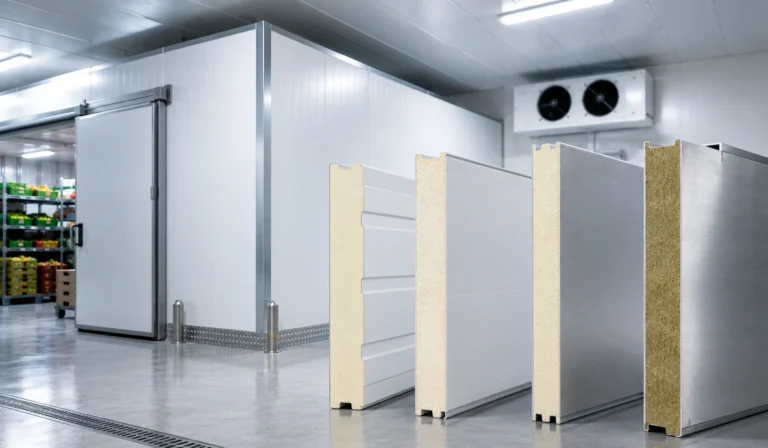
Insulated panels, flooring, doors, evaporators, condensers, controls and other components are selected to suit the application.
Installation follows once the design is agreed.
After the room is built, the refrigeration system should be commissioned and checked. The engineer should make sure the system reaches the required temperature and operates correctly before handing it over.
Ask for clear documentation at the end of the job. This should include relevant equipment details, warranty information and servicing requirements.
A good installation should leave you knowing how the system works, what temperature it should maintain and what to do if something goes wrong.
F-Gas Rules Every Business Owner Should Know
F-Gas is short for fluorinated greenhouse gases.
Some refrigeration systems use F-gases as refrigerants. Because these gases can have a high global warming impact, the UK has rules covering their use and the people who work with them.
The UK Government states that individuals working on equipment containing F-gas need appropriate qualifications for the work being carried out. This includes specific requirements for activities such as refrigerant recovery and leak checking.
There are also company certification requirements.
A company servicing stationary refrigeration equipment containing F-gas for other businesses must have the required company certification. The rules cover activities including installation, repair, maintenance and decommissioning.
This is one reason qualifications should be part of your buying decision.
When comparing cold room engineers Liverpool businesses, do not only compare prices. Ask whether the engineer has the correct F-Gas qualification and whether the company holds the required certification.
What About F-Gas Records?
Some refrigeration equipment also requires records.
The UK Government says records must be kept for equipment containing 5 tonnes or more of CO₂ equivalent to F-gas. Records can include the quantity and type of gas, gas added during maintenance, leak-check results and recovery or disposal information. These records must generally be kept for five years.
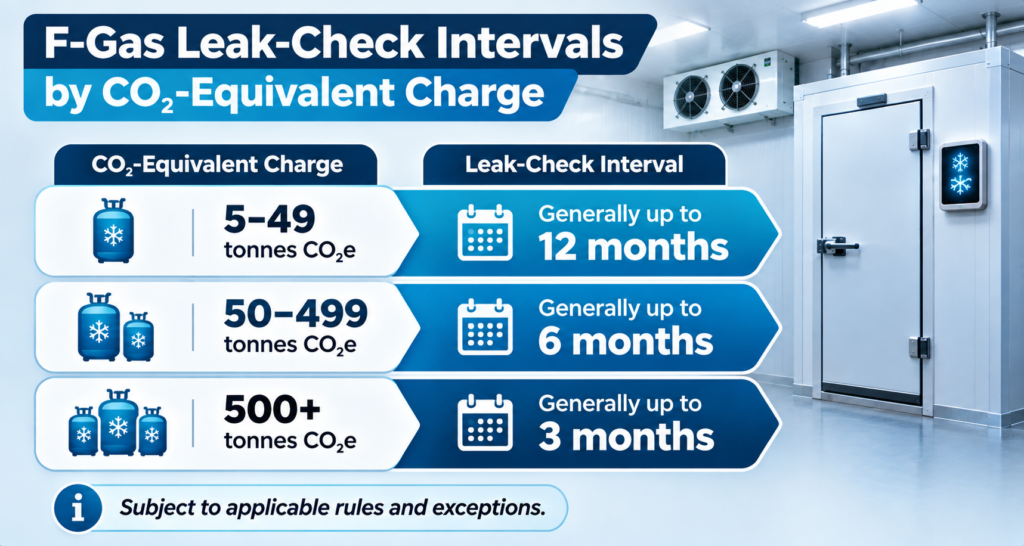
Leak-check frequency depends on the CO₂-equivalent charge.
For equipment containing 5 to 49 tonnes of CO₂ equivalent, the maximum interval is generally 12 months. For 50 to 499 tonnes, it is generally six months, while equipment containing 500 tonnes or more has a three-month maximum interval, subject to the applicable rules and exceptions.
Your refrigeration contractor should help you understand which requirements apply to your system.
How to Choose Cold Room Engineers Liverpool Businesses Can Trust
A good refrigeration contractor should make the process easy to understand.
Start by checking qualifications and certification.
Then look at experience with commercial refrigeration. A contractor that understands restaurants, retail, catering, food production and storage facilities will be better placed to design a system around your working environment.
Coldroomplus has more than 25 years of experience and provides F-Gas-certified, Level 3 RACHP-qualified technicians. The company also offers free site surveys within a 50-mile radius, which includes Liverpool, alongside bespoke refrigeration solutions.
Aftercare is another important factor.
Ask what happens if the system develops a fault after installation. A company offering emergency repairs, genuine spare parts and an extended warranty can give you greater peace of mind.
The goal should be simple: choose a contractor that can design, install and support a cold room for the long term.
Key Takeaways
Good cold room installation in Liverpool starts with understanding the business rather than simply choosing equipment.
Your room should match the products you store, the required temperature, available space and how often staff use the door.
F-Gas compliance is also important. Always check that the people working on your refrigeration system have the correct qualifications and that the company has the certification required for the work.
Do not forget energy use.
Good insulation, sensible temperature settings, proper door use, clean equipment and planned maintenance can all help keep operating costs under control.
Most importantly, compare the complete service rather than the installation price alone.
A well-designed cold room is a long-term business asset. The right system can protect stock, support food safety and make everyday operations easier.
Is your current cold storage system costing you more in energy, space or spoiled stock than it should—and would a properly designed cold room solve the problem?
Frequently Asked Questions
1. How long does cold room installation take?
The installation time depends on the size and complexity of the project. A small commercial cold room may be installed relatively quickly, while a larger bespoke room can take longer because of additional panels, refrigeration equipment, electrical work and commissioning.
2. What temperature should a commercial cold room be?
The correct temperature depends on the food being stored and the relevant food safety requirements. For food businesses in England, Wales and Northern Ireland, chilled food generally needs to be kept below 8°C, while the FSA recommends setting fridges at 5°C or below to provide a safety margin.
3. Do I need F-Gas certified engineers for a cold room?
If the work involves activities covered by F-Gas requirements, the engineer needs the appropriate qualification. The UK Government also requires companies carrying out relevant work on stationary refrigeration equipment for other businesses to hold the required company certification.
4. How much does cold room installation cost in Liverpool?
The cost depends on the room size, insulation, refrigeration capacity, door type, electrical work and installation conditions. The best way to get an accurate price is to arrange a site survey so the cooling requirements can be properly assessed.
5. Is a walk-in cold room better than a normal commercial fridge?
A walk-in cold room can provide much more storage space and easier stock access for businesses with larger volumes. However, a standard commercial refrigerator may be more suitable for a smaller business, so the choice should depend on your storage needs and available space.
6. How can I make my cold room more energy efficient?
Start with good insulation and keep the door closed whenever possible. Regular maintenance, clean refrigeration components, good door seals and sensible temperature settings can also help reduce unnecessary energy use.
7. How often should a commercial cold room be serviced?
There is no single service interval that suits every system because usage and equipment vary. Annual professional servicing is a sensible maintenance approach for many businesses, while F-Gas leak-check requirements may require more frequent checks depending on the refrigerant charge.
8. What are F-Gas records and do I need them?
F-Gas records document information about certain refrigeration systems, including gas quantities, refrigerant added during maintenance and mandatory leak checks. GOV.UK states that records are required for equipment containing 5 tonnes or more of CO₂ equivalent to F-gas and must generally be kept for five years.
9. Can a cold room be built to my exact requirements?
Yes. Commercial cold rooms can be designed around available space, storage requirements, product type, temperature needs and working conditions. Bespoke design is especially useful when a business has unusual room dimensions or expects to expand.
10. What should I check before hiring cold room engineers in Liverpool?
Check their relevant F-Gas qualifications, company certification, refrigeration experience, warranty terms and aftercare service. You should also ask whether they provide a proper site survey and whether emergency repairs and genuine spare parts are available.