What Documentation Should You Receive After Walk-In Freezer Installation in London?
A professional walk in freezer installation London project should not end when the refrigeration system reaches its target temperature. The handover is equally important because the documents you receive provide evidence of what was installed, how it was tested, which refrigerant was used and how the system should be operated and maintained.
For a business, this paperwork is more than administration. It can help with future servicing, warranty claims, compliance checks, troubleshooting and safe operation. UK Government guidance also places specific record-keeping responsibilities on operators of qualifying F-Gas equipment.
If you have recently invested in a walk in freezer that London businesses can depend on, here is what you should expect in a proper handover pack.
Why Documentation Matters After Freezer Installation
Walk-in freezers combine insulated panels, doors, electrical controls, evaporators, condensers, pipework, refrigerant and temperature-control equipment. Without accurate records, diagnosing a fault several years later can become unnecessarily difficult.
Good documentation creates a technical history for the installation. It tells a future engineer what equipment is fitted, what refrigerant is present, what settings were established during commissioning and what maintenance requirements apply.
BSI’s BS EN 378 series specifically addresses safety and environmental requirements for refrigeration systems, including design, construction, testing, marking, documentation, installation, operation and maintenance.
Key takeaway: A completed installation should leave you with both a working freezer and a usable record of the system.
What Documentation Should You Receive?
There is no single universal handover folder that looks identical for every installation. The exact documentation depends on the equipment, refrigerant, system design, site and applicable requirements.
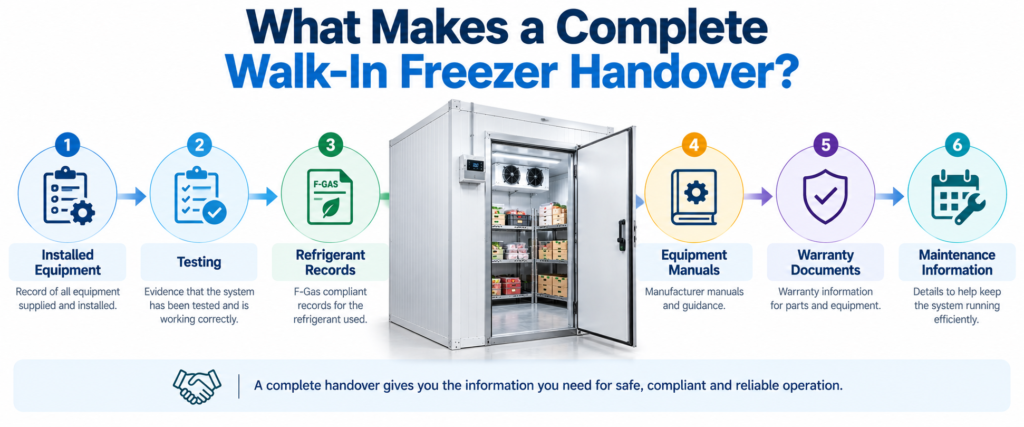
However, a professional handover will normally include several important categories.
| Document | Why it matters |
|---|---|
| Installation/commissioning record | Shows the system was tested and commissioned |
| Refrigerant/F-Gas record | Establishes refrigerant type and relevant quantities |
| Equipment manuals | Explains operation, settings and maintenance |
| Technical specifications | Identifies installed components |
| Warranty documentation | Establishes warranty terms and coverage |
| Test results | Provides evidence of pressure, leak and functional testing |
| Electrical information | Helps with safe servicing and fault diagnosis |
| Maintenance recommendations | Establishes future servicing requirements |
The installer should also identify the major components and their model or serial numbers where appropriate. This becomes particularly useful when replacement parts are needed.
F-Gas Documentation and Refrigerant Records
This is one of the most important areas for a refrigeration installation.
Under UK F-Gas requirements, businesses and technicians working with relevant stationary refrigeration equipment must follow qualification, certification, leak-checking and record-keeping requirements. The UK Government states that technicians need appropriate qualifications for activities including installation, servicing, leak checking and refrigerant recovery. Companies servicing equipment containing F-Gas on behalf of others generally require company certification as well.
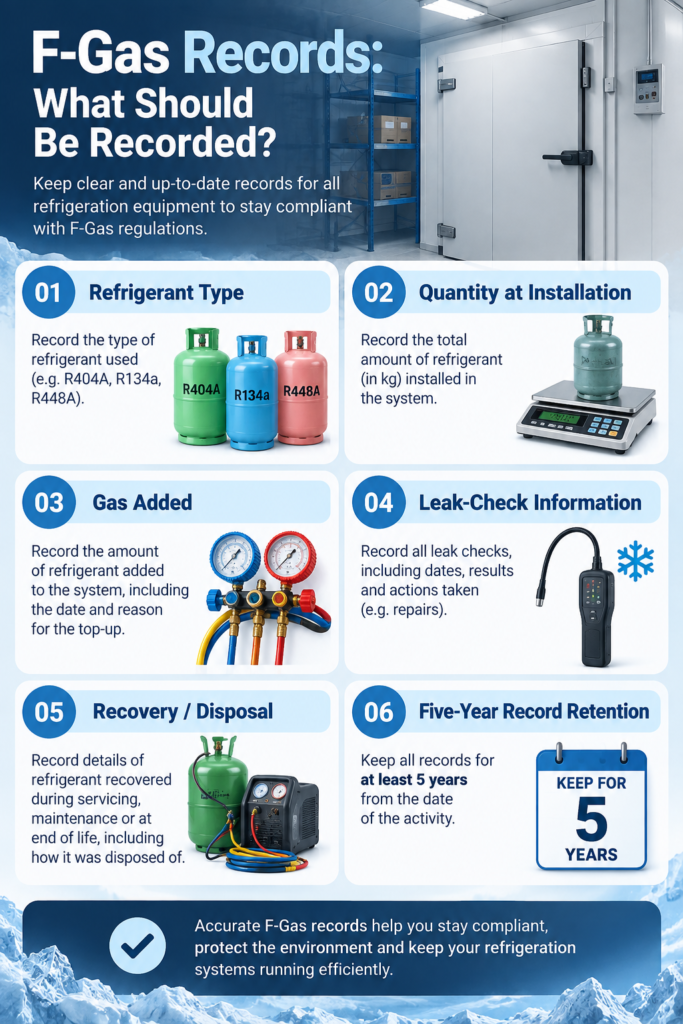
For qualifying equipment, operators must keep records including the quantity and type of gas at installation, gas added during maintenance, mandatory leak-check results and recovery or disposal information. These records must generally be retained for five years.
Your handover documentation should therefore clearly identify the refrigerant used and the relevant charge information.
It is also worth checking whether the refrigerant selected is appropriate for current UK requirements. The UK Government maintains guidance on F-Gas restrictions and bans affecting new refrigeration equipment, including restrictions based on refrigerant global-warming potential.
Commissioning and Testing Records
A freezer can switch on without being properly commissioned. That is why commissioning documentation matters.
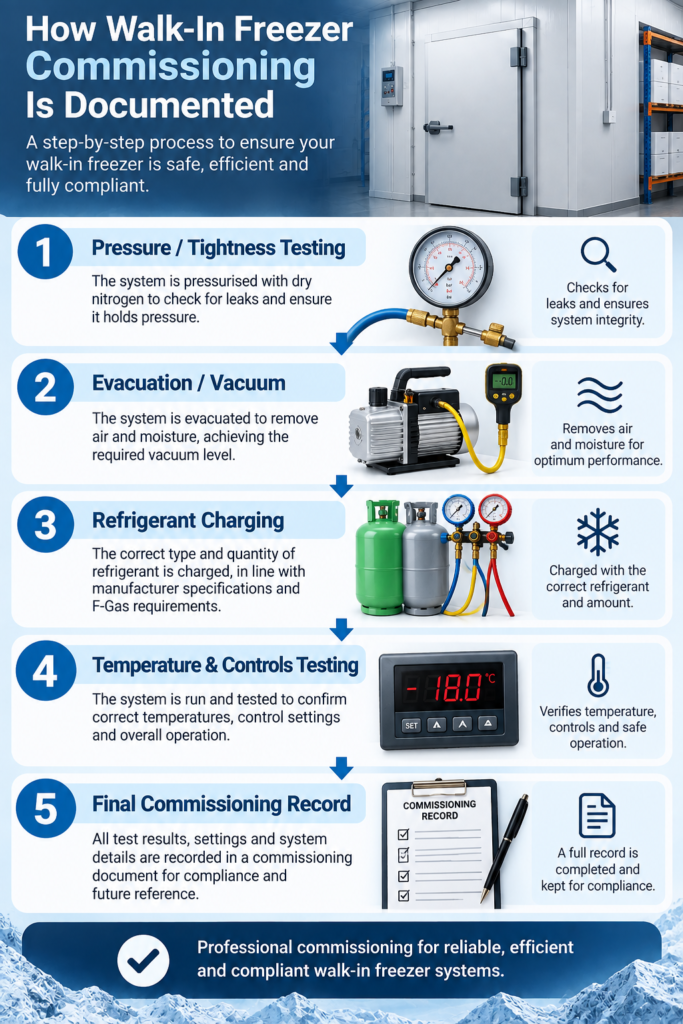
The commissioning record should demonstrate that the refrigeration system was tested and adjusted correctly. Depending on the installation, this can include pressure and tightness testing, evacuation or vacuum procedures, refrigerant charging, operating pressures, temperature performance, controls, alarms and defrost operation.
BS EN 378-2 covers refrigeration-system design, construction, testing, marking and documentation, including strength pressure, tightness and functional testing.
You should also expect the final operating condition to be recorded rather than simply being told, “It’s working.”
For example, a restaurant freezer may need stable sub-zero temperatures under normal operating conditions. A warehouse freezer with frequent door openings may have very different load characteristics. Recording commissioning results gives you a useful baseline against which future performance can be compared.
Equipment Manuals and Technical Information
Your documentation pack should include the manufacturer’s operating and installation information for the major equipment installed.
This can include manuals for the refrigeration unit, controller, evaporator, condenser, temperature probe, alarm system, door equipment and other specialist components.
Manufacturer documentation is particularly valuable when staff need to understand controller settings or when another engineer has to diagnose a fault later.
It should also identify model numbers and, where applicable, serial numbers. This can save considerable time when ordering genuine replacement components.
A useful comparison is simple: a freezer without documentation is like a commercial vehicle without a service history. It may operate perfectly, but its history is harder to establish.
Warranty and Spare Parts Documentation
Warranty information should never be treated as an afterthought.
Your paperwork should clearly explain what is covered, how long coverage lasts and whether different components have different warranty periods. It should also identify any conditions that could affect warranty validity, such as maintenance requirements or unauthorised modifications.
If specific manufacturer warranties apply to compressors, controls or other components, retain those documents with the installation records.
For businesses purchasing a walk in freezer London customers rely on for valuable stock, knowing exactly who to contact if something fails is equally important.
Coldroomplus, for example, states that its commercial refrigeration services include a one-year extended warranty, genuine spare parts, F-Gas-certified engineers and Level 3 RACHP-qualified technicians. Its stated installation process also includes testing and commissioning before ongoing support.
Compliance, Safety and Pressure-System Records
Refrigeration equipment can involve pressurised systems, so documentation should not stop at the freezer box itself.
The Health and Safety Executive explains that refrigeration plant can fall within the broader category of pressure equipment and that pressure-system users have responsibilities concerning suitability, safe operating limits, protective devices and maintenance.
Where Pressure Systems Safety Regulations(PSSR) requirements apply, a written scheme of examination may be necessary before qualifying equipment is operated, with examination by a competent person as required.
Whether a particular walk-in freezer installation requires a written scheme depends on the specific pressure system and circumstances, so this should be assessed rather than assumed.
You should also retain applicable conformity information, manufacturer instructions and safety information supplied with relevant equipment. HSE notes that qualifying pressure equipment placed on the Great Britain market must satisfy applicable conformity-assessment requirements and be supplied with appropriate instructions and safety information.
What Should You Check Before Signing the Handover?
Take a few minutes to compare the paperwork against the physical installation.
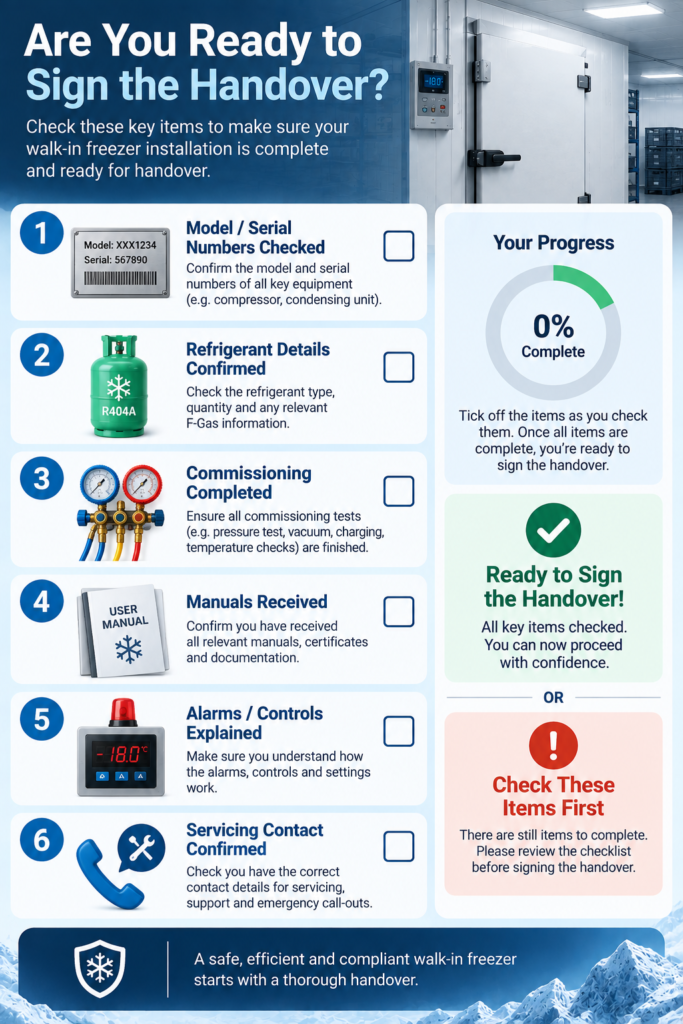
Check that the equipment models and serial numbers correspond with what is actually on site. Confirm that refrigerant details are recorded correctly and that commissioning information has been completed.
Then check the operating instructions, alarm functions and temperature controls. Your staff should know how to operate the freezer normally and what to do if the temperature rises or an alarm activates.
Finally, confirm who provides future servicing and emergency support. A freezer installation is a long-term business asset, so the handover should establish how it will be maintained after installation.
If you are planning a new walk-in freezer for your London business, have you checked exactly what commissioning, F-Gas, warranty and technical documentation your installer will provide before you approve the project?
FAQs About Walk-In Freezer Installation Documentation
1. What documents should I receive after walk-in freezer installation?
You should normally receive commissioning information, equipment manuals, warranty details, technical specifications and relevant refrigerant or F-Gas records. Additional documentation may be required depending on the system design and site.
2. Is an F-Gas certificate required after installing a walk-in freezer?
The precise documentation depends on the equipment and work performed, but relevant F-Gas installation and record-keeping requirements must be followed where they apply. The installer should provide the information necessary for the operator to maintain required records.
3. How long should I keep F-Gas records?
For qualifying equipment, the UK Government states that required F-Gas records must generally be kept for five years. These records can include refrigerant quantities, maintenance additions, leak-check results and recovery or disposal information.
4. Should commissioning results be provided?
Yes, commissioning information is valuable evidence that the refrigeration system was tested and configured correctly. It also establishes a performance baseline for future servicing and troubleshooting.
5. Do I need the freezer manufacturer's manual?
Yes, you should retain the operating and technical manuals supplied with the equipment. They can be essential for safe operation, controller adjustments, maintenance and future repairs.
6. What happens if I lose my refrigeration documentation?
Contact the original installer or equipment manufacturer first and request replacement records where available. You should then keep both digital and physical copies to reduce the risk of losing important information again.
7. Does every walk-in freezer need a written scheme of examination?
Not necessarily. HSE requirements depend on whether the particular pressure system falls within the relevant PSSR provisions, so the system should be assessed according to its design and operating conditions.
8. Why are refrigerant records important?
Refrigerant records help establish what gas is in the system and provide a history of additions, leak checks and recovery where applicable. They can also help future engineers service the equipment correctly.
9. Should warranty information be included in the handover pack?
Yes, warranty terms should be retained with the installation documentation. You should understand the warranty period, covered components and any maintenance or usage conditions that apply.
10. What should I ask before choosing a freezer installer in London?
Ask whether the quotation includes professional commissioning, testing, relevant F-Gas documentation, manuals, warranty information and ongoing support. It is also sensible to verify that the people carrying out F-Gas work hold the appropriate qualifications and that the company has the certification required for the work.