What Size Walk-In Freezer Does My UK Business Need?
Choosing the right walk in freezer size is one of the most important decisions for any business that stores frozen products. A freezer that’s too small quickly becomes overcrowded, while one that’s too large can increase running costs without adding real value. Finding the right balance helps protect stock, improve efficiency, and reduce unnecessary energy use.
Whether you run a restaurant, supermarket, bakery, food manufacturing facility, butcher’s shop, or pharmaceutical business, understanding how freezer size affects daily operations can save thousands of pounds over the lifetime of the equipment. This guide explains how to calculate the right size, what factors influence capacity, and when to consider professional walk in freezer installation Leeds services for a tailored solution.
Why Walk-In Freezer Size Matters More Than You Think
Many businesses focus on the purchase price when buying a commercial freezer. In reality, the wrong size often costs much more over time through higher electricity bills, slower workflows, and damaged stock.
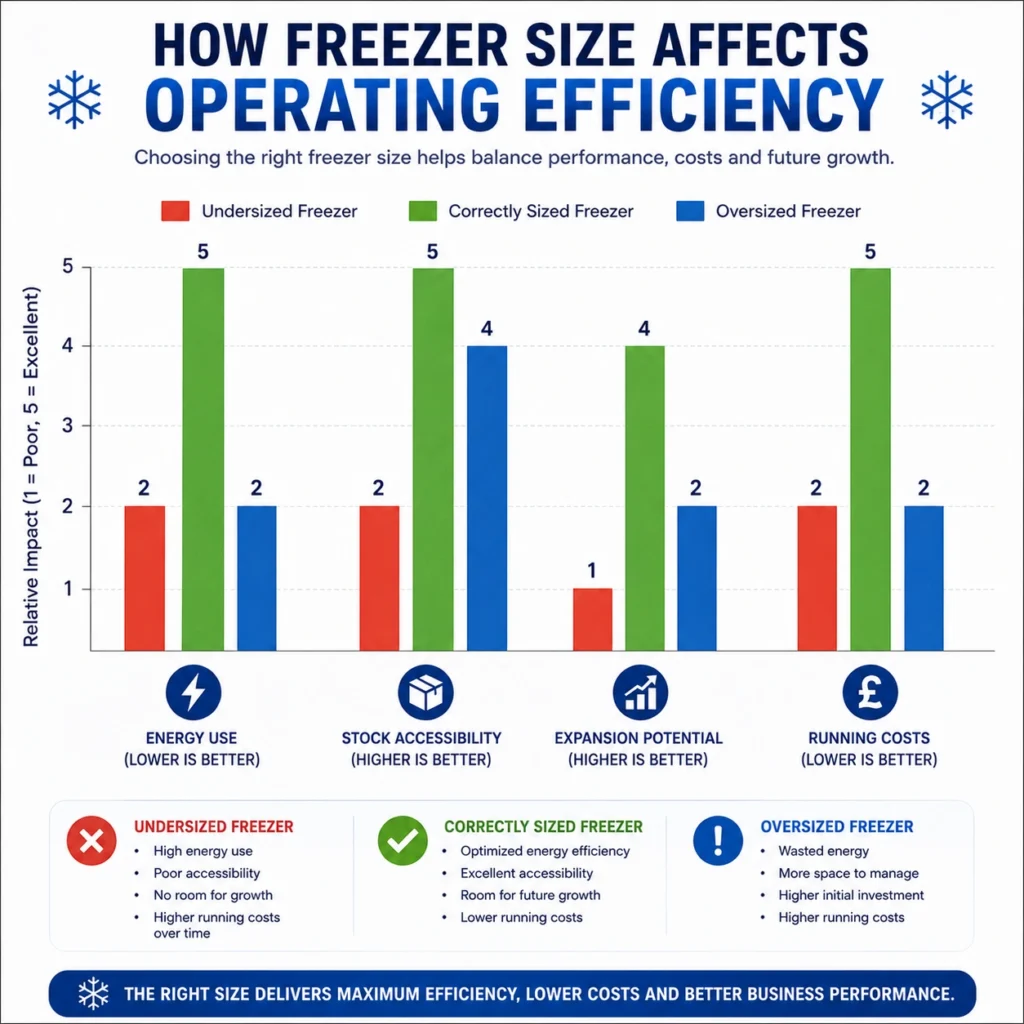
A freezer that is constantly full restricts airflow around products. Poor air circulation forces refrigeration equipment to work harder to maintain temperature, increasing energy consumption and reducing equipment lifespan.
On the other hand, an oversized freezer means paying to cool unused space every day.
According to research published by the UK’s refrigeration industry, improving cold store efficiency can reduce refrigeration energy consumption by 23–39% through better design, operation, and maintenance.
The goal isn’t simply buying the biggest freezer available. It’s selecting the size that supports today’s operations while allowing sensible room for future growth.
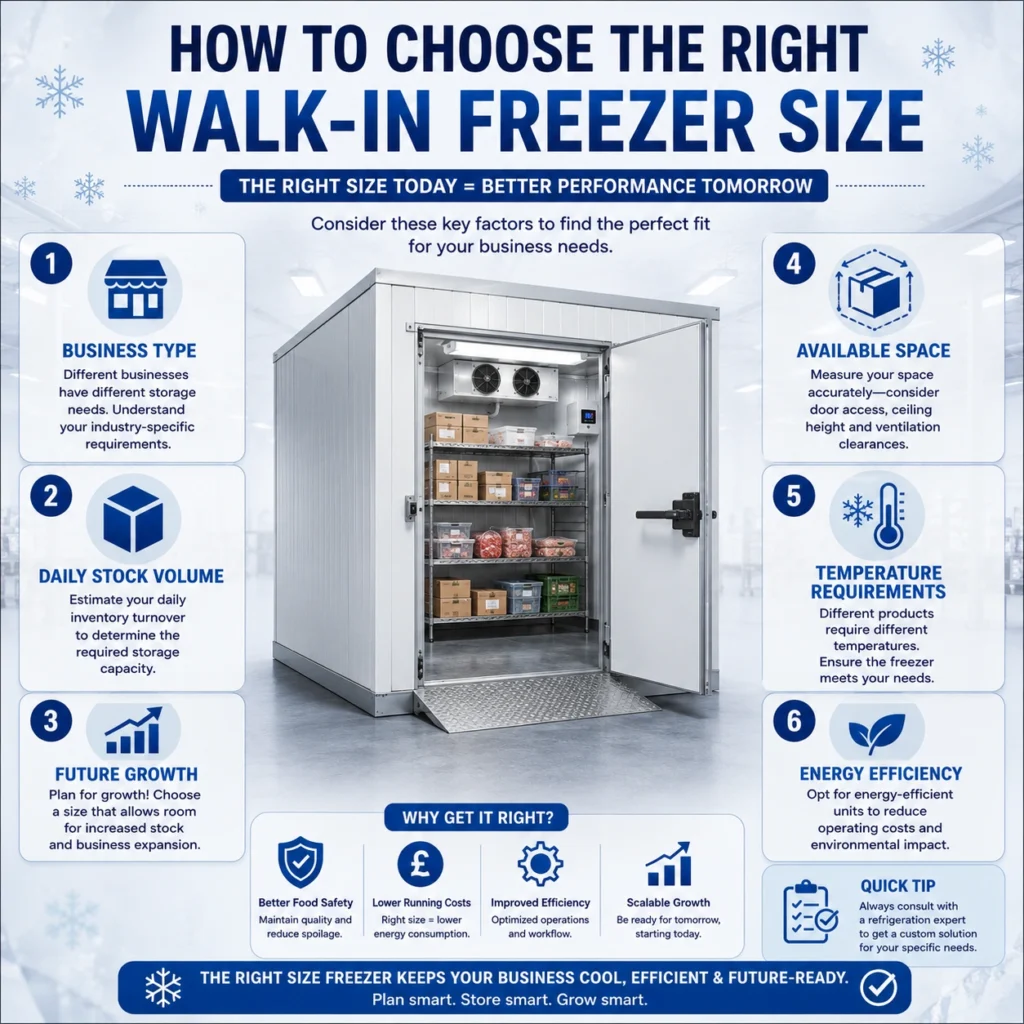
Walk-In Freezer Size Calculator
Estimate your optimal structural dimensions, volume capacities, and refrigeration load requirements tailored to your growth plans.
Start with Your Business Type
Every industry stores products differently. That means two businesses with similar floor areas may require completely different freezer sizes.
Restaurants and Commercial Kitchens
Restaurants usually need quick access rather than maximum storage. Staff regularly move in and out throughout the day, making layout just as important as total capacity.
A medium-sized restaurant often benefits from a compact walk-in freezer that stores several days’ worth of ingredients while allowing staff to move safely inside.
Supermarkets and Convenience Stores
Retail businesses generally require larger storage areas because deliveries arrive in bulk.
Extra capacity helps prevent stock shortages during busy periods and seasonal demand.
Food Manufacturers
Manufacturers often need significantly larger freezers because products remain stored before distribution.
Production schedules should always influence sizing decisions.
Pharmaceutical Businesses
Medicine and healthcare products require precise temperature control.
Instead of focusing purely on volume, these businesses must also consider airflow, monitoring systems and regulatory compliance.
| Business Type | Typical Storage Need | Recommended Planning Priority |
|---|---|---|
| Restaurant | Daily ingredients | Easy staff access |
| Supermarket | Bulk frozen stock | Larger storage capacity |
| Bakery | Frozen dough & desserts | Flexible shelving |
| Food Manufacturer | High-volume storage | Future expansion |
| Pharmaceutical | Temperature-sensitive products | Precise environmental control |
How to Calculate the Right Walk-In Freezer Size
Instead of guessing, professional refrigeration engineers normally work through several practical questions before recommending a freezer.
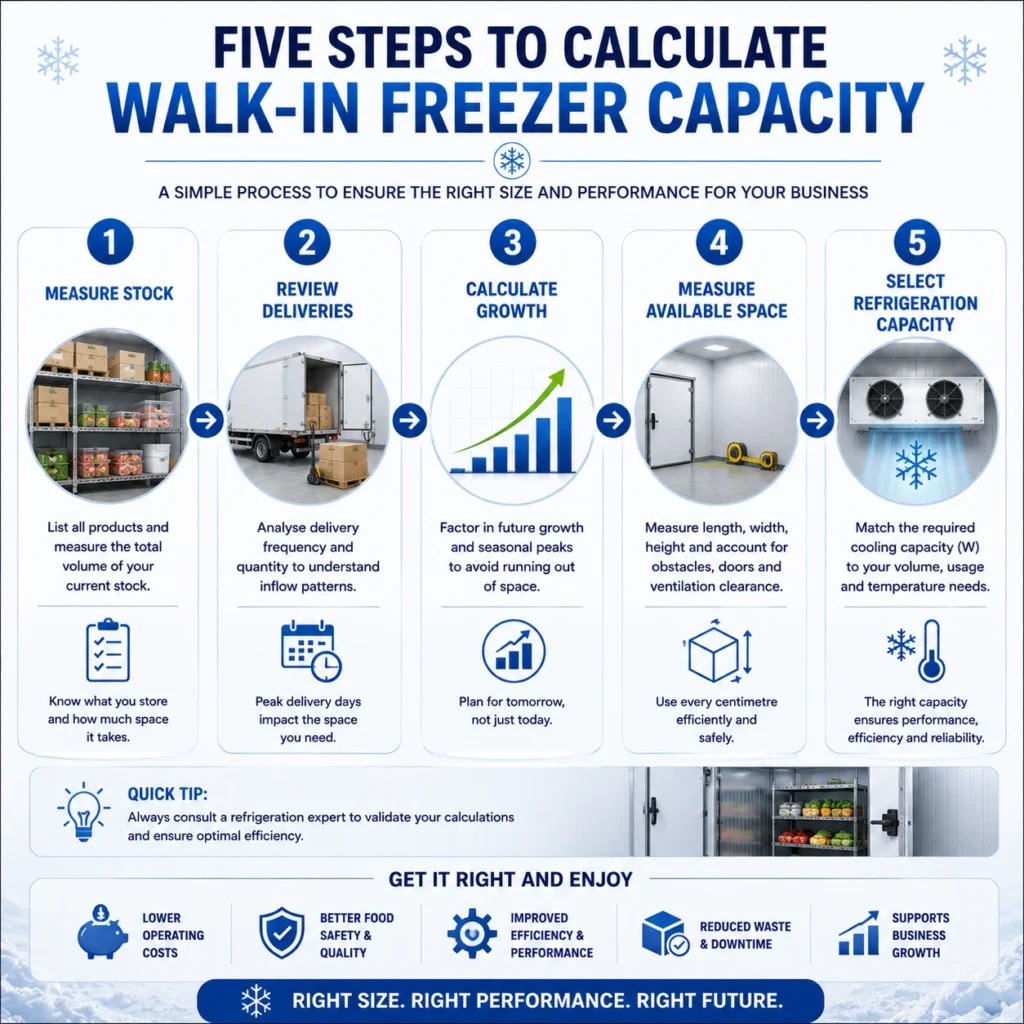
1. How Much Stock Do You Store?
Start by calculating your average frozen inventory.
Then identify your busiest trading periods.
For example, Christmas, Easter, sporting events or summer holidays may require significantly more storage than the yearly average.
Planning only for quiet periods often results in expensive upgrades later.
2. How Often Are Deliveries Made?
Businesses receiving daily deliveries usually require less storage than companies supplied once every week.
If deliveries are delayed, extra freezer capacity provides valuable protection against supply chain disruption.
3. How Fast Does Stock Move?
High stock turnover means products enter and leave the freezer quickly.
Lower turnover businesses require more storage because products remain frozen for longer periods.
Understanding this movement helps determine usable storage rather than simply measuring floor space.
Don't Forget Future Growth
One of the biggest mistakes businesses make is buying only for today’s needs.
If your business grows by just 10–20% over the next few years, your freezer may become overcrowded much sooner than expected.
Industry guidance for commercial cold room planning recommends allowing additional capacity for expected business expansion rather than designing purely around current demand.
Adding a small amount of extra capacity during installation is usually far cheaper than replacing an entire freezer later.
Floor Space Isn't the Same as Storage Space
Many people assume internal dimensions equal usable storage.
They don’t.
Shelving, evaporators, doors and required walking areas all reduce usable storage.
Professional installers calculate both gross internal volume and effective storage capacity.
This ensures staff can safely move products while maintaining proper airflow around stored goods.
Poor layouts can block evaporators, reducing cooling performance and increasing compressor workload.
Why Ceiling Height Can Increase Capacity
Businesses often focus only on floor dimensions.
In many cases, increasing height rather than width delivers far greater storage capacity.
Modern shelving systems allow products to be stacked safely while maintaining airflow.
This is particularly useful where building space is limited.
Professional walk in freezer installation Leeds specialists frequently recommend taller storage layouts for urban businesses where floor space comes at a premium.
Want a tailored recommendation or quick quote? Reach out today
Energy Efficiency Starts with the Right Size
Electricity represents one of the largest ongoing operating costs for commercial refrigeration.
Research into UK cold stores found significant differences in energy performance between facilities, with modern best practices dramatically reducing annual electricity use through correct sizing, efficient operation and improved refrigeration systems.
An appropriately sized freezer operates more efficiently because compressors cycle correctly, airflow remains unrestricted and temperature recovery after door openings is faster.
Choosing the right freezer size therefore supports both lower operating costs and longer equipment life, making sizing decisions just as important as selecting the refrigeration system itself.
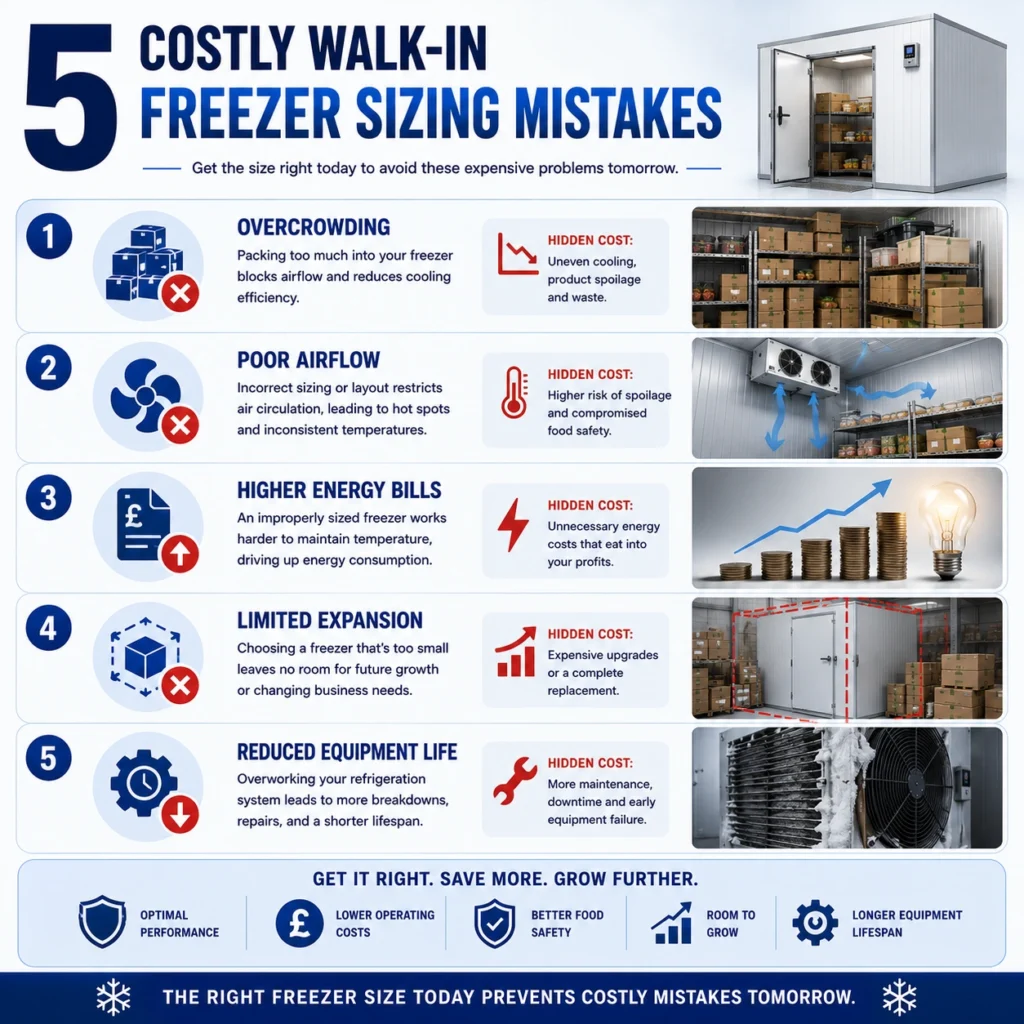
Common Mistakes When Choosing Walk-In Freezer Size
Buying a freezer based only on price or available floor space can create long-term problems. Many businesses discover too late that their freezer no longer meets operational needs after only a few years.
Some of the most common sizing mistakes include:
- Choosing the smallest unit to reduce upfront costs.
- Ignoring seasonal increases in stock.
- Forgetting future business growth.
- Overlooking aisle space for staff and trolleys.
- Not considering shelving height.
- Installing oversized systems that waste electricity.
The right walk in freezer size should support efficient stock movement, safe working conditions, and consistent temperatures without unnecessary operating costs.
Want a tailored recommendation or quick quote? Reach out today
Should You Plan for Expansion?
If your business expects to grow over the next five to ten years, expansion should be part of the initial planning process.
For example, a food wholesaler opening new customer accounts or a restaurant planning multiple locations will almost certainly require more frozen storage.
Adding additional insulated panels or relocating refrigeration equipment later is usually far more expensive than allowing extra capacity during the original installation.
Professional walk in freezer installation Leeds specialists often recommend allowing around 15–25% spare storage capacity where realistic business growth is expected. This provides flexibility without significantly increasing operating costs.
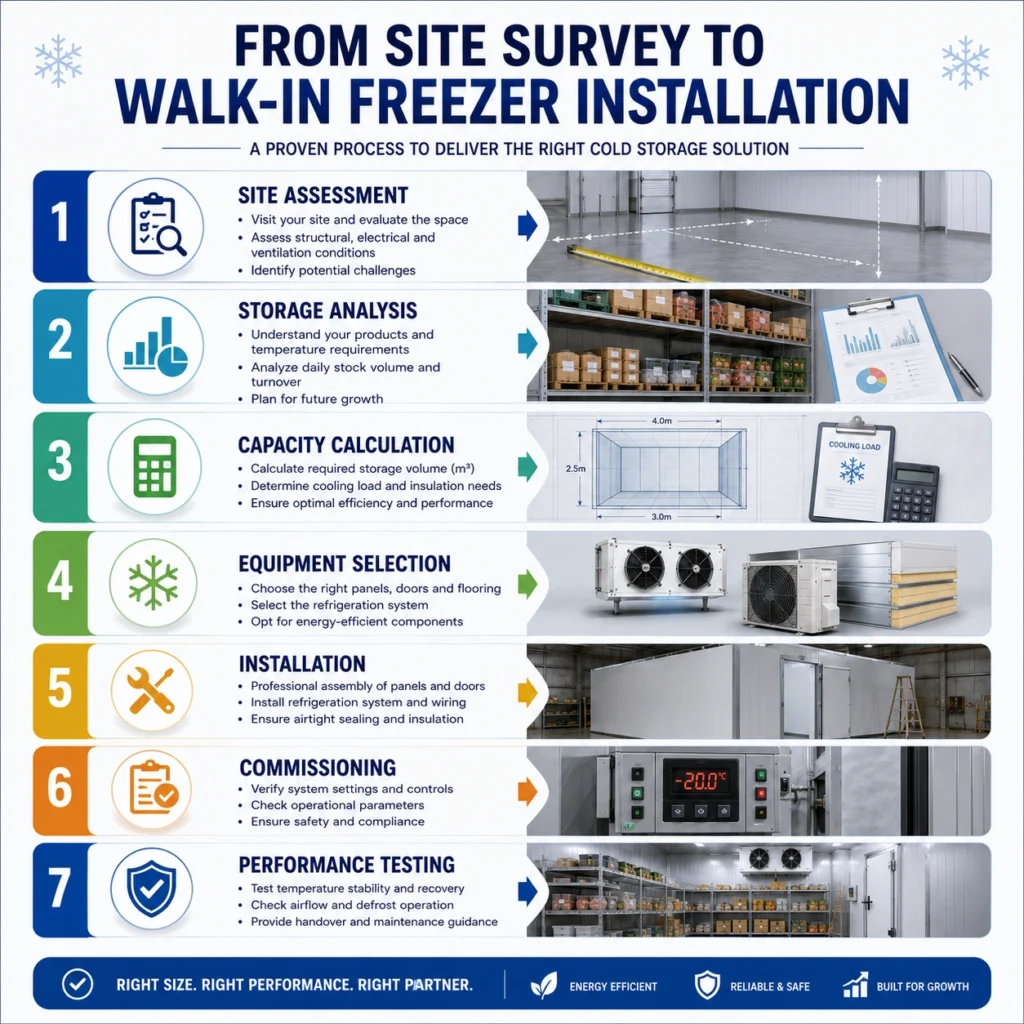
Why Professional Site Surveys Make a Difference
No two commercial buildings are identical.
Ceiling height, access doors, electrical supply, ventilation, drainage, and workflow all influence the most suitable freezer size.
A professional site survey helps identify issues before installation begins.
It also ensures the refrigeration system is correctly matched to the freezer volume, reducing energy waste and improving temperature recovery after frequent door openings.
According to the Carbon Trust, improving refrigeration system efficiency through correct specification, maintenance, and operation can significantly reduce energy consumption and operating costs for commercial businesses.
Questions to Ask Before Ordering Your Freezer
Before making a purchase, it helps to answer a few practical questions:
- How many pallets, boxes, or trays need to be stored?
- How quickly does stock move through the freezer?
- Will the business grow within the next five years?
- Is there enough room for staff to work safely?
- Can deliveries be unloaded efficiently?
- Does the refrigeration system match the required freezer volume?
Answering these questions early helps avoid expensive alterations later.
There is no universal answer because every business stores products differently. The ideal walk in freezer size depends on inventory levels, delivery schedules, available space, expected growth, and operational workflow.
Taking the time to calculate these factors before installation can reduce operating costs, improve productivity, and help protect valuable frozen stock for years to come.
If you were planning a new commercial freezer today, what would be your biggest challenge—limited space, future growth, or reducing energy costs? Share your thoughts below or speak with our refrigeration specialists for tailored advice.
Frequently Asked Questions (FAQs)
1. What is the best walk in freezer size for a small business?
The best walk in freezer size depends on the amount of frozen stock you store, how often you receive deliveries, and your available floor space. Small cafés and restaurants typically need compact walk-in freezers, while supermarkets and food manufacturers usually require larger units with additional storage capacity. A professional site survey helps determine the right size for your business.
2. How do I calculate the right walk in freezer size?
To calculate the correct walk in freezer size, consider your average stock volume, peak seasonal demand, product dimensions, shelving layout, aisle space, and future business growth. It’s also important to allow enough room for proper airflow and safe staff movement inside the freezer.
3. What happens if my walk-in freezer is too small?
An undersized walk-in freezer can become overcrowded, reducing airflow and making it harder to maintain consistent temperatures. This may increase energy consumption, reduce equipment lifespan, slow staff productivity, and increase the risk of food spoilage.
4. Is it better to buy a larger walk-in freezer than I currently need?
Buying a slightly larger freezer can be a smart investment if you expect your business to grow. However, choosing an oversized freezer without sufficient stock can increase running costs because you’re cooling unused space. The ideal solution balances current storage needs with realistic future expansion.
5. How much space should I leave inside a walk-in freezer?
You should leave enough space for staff to move safely and for cold air to circulate freely around stored products. Overloading shelves or blocking evaporators can reduce cooling performance and increase electricity usage.
6. How long does a walk in freezer installation take?
Most walk in freezer installation Leeds projects are completed within a few days, depending on the freezer size, site conditions, electrical work, and refrigeration system requirements. Larger or bespoke commercial installations may take longer.
7. Can a walk-in freezer be customised to fit my business?
Yes. Modern walk-in freezers can be customised with different dimensions, shelving layouts, door types, flooring options, temperature monitoring systems, and refrigeration equipment to suit restaurants, supermarkets, food manufacturers, pharmaceutical businesses, and other industries.
8. How energy efficient are modern walk-in freezers?
Modern walk-in freezers are significantly more energy efficient than older systems when correctly sized and professionally installed. Features such as high-performance insulated panels, energy-efficient compressors, LED lighting, and properly sealed doors help reduce electricity consumption and operating costs.
9. Do I need planning permission for a commercial walk-in freezer in the UK?
In many cases, internal walk-in freezers do not require planning permission. However, external installations or projects involving structural changes may require planning approval or building regulation compliance. It’s always advisable to check with your local authority before installation.
10. Why should I choose professional walk in freezer installation in Leeds?
Professional walk in freezer installation Leeds ensures your freezer is correctly sized, safely installed, energy efficient, and compliant with UK refrigeration standards. Experienced engineers also assess your site’s layout, refrigeration load, insulation requirements, and future expansion plans to maximise long-term performance.