Walk In Freezer vs Walk In Chiller: Which Do You Need?
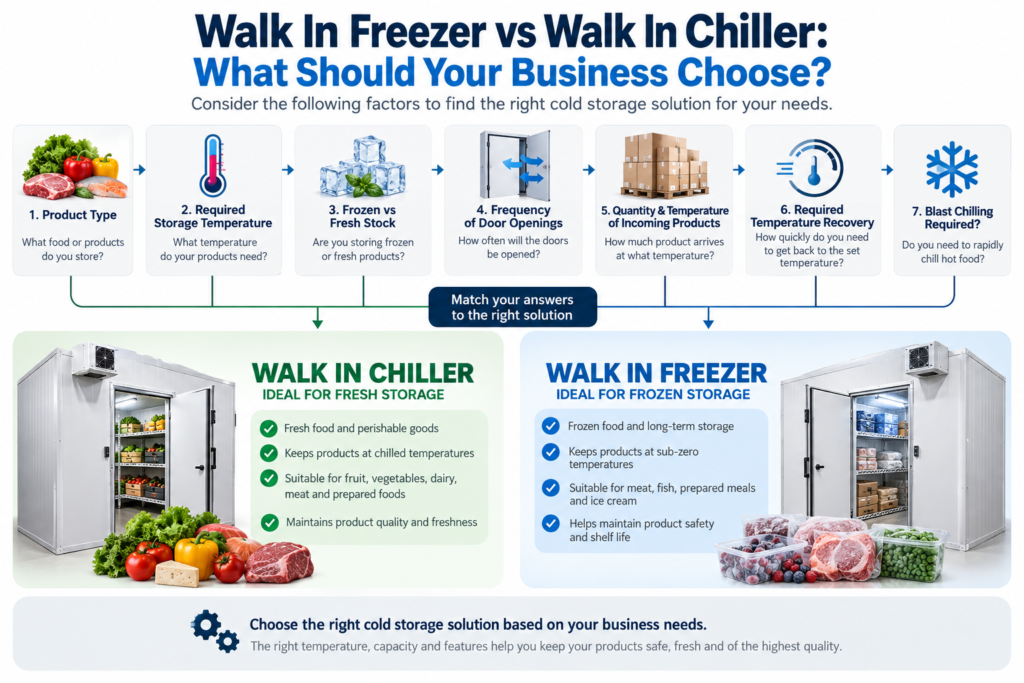
Choosing between a walk in freezer vs walk in chiller is not simply a question of which room gets colder. The correct choice depends on what you store, the required temperature, how frequently the door is opened, how much stock enters the room at once and how quickly the system needs to recover its temperature.
For restaurants, hotels, supermarkets, caterers, food manufacturers and other commercial operations, selecting the wrong refrigeration system can lead to wasted energy, damaged stock and unreliable temperature control. Danfoss notes that cold-room design depends on factors including stored products, door-opening frequency, target temperature and the amount of warm product being introduced.
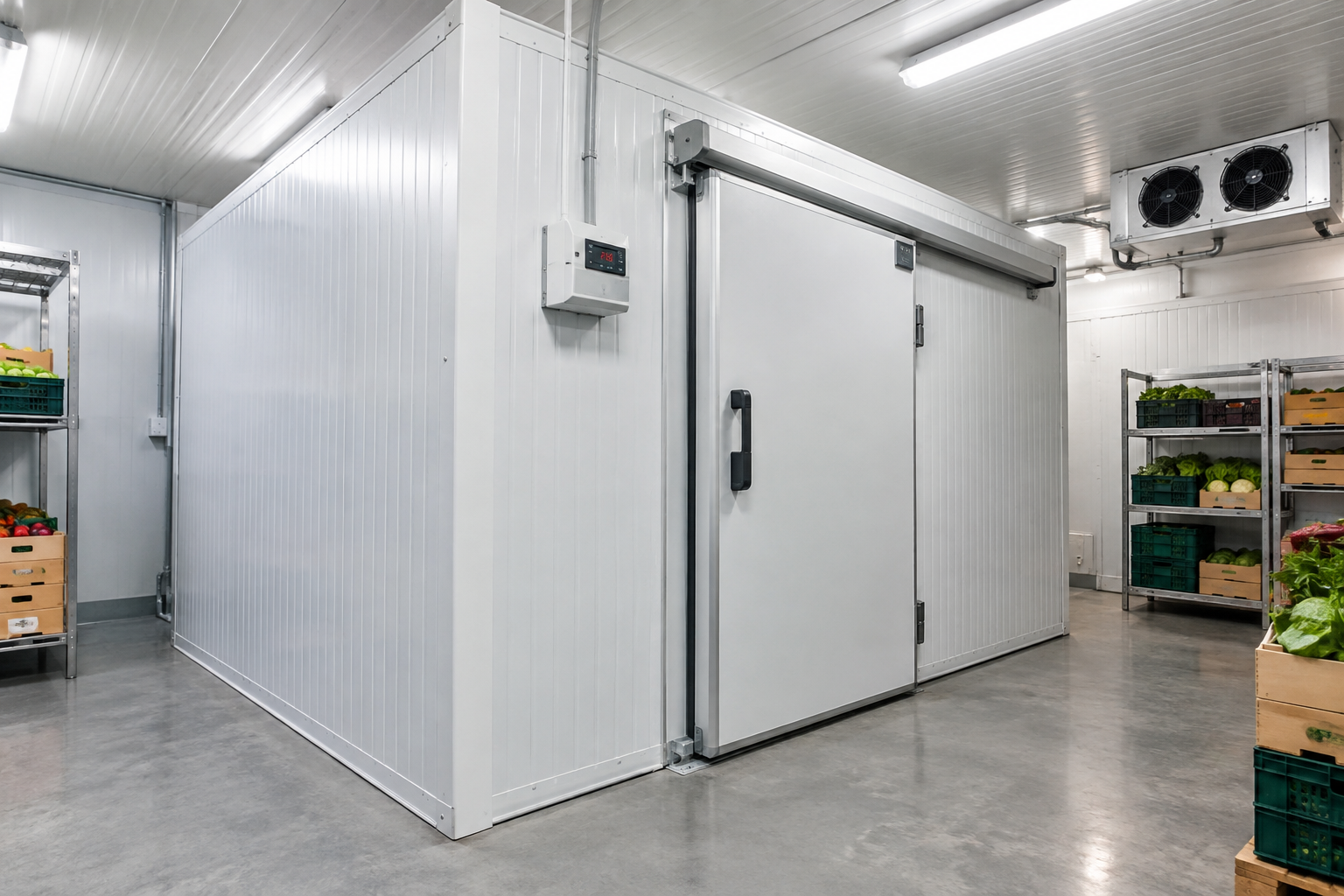
Walk-In Chiller Explained
A walk-in chiller is designed to keep products cold without freezing them. A typical commercial cold room may operate around 2°C to 5°C, although the correct setpoint depends on the products being stored. Danfoss gives approximately 2°C to 5°C as an example range for fresh food storage.
Chillers are commonly used for fresh meat, dairy products, vegetables, prepared foods, drinks and other perishable goods. They are particularly useful where staff need frequent access to stock throughout the working day.
For UK food businesses, the Food Standards Agency states that chilled foods should generally be kept at 5°C or below, while the legal maximum for relevant chilled food storage in England, Wales and Northern Ireland is 8°C.
The important point is that a chiller is designed for cold storage, not frozen storage. Setting one unnecessarily low can increase energy consumption and may damage products that should not freeze.
Walk-In Freezer Explained
A walk-in freezer operates at substantially lower temperatures and is designed to keep food frozen for longer-term storage. A commercial freezer commonly operates around -18°C, with some applications requiring temperatures down to approximately -23°C or lower.
Frozen meat, fish, frozen vegetables, ice cream, prepared frozen meals and other frozen products are typical freezer-room applications.
Freezing slows chemical reactions and stops microorganisms from growing, but it does not necessarily destroy them. The FSA recommends keeping frozen food at -18°C and explains that temperature control remains important for food quality and safe storage.
A freezer also requires different refrigeration characteristics from a chiller. Defrost management, insulation, evaporator selection, door design and temperature recovery all become particularly important at sub-zero temperatures.
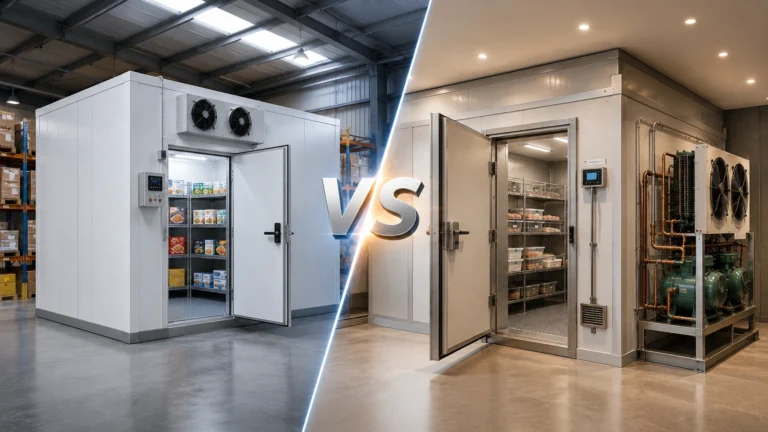
Walk In Freezer vs Walk In Chiller: Key Differences
| Factor | Walk-In Chiller | Walk-In Freezer |
|---|---|---|
| Typical temperature | Around 2°C–5°C | Around -18°C |
| Main purpose | Fresh and chilled storage | Frozen storage |
| Typical products | Meat, dairy, vegetables, drinks, prepared foods | Frozen foods, meat, fish, ice cream |
| Freezing required? | No | Yes |
| Defrost requirements | Generally simpler | More demanding |
| Insulation requirements | High | Higher due to greater temperature difference |
| Energy demand | Generally lower | Generally higher |
| Door management | Important | Extremely important |
| Best suited to | Short-to-medium-term chilled stock | Long-term frozen stock |
The walk in freezer vs walk in chiller decision therefore starts with your product rather than the size of the room.
Which Cold Room Does Your Business Need?
If your business primarily stores fresh food that must remain cold but unfrozen, a walk-in chiller will normally be the appropriate solution. A restaurant receiving fresh meat, dairy and vegetables several times a week is a typical example.
If most of your stock arrives already frozen and needs to remain frozen, a walk-in freezer is the better choice.
Some businesses need both. A busy catering operation, for example, might use a chiller for fresh ingredients and a separate freezer for frozen meat, prepared meals and backup stock. Trying to make one room perform both roles can compromise temperature control and operating efficiency.
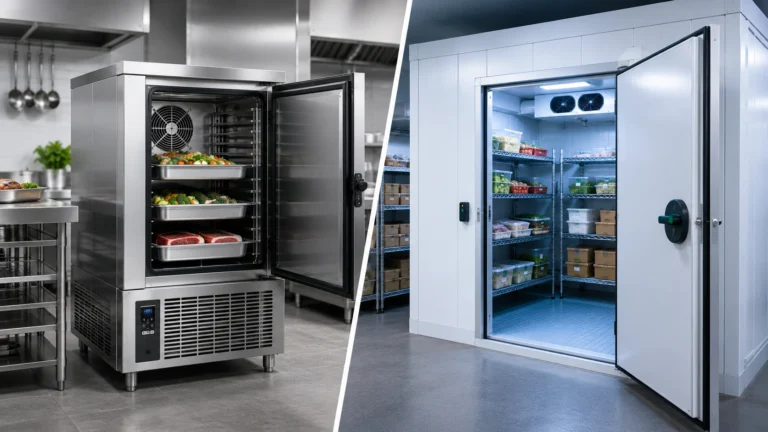
There is also a third possibility: your business may need blast chilling or rapid cooling rather than ordinary cold storage. This is a different application because the objective is to remove heat rapidly from freshly cooked or processed products before they enter normal chilled storage.
Before specifying equipment, consider the product temperature on arrival, maximum daily deliveries, stock turnover, room dimensions, ambient conditions, door openings and whether warm products will be placed inside.
What Does Walk-In Cold Room Installation Involve?
Professional installation involves considerably more than fitting a refrigeration unit to an insulated box.
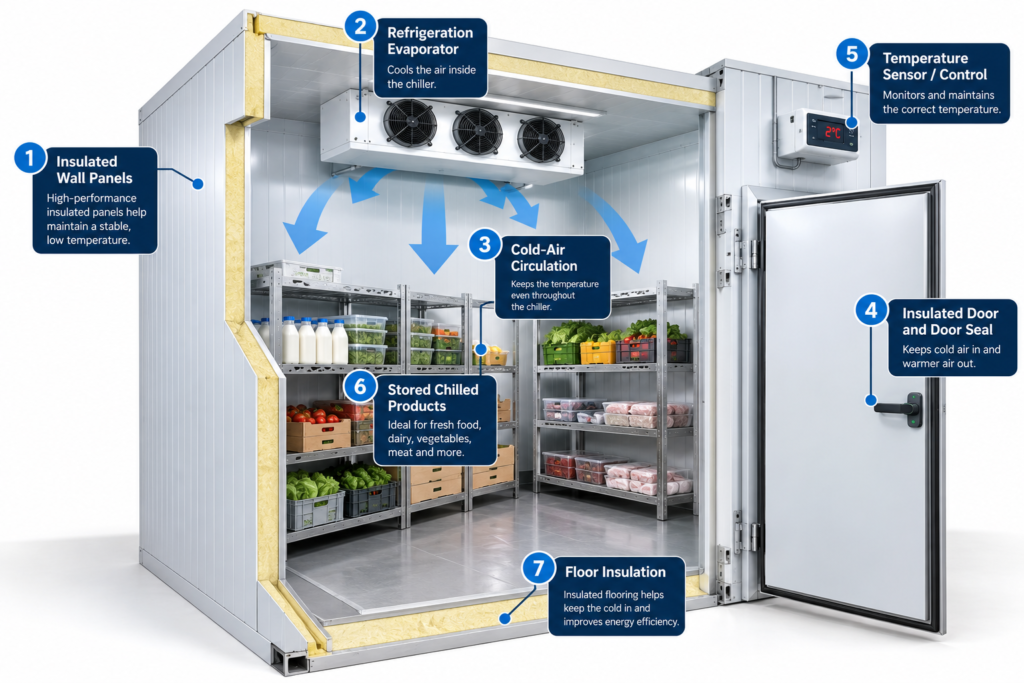
The room needs correctly specified insulated panels, a suitable floor, properly sealed doors, appropriate evaporators and condensing equipment, controls, drainage and electrical connections.
Danfoss identifies insulation panels, refrigeration equipment, doors and seals, electrical controls and flooring as fundamental components of a walk-in cold room.
Correct sizing matters too. An undersized system may struggle to recover after repeated door openings or large deliveries. An oversized system may cycle inefficiently and cost more than necessary.
For businesses looking for walk in freezer installation in London, a proper site assessment is particularly valuable because available space, access routes, ventilation, electrical capacity and the surrounding building environment can all influence the final specification.
Coldroomplus provides bespoke cold-room solutions, including free site surveys within its stated 50-mile radius, with refrigeration technicians qualified for RACHP work.
Energy Efficiency and Maintenance Matter
The cheapest refrigeration system to purchase is not necessarily the cheapest system to operate.
Every time a cold-room door opens, warm air enters and the refrigeration system has to remove that additional heat. Poor door seals, inadequate insulation, excessive frost and dirty heat-exchange surfaces can also reduce efficiency.
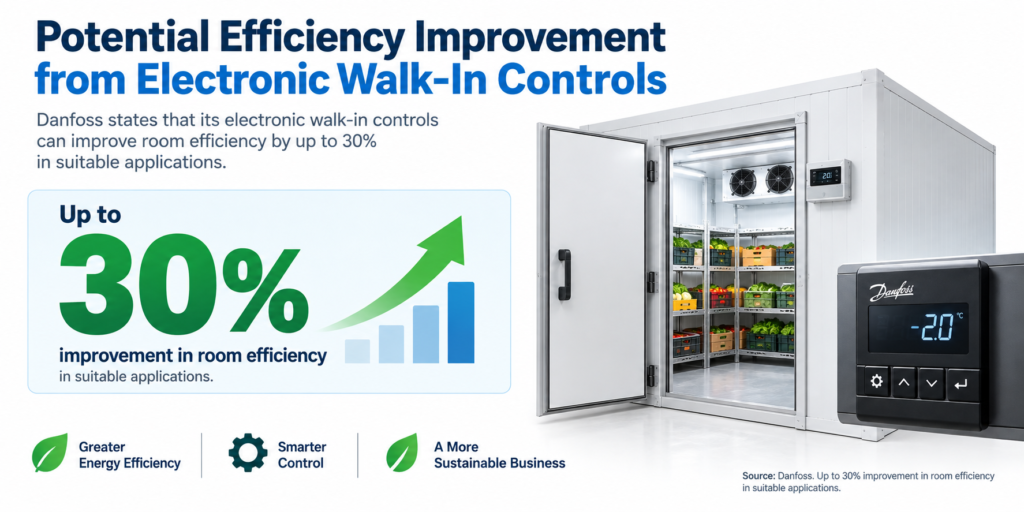
Modern electronic controls can help coordinate compressors, fans and defrost functions more effectively. Danfoss states that its electronic walk-in controls can improve room efficiency by up to 30% in suitable applications, demonstrating why control strategy should be considered alongside the refrigeration hardware.
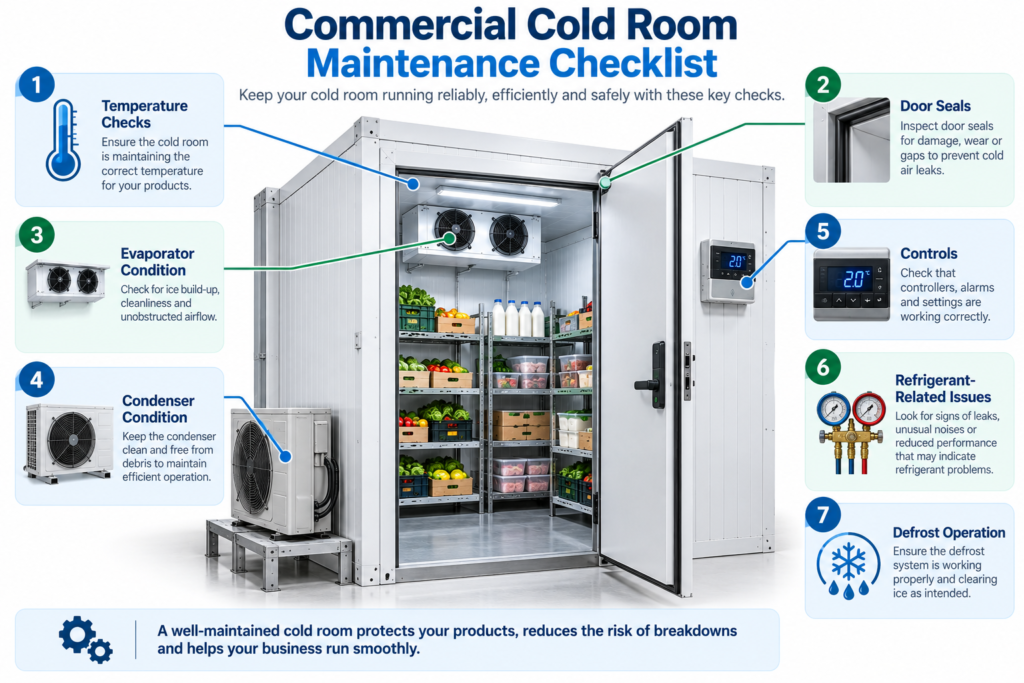
Routine maintenance should include checking temperatures, door seals, evaporator and condenser condition, controls, refrigerant-related issues and defrost operation.
Temperature monitoring is particularly important because a room can appear to be functioning normally while gradually operating outside the required range.
UK Food Safety and F-Gas Considerations
For food businesses, refrigeration is part of the wider food-safety system. The FSA recommends regular temperature monitoring, while local authority guidance commonly recommends maintaining chilled foods at 8°C or below and frozen food at -18°C or below.
Businesses should also consider the qualifications of anyone working on refrigeration equipment containing F-Gas. The UK Government states that individuals need appropriate qualifications to install, service, maintain, leak-check, recover or decommission relevant F-Gas equipment.
Companies servicing stationary F-Gas equipment operated by other businesses must also hold appropriate company certification.
Refrigerant selection is another reason not to treat installation as a simple equipment purchase. UK rules restrict certain high-GWP refrigerants in new equipment, so the system should be specified with current regulatory requirements and future servicing considerations in mind.
Common Buying Mistakes
One of the most common mistakes is choosing the room purely by dimensions. A large room does not automatically need a more powerful system; the refrigeration load depends on the building, product load, ambient conditions and operating pattern.
Another mistake is ignoring door usage. A busy commercial kitchen opening a freezer dozens of times per day has very different requirements from a storage facility that opens its freezer only a few times.
It is also unwise to focus solely on the initial quotation. Insulation quality, controls, refrigerant choice, serviceability, warranty,
spare-parts availability and expected running costs can have a much greater effect over the life of the system.
Key Takeaway
The simplest way to approach the walk in freezer vs walk in chiller question is to start with the storage requirement. If products need to stay fresh and chilled, specify a chiller. If they must remain frozen, specify a freezer. If your operation handles both, separate temperature-controlled environments may provide the safest and most efficient solution.
The right design should then be based on your stock volume, room size, operating pattern, temperature requirements and future business needs rather than choosing equipment from a catalogue alone.
If you are unsure which option fits your premises, would a professional site assessment help you determine the correct cold-room specification before you invest?
FAQs
1. What is the main difference between a walk-in freezer and a walk-in chiller?
A walk-in chiller keeps products cold without freezing them and commonly operates around 2°C to 5°C. A walk-in freezer operates at substantially lower temperatures, typically around -18°C, to maintain frozen products.
2. What temperature should a commercial walk-in chiller be?
A common operating range for fresh-food chillers is approximately 2°C to 5°C. Businesses must also ensure their particular food products remain within applicable food-safety requirements and manufacturer storage instructions.
3. What temperature should a walk-in freezer be?
Commercial frozen-food storage is commonly maintained at approximately -18°C or colder. The exact operating range can vary according to the product, equipment and application.
4. Can a walk-in chiller be used as a freezer?
Not normally. A chiller refrigeration system is designed around positive-temperature storage, whereas freezing requires equipment, insulation, controls and defrost arrangements designed for sub-zero operation.
5. Is a walk-in freezer more expensive to run than a chiller?
It can be because achieving and maintaining sub-zero temperatures generally requires greater refrigeration effort. Actual running costs depend on room size, insulation, ambient conditions, door openings, product loading, equipment efficiency and temperature setpoint.
6. Do walk-in freezers need more maintenance?
They can require additional attention because sub-zero operation introduces issues such as frost and ice accumulation, defrost management and greater sensitivity to door openings and damaged seals. Preventive maintenance helps identify problems before they affect stock.
7. How often should a commercial cold room temperature be checked?
Temperature should be monitored according to the business’s food-safety management procedures and the equipment requirements. The FSA recommends businesses regularly check that refrigeration units are maintaining appropriate temperatures.
8. Does a walk-in freezer need special insulation?
Yes. Freezer rooms require carefully designed insulation and vapour control because the temperature difference between the room and surrounding environment can be significant. Door seals, floors and panel joints are also important to maintaining performance.
9. Does a refrigeration engineer need F-Gas qualifications?
Where relevant F-Gas equipment is involved, the person carrying out regulated work needs the appropriate qualification. GOV.UK specifically includes installation, servicing, maintenance, leak checking and refrigerant recovery among activities requiring relevant qualifications.
10. Should a business choose a chiller or freezer based only on room size?
No. Room dimensions are only one part of the calculation. Product load, delivery temperature, door openings, ambient conditions, required temperature and recovery time should all be considered when specifying the refrigeration system.