Walk-In Freezer Installation Leeds: Everything You Need to Know
When you are investing in a walk-in freezer, you are not just buying storage—you are protecting stock, maintaining compliance, and controlling long-term operating costs. For businesses considering walk in freezer installation Leeds, making the right decisions early can save thousands in energy and prevent costly downtime.
Across the UK, demand for cold storage continues to grow rapidly. The frozen food market growth alone reached around £8.5 billion in retail sales in 2024, highlighting how critical reliable freezing systems have become for businesses of all sizes. At the same time, energy costs for cold storage have surged significantly, making efficiency a top priority.
Why walk-in freezers are essential for Leeds businesses
From restaurants and takeaways to butchers, pharmacies, and food distributors, walk-in freezers play a vital role in daily operations.
They allow businesses to:
- Store large volumes safely
- Reduce food waste
- Buy in bulk and improve margins
- Maintain compliance with food safety standards
For domestic users, walk-in freezers are becoming increasingly popular for bulk storage, home catering setups, and long-term food preservation.
However, not all freezers are equal—and poor planning can lead to inefficiency and unnecessary costs.
Understanding how walk-in freezer sizing works
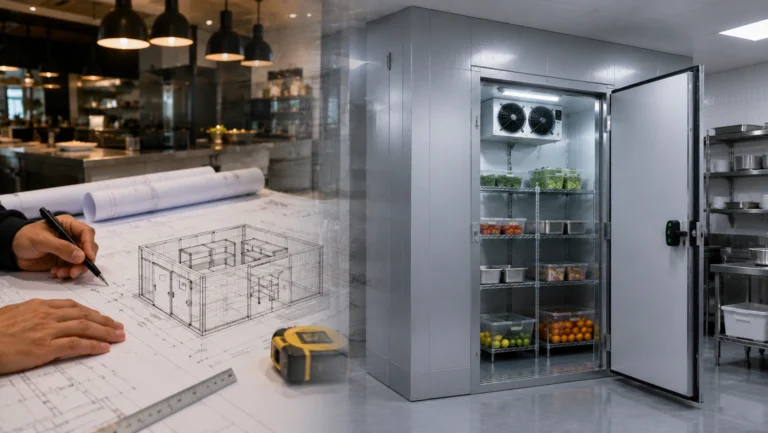
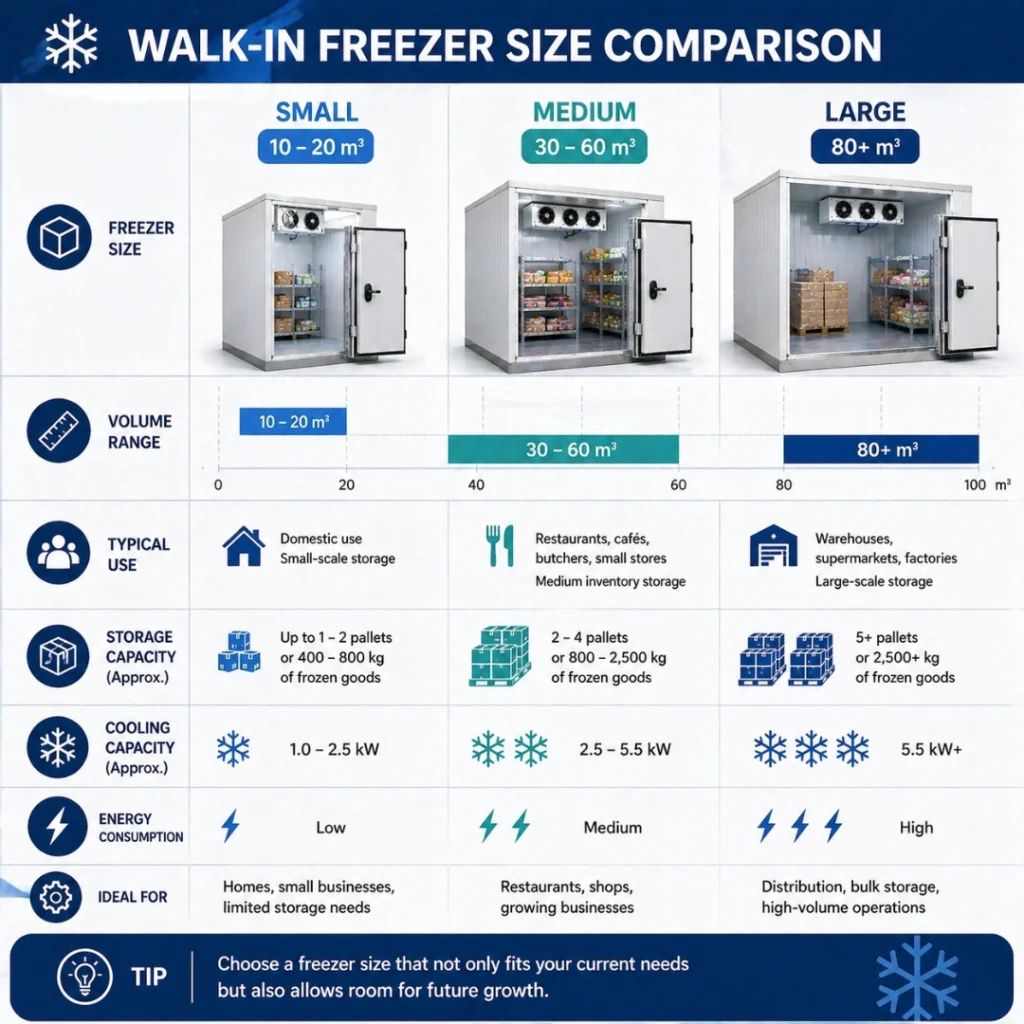
The most important decision in any walk-in freezer installation Leeds project is choosing the right size and capacity.
A common industry approach is:
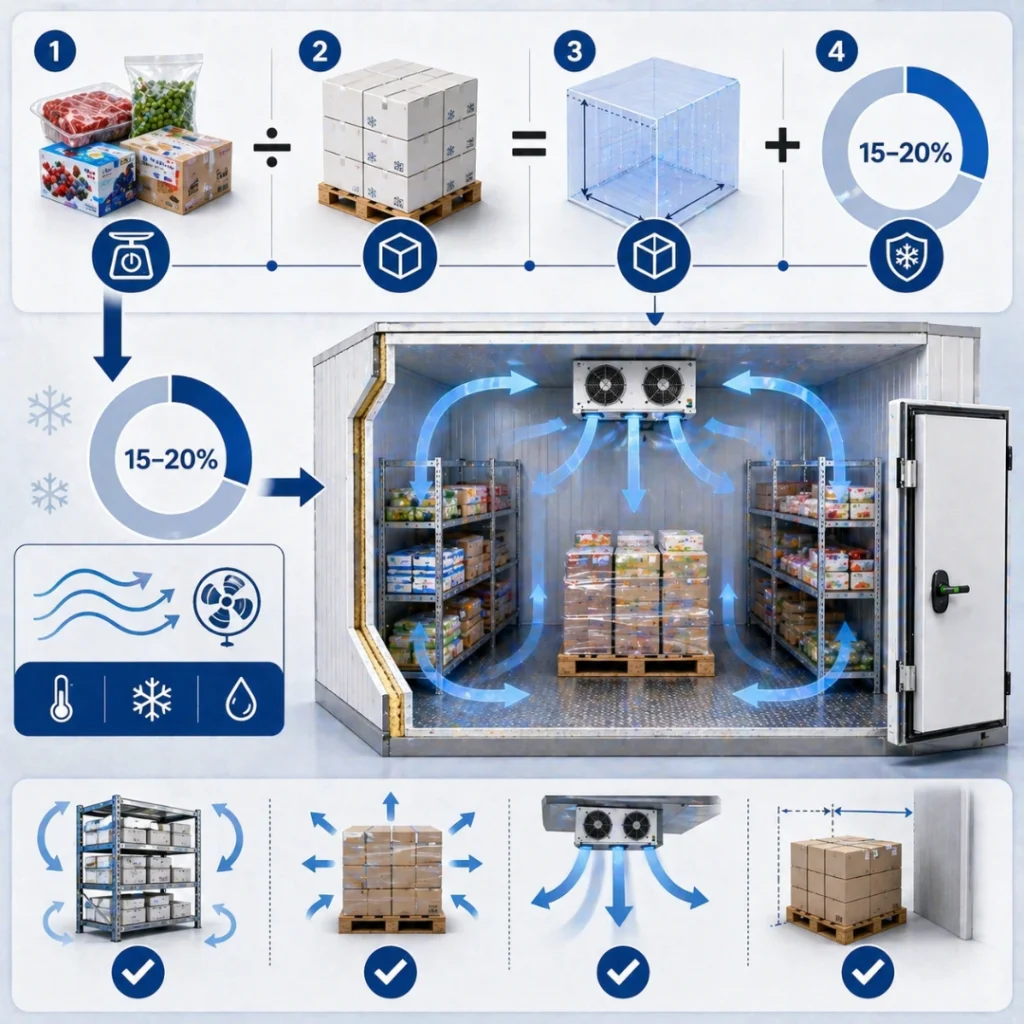
Storage volume (m³) = Stock weight (kg) ÷ product density (kg/m³)
For example:
If you store 8,000 kg of frozen goods at a density of 300 kg/m³, you need roughly 26–27 m³ of base storage.
But that is only part of the picture.
You must also include:
- Air circulation space
- Access aisles
- Shelving or pallet layout
- Future growth buffer (15–20%)
This means your actual freezer size may increase to around 35–40 m³.
Want a tailored recommendation or quick quote? Reach out today
Temperature requirements and why they matter
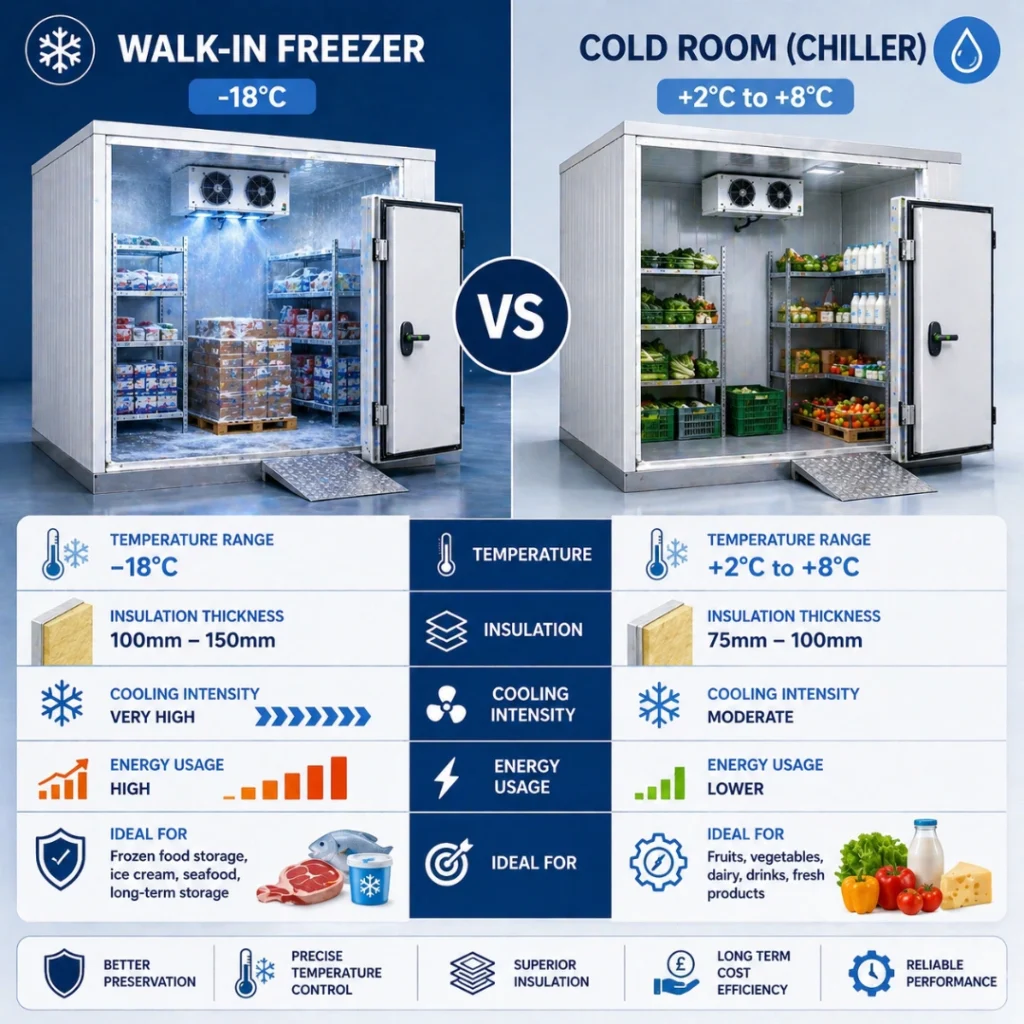
Walk-in freezers operate very differently from chilled cold rooms.
Standard freezer temperature:
-18°C or lower
At this temperature, bacterial growth is effectively halted, making it ideal for long-term storage.
However, maintaining this temperature requires:
- Thicker insulation
- More powerful refrigeration systems
- Better door sealing and usage control
Industry guidance typically recommends 100 mm insulation panels for freezer environments to prevent heat transfer and reduce energy loss.
The real driver: heat load and usage patterns
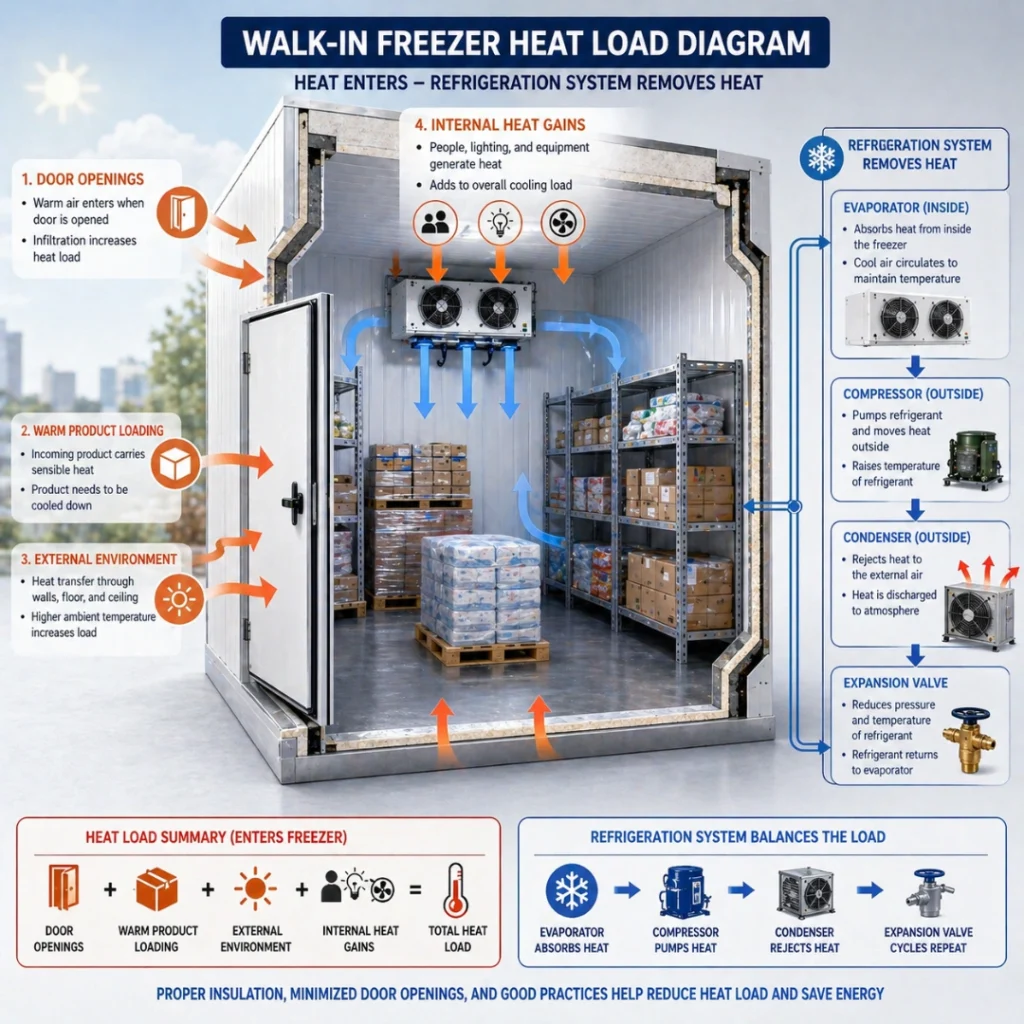
Many businesses assume freezer performance is only about size—but the real factor is heat load.
Heat enters the freezer through:
- Door openings
- Warm products being stored
- Walls, ceiling, and floor
- Lighting and human activity
This is especially important in busy Leeds environments like restaurants and food outlets where doors open frequently.
A freezer used 50 times a day will need significantly more cooling power than one opened only a few times.
Layout planning and internal space efficiency
Even with the right size, poor internal layout can reduce efficiency.
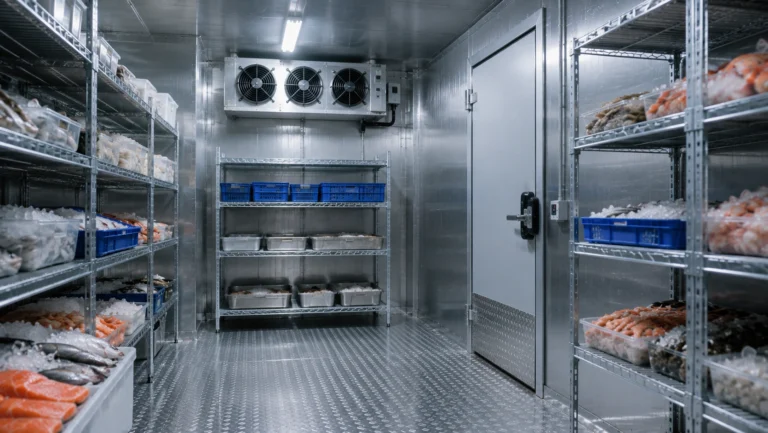
A well-planned freezer should:
- Allow consistent airflow around stored goods
- Keep products below the evaporator airflow path
- Avoid overcrowding
Industry best practice suggests maintaining at least 30 cm clearance below the evaporator unit to ensure proper air circulation.
This is one of the most overlooked factors in walk in freezer installers Leeds projects, yet it directly affects performance.
Energy efficiency: the hidden cost factor
Energy is one of the biggest long-term costs of running a walk-in freezer.
According to UK cold chain data, electricity costs for cold storage facilities increased dramatically in recent years, rising from approximately £560 million in 2021 to over £1.6 billion in 2022.
This makes correct sizing and insulation more important than ever.
An oversized freezer wastes energy.
An undersized freezer overworks the system.
The goal is balance.
Leeds businesses vs domestic freezer needs
Commercial freezer installations focus on:
- High usage frequency
- Large storage capacity
- Compliance with regulations
Domestic installations are typically:
- Smaller in scale
- Lower in usage frequency
- Used for bulk or specialist storage
This is why walk in freezer installation Leeds must always be tailored to usage rather than just available space.
A home user storing frozen meals has very different needs compared to a restaurant handling daily deliveries.
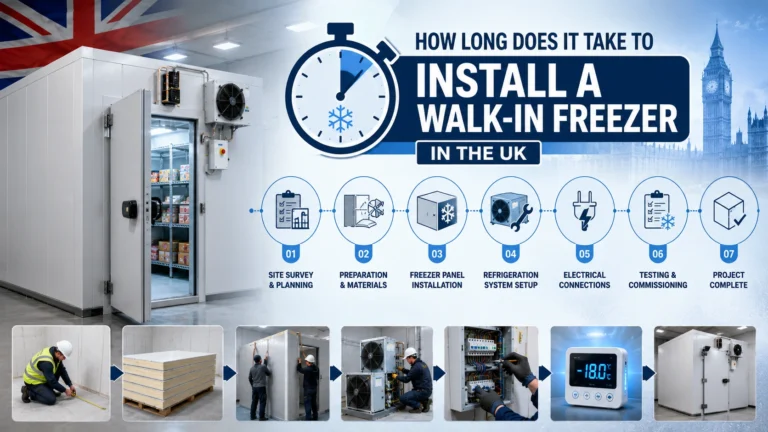
How long does installation typically take?
Most walk-in freezer installations take:
- A few days for smaller units
Up to 1–2 weeks for larger or more complex setups
The timeline depends on size, site conditions, and system requirements.
Proper planning at the start ensures smoother installation and better long-term performance.
What to consider before installing a walk-in freezer
Before committing to a system, it is worth thinking about:
- Your peak storage requirement
- Door usage frequency
- Product type and temperature needs
- Future expansion plans
If these factors are not clearly defined, the freezer may not perform as expected.
Want a tailored recommendation or quick quote? Reach out today
Freezer Size Estimator ❄️
Enter your total stock weight to find your ideal cold room capacity.
Includes a 20% safety buffer for airflow and shelving.
Get a Quote for this SizeFrequently Asked Questions (FAQs)
1. What size walk-in freezer do I need?
The size depends on your maximum storage needs, not average usage. A common method is dividing stock weight by density (around 300 kg/m³ for frozen goods) and adding 15–20% extra space for airflow and access.
2. How much does walk in freezer installation cost in Leeds?
Costs vary depending on size, insulation thickness, and refrigeration requirements. Small units may cost a few thousand pounds, while larger commercial freezers can require a significantly higher investment due to increased capacity and energy demand.
3. What temperature should a walk-in freezer be set at?
A walk-in freezer should typically operate at -18°C or lower to safely preserve frozen goods and meet food safety regulations.
4. How long does it take to install a walk-in freezer?
Most installations take between a few days to two weeks depending on the size, complexity, and site conditions. Proper planning ensures a faster and smoother installation process.
5. What is the difference between walk-in freezer installation and assembly?
Walk in freezer installation Leeds includes the full setup, including refrigeration systems and performance testing. Walk in freezer installers Leeds may also carry out assembly, which focuses on building the insulated panels and structural components.
6. How energy-efficient are modern walk-in freezers?
Modern walk-in freezers are designed to be energy-efficient, especially when correctly sized and insulated. Proper installation can significantly reduce running costs compared to older systems.
7. How does door usage affect freezer performance?
Frequent door openings allow warm air to enter, increasing heat load and energy consumption. High-traffic environments require stronger cooling capacity to maintain consistent temperatures.
8. Can walk-in freezers be used in domestic settings?
Yes, walk-in freezers are increasingly used in homes for bulk food storage, home catering businesses, and long-term preservation needs. Domestic units are usually smaller and less frequently used than commercial ones.
9. What insulation thickness is required for a walk-in freezer?
Typically, freezer panels are around 100 mm thick to maintain low temperatures efficiently and minimise heat transfer.
10. Do I need planning permission for a walk-in freezer in Leeds?
In most cases, internal installations do not require planning permission. However, external units or large commercial installations may need approval depending on local regulations.