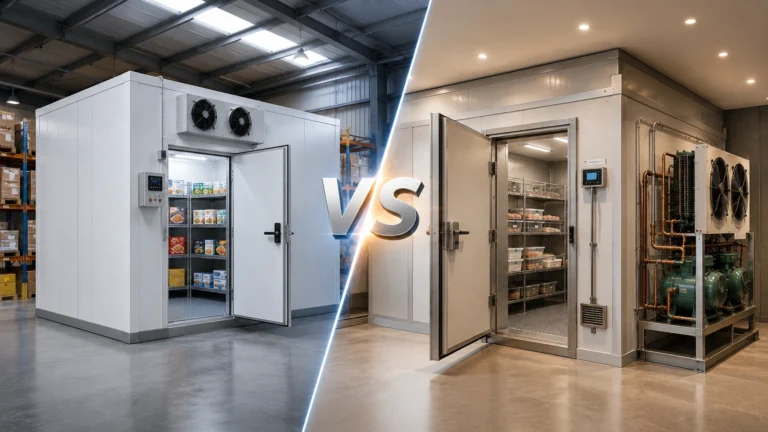
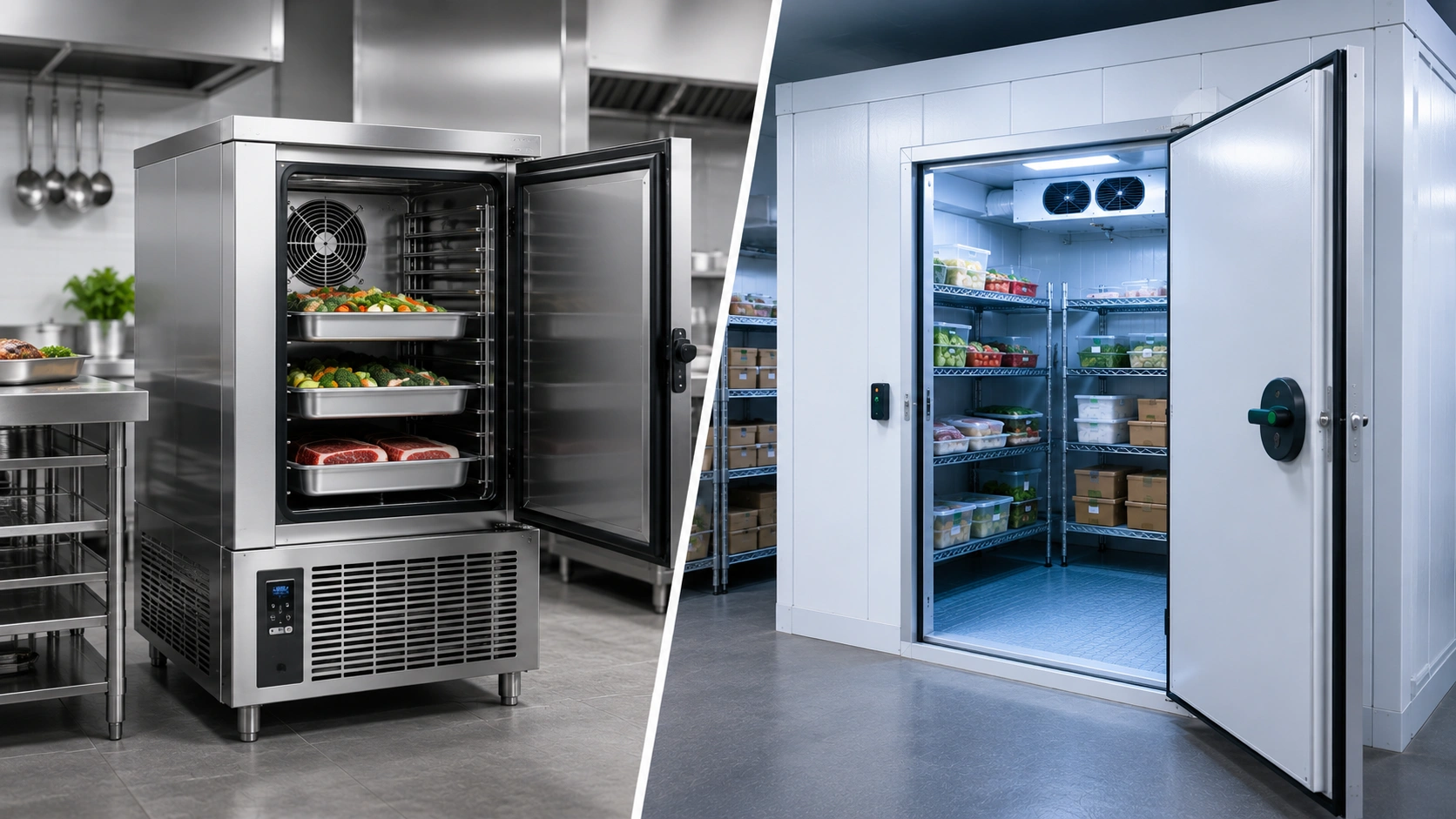
Blast Chiller vs Walk-In Freezer: Which Do You Need?
When it comes to commercial refrigeration, choosing between a blast chiller and a walk-in freezer can directly impact food safety, operational efficiency, energy costs, and long-term profitability. Many restaurant owners, caterers, food manufacturers, florists, and even homeowners assume these systems do the same job. In reality, they serve very different purposes.
If you are planning a new refrigeration setup or upgrading your existing cold storage system, understanding the difference between a blast chiller and a walk-in freezer is essential before investing in equipment.
At Coldroomplus, businesses across the UK regularly ask which solution delivers the best performance for their operation. The answer depends on what you store, how quickly products need cooling, and your daily workflow.
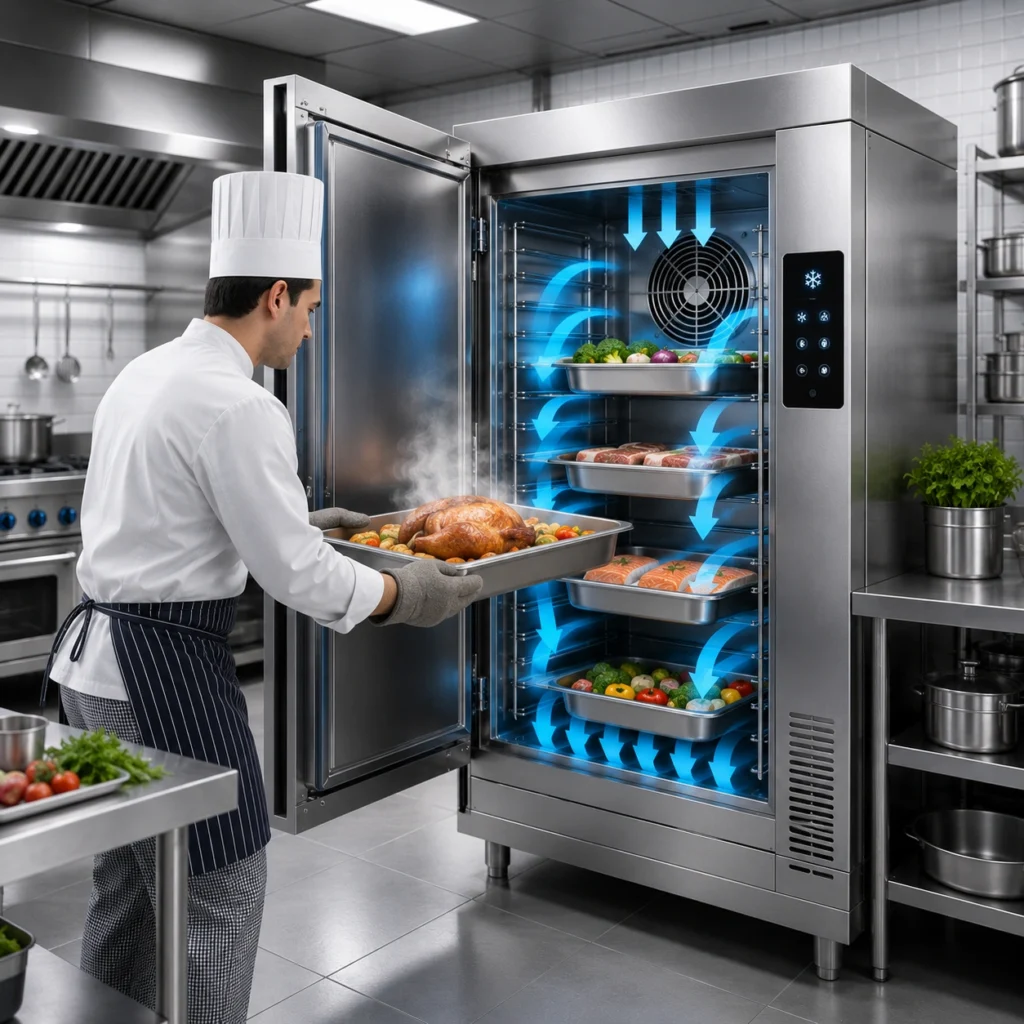
Understanding What a Blast Chiller Does
A blast chiller is designed to reduce the temperature of hot food rapidly. Instead of slowly cooling food at room temperature, the system pushes cold air aggressively around products to move them through the “danger zone” quickly.
According to the UK Food Standards Agency, food should be cooled from 63°C to below 8°C as quickly as possible to reduce bacterial growth risks. Rapid chilling significantly lowers contamination risks in commercial kitchens.
A blast chiller is commonly used in:
- Restaurants
- Hotels
- Catering facilities
- Bakeries
- Meal prep companies
- Food production units
- Domestic luxury kitchens
The primary purpose is not long-term frozen storage. It is rapid temperature reduction while maintaining food quality, texture, and safety.
What Is a Walk-In Freezer?
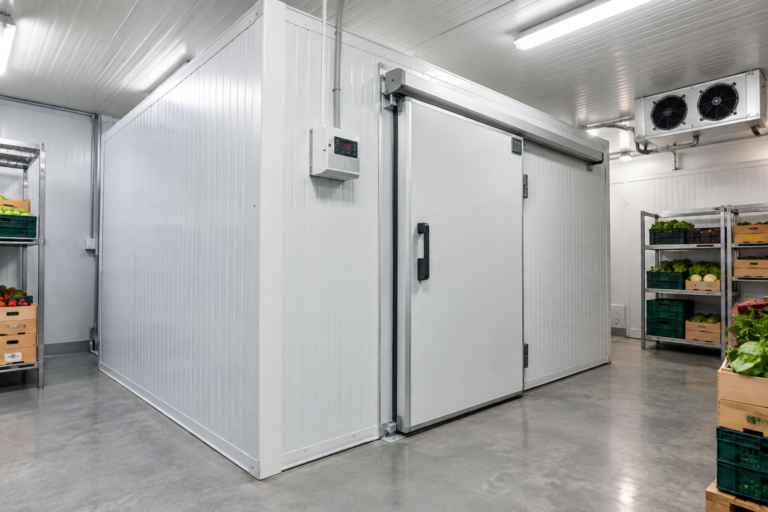
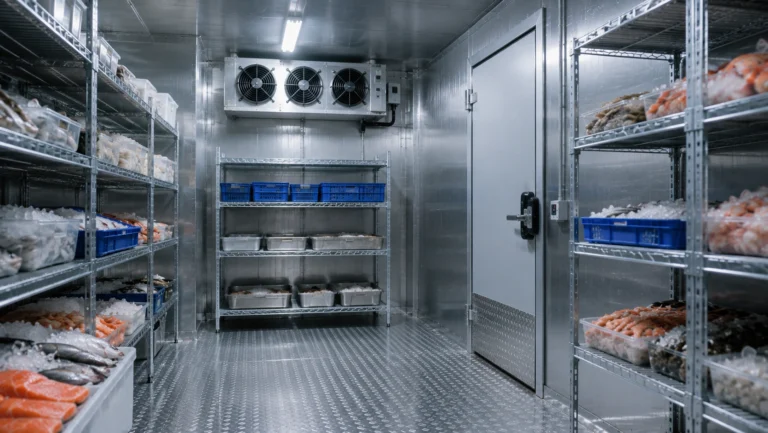
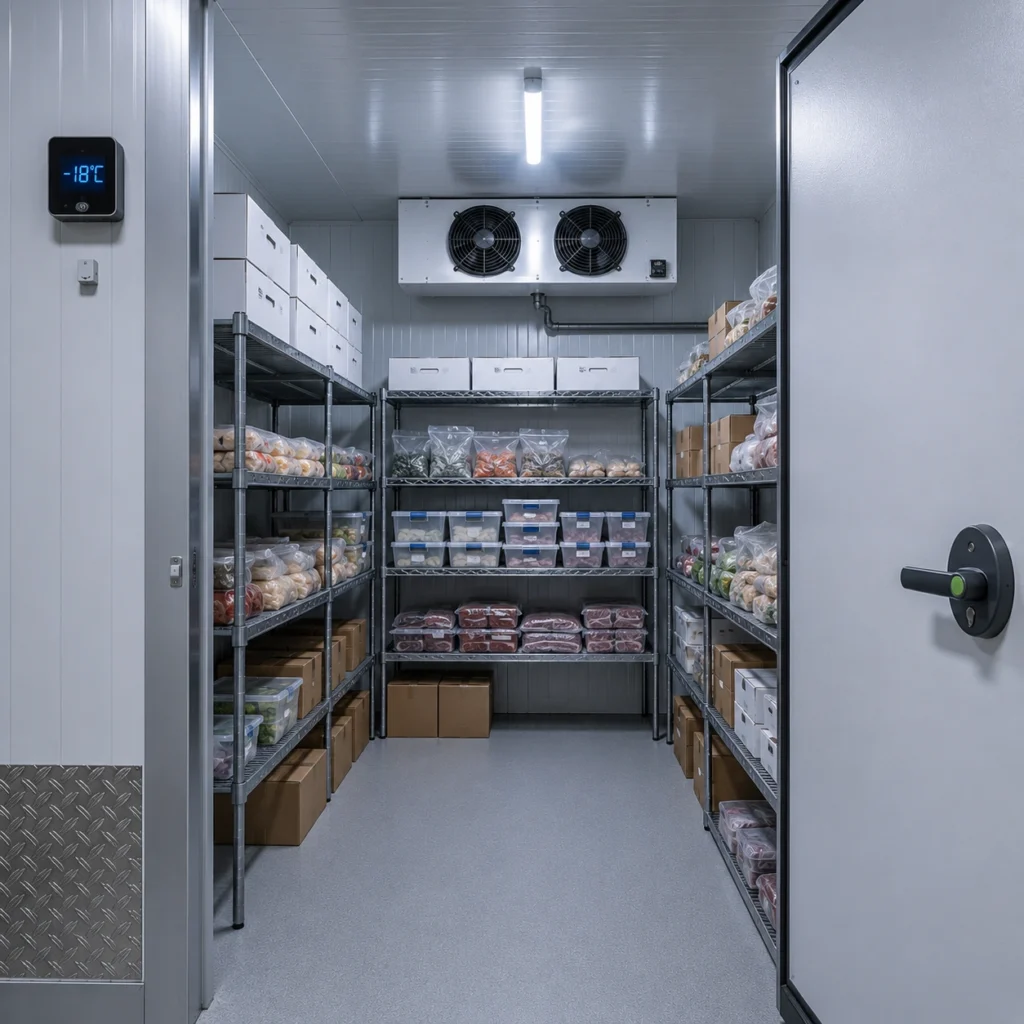
A walk-in freezer is a large insulated cold storage room designed to hold products at frozen temperatures over long periods.
Unlike blast chillers, walk-in freezers maintain stable low temperatures for bulk storage. They are ideal for businesses needing consistent frozen inventory management.
Industries commonly using walk-in freezers include:
- Restaurants
- Supermarkets
- Butchers
- Pharmaceutical facilities
- Warehouses
- Floral businesses
- Residential luxury properties
Walk-in freezers are built for storage capacity rather than rapid cooling speed.
The Biggest Difference Between a Blast Chiller and Walk-In Freezer
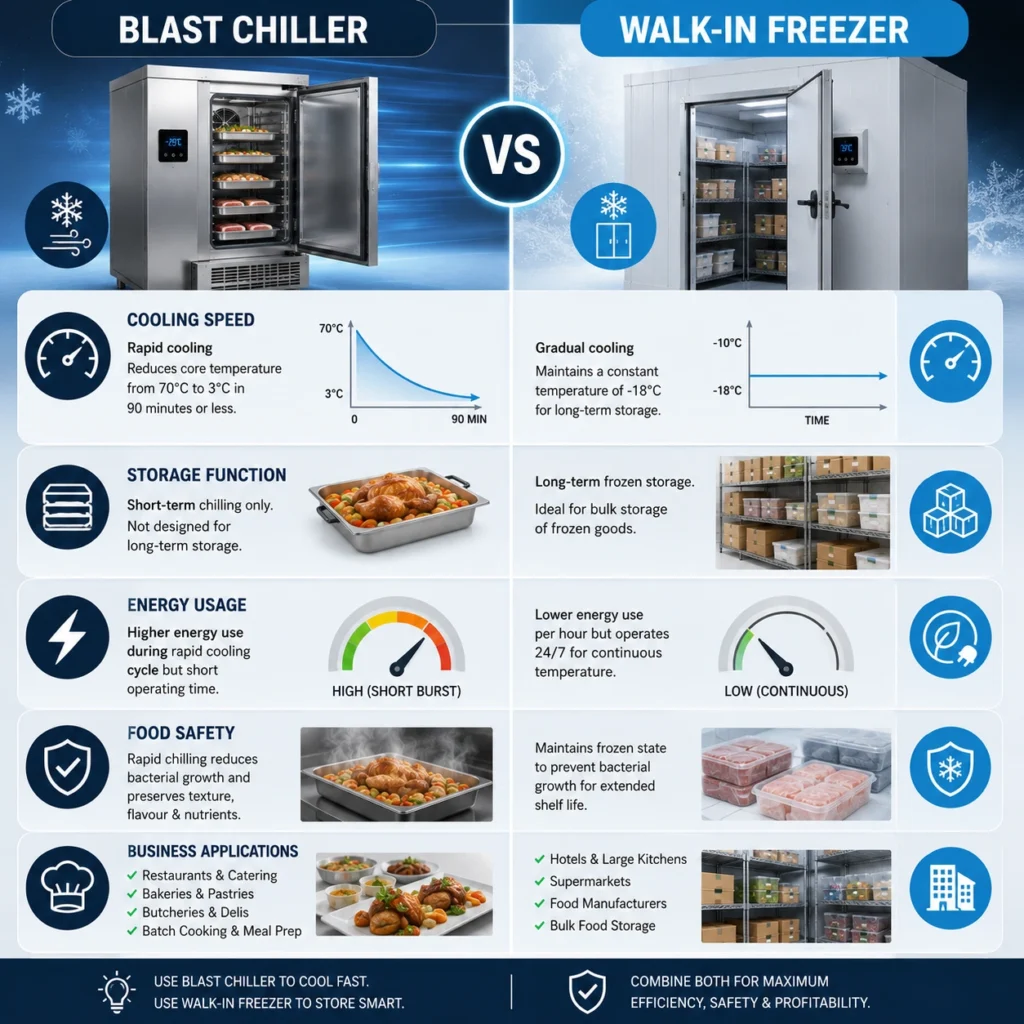
The key difference comes down to cooling speed versus storage capacity.
Feature | Blast Chiller | Walk-In Freezer |
Main Purpose | Rapid cooling | Long-term frozen storage |
Cooling Speed | Extremely fast | Slow gradual cooling |
Typical Temperature | +3°C to -40°C | Around -18°C |
Food Safety Function | Prevents bacterial growth | Maintains frozen products |
Best For | Freshly cooked foods | Bulk frozen inventory |
Usage Duration | Short-term process | Continuous storage |
A blast chiller works as part of the food preparation process. A walk-in freezer works as part of inventory management.
Want a tailored recommendation or quick quote? Reach out today
Why More UK Restaurants Are Investing in Blast Chillers
The UK foodservice sector continues to adopt blast chilling technology rapidly due to stricter food safety compliance and labour efficiency.
According to market research from Grand View Research, the global blast chiller market is projected to exceed £2 billion within the next few years due to increasing demand from commercial kitchens and food production facilities.
Restaurants benefit because blast chilling allows chefs to:
- Prepare food in larger batches
- Reduce waste
- Improve consistency
- Extend shelf life
- Reduce contamination risks
- Increase kitchen productivity
Studies from food preservation research show rapid chilling can extend refrigerated shelf life by up to 3 times compared to traditional cooling methods.
For busy restaurants in Leeds, this can dramatically improve operational efficiency.
When a Walk-In Freezer Makes More Sense
If your business handles large frozen stock volumes, a walk-in freezer becomes essential.
For example:
A supermarket storing frozen goods daily needs constant frozen storage rather than rapid cooling technology.
Similarly, butchers, seafood suppliers, and frozen meal distributors rely on large-capacity walk-in freezer systems for inventory preservation.
The British Frozen Food Federation reports that frozen food sales in the UK continue to grow year-on-year due to reduced waste and consumer demand for convenience foods.
This means more businesses now require reliable commercial freezer systems capable of handling increased stock levels efficiently.
Energy Consumption: Which System Costs More?
Energy efficiency is one of the biggest considerations for businesses.
Blast chillers consume intense short-term energy because they rapidly remove heat from products. However, they operate in cycles rather than continuously.
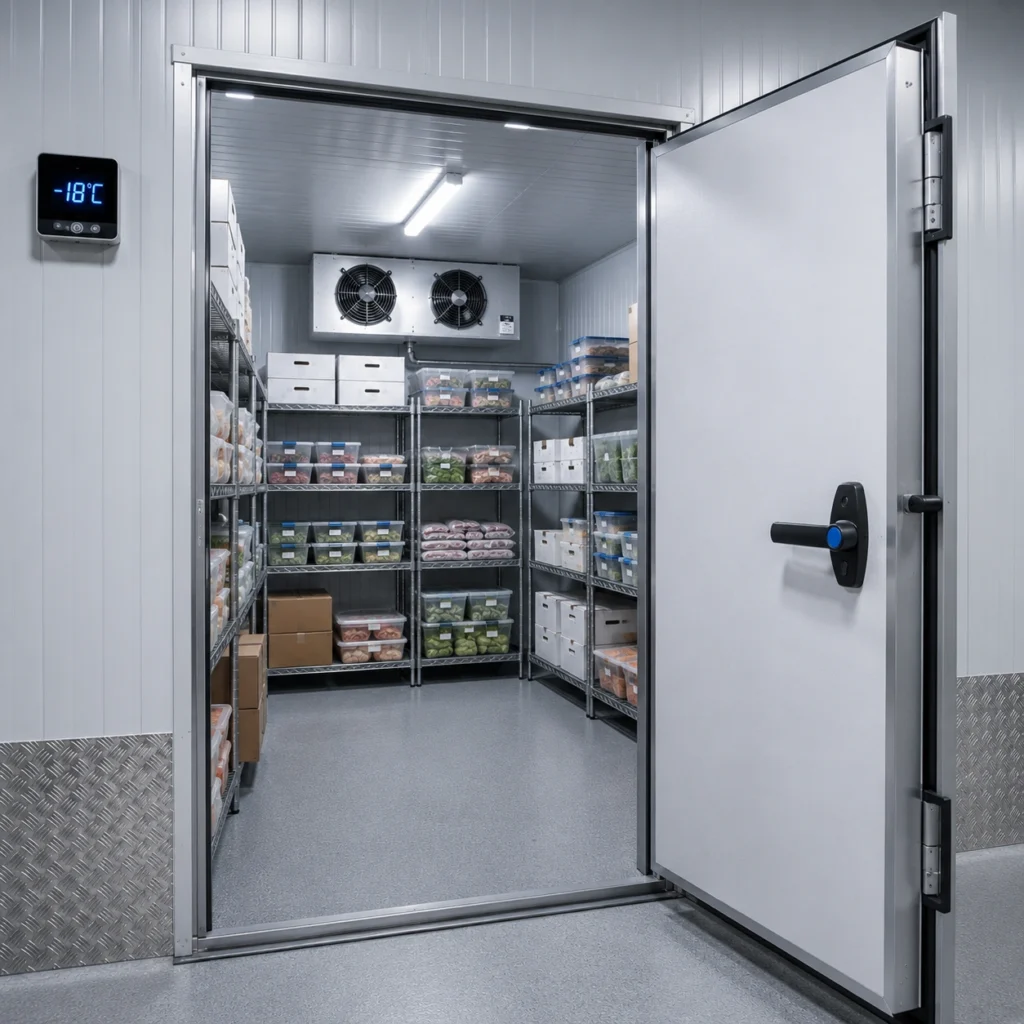
Walk-in freezers consume lower cooling intensity but run continuously 24/7.
The actual running cost depends on:
- Insulation quality
- Compressor efficiency
- Door usage frequency
- Ambient room temperature
- System sizing
- Installation quality
The Carbon Trust estimates refrigeration can account for up to 50% of energy usage in food businesses. Poorly installed refrigeration systems often create significant unnecessary operating costs.
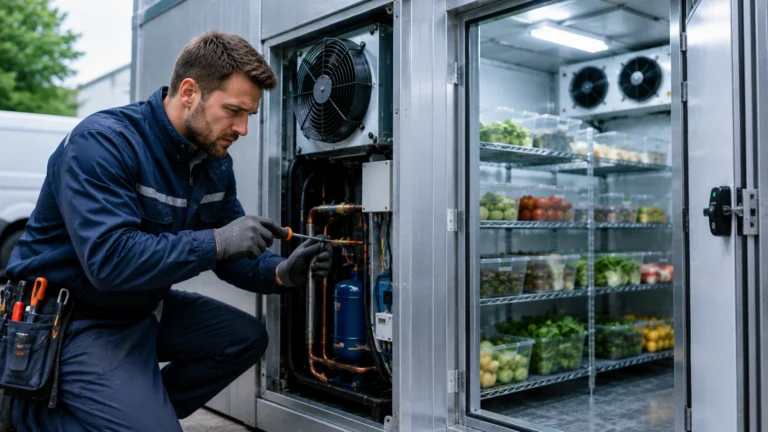
This is why professional blast chiller installation and walk-in freezer installation are critical for long-term efficiency.
Which Option Is Better for Food Safety?
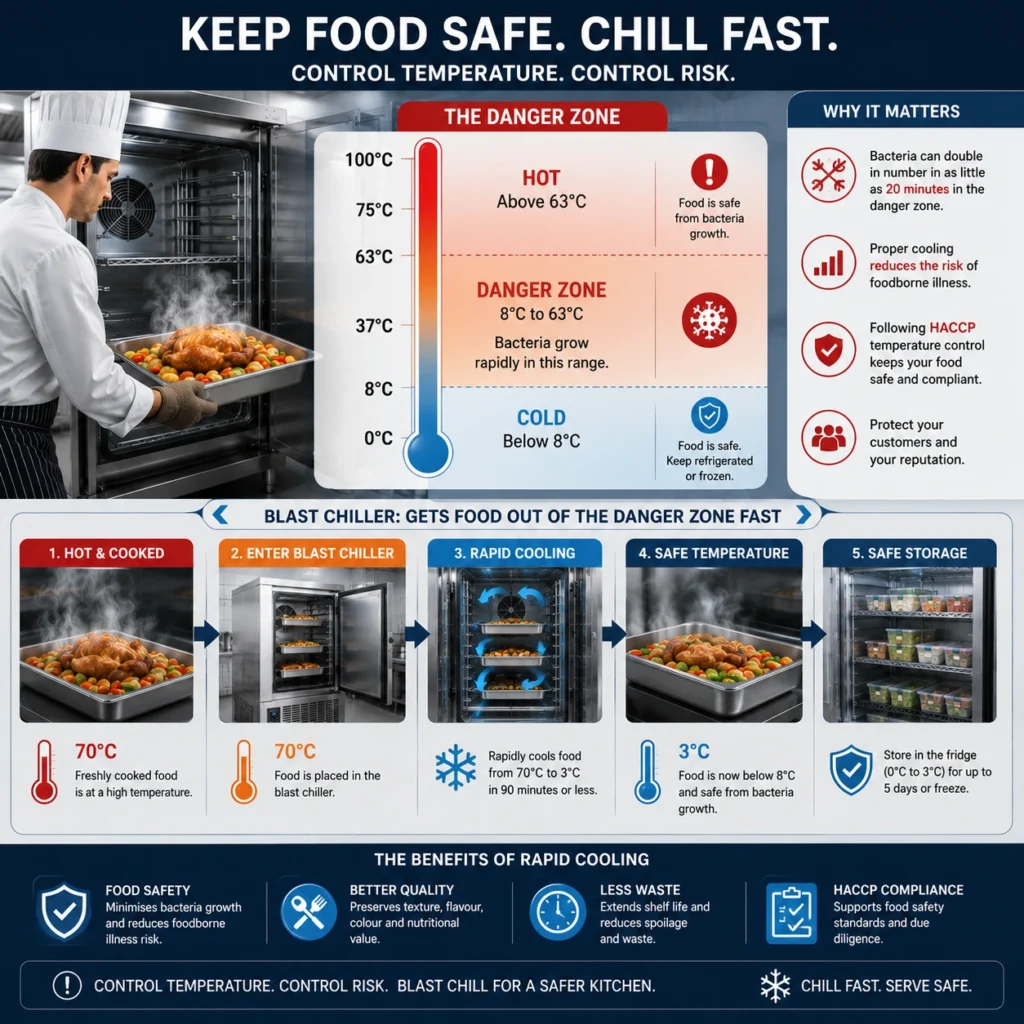
Food safety regulations heavily favour blast chilling for cooked food handling.
Rapid cooling helps prevent bacteria such as:
- Salmonella
- Listeria
- E. coli
The danger zone for bacterial growth typically sits between 8°C and 63°C.
A blast chiller rapidly moves food out of this temperature range.
Here is the principle behind rapid cooling:
The faster the cooling coefficient k, the faster food exits unsafe temperature zones.
Walk-in freezers cannot cool hot food efficiently because introducing hot products raises internal temperatures and stresses the refrigeration system.
That is why many commercial kitchens use both systems together.
Can Domestic Customers Benefit Too?
Absolutely.
High-end residential kitchens increasingly install compact blast chillers and small walk-in freezer systems.
Domestic users benefit from:
- Batch cooking convenience
- Better food preservation
- Reduced food waste
- Meal prep efficiency
- Faster beverage chilling
Luxury homes with outdoor kitchens, large families, or private chefs often install these systems for convenience and food quality control.
Should You Choose Both?
For many commercial businesses, the best answer is not either-or.
It is both.
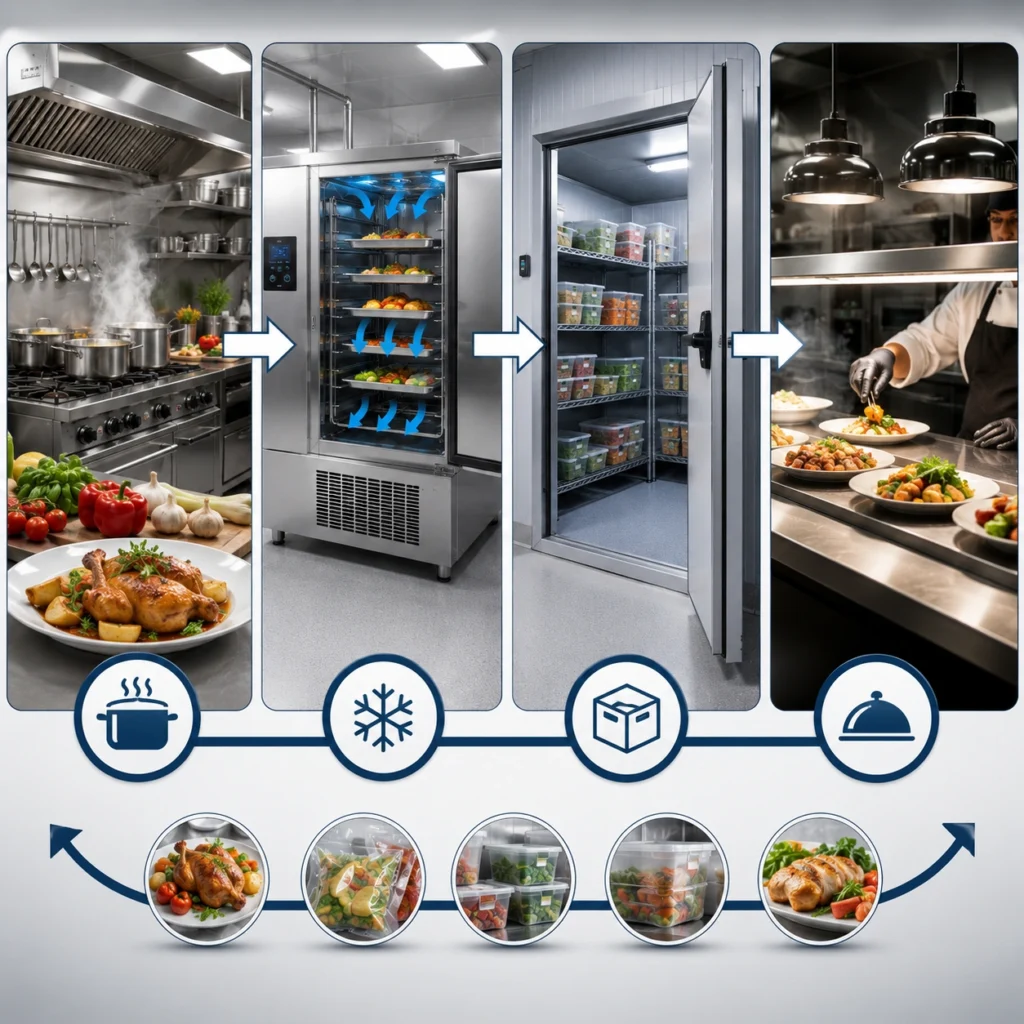
A common setup looks like this:
- Food is cooked
- Blast chilled rapidly
- Moved into refrigerated or frozen storage
- Reheated when needed
This workflow improves:
- Kitchen efficiency
- Compliance
- Product consistency
- Labour management
- Stock control
Restaurants operating high-volume prep kitchens often see major operational improvements using this combined approach.
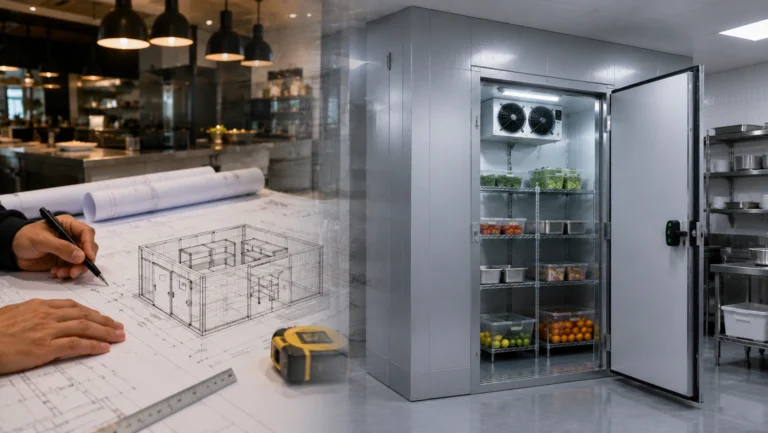
Installation Matters More Than Most Businesses Realise
Even the best refrigeration equipment performs poorly if installed incorrectly.
Professional blast chiller installation ensures:
- Proper airflow
- Correct ventilation
- Efficient drainage
- Accurate temperature calibration
- Compliance with UK regulations
Similarly, professional walk-in freezer installation prevents:
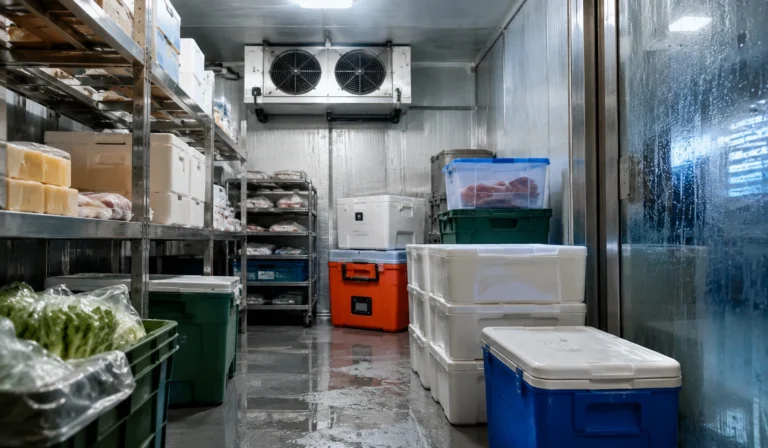
- Ice build-up
- Temperature fluctuations
- Excessive energy consumption
- Premature compressor failure
Incorrect installation is one of the biggest causes of refrigeration breakdowns in UK commercial kitchens.
Want a tailored recommendation or quick quote? Reach out today
What Businesses Around Leeds Are Choosing Today
Many restaurants and food businesses across Leeds are increasingly moving toward integrated refrigeration systems rather than relying on traditional storage alone.
As delivery kitchens, catering operations, and food prep businesses grow, rapid cooling technology has become a competitive advantage rather than a luxury.
Businesses investing in properly specified refrigeration systems often experience:
- Lower waste
- Better compliance
- Improved workflow
- Reduced long-term repair costs
- Better product quality
Choosing the right solution starts with understanding how your business actually operates day to day.
FAQs – Blast Chiller vs Walk-In Freezer
1. What is the main difference between a blast chiller and a walk-in freezer?
A blast chiller rapidly cools hot food to safe temperatures to reduce bacterial growth, while a walk-in freezer is designed for long-term frozen storage. Blast chillers focus on food safety and fast cooling, whereas walk-in freezers focus on preserving large quantities of frozen stock.
2. Do restaurants need both a blast chiller and a walk-in freezer?
Many restaurants benefit from using both systems together. A blast chiller cools freshly cooked food quickly, and the walk-in freezer stores products safely for longer periods. This setup improves kitchen efficiency, food safety, and stock management.
3. Is a blast chiller worth it for small businesses?
Yes. Small restaurants, bakeries, catering companies, and meal prep businesses can reduce food waste, improve food quality, and prepare larger batches more efficiently with a blast chiller. It can also help businesses meet UK food safety regulations.
4. How much does blast chiller installation cost in the UK?
The cost of blast chiller installation depends on factors such as unit size, cooling capacity, ventilation requirements, and electrical setup. Commercial blast chillers typically cost more than standard refrigeration systems because they require rapid cooling technology and professional installation.
5. How cold is a walk-in freezer?
Most commercial walk-in freezers operate at around -18°C, which is the recommended temperature for frozen food storage. Some specialist systems may operate at even lower temperatures depending on the products being stored.
6. What businesses use walk-in freezers?
Walk-in freezers are commonly used by:
- Restaurants
- Supermarkets
- Butchers
- Hotels
- Food distributors
- Pharmaceutical companies
- Floral businesses
- Warehouses
They are ideal for storing large volumes of frozen goods safely and efficiently.
7. Can a walk-in freezer replace a blast chiller?
No. A walk-in freezer is not designed to cool hot food rapidly. Placing hot food directly into a freezer can increase internal temperatures, affect stored products, and strain the refrigeration system. Blast chillers are specifically designed for rapid temperature reduction.
8. Does a blast chiller improve food safety?
Yes. Blast chillers rapidly move food through the bacterial danger zone between 8°C and 63°C. This helps reduce the risk of bacteria such as Salmonella, Listeria, and E. coli developing in cooked food.
9. Are walk-in freezers energy efficient?
Modern walk-in freezers can be highly energy efficient when properly installed and maintained. Energy performance depends on insulation quality, door usage, compressor efficiency, and correct system sizing.
10. How long does blast chiller installation take?
Most blast chiller installations can be completed within one day, depending on the site layout, electrical requirements, ventilation setup, and system size.
11. Can domestic customers install blast chillers at home?
Yes. Compact blast chillers are becoming increasingly popular in luxury residential kitchens for meal prep, batch cooking, and food preservation.
12. How long do walk-in freezers last?
A professionally installed and well-maintained walk-in freezer can last between 15 and 25 years. Regular servicing helps improve performance and reduce breakdown risks.