
Cold Room Solutions for UK Restaurants: Everything You Need to Know
Running a busy restaurant in Leeds, London, or anywhere across the UK comes with relentless pressure—tight margins, evolving food safety regulations, and energy bills that seem to climb every quarter. Walk into any thriving commercial kitchen and, behind the pass, you will find the real workhorse: a well-designed cold room.
If you are currently juggling multiple upright fridges, struggling with inconsistent temperatures, or facing an upcoming Environmental Health inspection with some anxiety, this guide is for you. We have gathered the latest data and practical insights to help business owners—whether you operate a restaurant or are exploring domestic cold storage for the first time—understand what makes a cold room solutions genuinely effective.

Why UK Restaurants Are Moving Beyond Standard Refrigeration
The UK cold storage market is expanding at an extraordinary pace. According to Grand View Research, the market generated USD 7,097.1 million in revenue in 2025 and is projected to reach USD 20,538.0 million by 2033, growing at a compound annual growth rate (CAGR) of 14.2%. Spherical Insights similarly estimates the market could hit USD 29,631.5 million by 2035, with a CAGR of 15.13% from 2025 onward.
Behind these figures is a simple truth: the UK hospitality sector loses approximately £3.2 billion every year to food waste, with the average venue throwing away roughly £10,000 annually in spoiled stock. A significant portion of that waste is preventable through better cold storage. At the same time, the Cold Chain Federation’s 2024 report found that nearly half of all food and beverages produced in the UK (49%) require chilling or freezing, and the cold chain contributes £14 billion to UK GDP.
A dedicated cold room solution does more than keep stock chilled—it directly impacts your bottom line by slashing spoilage, centralising inventory, and cutting the energy drain of running multiple standalone units.
Temperature Compliance: The Non-Negotiable Foundation
UK food safety legislation is unambiguous. The Food Hygiene (England) Regulations 2013 and retained Regulation (EC) No. 852/2004 require all food businesses to store perishable goods within strict temperature bands.
Storage Type | Legal Limit (UK) | Best Practice Range |
Chilled / Refrigerated | 8°C or below | 0°C to 5°C |
Frozen | –18°C or below | –18°C to –24°C |
Chill cold rooms should operate between 0°C and +5°C, while freezer rooms must maintain –18°C to –24°C to satisfy both the Food Standards Agency (FSA) guidance and the Food Hygiene Regulations 2006. Most experienced kitchen operators target 1°C to 4°C for chilled storage, creating a safety buffer that protects against minor fluctuations during busy service periods.
Compliance is not just a legal box to tick. Failure to maintain these temperatures can result in enforcement action, fines, or temporary closure. It also puts your reputation at risk—one temperature breach can damage customer trust permanently.

Choosing the Right Cold Room Solution: Chiller, Freezer, or Both?
Cold rooms fall into three broad categories, and the right choice depends entirely on your menu, volume, and operational workflow.
Cold Room Chillers
Cold Room Chillers maintain temperatures between +2°C and +8°C. They are ideal for fresh produce, dairy, cooked and marinated foods, ready-to-eat meals, and beverages. If your restaurant depends on fresh ingredients with short shelf lives and frequent restocking, a chiller is essential.
Cold Room Freezers
Cold Room Freezers operate at –18°C or lower. They suit long-term storage of raw meat and seafood, frozen vegetables, ice cream, bulk-prepared meals, and backup inventory. They extend shelf life significantly and allow for bulk buying—a powerful cost-control lever in an era of volatile food prices.
Dual-compartment modular cold rooms
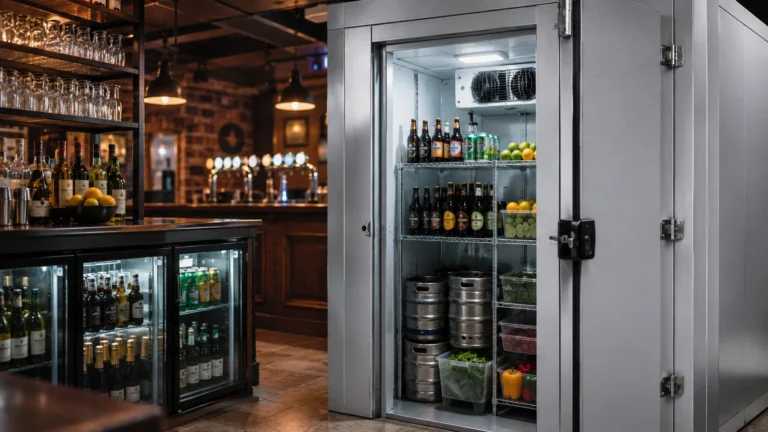
Dual-compartment modular cold rooms combine a chiller and a freezer in one footprint, with separate doors, insulated partitions, and independent controls. These systems are particularly effective for restaurants that need both types of storage but want to save space and reduce installation costs.
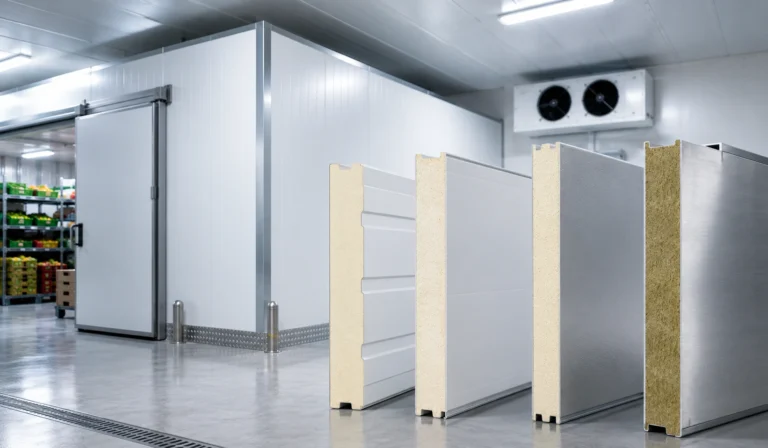
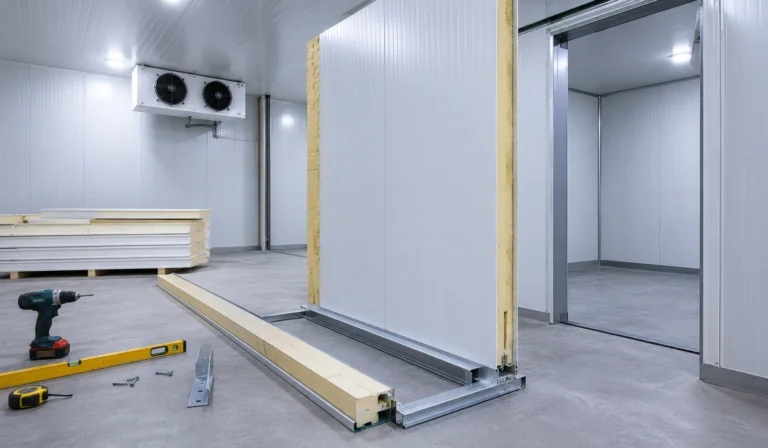
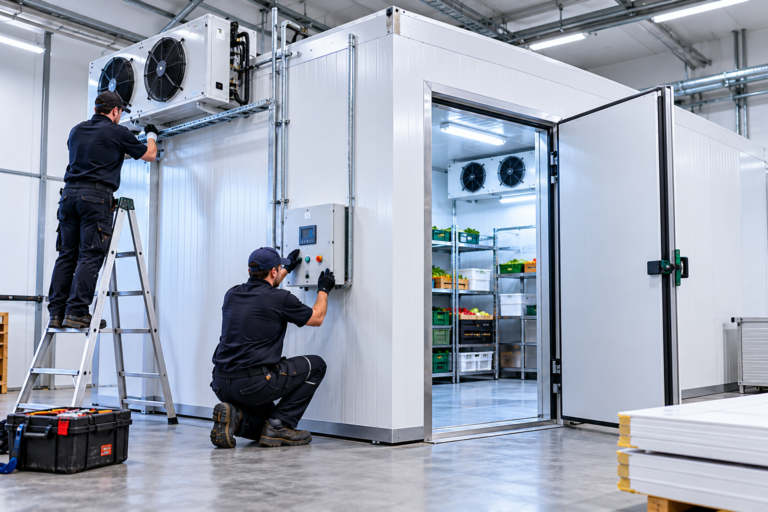
If you require flexibility and scalability—whether you are planning to relocate, expand, or simply want minimal disruption during installation—modular cold rooms offer significant advantages over traditional walk-in builds. Modular systems use prefabricated insulated panels that lock together, allowing rapid assembly in as little as a few days rather than several weeks. They can also be disassembled and relocated, something a permanent walk-in simply cannot offer.
Want a tailored recommendation or quick quote? Reach out today
Energy Efficiency: Where the Real Savings Hide
Refrigeration can account for up to 50% of total energy consumption in food retail environments. For restaurants, that figure may be lower, but it still represents a substantial portion of monthly operating costs. Energy prices have risen sharply, with the Cold Chain Federation reporting that energy costs jumped by 46% in 2023 compared to 2022.
The good news is that modern cold room technology can dramatically reduce consumption:
- Replacing existing cabinets with best-available models can reduce energy use by up to 65%.
- Electronic expansion valves (EEVs) have demonstrated 15–25% energy savings in commercial refrigeration systems.
- Upgrading to electronically commutated (EC) condenser fan motors can deliver up to 30% energy savings compared to traditional AC motors.
- Variable frequency drive (VFD) compressors can yield 15–35% energy savings by matching output to actual cooling demand.
- Systems with SEER ratings of 3 or higher can reduce cooling costs by 30% compared to older systems, according to the Energy Saving Trust.
A quality modular cold room can replace three or four commercial upright fridges, run on less energy than the units it replaces, and last 15–20 years with basic maintenance.

What Does Cold Room Installation Cost in 2026?
Let us address the question every business owner asks: how much should you budget for cold room installation?
Cold room installation costs in the UK vary by size, temperature specification, and location. As a general guide for 2025:
- Small walk-in cold rooms: £3,000 to £7,000
- Medium commercial cold rooms: £8,000 to £20,000
- Large industrial cold rooms: £25,000+
For restaurants specifically, walk-in cold room installation starts from approximately £4,000 for small units, with larger walk-in units costing between £10,000 and £15,000. A compact 2m × 2m walk-in freezer, including insulated panels, refrigeration system, insulated flooring, and anti-condensation door heaters, typically ranges from £5,500 to £8,000 installed.
Modular cold rooms generally cost less than custom-built alternatives. However, custom projects offer better space optimisation, which can translate into greater storage efficiency over time. Location also matters—London projects tend to cost more due to higher labour charges and transport fees.
Annual servicing costs typically range from £200 to £600, with industrial systems exceeding £1,000 per year. Regular maintenance extends equipment lifespan and prevents expensive breakdowns.
Installation Best Practices: Avoiding Costly Mistakes
Poor cold room installation decisions can cost businesses thousands in unnecessary energy bills, stock losses, and compliance failures. Following established guidance is essential.
The UK government’s “Walk-in cold rooms: a practitioner’s technical guide” outlines 12 key steps for specifying, delivering, and operating a walk-in cold room, covering both technical and business perspectives. Key practical considerations include:
Location and airflow
Position the unit on level ground with adequate airflow around external condensers. Avoid installing near heat sources such as ovens or dishwashers.
Pre-cooling
Allow sufficient time for the cold room to reach operating temperature before loading stock.
Door discipline
Frequent door opening allows warm air ingress; train staff to minimise door-open time during busy service.
Load management
Avoid overloading shelves. Proper airflow circulation around products is essential for maintaining stable internal temperatures.
Flooring
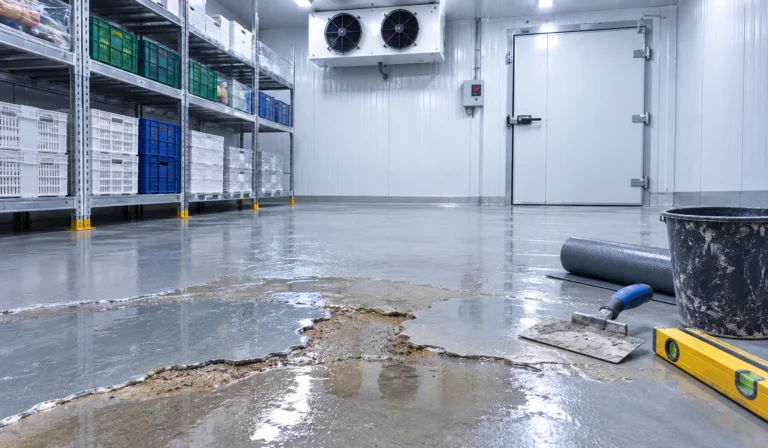
Freezer rooms require insulated flooring to prevent ground freezing and structural damage. This is not optional—it is mandatory for sub-zero installations.
HACCP Compliance and Temperature Monitoring
Under Regulation (EC) 852/2004, any business storing perishable food in bulk must implement HACCP-based procedures, including documented temperature monitoring. Environmental Health Officers (EHOs) will expect to see:
- Daily temperature checks at least twice per day—ideally at the start and end of each shift, with additional checks during peak periods.
- A written log of all temperature readings and any corrective actions taken if temperatures fall outside safe ranges.
- Proof of staff training in using thermometers and recognising temperature breaches.
- Regular calibration of probes and monitoring equipment to ensure accuracy.
Many businesses now use digital temperature monitoring systems with cloud-based logging and automated alerts. This is not a legal requirement, but it provides peace of mind and a robust audit trail for inspections.

Maintenance: Protecting Your Investment
A cold room is a significant capital investment, and regular maintenance keeps it running efficiently and compliantly. Industry best practice recommends:
- Daily: Clean contact surfaces and check for visible damage.
- Weekly: Inspect door seals and gaskets for wear or cracking.
- Monthly: Clean condenser coils and check refrigerant levels.
- Quarterly: Perform thorough defrosting and deep cleaning.
- Annually: Full professional service including calibration, safety checks, and system performance review.
Well-maintained cold rooms consistently outperform neglected ones in energy efficiency, temperature stability, and equipment lifespan. Scheduled preventive maintenance also reduces the risk of unexpected breakdowns during peak trading periods.
Tailored Cold Room Solutions for Your Business
Every restaurant kitchen is different. Whether you are running a compact café in Leeds city centre, a high-volume gastropub, or a domestic setup for home catering, your cold storage needs to match your space, your menu, and your ambitions.
Our approach at Coldroomplus is straightforward: we listen, we survey your site, and we design a solution that delivers compliance, energy efficiency, and long-term reliability—all without the hard sell. We work across the Leeds area and beyond, providing professional cold room installation backed by decades of hands-on HVAC experience.
Get a tailored quote today. One conversation could transform how your kitchen operates—and how much you save.
Want a tailored recommendation or quick quote? Reach out today
Frequently Asked Questions (FAQs)
1. What exactly is a cold room solution and does my restaurant actually need one?
A cold room solution is a large-scale, walk-in refrigerated or freezer storage space built from insulated panels. Unlike standalone upright fridges, it provides a temperature-controlled environment that centralises bulk ingredient storage. If your restaurant currently relies on multiple fridges, struggles with inconsistent temperatures, faces high food waste, or needs to satisfy rigorous Environmental Health inspections, a professional cold room solution will dramatically improve kitchen efficiency, food safety compliance, and long-term operating costs.
2. What temperature should my restaurant cold room be to comply with UK law?
UK food safety regulations require chilled cold rooms to operate at 8°C or below, with best practice targeting 0°C to +5°C. Freezer rooms must maintain -18°C or below. Most experienced chefs aim for a stable 1°C to 4°C in chill rooms, creating a safety buffer against temperature fluctuations during busy service. Twice-daily documented temperature checks are mandatory for HACCP compliance.
3. How much does cold room installation cost in the UK in 2026?
Cold room installation costs vary significantly by size, temperature specification and location. A small walk-in chiller typically starts from £3,000 to £7,000, a medium commercial unit can range from £8,000 to £20,000, and a large bespoke industrial freezer can exceed £25,000. For a typical restaurant, a 2m × 2m modular walk-in unit, fully installed with insulated flooring and anti-condensation heaters, generally falls between £5,500 and £8,000. Modular systems are often more cost-effective than traditional built-on-site walk-ins.
4. What’s the difference between a modular cold room and a traditional walk-in?
A modular cold room is built from prefabricated interlocking panels that can be assembled rapidly—often in a few days—without extensive construction work. A traditional walk-in usually requires a fixed, built-on-site structure that is permanent and cannot be easily moved. Modular cold room solutions offer superior flexibility: they can be expanded, reconfigured, or completely relocated if your business grows or moves. For many UK restaurants, modular systems now offer the ideal balance of cost, performance and adaptability.
5. Are cold rooms more energy efficient than running multiple upright fridges?
Yes, significantly. Refrigeration can account for up to 50% of energy use in food businesses. Replacing several ageing upright cabinets with one well-designed cold room can cut energy consumption by up to 65% when using best-available models. Upgrades such as electronic expansion valves, EC fans and inverter-driven compressors deliver additional savings of 15% to 35%. A single, efficient cold room uses less electricity than the collection of units it replaces, directly lowering your monthly bills.
6. How often should a commercial cold room be serviced?
A full professional service should be carried out annually at a minimum. This includes condenser coil cleaning, refrigerant level checks, door seal inspection and thermostat calibration. Additionally, your team should perform weekly door seal checks and monthly condenser coil cleaning. A well-maintained cold room can last 15 to 20 years, and proactive maintenance prevents the majority of expensive breakdowns that occur during peak trading periods.
7. Can I get a cold room solution for domestic use?
Absolutely. While cold room solutions are standard in restaurants, the demand for domestic cold storage is growing—whether for serious home cooks, smallholding produce, game storage, or home catering businesses. Smaller, modular cold rooms can be installed in garages, outbuildings or large utility rooms. The same temperature compliance and installation principles apply, scaled to suit residential power supplies and space. If you are a homeowner looking for reliable, walk-in refrigeration, we design solutions that fit domestic settings without compromising on professional-grade performance.