Cold Room for Bakeries: Chilling Dough, Dairy & Fillings
Walk into any successful bakery before sunrise and you will find a carefully controlled environment behind the scenes. While customers focus on fresh bread, pastries, cakes, and desserts, bakery owners understand that product quality begins long before baking starts. Proper temperature management of dough, dairy ingredients, and fillings plays a major role in consistency, food safety, and profitability.
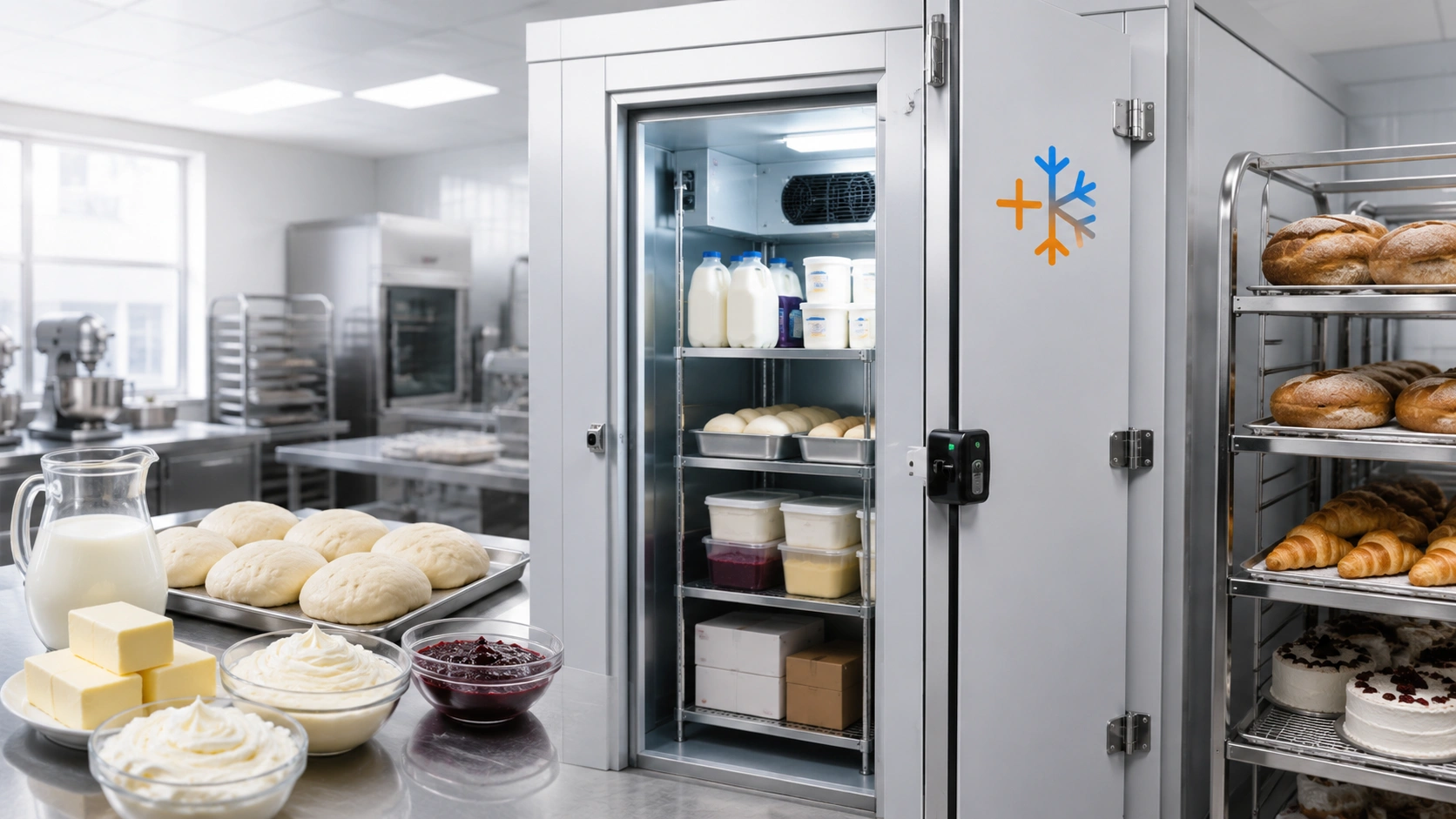
A well-designed cold room for bakeries helps maintain ingredient quality, control fermentation, reduce waste, and support smoother production schedules. Whether storing butter, cream, custard, chocolate fillings, or prepared dough, reliable refrigeration can make the difference between consistent results and costly spoilage.
According to food storage and cold chain research, temperature-controlled storage remains one of the most effective ways to preserve perishable food products, maintain food safety standards, and extend shelf life across bakery operations.
Why Bakeries Depend on Cold Rooms
Bakery products are highly sensitive to temperature fluctuations. Ingredients such as milk, cream, butter, custards, fruit fillings, and prepared dough can quickly deteriorate when stored incorrectly.
A dedicated cold room for bakeries creates a controlled environment where ingredients remain fresh while production teams can better manage inventory and workflow.
Cold storage helps bakeries:
- Maintain ingredient quality
- Slow bacterial growth
- Control dough fermentation
- Reduce product waste
- Improve production planning
- Meet food safety requirements
Research within the global cold chain sector shows that bakery and confectionery products account for a significant share of temperature-controlled storage demand due to their sensitivity to spoilage and quality degradation.
The Role of Cold Storage in Dough Management
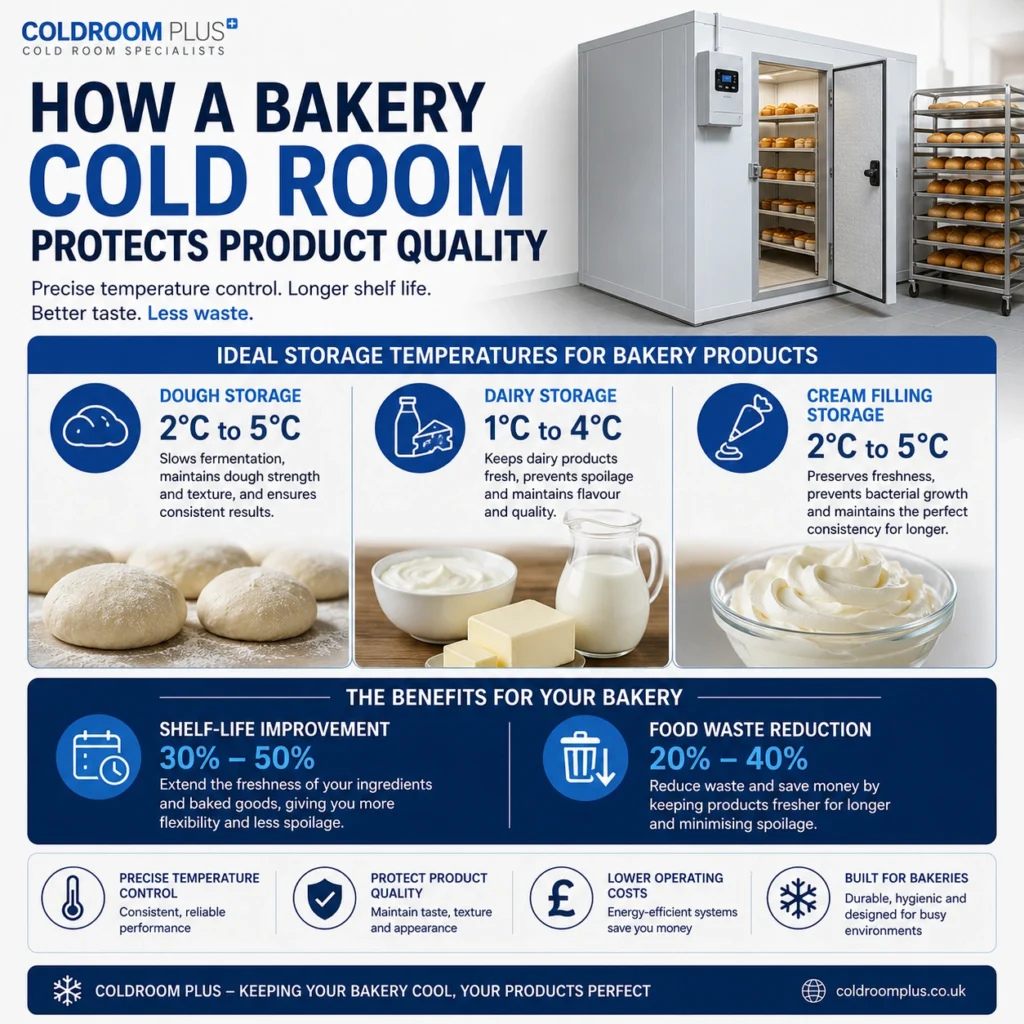
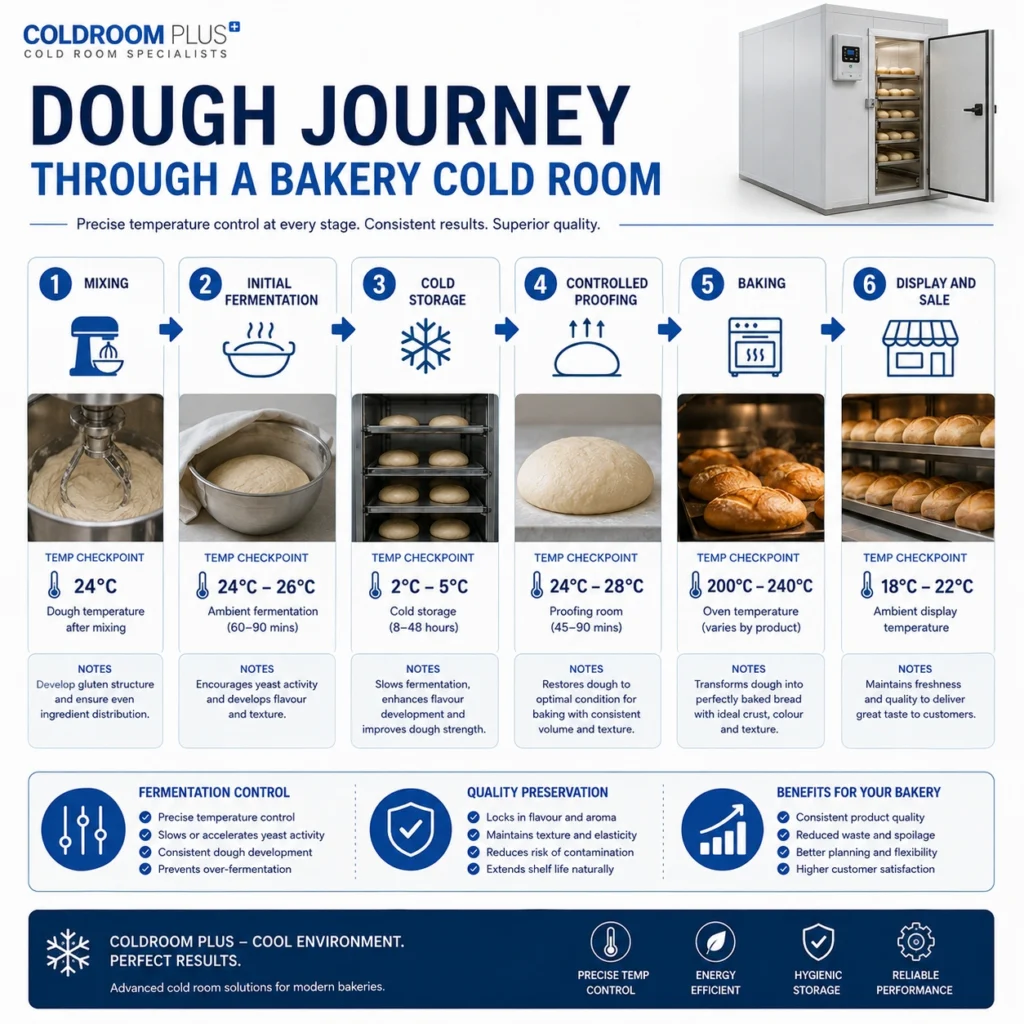
One of the most valuable uses of a cold room for bakeries is dough storage.
Temperature-controlled environments allow bakers to slow fermentation without stopping it entirely. This provides greater flexibility when managing production schedules, especially during busy periods.
Industry guidance indicates that dough stored between approximately 0°C and 4.5°C experiences delayed fermentation, allowing storage periods ranging from several days to multiple weeks depending on the product and process.
Insulated Storage Space
Proper insulation minimizes heat gain and reduces cooling demand.
Refrigeration Equipment
Dedicated cooling units regulate cellar temperatures throughout the year.
Air Distribution
Balanced airflow ensures uniform cooling across all stored products.
Temperature Monitoring
Modern systems use digital monitoring to maintain consistency and identify issues early.
When combined correctly, these elements create an efficient environment that protects stock quality while minimizing operating costs.
Storing Dairy Products Safely
Dairy ingredients are among the most temperature-sensitive components used in commercial bakeries.
Cream, milk, butter, mascarpone, soft cheese, and yoghurt-based ingredients require strict temperature control to remain safe and maintain quality.
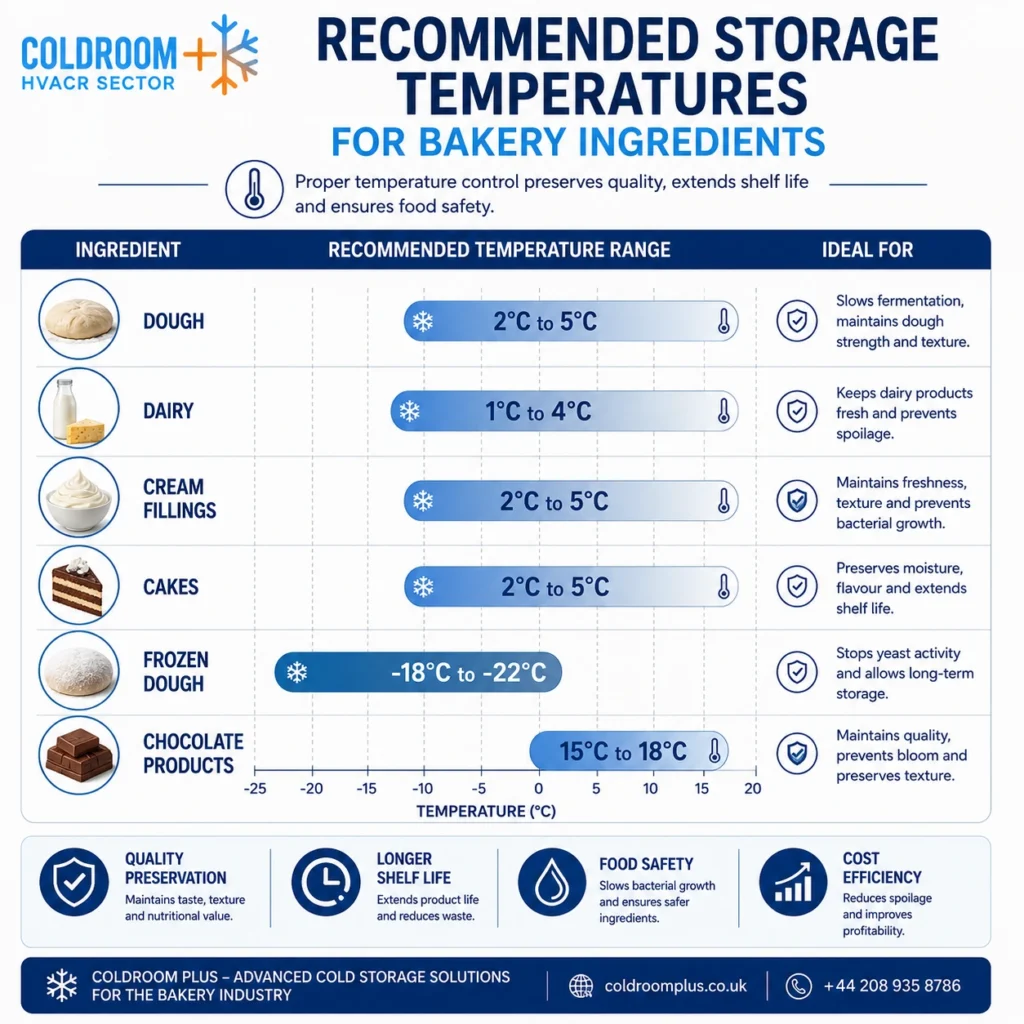
Food safety guidance recommends storing dairy products between 2°C and 4°C to minimise bacterial growth and preserve freshness.
Common Dairy Ingredients Stored in Bakery Cold Rooms
Ingredient | Recommended Temperature |
Milk | 2°C–4°C |
Fresh Cream | 2°C–4°C |
Butter | 2°C–5°C |
Soft Cheese | 2°C–4°C |
Mascarpone | 2°C–4°C |
Custard Base | 2°C–4°C |
Maintaining these temperatures consistently helps preserve flavour, texture, and food safety compliance.
Why Cream Fillings Need Precise Temperature Control
Cream-based fillings represent one of the highest-risk product categories in bakery operations.
Items such as:
- Fresh cream
- Whipped cream
- Custard
- Cheesecake fillings
- Chantilly cream
- Fruit cream fillings
contain moisture and nutrients that can support microbial growth if temperatures rise above safe levels.
Studies on food refrigeration consistently show that maintaining temperatures at or below 4°C significantly slows bacterial, yeast, and mould activity.
For bakeries producing premium desserts, maintaining filling quality directly affects customer satisfaction and repeat business.
Managing Chocolate and Specialty Fillings
Chocolate products require a slightly different storage approach.
Unlike dairy products, chocolate is often best stored at moderate temperatures that prevent blooming while preserving texture and appearance.
Industry cold storage guidance recommends temperatures around 12°C to 16°C for chocolate and certain fillings where moisture control is particularly important.
This helps prevent:
- Fat bloom
- Sugar bloom
- Texture changes
- Surface discolouration
For artisan bakeries producing premium desserts, maintaining these conditions can protect both presentation and taste.
How Cold Rooms Reduce Food Waste
Food waste remains a major challenge for bakeries.
Unsold products, spoiled ingredients, and improperly stored fillings can significantly affect profitability.
A properly managed cold room for bakeries helps reduce waste by extending ingredient usability and preserving finished products for longer periods.
Industry sources highlight that cold storage slows spoilage and supports longer shelf life for cakes, pastries, dough, dairy products, and fillings.
Comparison Table: Bakery Operations With vs Without Cold Storage
| Factor | With Cold Room | Without Cold Room |
|---|---|---|
| Ingredient Shelf Life | Extended | Reduced |
| Dough Flexibility | High | Limited |
| Food Waste | Lower | Higher |
| Production Planning | Easier | More Difficult |
| Product Consistency | Improved | Variable |
| Food Safety Compliance | Easier | Higher Risk |
Want a tailored recommendation or quick quote? Reach out today
Supporting Food Safety Compliance
Food safety regulations place significant responsibility on food businesses to store perishable ingredients correctly.
Cold rooms help bakeries maintain documented temperature control and reduce the risk of contamination.
Key practices include:
- Daily temperature monitoring
- Stock rotation procedures
- Segregation of ingredients
- Regular maintenance
- Controlled access to storage areas
Food safety guidance consistently identifies refrigeration below 4°C as critical for reducing microbial growth in perishable foods.
The Importance of Reliable Cold Room Installation UK Businesses Can Trust
For bakeries operating in competitive markets, refrigeration reliability is just as important as product quality.
A professional cold room installation UK solution helps ensure stable temperatures throughout the year, even during periods of heavy production.
Temperature fluctuations can negatively affect:
- Dough fermentation
- Cream stability
- Dairy freshness
- Product shelf life
- Food safety compliance
As the UK cold chain sector continues to grow, investment in modern refrigerated storage and monitoring systems remains a priority for food businesses seeking greater operational efficiency.
Bakery Cold Room Capacity Calculator
Accurately determine the exact cold storage dimensions, temperature zones, and volume profiles required for your commercial baking operations.
Engineered Technical Specification Summary
Suggested Operating Temperature Zones:
Cold Room Plus Engineering Commentary:
Temperature Zones Every Bakery Should Consider
Not all bakery products should be stored at the same temperature.
Different ingredients benefit from dedicated storage zones.
Product Category | Temperature Range |
Dairy Products | 2°C–4°C |
Cream Cakes | 2°C–5°C |
Bread & Rolls | 0°C–5°C |
Pastries | 2°C–6°C |
Chocolate Fillings | 12°C–16°C |
Frozen Dough | -18°C to -25°C |
These ranges align with commonly accepted cold storage recommendations used throughout commercial bakery operations.
Choosing the Right Cold Storage Strategy for Your Bakery
Every bakery has unique storage requirements.
A small artisan bakery may primarily focus on dough and dairy storage, while larger operations may require separate environments for frozen dough, cream-based products, and chocolate fillings.
The most effective approach is to evaluate:
- Production volume
- Ingredient turnover
- Product range
- Seasonal demand
- Food safety requirements
With growing demand for premium bakery products and stricter food safety expectations, investing in effective temperature-controlled storage has become an operational necessity rather than a luxury.
Share your experience and let’s discuss the best cold storage practices for improving consistency and reducing waste.
Frequently Asked Questions (FAQs) About Cold Room for Bakeries
1. What is the ideal temperature for a cold room for bakeries?
The ideal temperature for a cold room for bakeries depends on what is being stored. Dairy products, cream fillings, and custards are typically stored between 2°C and 4°C, while dough is often stored between 0°C and 5°C to slow fermentation and maintain product quality.
2. Why do bakeries need a cold room?
A bakery cold room helps preserve ingredients, maintain food safety standards, extend shelf life, reduce waste, and improve production planning. It ensures that dough, dairy products, and fillings remain fresh and safe for use.
3. Can dough be stored in a bakery cold room?
Yes. Many bakeries use cold rooms to store dough and control fermentation. Chilled dough storage allows bakers to prepare products in advance, improve workflow efficiency, and maintain consistent baking results.
4. How long can bakery dough be stored in a cold room?
The storage time depends on the dough type, ingredients, and temperature settings. In many commercial bakeries, dough can be stored safely for several days under controlled refrigeration conditions without compromising quality.
5. What size cold room does a bakery need?
The required cold room size depends on production volume, ingredient inventory, and storage requirements. Small artisan bakeries may need compact cold rooms, while larger bakeries often require walk-in cold rooms with multiple temperature zones.
6. What products can be stored in a bakery cold room?
Most cold room installations for pubs and bars can be completed within a few days to a few weeks, depending on the project size, complexity, and site requirements. Larger systems may require additional time for commissioning and testing.
7. How does a cold room help reduce food waste in bakeries?
Cold rooms extend the shelf life of ingredients and finished products by maintaining consistent temperatures. This reduces spoilage, prevents unnecessary waste, and helps bakeries improve profitability.
8. What are the food safety requirements for bakery cold rooms?
Bakery cold rooms should maintain appropriate temperatures, support stock rotation, allow regular cleaning, and include temperature monitoring systems. Proper cold storage helps businesses comply with UK food safety regulations.
9. How much does a cold room installation in UK cost for a bakery?
The cost of cold room installation UK services varies depending on room size, refrigeration equipment, insulation requirements, temperature range, and any specialist storage needs. A professional assessment is usually required to provide an accurate quote.
10. How often should a bakery cold room be serviced?
Most commercial cold rooms should be professionally serviced at least every six months. Regular maintenance helps prevent breakdowns, improves energy efficiency, maintains food safety standards, and extends equipment lifespan.