Portable Cold Room Hire vs Permanent Installation: Which Is Better?
When a business suddenly needs additional refrigerated storage, the first question is often whether to invest in a permanent solution or choose a temporary one. From hospitals storing temperature-sensitive medicines to restaurants handling seasonal demand and warehouses managing inventory surges, selecting the right cold storage option can directly impact operating costs, efficiency, and compliance.
As demand for temperature-controlled storage continues to grow worldwide, many businesses are weighing the benefits of cold room installation against the flexibility of coldroom hire. The decision is not always straightforward. What works for a busy food distribution centre may not be the best solution for a restaurant, healthcare facility, or retail business.
The global cold storage market was valued at approximately $185.75 billion in 2025 and is expected to reach $474.21 billion by 2033, highlighting the increasing importance of reliable cold storage infrastructure across industries.
Understanding Portable Cold Room Hire
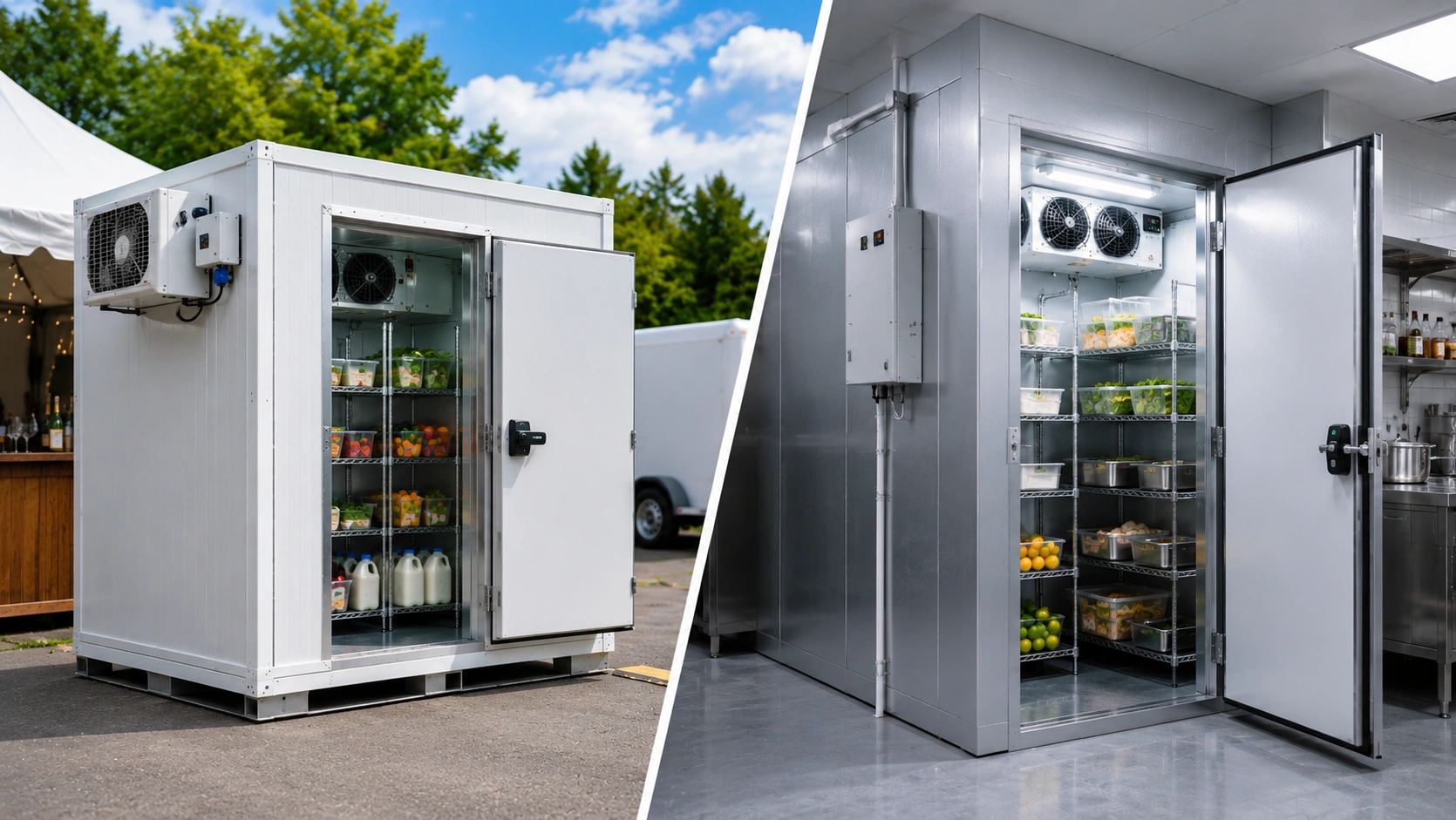
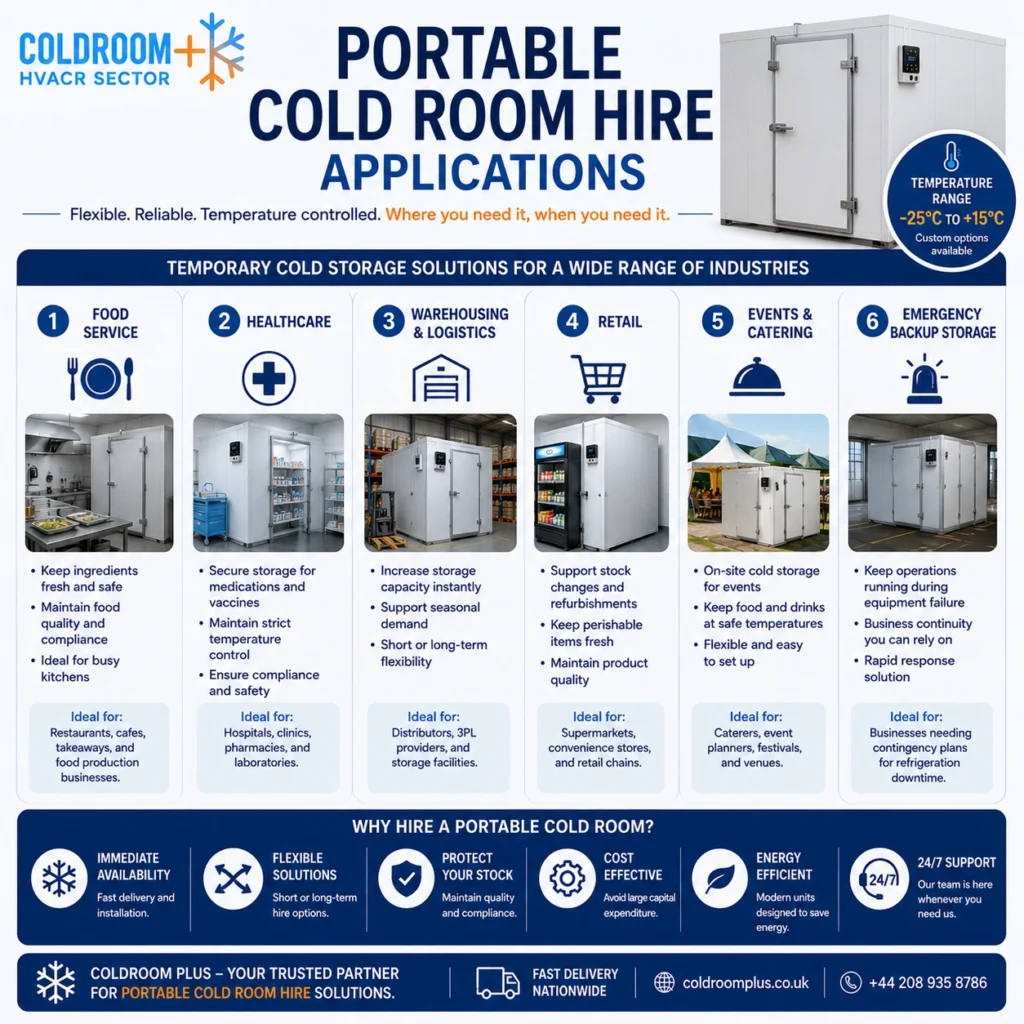
Portable cold rooms are temporary refrigerated storage units that can be delivered and installed quickly for short-term or seasonal requirements.
Businesses commonly use coldroom hire during:
- Seasonal demand spikes
- Equipment breakdowns
- Facility renovations
- Emergency storage requirements
- Special events and catering operations
Unlike permanent systems, portable units can usually be deployed rapidly and removed when no longer needed.
What Is Permanent Cold Room Installation?
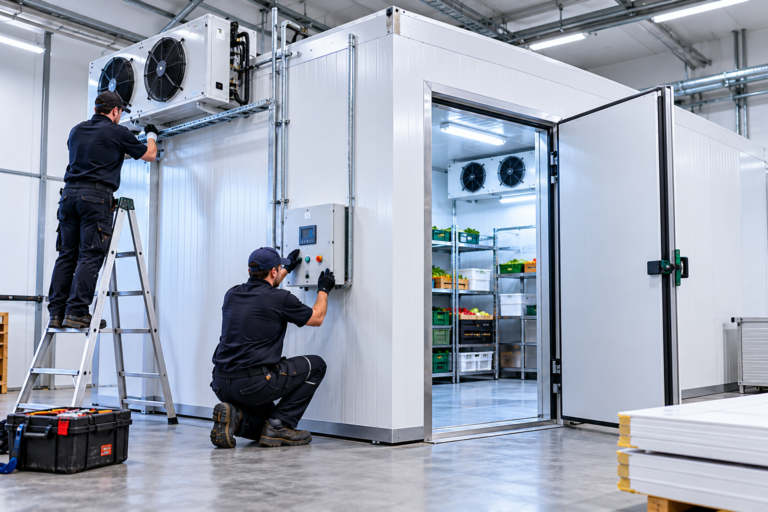
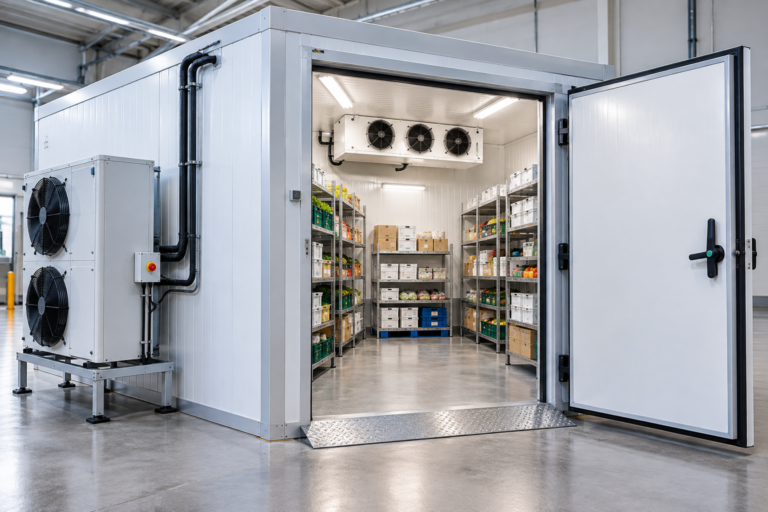
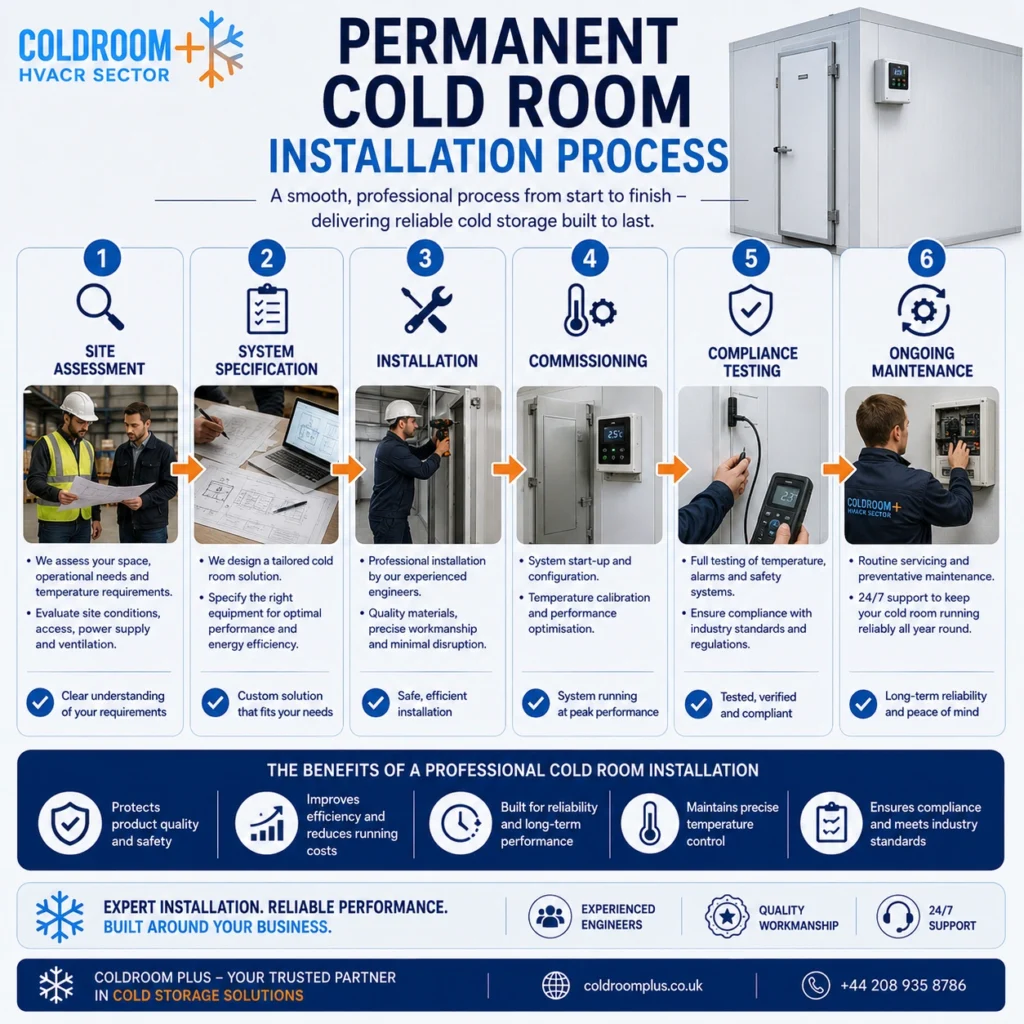
A permanent cold room installation is a purpose-built refrigerated storage facility designed for long-term operation within a commercial property.
These systems are commonly found in:
- Hospitals
- Food processing facilities
- Restaurants
- Distribution centres
- Pharmaceutical facilities
- Supermarkets
Permanent installations can be customised to specific temperature requirements, storage capacities, and operational workflows.
According to industry research, the global cold storage equipment market reached approximately $57.2 billion in 2025 and is projected to exceed $116 billion by 2036, reflecting strong investment in long-term cold storage infrastructure.
Comparing Portable Hire and Permanent Installation
Initial Cost Comparison
One of the biggest differences between the two options is the upfront investment.
Portable coldroom hire generally requires lower initial expenditure because businesses pay rental fees rather than purchasing equipment.
Permanent cold room installation involves costs related to:
- Refrigeration equipment
- Insulated panels
- Electrical work
- Installation labour
- Compliance requirements
For businesses needing refrigeration for years rather than months, the higher initial investment can often provide better long-term value.
Portable Cold Room Hire vs Permanent Installation Comparison
| Factor | Portable Cold Room Hire | Permanent Cold Room Installation |
|---|---|---|
| Upfront Cost | Lower initial investment with rental payments | Higher upfront capital investment |
| Ownership | No ownership of the equipment | Full ownership of the cold room asset |
| Long-Term ROI | Can become expensive over extended periods | Typically offers better long-term value and return on investment |
| Flexibility | Highly flexible and easy to scale up or down | Less flexible once installed |
| Installation Time | Usually available within hours or days | May take several days or weeks depending on size and complexity |
| Customisation | Limited customisation options | Fully tailored to business requirements |
| Storage Capacity | Suitable for temporary or additional storage needs | Designed for specific operational capacity requirements |
| Energy Efficiency | Generally efficient but not fully optimised for the site | Often more energy-efficient due to site-specific design and modern technologies |
| Temperature Control | Reliable for most applications | Greater precision and consistency for sensitive products |
| Maintenance Responsibility | Usually managed by the hire provider | Responsibility typically falls on the business owner or maintenance contractor |
| Compliance Features | Basic compliance features depending on unit type | Can be designed to meet industry-specific regulations and standards |
| Expansion Potential | Easy to add additional units temporarily | Expansion may require structural modifications or additional installation work |
| Best For | Seasonal demand, emergencies, renovations, events, and short-term projects | Long-term storage needs, food production, pharmaceutical storage, hospitals, and distribution centres |
| Asset Value | No asset created for the business | Adds value as a long-term business asset |
| Typical Usage Duration | Days, weeks, or months | Years or decades |
Cold Storage Hire vs. Ownership Cost Calculator
Compare the financial impacts of renting short-term versus purchasing your commercial cold room asset directly.
Investment & Procurement Summary
(Over Specified Term) £0
(Over Specified Term) £0
Projected 5-Year Financial Outlook:
Cold Room Plus Asset Strategy Notes:
Flexibility and Scalability
Flexibility is where portable coldroom hire excels.
Businesses can quickly increase or decrease storage capacity without major capital expenditure. This makes portable units particularly useful for seasonal operations.
Examples include:
- Christmas food demand
- Summer hospitality peaks
- Pharmaceutical projects
- Temporary warehouse overflow
Permanent cold room installation offers less flexibility because expanding capacity often requires structural modifications.
However, for organisations with predictable storage needs, stability often outweighs flexibility.
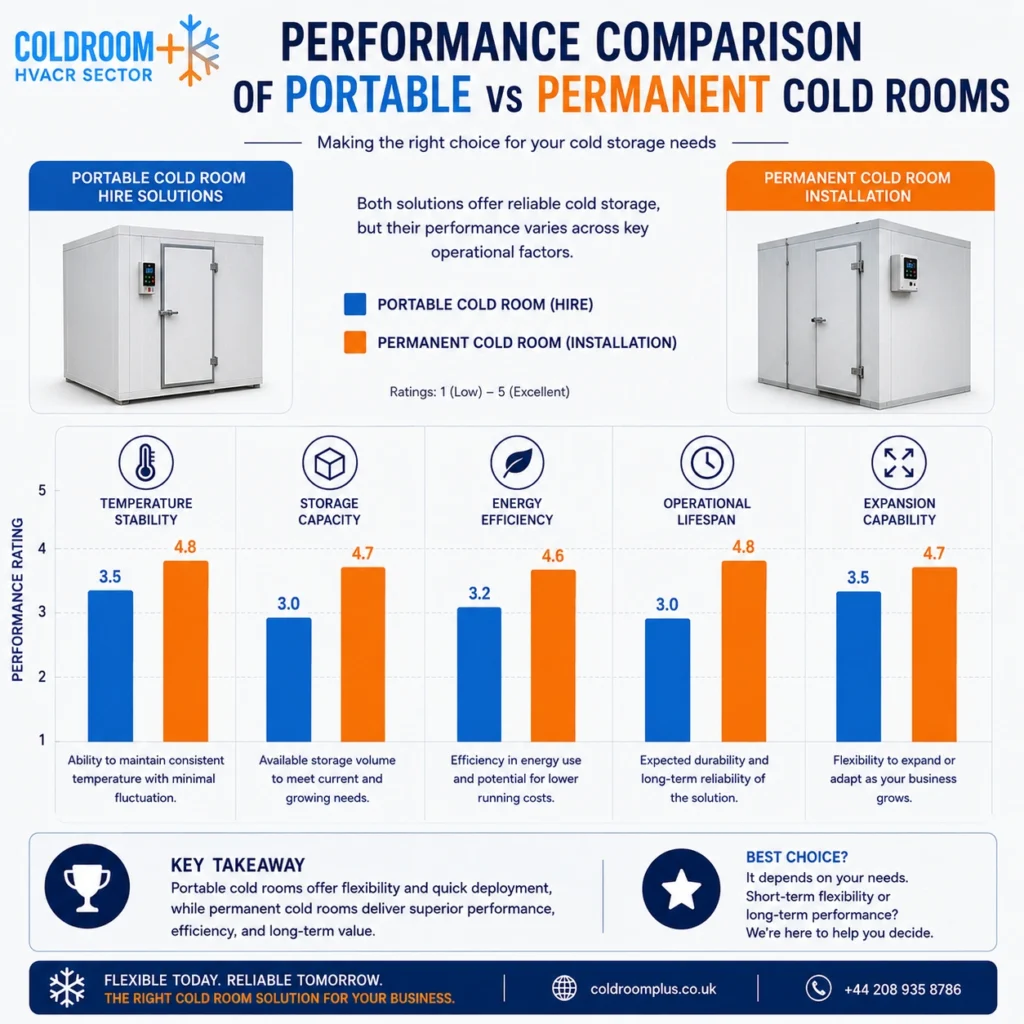
Reliability and Performance
Permanent installations are typically designed specifically around operational requirements.
This often provides:
- Better temperature consistency
- Improved energy efficiency
- Greater storage capacity
- Enhanced monitoring capabilities
Portable units can provide excellent performance but may not offer the same level of customisation.
For businesses handling pharmaceuticals, vaccines, or highly sensitive products, precise environmental control can be critical.
Energy Efficiency Considerations
Energy consumption is one of the largest operating expenses associated with refrigerated storage.
Modern permanent cold room installation systems often include:
- High-performance insulation
- Advanced compressors
- Smart monitoring systems
- Variable-speed controls
These technologies can significantly reduce energy consumption over time.
As cold storage demand continues growing globally, energy-efficient infrastructure is becoming a major investment priority. The cold storage market is forecast to grow at approximately 11.8% annually through 2033, driven partly by the need for more efficient temperature-controlled facilities.
Portable units can also be efficient, but they are typically designed to accommodate a wider range of temporary applications rather than being fully optimised for a specific site.
Which Industries Benefit Most from Coldroom Hire?
Restaurants and Catering Businesses
Restaurants often experience fluctuating demand.
Hiring a cold room can provide additional capacity during:
- Holiday seasons
- Weddings
- Festivals
- Corporate events
The ability to scale storage without permanent investment makes hiring attractive.
Healthcare Facilities
Hospitals occasionally require temporary storage during:
- Facility upgrades
- Emergency situations
- Equipment replacement
Portable units can provide immediate support without disrupting operations.
Warehouses and Distribution Centres
Warehouses sometimes face inventory spikes that exceed normal capacity.
Temporary cold storage helps maintain product quality while avoiding the cost of constructing additional permanent facilities.
Which Industries Benefit Most from Permanent Cold Room Installation?
Food Manufacturing
Food processors typically require year-round refrigeration.
A permanent installation provides:
- Consistent capacity
- Regulatory compliance
- Better operating efficiency
Pharmaceutical Storage
Many pharmaceutical products require strict temperature control.
Permanent systems often include:
- Continuous monitoring
- Alarm systems
- Backup refrigeration
- Compliance reporting
Large Commercial Warehouses
Distribution centres operating continuously often achieve better long-term ROI through ownership rather than rental.
The increasing demand for temperature-controlled logistics is one of the primary reasons cold storage infrastructure investment continues to rise globally.
Commercial Cold Storage Decision Quiz
Answer 5 quick strategic questions to discover the most cost-effective and structurally optimized cooling solution for your business operations.
Your Strategic Storage Analysis
Cold Room Plus Solution Roadmap:
Key Questions Before Making a Decision
Before choosing between coldroom hire and permanent installation, businesses should evaluate several important factors.
How Long Will You Need Refrigerated Storage?
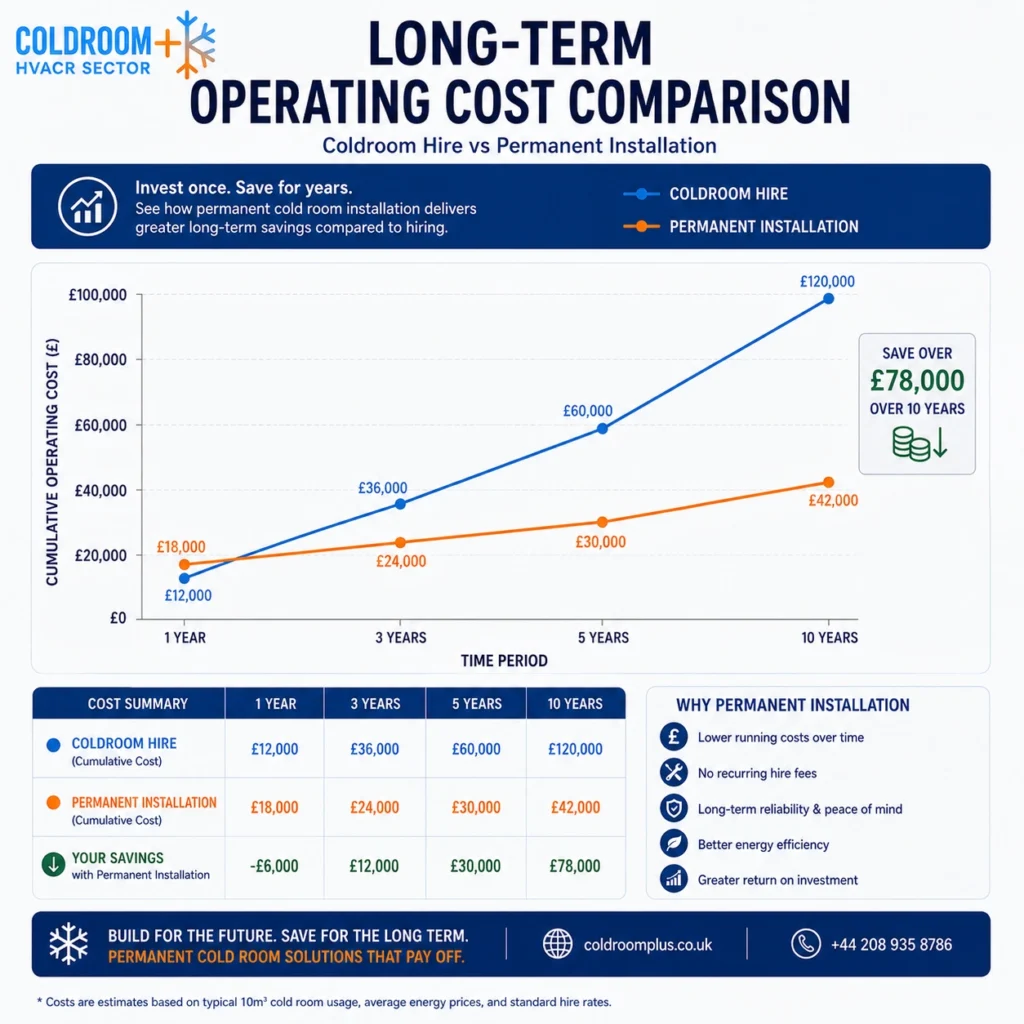
If the requirement is temporary, hiring often makes more financial sense.
If storage is required for several years, ownership may provide stronger returns.
Is Demand Seasonal or Constant?
Seasonal demand often favours portable solutions.
Consistent year-round demand generally supports permanent investment.
Do You Need Custom Features?
Permanent systems can be tailored to:
- Specific temperatures
- Storage layouts
- Industry compliance requirements
- Monitoring systems
Portable units offer less customisation.
What Is Your Available Budget?
Budget constraints frequently influence the decision.
While hiring reduces upfront expenditure, long-term rental costs can eventually exceed the cost of ownership.
Coldroomplus provides professional cold room installation, maintenance, repairs, and refrigeration solutions for commercial environments including hospitals, restaurants, warehouses, food production facilities, and other temperature-sensitive operations.
Whether a business requires a long-term refrigerated storage solution or guidance on the most suitable approach for future growth, expert assessment can help ensure maximum efficiency, compliance, and return on investment.
Choosing between cold room installation and coldroom hire ultimately depends on your business goals, budget, storage duration, and operational requirements. Is your organisation looking for a short-term solution to meet seasonal demand, or would a permanent refrigerated facility deliver greater value over the next five years? Share your situation in the comments and let’s explore the best option for your business.
Frequently Asked Questions (FAQs)
1. Is cold room hire cheaper than cold room installation?
Coldroom hire is usually more affordable for short-term needs such as seasonal demand, events, emergencies, or temporary storage requirements. However, if your business requires refrigerated storage for several years, cold room installation often provides better long-term value and a lower overall cost of ownership.
2. How long does a cold room installation take?
The timeframe for a cold room installation depends on the size, complexity, and site requirements. Most commercial cold rooms can be installed within a few days to several weeks, including commissioning and testing.
3. What businesses benefit most from coldroom hire?
Coldroom hire is ideal for restaurants, catering companies, hospitals, pharmacies, supermarkets, warehouses, and food distributors that need temporary or additional refrigerated storage capacity.
4. When should I choose a permanent cold room installation?
A permanent cold room installation is the best choice when your business requires year-round refrigerated storage, precise temperature control, long-term reliability, and lower operating costs over time.
5. What are the advantages of cold room installation?
Key benefits include improved energy efficiency, greater storage capacity, customisable layouts, precise temperature control, enhanced compliance features, and stronger long-term return on investment.
6. Can a portable cold room maintain the same temperature as a permanent cold room?
Modern portable cold rooms can maintain consistent temperatures suitable for most commercial applications. However, permanent cold rooms often provide more precise environmental control for sensitive products such as pharmaceuticals and medical supplies.
7. How much does commercial cold room installation cost?
The cost of commercial cold room installation varies depending on the room size, temperature requirements, insulation specifications, refrigeration equipment, and site conditions. A professional assessment is the best way to obtain an accurate quotation.
8. Are portable cold rooms suitable for emergency refrigeration needs?
Yes. Portable cold rooms are commonly used as emergency refrigeration solutions during equipment breakdowns, renovations, unexpected demand increases, or temporary facility closures.
9. How energy-efficient are modern cold rooms?
Modern cold rooms use advanced insulation, energy-efficient compressors, smart controls, and temperature monitoring systems that can significantly reduce energy consumption and operating costs compared to older refrigeration systems.
10. How do I decide between coldroom hire and cold room installation?
The decision depends on your storage duration, budget, operational requirements, growth plans, and temperature control needs. Businesses with temporary requirements often benefit from coldroom hire, while those needing long-term refrigerated storage usually achieve better value through permanent cold room installation.