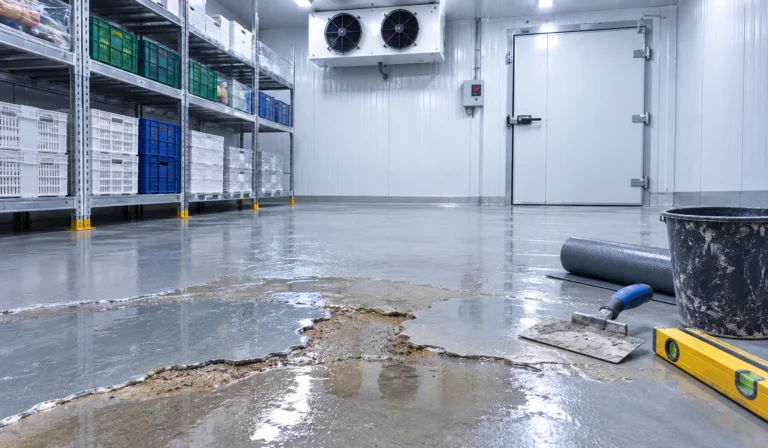
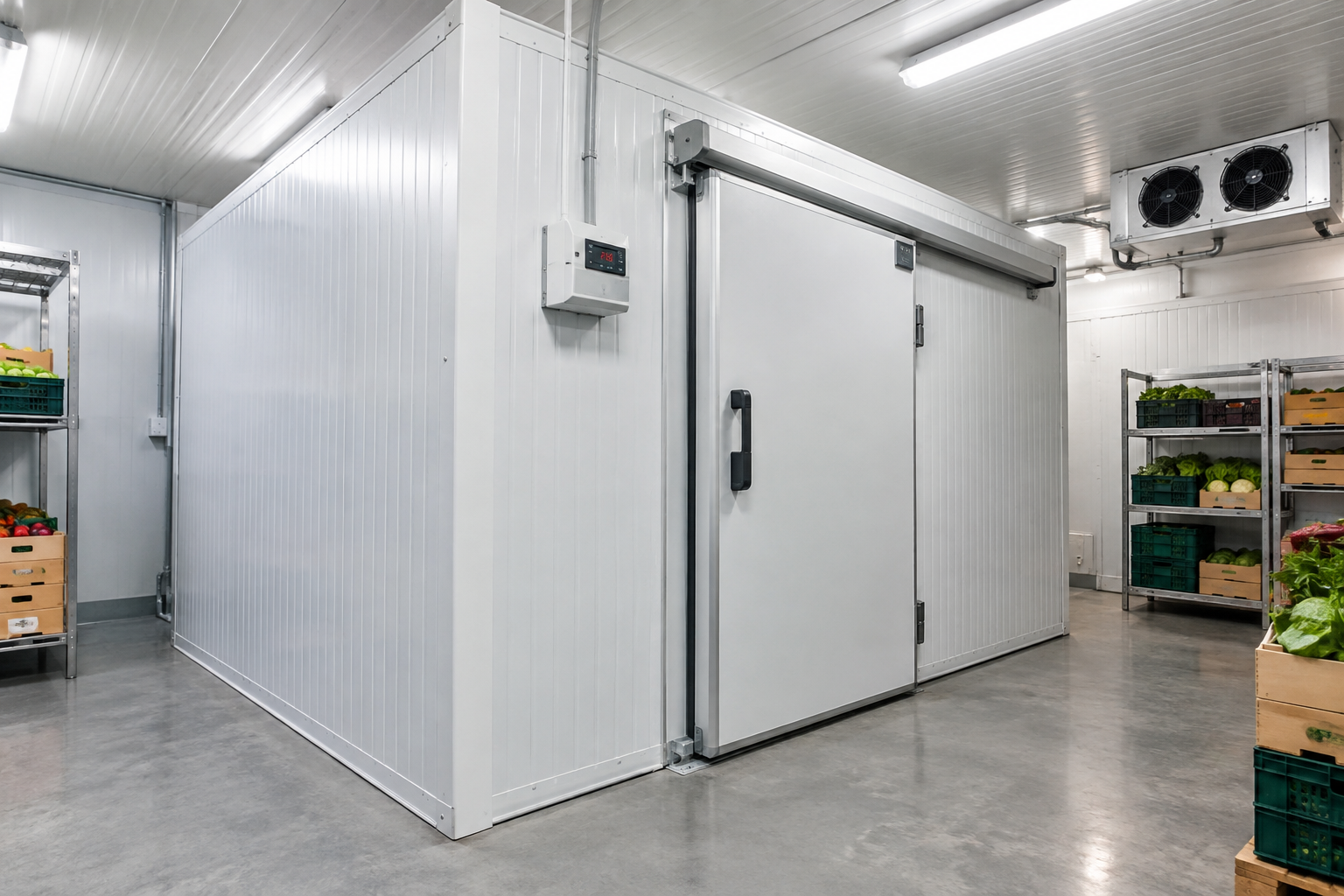
Wi-Fi Enabled Temperature Alarms for Walk-In Freezers: Top Options
A walk-in freezer can hold thousands of pounds worth of stock, so discovering a temperature problem several hours after it starts can be extremely expensive. The best temperature alarms for walk in freezers provide more than a number on a display: they continuously monitor conditions and can warn responsible staff when temperatures move outside a defined range.
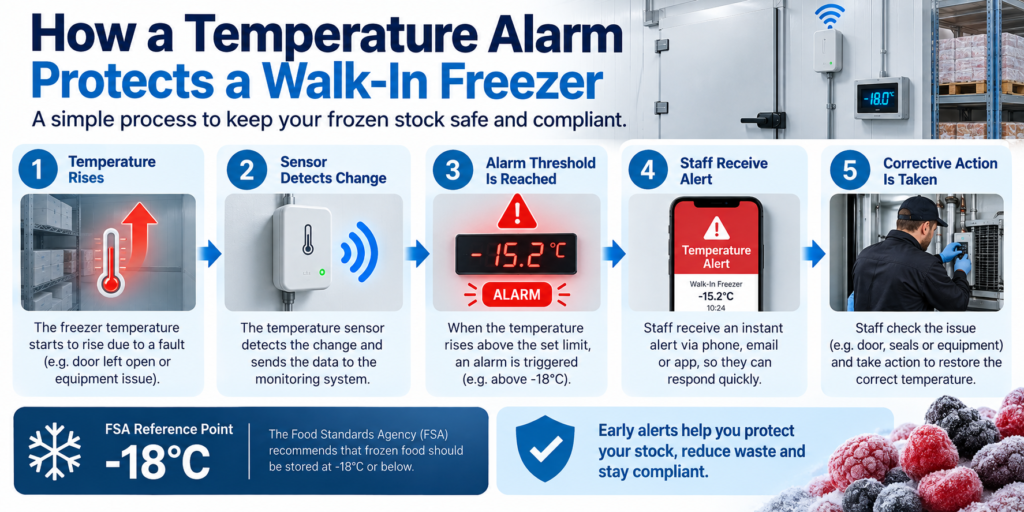
For restaurants, hotels, supermarkets, food manufacturers, caterers and other commercial operations, that early warning can mean the difference between correcting a refrigeration fault and dealing with spoiled stock. The Food Standards Agency recommends that food businesses keep frozen food at -18°C, while also emphasising regular temperature checks as part of effective food-safety management.
Why Temperature Alarms for Walk In Freezers Matter
A freezer does not necessarily fail dramatically. A faulty fan, damaged door seal, blocked condenser, refrigeration fault or prolonged door opening can gradually push the temperature upwards.
That is why simply checking a display at the start of a shift has limitations. A Wi-Fi temperature monitoring system can watch conditions continuously and notify someone when a preset threshold is exceeded.
The FSA‘s research is particularly relevant here. In its Kitchen Life 2 research, eight of 28 food businesses with usable freezer data had an average freezer temperature warmer than the recommended -18°C. The study also found that incorrect frozen-food storage affected just under a third of the food businesses observed.
A temperature alarm therefore acts as an additional layer of protection. It does not replace documented food-safety procedures, manual checks or appropriate refrigeration maintenance, but it can provide an earlier warning when something goes wrong.
What Happens When a Freezer Gets Too Warm?
The consequences depend on the food, duration and temperature excursion. Frozen food can suffer quality deterioration, partial thawing, refreezing problems and financial loss.
For food businesses, temperature monitoring also forms part of a wider HACCP-based food-safety management system. The UK Government states that food businesses should identify critical control points, monitor them, take corrective action when something goes wrong and maintain appropriate records.
Key takeaway: An alarm is most valuable when it triggers a clear response procedure rather than simply making a noise.
Top Temperature Monitoring Options Compared
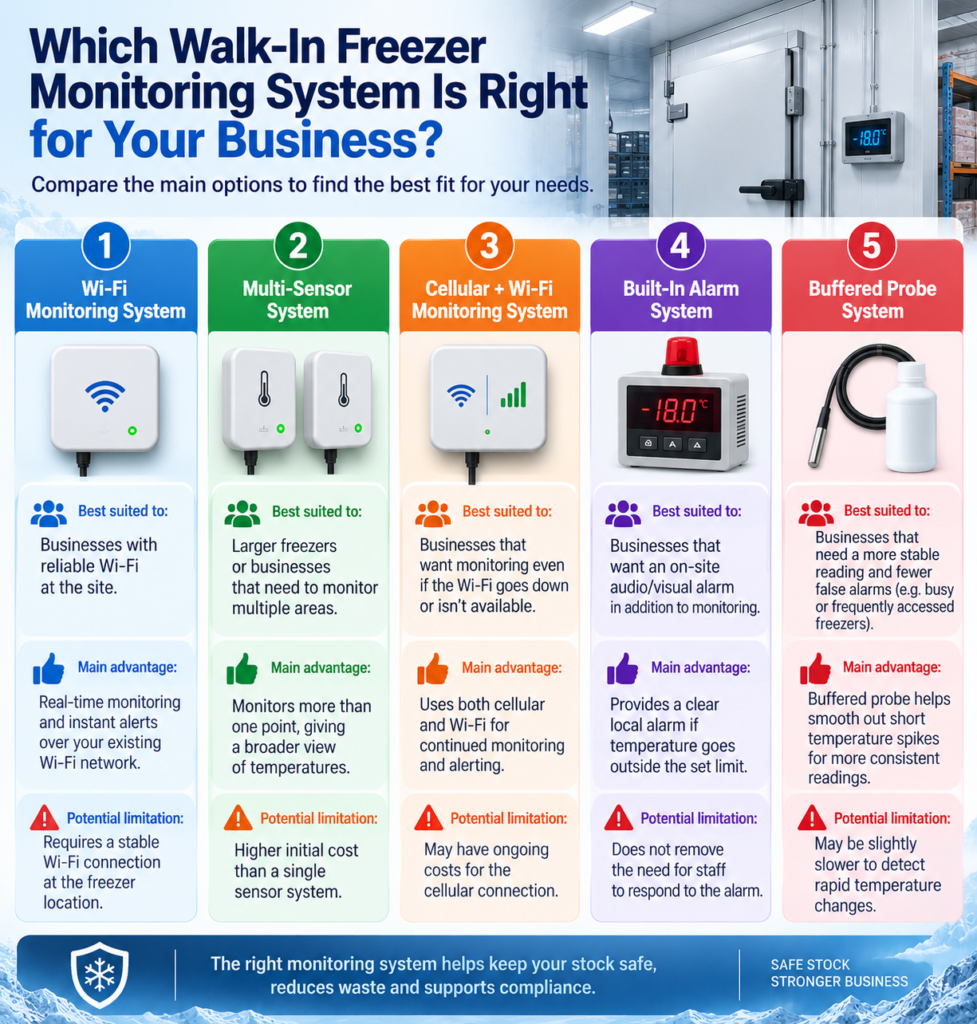
There is no single best system for every walk-in freezer. The right choice depends on the size of the operation, number of rooms, connectivity, reporting requirements and consequences of a refrigeration failure.
| Monitoring option | Best suited to | Main advantage | Potential limitation |
|---|---|---|---|
| Wi-Fi data logger with external probe | Small and medium food businesses | Relatively simple remote monitoring | Depends on reliable Wi-Fi |
| Multi-sensor wireless system | Several freezers or larger sites | Multiple rooms can be monitored centrally | Higher system complexity |
| Cellular + Wi-Fi monitoring | Critical refrigeration | Greater communication resilience | Usually higher cost |
| Built-in refrigeration alarm | New cold-room projects | Integrated into the refrigeration system | May provide fewer remote-monitoring features |
| Buffered probe system | Food-storage applications | Helps reduce false alarms from short fluctuations | Additional equipment and setup |
A UK example is the ETI wireless fridge/freezer monitoring kit, which currently lists a Wi-Fi data logger, remote monitoring, email alerts, food-simulant probes and a traceable calibration certificate. Its listed price is £188 before VAT at the time of research, although prices and configurations can change.
For larger installations, a multi-sensor architecture may make more sense. Elitech‘s RCW-3000/3200 system, for example, is designed around wireless sensors, gateways and cloud/mobile monitoring, with support for multiple sensors.
There are also integrated approaches. Porkka‘s commercial freezer rooms, for example, can include a temperature display with audible and visual high/low temperature alarms and a connection to a building-management system.
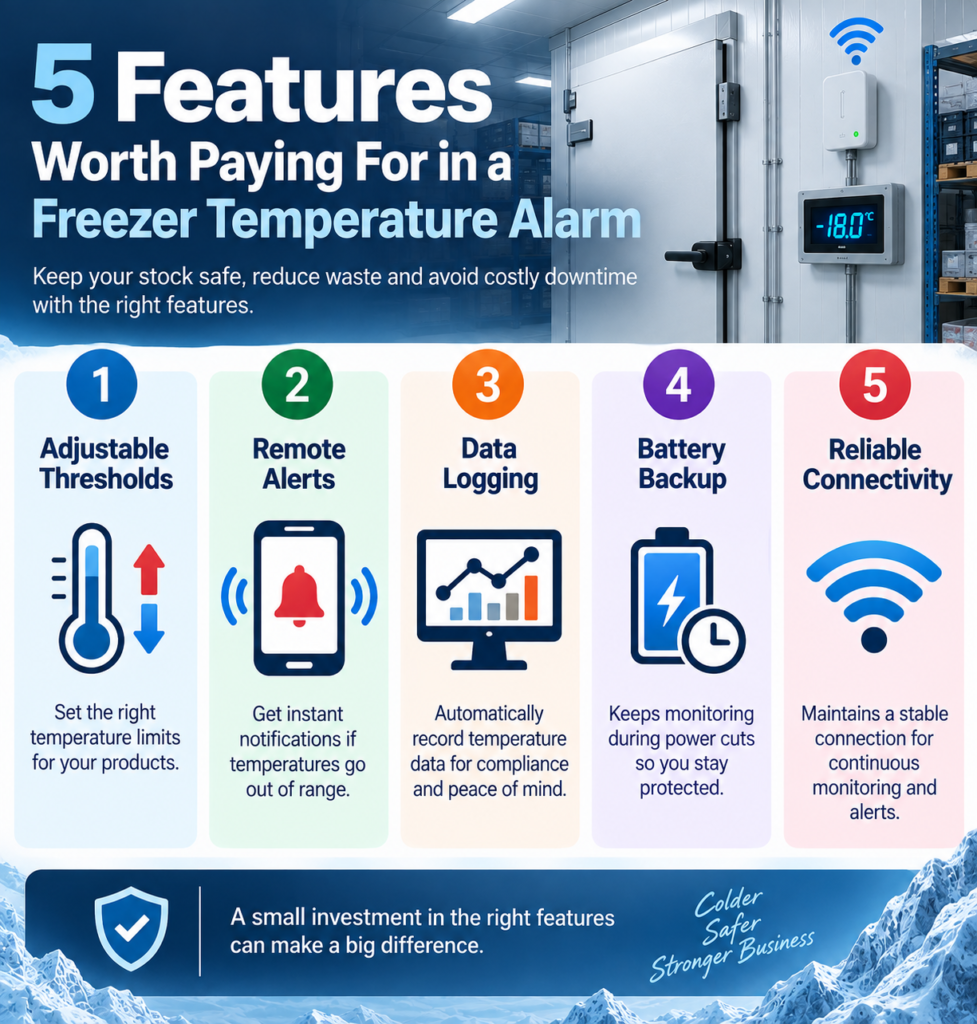
Features Worth Paying For
The cheapest temperature alarm is not necessarily the cheapest solution. If an alarm cannot reliably communicate during a problem, has poor sensor placement or provides no useful temperature history, its practical value is limited.
Look for an adjustable alarm threshold rather than a fixed generic setting. A freezer used for food storage should be configured according to the equipment, food-safety procedure and operational requirements rather than blindly copying a setting from another business.
Remote notifications are another important consideration. Email may be sufficient for some businesses, whereas a site storing high-value frozen stock may benefit from SMS, app notifications or multiple recipients.
Data logging is also valuable. A system that records temperature over time provides a much better picture than a single reading. Some commercial monitoring platforms also allow historical data to be reviewed remotely.
Battery backup deserves attention too. If the refrigeration system loses power, the monitoring system should ideally be capable of reporting the problem rather than becoming unavailable at exactly the same time. Some modern devices incorporate rechargeable batteries or backup power arrangements.
For businesses requiring a complete refrigeration solution, Coldroomplus provides bespoke cold-room solutions and refrigeration services, with F-Gas-certified and Level 3 RACHP-qualified technicians. The company also offers free site surveys within a 50-mile radius, emergency repairs and ongoing support.
UK regulations are important when choosing an installation or service provider. The UK Government states that individuals working with F-Gas-containing stationary refrigeration equipment need the appropriate qualifications, while companies servicing equipment belonging to other businesses need the relevant company certification.
Maintenance Tips for Reliable Monitoring
A temperature alarm should itself be treated as monitoring equipment that requires periodic attention.
Check that the sensor is still securely positioned, verify that notifications are reaching the intended people and review historical readings for unusual patterns.
Calibration is also worth considering where accurate temperature records are important. A calibrated reference instrument can be used to compare the monitoring sensor and identify potential measurement drift.
The refrigeration system needs attention too. Keep condenser and evaporator areas clean as appropriate, inspect door seals, investigate unusual ice formation and arrange professional servicing when performance changes.
Where F-Gas-containing equipment falls within the applicable thresholds, UK operators also have legal leak-checking and record-keeping responsibilities. The UK Government explains that certain stationary refrigeration equipment must undergo periodic leak checks based on its refrigerant charge and global-warming potential, with specific record requirements applying to equipment containing at least five tonnes of CO₂ equivalent.
What Should You Choose?
The best temperature alarms for walk in freezers are not necessarily the ones with the longest feature list. The right system is one that accurately measures the relevant storage conditions, alerts the right person quickly, retains useful records and continues operating reliably when something goes wrong.
For a small business, a professionally selected Wi-Fi data logger may be sufficient. Larger or higher-risk operations may benefit from multiple sensors, cloud monitoring, cellular backup or integration with the refrigeration control system.
If you’re planning a new walk in freezer installation in London, upgrading an existing cold room or simply want better protection for valuable frozen stock, what matters most is not just having an alarm—but designing a monitoring system that your team can actually rely on when the freezer needs attention.
What type of freezer, stock value and operating hours does your business have, and would a professionally designed temperature-monitoring solution give you greater peace of mind?
FAQs About Temperature Alarms for Walk In Freezers
1. What temperature should a commercial walk-in freezer be?
For food businesses, the Food Standards Agency states that frozen food should be kept at -18°C. Businesses should nevertheless follow the storage requirements applicable to their particular products and food-safety procedures.
2. Are Wi-Fi temperature alarms better than traditional freezer alarms?
Wi-Fi systems provide an important advantage because they can send alerts remotely instead of relying solely on an audible alarm at the premises. They can also provide historical temperature records, depending on the system selected.
3. Can a temperature alarm work if the freezer loses power?
Some monitoring systems include battery backup, allowing the device to continue communicating during a power interruption. The exact behaviour depends on the model, so power-failure alerts and backup duration should be checked before purchase.
4. Can I monitor more than one walk-in freezer?
Yes. Multi-sensor systems can monitor several refrigeration areas through a common gateway or cloud platform. This is particularly useful for restaurants, supermarkets, warehouses and food-production premises with multiple cold rooms.
5. Do I need Wi-Fi inside the walk-in freezer?
Usually, the temperature sensor communicates wirelessly with a gateway or network connection rather than requiring the freezer itself to have conventional Wi-Fi equipment inside it. Site layout and the freezer’s construction can affect wireless performance.
6. Where should a freezer temperature sensor be positioned?
It should normally be positioned where it provides a representative reading of storage conditions, away from unusually direct cold airflow or immediate door-related temperature changes. The precise position should account for airflow, evaporator location and the way the freezer is loaded.
7. Can temperature monitoring help with HACCP?
Yes. Temperature monitoring can support HACCP-based procedures by providing records and alerts, but the monitoring system itself does not constitute a complete HACCP system. GOV.UK states that food businesses need procedures for monitoring critical control points and taking corrective action.
8. How often should a freezer temperature alarm be checked?
The monitoring system should be checked according to the manufacturer’s instructions and the business’s food-safety procedures. Notifications, sensor positioning, battery condition and measurement accuracy should all be considered as part of routine checks.
9. Are temperature alarms required by law for every walk-in freezer?
There is not a universal rule requiring every walk-in freezer to use a Wi-Fi temperature alarm. However, food businesses have responsibilities around safe storage, monitoring and food-safety management, so an appropriate monitoring method should form part of the overall control system.
10. Should temperature monitoring be included when installing a new walk-in freezer?
It is usually worth considering during the design stage, particularly where frozen inventory is valuable or the freezer operates outside normal staffed hours. Planning the alarm, sensor position, connectivity and escalation process alongside the refrigeration system can produce a more dependable overall installation.