Best Walk-In Freezer Door Types for UK Commercial Kitchens
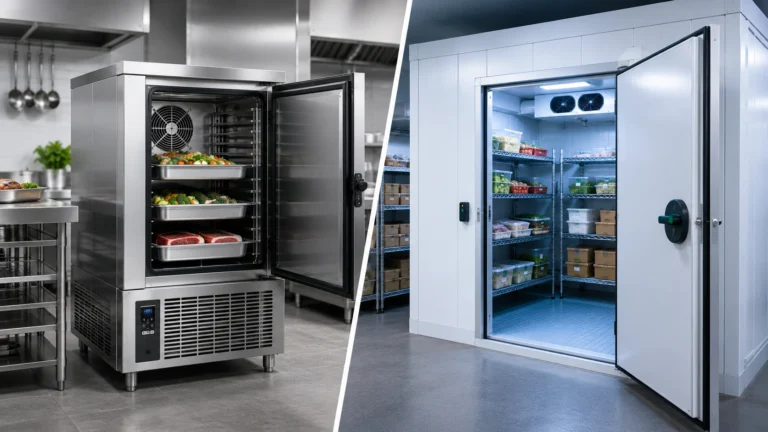
A walk in freezer door may seem like a simple part of a cold room, but it plays a major role in food safety, energy efficiency, and daily kitchen operations. Whether you run a busy restaurant, hotel, supermarket, catering business, or food production facility, choosing the right freezer door can reduce energy costs, improve workflow, and protect valuable stock.
Commercial kitchens across the UK open and close freezer doors hundreds of times every day. Every opening allows warm air inside, forcing refrigeration equipment to work harder. According to the UK’s Energy Saving Trust, refrigeration can account for up to 50% of electricity used in commercial kitchens, making efficient cold storage one of the biggest opportunities for reducing operating costs.
This guide explains the most common walk-in freezer door types, where each works best, and how to choose the right option for your business.
Why Your Walk-In Freezer Door Matters More Than You Think
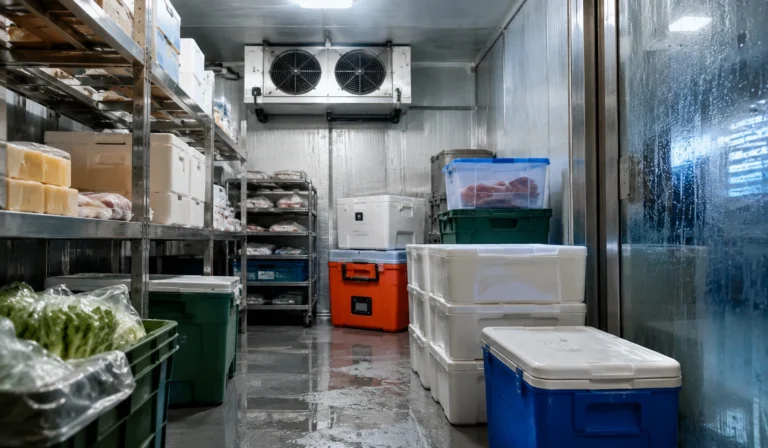
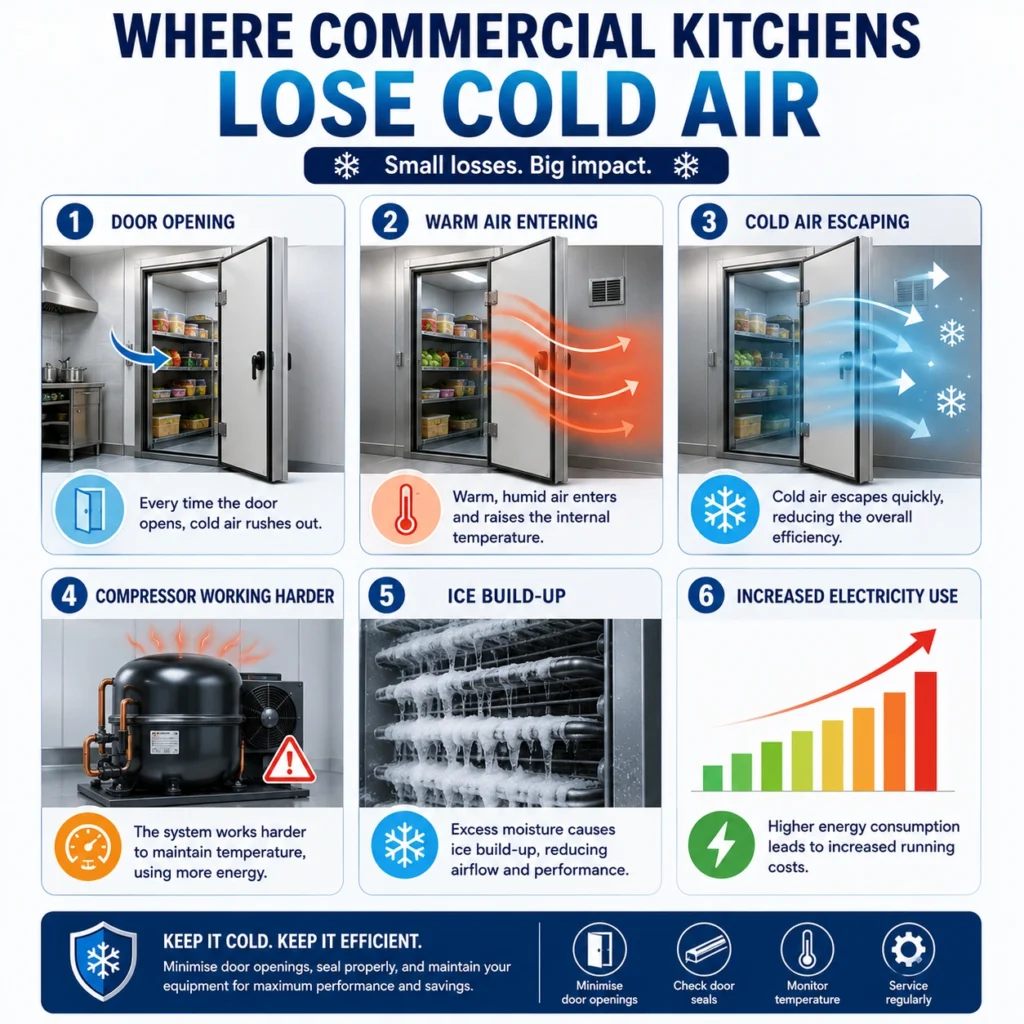
Many businesses focus on compressors, evaporators, and insulation panels while overlooking the freezer door. In reality, the door is one of the largest sources of temperature loss inside a freezer.
Every unnecessary second the door remains open allowing warm air and moisture to enter. This increases:
- Compressor running time
- Ice formation
- Energy consumption
- Maintenance costs
- Risk of food spoilage
For kitchens handling fresh meat, seafood, dairy products or frozen goods, maintaining stable temperatures is essential for both food quality and compliance with UK food safety regulations.
The Main Types of Walk-In Freezer Doors
Different businesses have different storage needs. A busy supermarket warehouse requires something completely different from a small café.
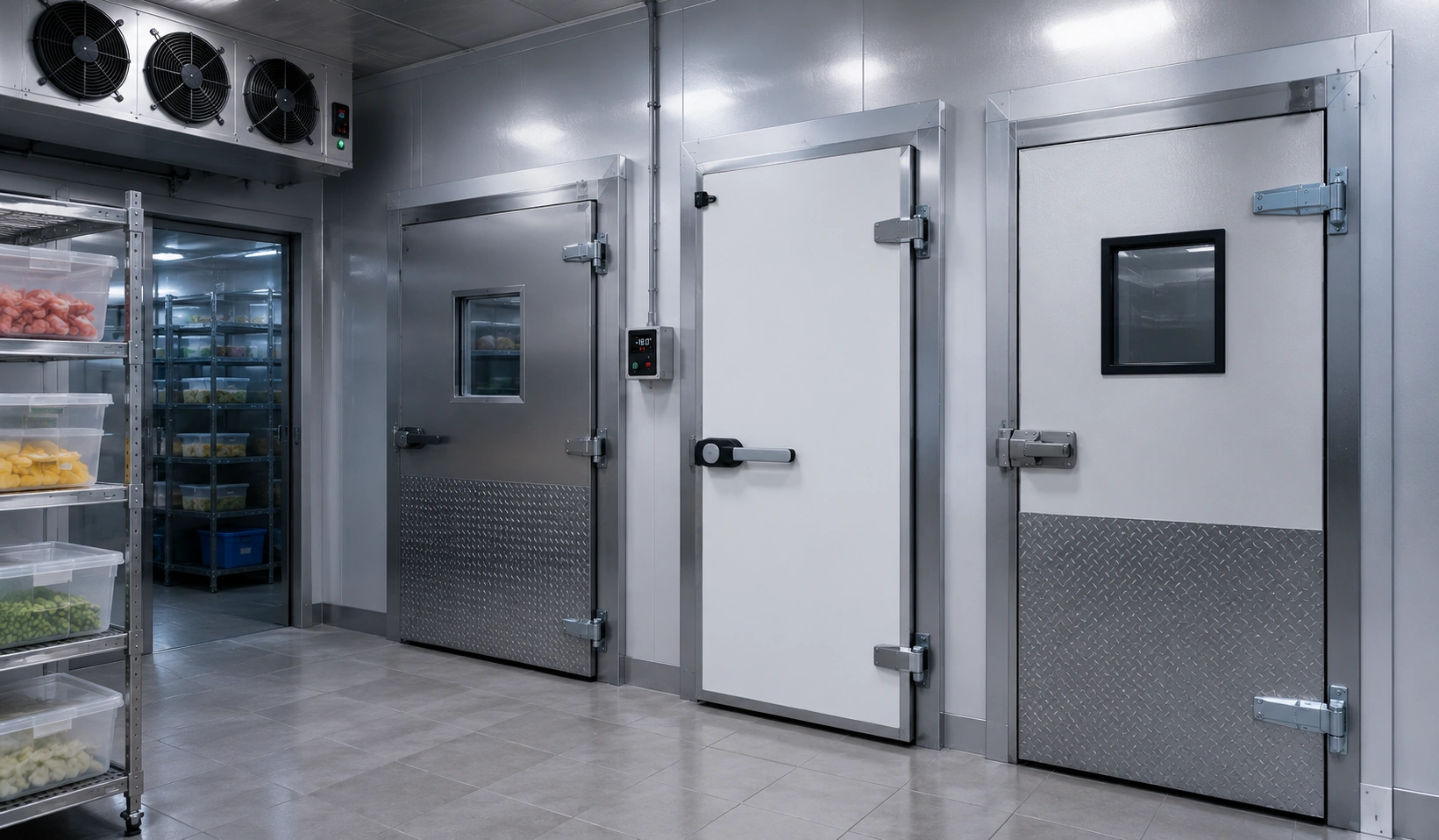
Below are the main freezer door types used throughout UK commercial kitchens.
Hinged Walk-In Freezer Doors
Hinged doors are the traditional option found in thousands of restaurants, pubs and cafés.
They open like a normal door and are ideal for smaller freezer rooms where people enter on foot instead of using pallet trucks or forklifts.
Best suited for:
- Restaurants
- Cafés
- Hotels
- Care homes
- Small commercial kitchens
Advantages
- Lower installation cost
- Easy to operate
- Reliable for moderate traffic
- Excellent thermal insulation
- Simple maintenance
The main limitation is space. Because the door swings outward, enough clearance must be available every time someone enters the freezer.
| Feature | Hinged Door |
|---|---|
| Best For | Small kitchens |
| Opening Style | Swing open |
| Space Required | Medium |
| Traffic Level | Low to Medium |
| Energy Efficiency | Excellent |
| Maintenance | Low |
Sliding Walk-In Freezer Doors
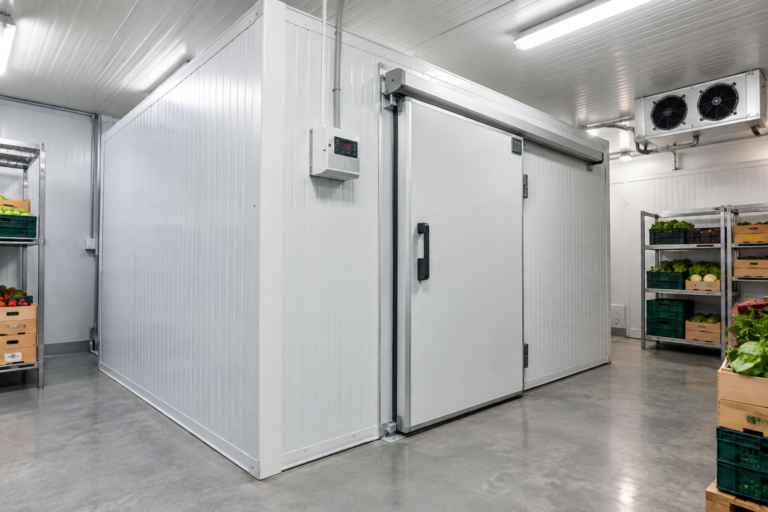
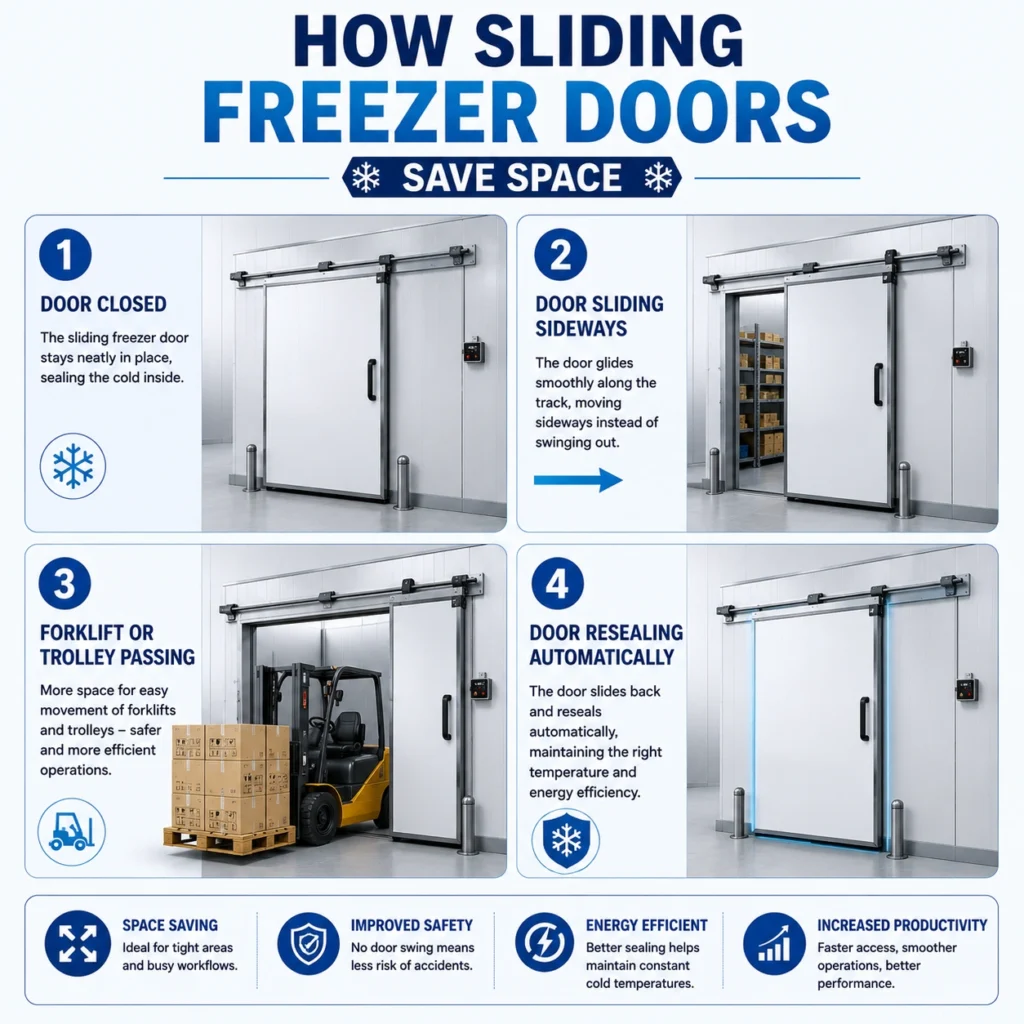
Sliding doors move sideways rather than swinging outward.
This makes them extremely popular in larger commercial kitchens where staff regularly move stock using trolleys or pallet trucks.
Because the door does not require swing space, movement around the kitchen becomes much easier.
Many modern food manufacturers and distribution centres choose sliding doors because they improve workflow while maintaining excellent insulation.
Industry specialists also note that sliding freezer doors provide reliable sealing and durability for high-frequency use.
Best suited for
- Food factories
- Distribution centres
- Supermarkets
- Large restaurants
- Wholesale food suppliers
Benefits
- Saves valuable floor space
- Ideal for wider openings
- Excellent insulation
- Easier movement for large deliveries
- Suitable for heavy daily use
The main consideration is ensuring enough wall space beside the opening for the door to slide.
High-Speed Freezer Doors
Large food production facilities often need access every few minutes.
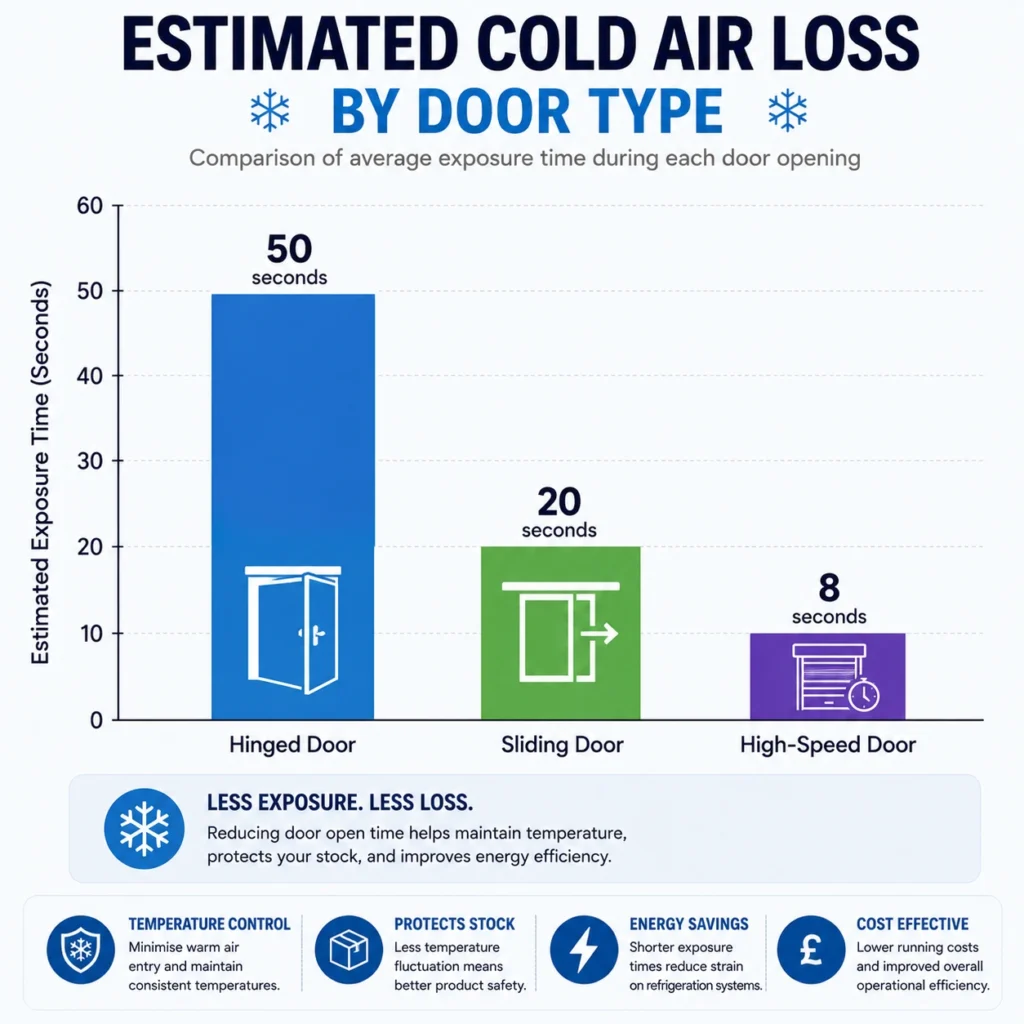
Opening a conventional door repeatedly allows significant heat transfer between rooms.
High-speed freezer doors solve this problem by opening and closing automatically in just a few seconds.
These rapid-action doors help maintain stable temperatures while improving staff productivity.
Manufacturers report that high-speed insulated freezer doors minimise temperature fluctuations, improve workflow, and reduce product spoilage in busy cold storage environments. (GS Doors)
Ideal for
- Food manufacturing
- Frozen food warehouses
- Logistics centres
- Meat processing plants
Benefits
- Faster opening and closing
- Less cold air escapes
- Reduced frost formation
- Better hygiene
- Lower energy consumption over time
Although these doors have a higher upfront cost, businesses with constant traffic often recover that investment through reduced electricity usage.
Want a tailored recommendation or quick quote? Reach out today
Vertical Lift Freezer Doors
Vertical lift doors rise upwards instead of sliding sideways.
They are commonly installed where wall space is limited but ceiling height is available.
Although less common than sliding doors, they are valuable for warehouses and specialist industrial facilities.
These doors are particularly useful where forklifts require unrestricted access across the entire doorway.
Manufacturers recommend vertical doors for facilities with limited side clearance and continuous material handling.
Which Door Type Is Best for Your Commercial Kitchen?
The answer depends on how your freezer is used every day.
Smaller independent restaurants usually benefit from hinged doors because they are affordable and reliable.
Larger kitchens receiving multiple deliveries every day often prefer sliding doors because they make transporting stock much easier.
Food factories processing hundreds of pallets daily typically choose high-speed insulated doors to reduce energy loss while improving productivity.
Instead of focusing only on purchase price, businesses should consider the long-term operating cost over the next 10 to 20 years.
Want a tailored recommendation or quick quote? Reach out today
Insulation Thickness Makes a Bigger Difference Than Most People Realise
The door itself is only part of the equation. Its insulation thickness has a direct impact on temperature stability and energy use.
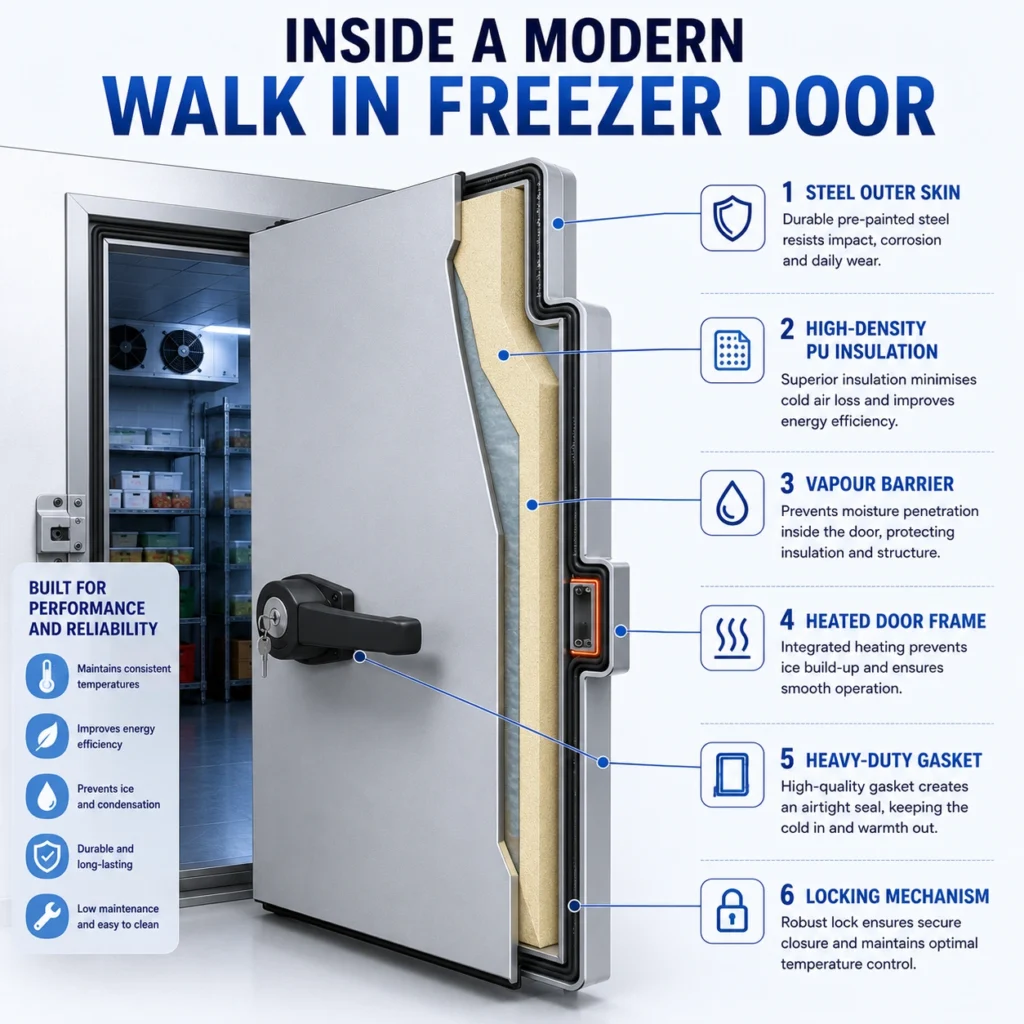
Most commercial freezer doors use high-density polyurethane (PU) foam insulation because it provides excellent thermal performance while keeping the door relatively lightweight. For freezer applications operating below 0°C, insulated doors are commonly manufactured with panel thicknesses between 100 mm and 150 mm, depending on the required temperature and usage.
A thicker insulated door helps:
- Reduce heat transfer
- Lower compressor workload
- Maintain stable freezer temperatures
- Reduce ice build-up around the door frame
- Improve long-term energy efficiency
Choosing the correct insulation specification from the beginning can help lower running costs over the lifetime of your cold room.
Safety Features Every Commercial Freezer Door Should Have
Cold rooms and freezer rooms must be safe for everyone using them. Modern freezer doors include several safety features that protect staff while keeping the freezer operating efficiently.
Important safety features include:
- Internal emergency release handle
- Heated door frame to prevent freezing shut
- Anti-slip threshold
- Heavy-duty insulated gasket
- Self-closing mechanism where appropriate
- Secure locking system with emergency override
These features help businesses meet workplace safety requirements while reducing the risk of accidents.
How to Choose the Right Walk In Freezer Door Supplier Leeds
Finding the right walk in freezer door supplier Leeds is just as important as choosing the right door type.
A quality supplier should understand commercial refrigeration systems rather than simply selling doors. They should assess your kitchen layout, operating temperatures, traffic levels and long-term maintenance needs before making recommendations.
When comparing suppliers, consider:
| What to Look For | Why It Matters |
|---|---|
| Commercial refrigeration experience | Ensures the correct door is specified. |
| Quality insulated door panels | Better energy efficiency and durability. |
| Professional installation | Reduces air leaks and future repairs. |
| Availability of replacement parts | Minimises downtime. |
| Maintenance support | Keeps doors performing efficiently. |
| Knowledge of UK food industry requirements | Supports compliance and operational reliability. |
Working with an experienced supplier helps ensure your freezer door performs reliably for many years instead of becoming a frequent maintenance issue.
Walk-In Freezer Door Recommendation Tool
Quickly identify the ideal freezer door configuration, insulation profile, and service cycle based on your everyday facility demands.
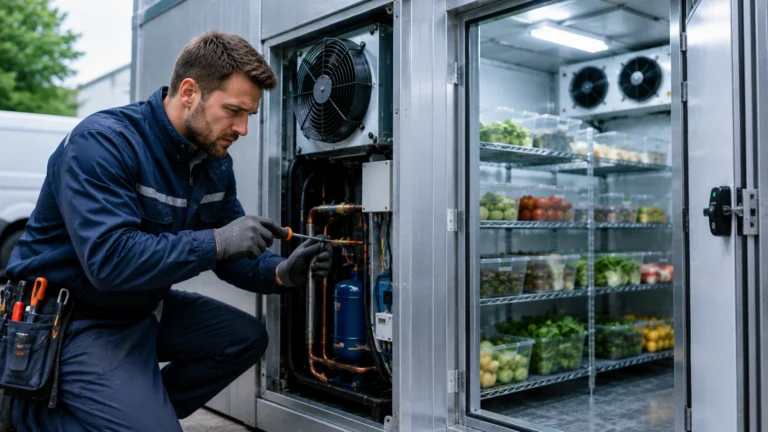
Simple Maintenance Tips That Extend Door Life
Even the best freezer door requires regular maintenance.
Routine inspections help identify small issues before they become expensive repairs.
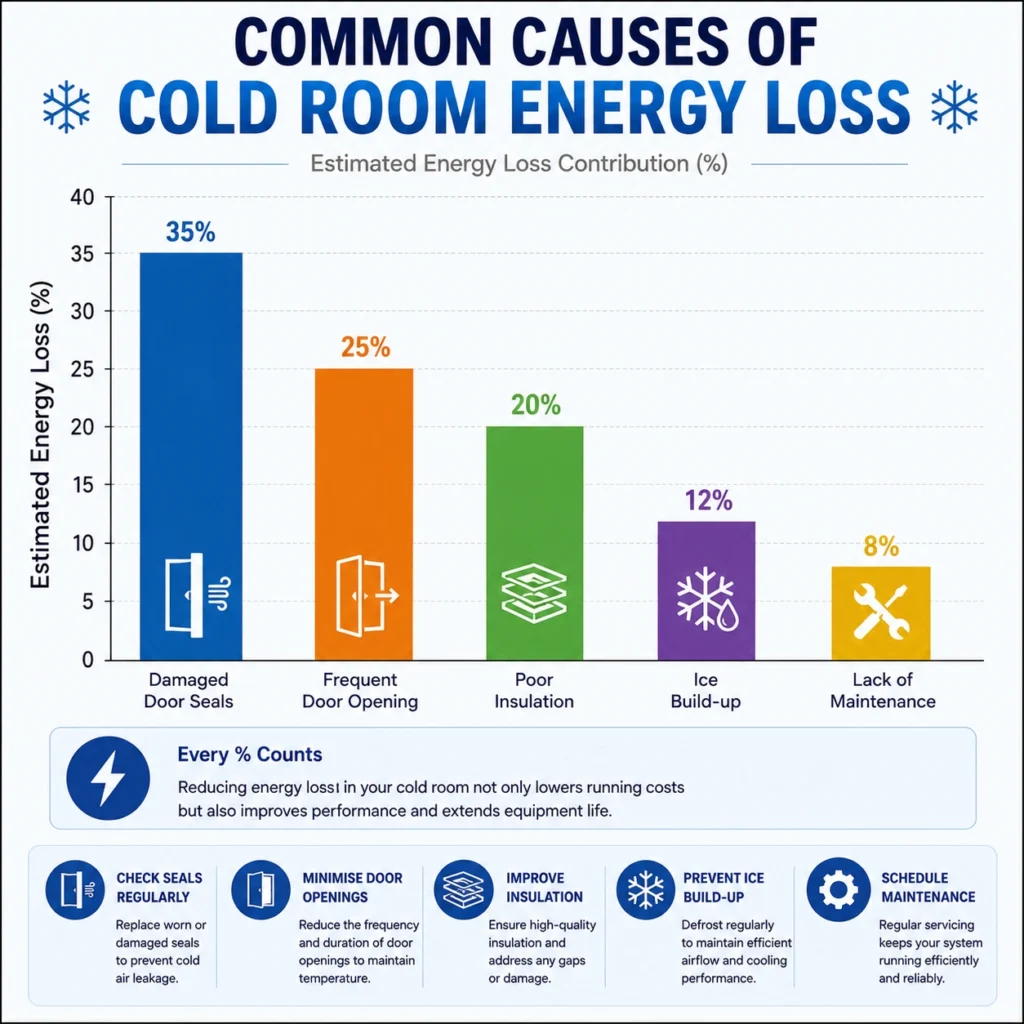
Maintenance should include:
- Cleaning door seals
- Checking hinges or sliding rails
- Inspecting heated frames
- Testing emergency release handles
- Replacing damaged gaskets
- Checking door alignment
According to the UK’s Energy Saving Trust, improving refrigeration efficiency through regular maintenance can reduce energy consumption while extending equipment life.
Preventive maintenance also helps minimise unexpected downtime during busy trading periods.
The right walk in freezer door improves more than just access to your freezer. It helps maintain food quality, lowers electricity consumption, reduces maintenance costs and keeps your commercial kitchen running smoothly every day.
Whether you operate a café, restaurant, supermarket or food manufacturing facility, taking the time to compare door types, insulation performance and supplier experience will deliver long-term value.
Which type of walk-in freezer door would work best for your commercial kitchen? Share your experience or contact our team if you’d like expert guidance choosing the right solution for your business.
Frequently Asked Questions (FAQs)
1. What is the best walk in freezer door for a commercial kitchen?
The best walk in freezer door depends on your business type, available space, and daily traffic. Hinged doors are ideal for smaller kitchens with limited access, while sliding doors work well in larger kitchens where staff frequently move trolleys. High-speed freezer doors are best for busy food production facilities because they reduce cold air loss and improve energy efficiency.
2. How much does a walk-in freezer door cost in the UK?
The cost of a walk-in freezer door varies depending on its size, insulation thickness, door type, and additional features such as heated frames or automatic operation. A professional supplier can recommend the right solution based on your cold room requirements and provide an accurate quotation.
3. Which walk-in freezer door is the most energy-efficient?
High-speed insulated freezer doors are generally the most energy-efficient for facilities with frequent door openings because they open and close quickly, reducing cold air loss. For smaller commercial kitchens, a well-insulated hinged or sliding door with high-quality seals can also provide excellent energy performance.
4. What insulation thickness should a walk-in freezer door have?
Most commercial freezer doors use insulation between 100mm and 150mm for freezer applications. The correct thickness depends on your operating temperature, room size, and how often the door is opened. Better insulation helps maintain stable temperatures while lowering energy costs.
5. What safety features should a commercial walk-in freezer door include?
A quality commercial freezer door should include an internal emergency release handle, heated door frame, heavy-duty insulated gasket, secure locking mechanism, anti-slip threshold, and durable hinges or sliding hardware. These features improve both safety and operational reliability.
6. How long does a walk-in freezer door last?
With professional installation and regular maintenance, a commercial walk-in freezer door can last 15–25 years or longer. Routine inspections, seal replacement, and proper cleaning help extend its lifespan and maintain energy efficiency.
7. How do I know if my walk-in freezer door needs replacing?
Signs that your freezer door may need replacing include damaged seals, difficulty closing the door, excessive frost build-up, rising energy bills, temperature fluctuations, rust, or visible damage to the insulation or frame. Replacing a worn door can improve cold room performance and reduce operating costs.
8. How often should a walk-in freezer door be serviced?
Commercial freezer doors should be inspected every month and professionally serviced at least once a year. Businesses with high daily usage may benefit from more frequent maintenance to ensure seals, hinges, tracks, and safety mechanisms remain in good condition.
9. Can I upgrade an existing cold room with a new walk-in freezer door?
Yes. In many cases, an existing cold room can be upgraded with a modern insulated freezer door without replacing the entire cold room. An experienced walk in freezer door supplier Leeds can assess compatibility and recommend the most suitable replacement.
10. Why choose a professional walk in freezer door supplier Leeds?
An experienced walk in freezer door supplier Leeds can help you choose the correct door based on your business needs, freezer temperature, traffic levels, and available space. Professional installation ensures an airtight seal, reliable operation, improved energy efficiency, and long-term performance.