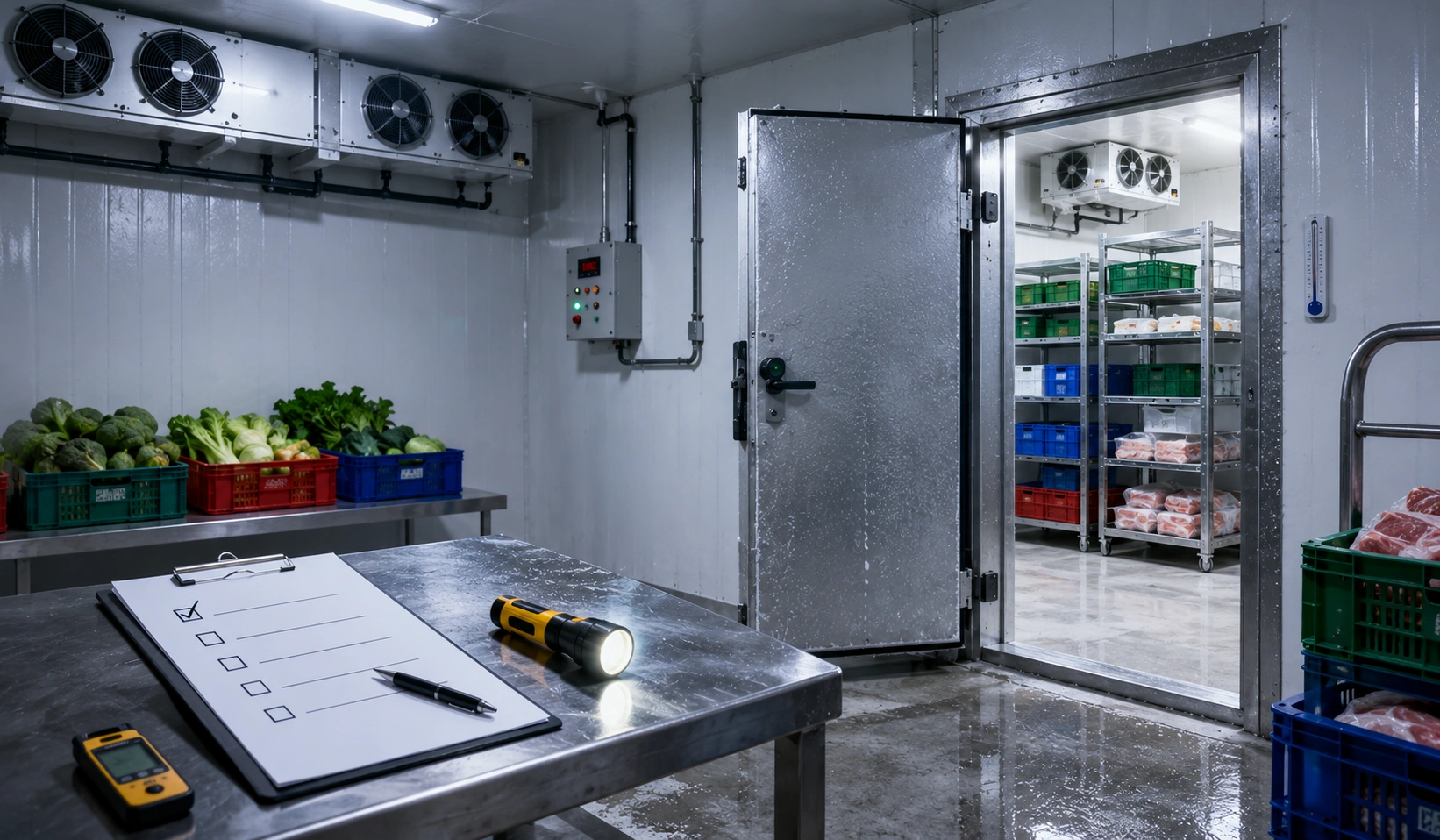
Cold Room Not Working? A Step-by-Step Emergency Checklist for Businesses
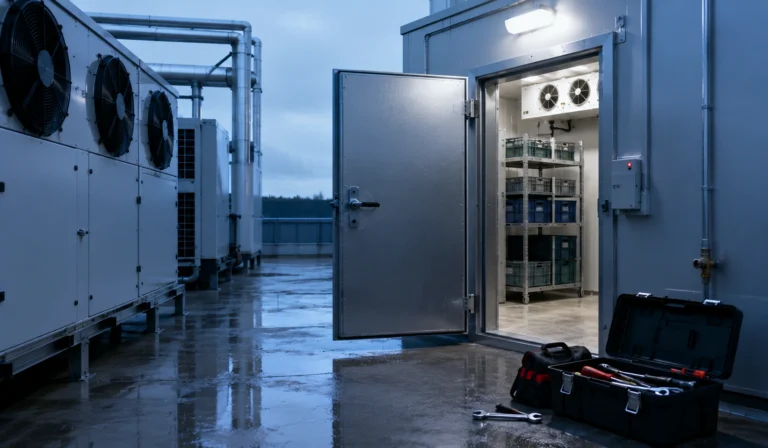
Nothing creates panic in a food business, pharmacy, warehouse, or commercial kitchen faster than discovering your cold room not working. Every minute without proper refrigeration increases the risk of spoiled stock, business interruption, and costly losses.
The good news is that not every cooling problem means a major system failure. Some issues can be identified quickly, while others require immediate professional attention. Knowing what to check first can reduce downtime, protect valuable products, and help engineers diagnose the problem faster.
According to the UK Food Standards Agency, businesses handling chilled food must maintain safe storage temperatures as part of their food safety management systems. Temperature monitoring is also a legal requirement for many commercial cold rooms used in food and pharmaceutical industries.
Why Every Minute Matters When a Cold Room Stops Working
A commercial cold room protects more than products—it protects your reputation, compliance, and profits.
Temperature-sensitive goods can quickly become unsafe if storage temperatures rise outside recommended limits. Research published by the World Resources Institute estimates that cold chain failures contribute to approximately $15 billion in annual food waste globally, highlighting how expensive refrigeration failures can become.
Businesses commonly affected include:
- Restaurants
- Hotels
- Supermarkets
- Food manufacturers
- Florists
- Pharmaceutical facilities
- Catering companies
- Butchers and fish suppliers
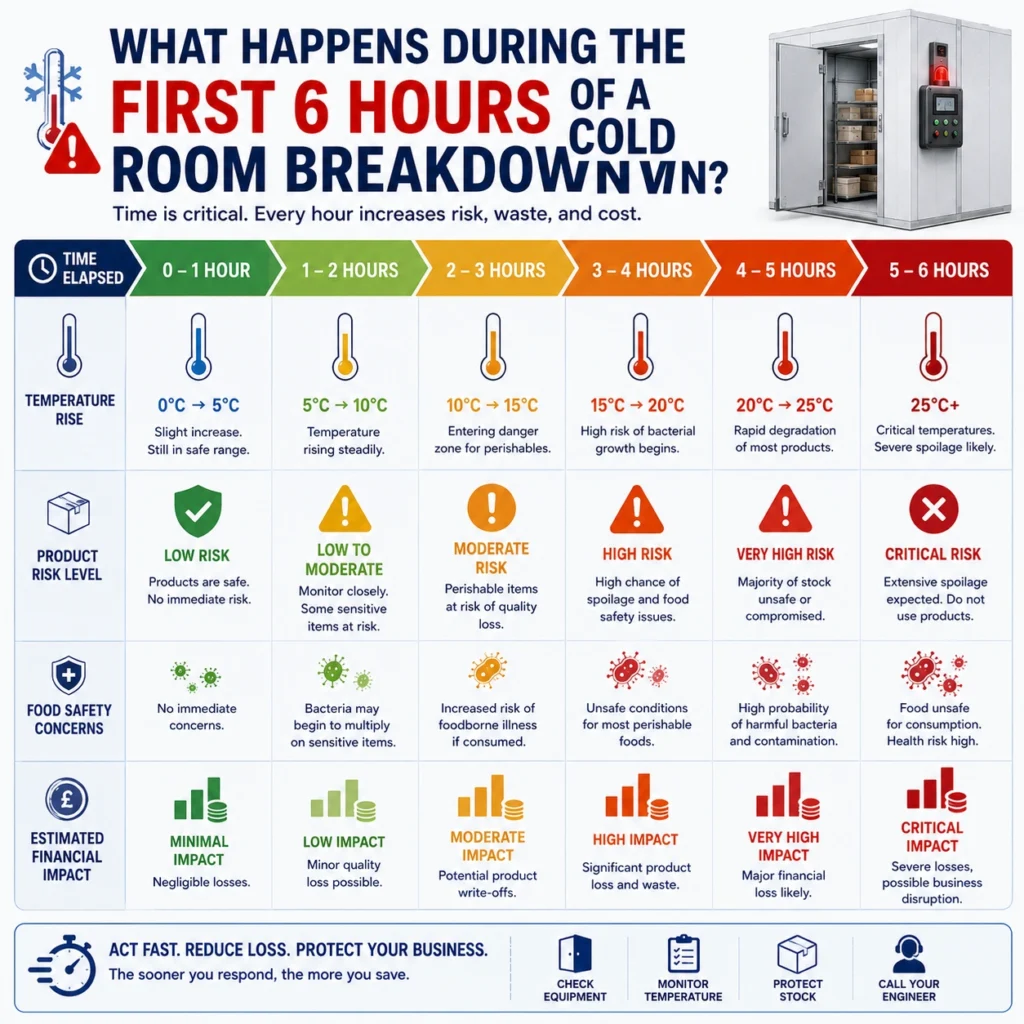
Step 1: Stay Calm and Keep the Door Closed
Your first reaction may be to open the door repeatedly to inspect the products.
Avoid doing this.
Every door opening allows warm air inside, causing temperatures to rise much faster.
Instead:
- Keep the door closed.
- Inform staff immediately.
- Record the current temperature.
- Stop adding new stock into the room.
A well-insulated cold room can often maintain acceptable temperatures for several hours if doors remain shut.
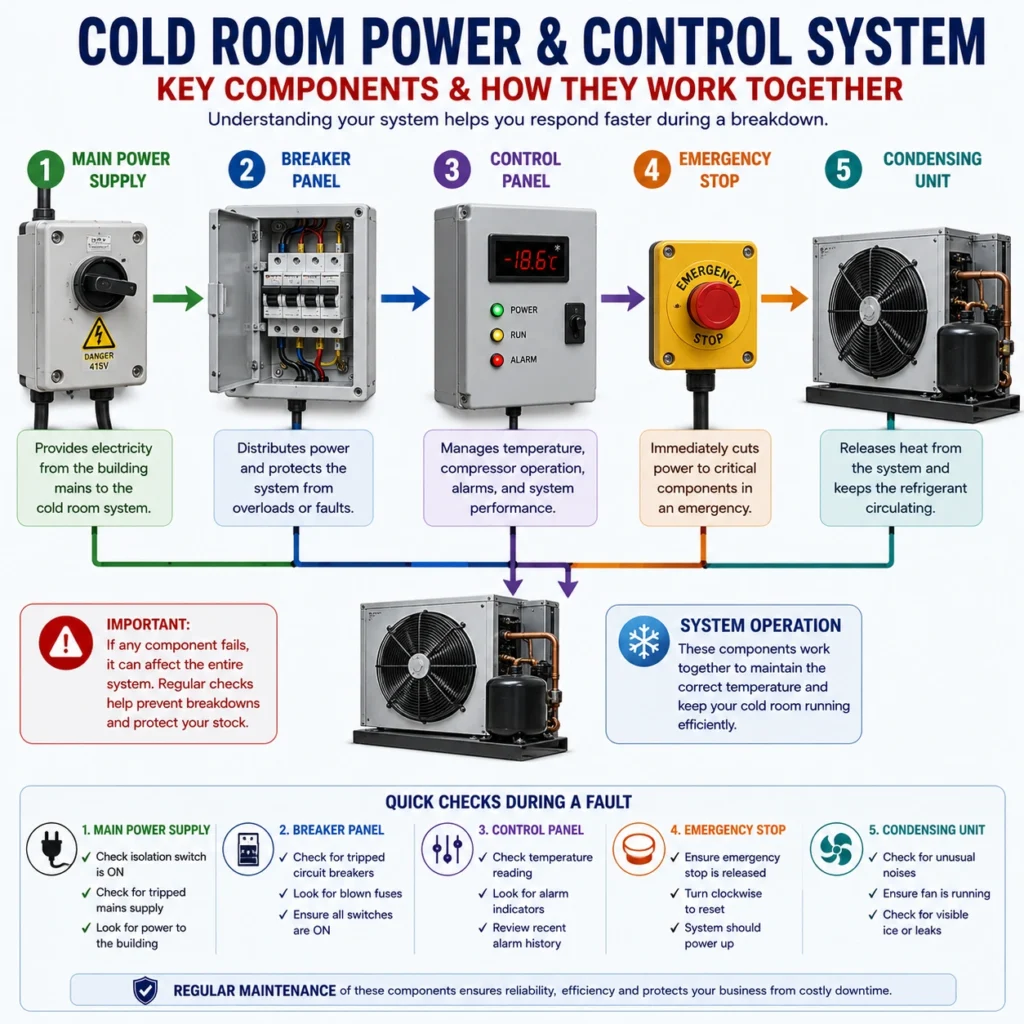
Step 2: Check the Power Supply
Many emergency call-outs are caused by simple electrical issues.
Inspect:
- Main power supply
- Circuit breakers
- Emergency isolation switch
- Control panel display
If the control panel is completely blank, power loss may be the cause rather than refrigeration failure.
Never attempt electrical repairs yourself unless qualified.
Step 3: Look for Obvious Warning Signs
Walk around the cold room without dismantling equipment.
Check for:
| Warning Sign | Possible Cause |
|---|---|
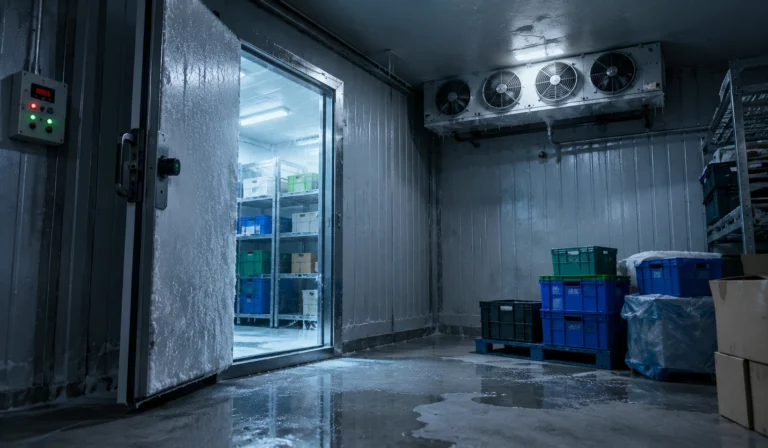
| Water on floor | Blocked drain or failed defrost |
| Excessive frost | Door seal problem or airflow issue |
| Loud noises | Fan or compressor fault |
| Burning smell | Electrical fault |
| Ice around evaporator | Defrost failure |
| Warm air inside | Refrigeration system failure |
These observations help engineers diagnose problems faster during cold room repair Leeds call-outs.
Step 4: Check Temperature Readings
Compare:
- Display temperature
- Independent thermometer
- Product temperature if available
A faulty sensor may show incorrect readings even when the room is cooling correctly.
Temperature monitoring is considered an essential compliance requirement for commercial cold rooms used in food businesses and pharmaceutical storage.
Cold Room Temperature Risk Calculator
Step 5: Check Door Seals
Damaged door gaskets are one of the most overlooked causes of poor cooling.
Look for:
- Tears
- Cracks
- Loose corners
- Gaps around the frame
Warm air entering continuously forces the refrigeration system to work much harder.
Want a tailored recommendation or quick quote? Reach out today
Step 6: Look at Airflow
Poor airflow prevents even cooling.
Check whether:
- Products block evaporator fans
- Boxes are stacked against vents
- Air can circulate freely
Maintenance experts consistently recommend keeping airflow clear to improve cooling performance and reduce compressor strain.
| Good Airflow | Poor Airflow |
|---|---|
| Faster cooling | Slow cooling |
| Lower energy use | Higher electricity bills |
| Even temperatures | Hot and cold spots |
| Longer equipment life | Compressor overwork |
Step 7: Listen to the Refrigeration System
Your ears often detect problems before your eyes.
Normal sounds include:
- Gentle fan operation
- Compressor cycling
Warning sounds include:
- Grinding
- Buzzing
- Clicking repeatedly
- Loud vibration
- Metal knocking
These symptoms usually require immediate inspection by qualified refrigeration engineers.
Want a tailored recommendation or quick quote? Reach out today
Step 8: Inspect for Ice Build-Up
Ice isn’t always normal.
Large frost accumulation may indicate:
- Failed defrost cycle
- Faulty door seal
- Humidity entering the room
- Refrigerant problems
Avoid using sharp tools to remove ice because this can damage evaporator coils.
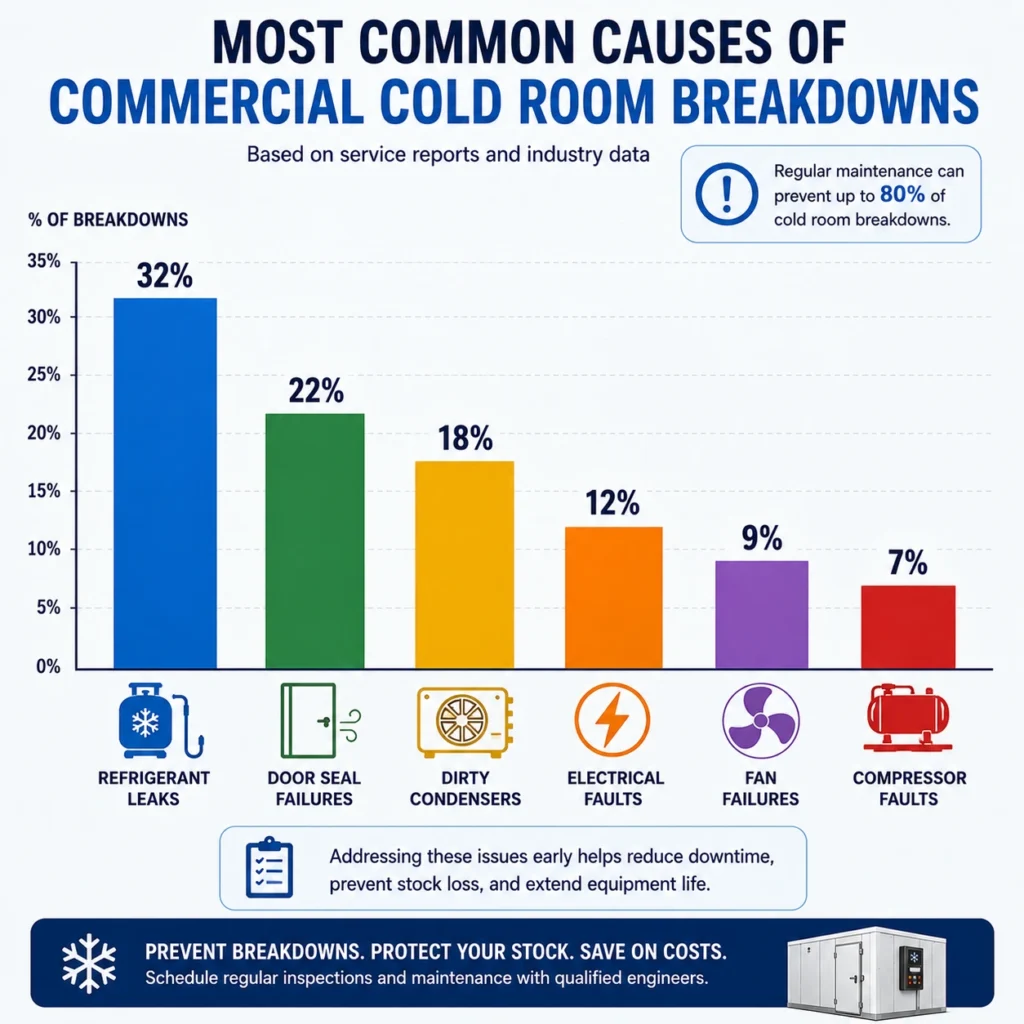
Step 9: Don't Ignore Dirty Condensers
Dirty condenser coils reduce cooling efficiency dramatically.
Industry maintenance guidance reports that dirty condensers may increase refrigeration energy consumption by 10–40%, while also increasing compressor wear.
Signs include:
- High discharge temperatures
- Longer cooling times
- Increased electricity costs
Professional cleaning is usually recommended during scheduled servicing.
Step 10: Know When to Call an Engineer
Some issues should never be delayed.
Call a refrigeration engineer immediately if:
- Products are warming rapidly.
- Compressor is not running.
- Refrigerant leak is suspected.
- Electrical burning smell is present.
- System repeatedly trips power.
- Temperature alarms continue.
- Cooling does not recover after basic checks.
Choosing experienced professionals for cold room repair Leeds helps minimise downtime and protects valuable stock.
For businesses across the UK, working with F-Gas Certified engineers and Level 3 RACHP Qualified Technicians ensures refrigerant work complies with regulations while repairs are completed safely. Coldroomplus supports businesses with Emergency Repairs & Ongoing Support, UK-Wide Coverage, Genuine Spare Parts, and a 1 Year Extended Warranty where applicable, helping reduce future breakdown risks.
Preventing the Next Emergency
The best emergency repair is the one you never need.
Routine servicing helps identify:
- Refrigerant leaks
- Electrical wear
- Dirty condensers
- Worn fan motors
- Failing door seals
- Calibration issues
Professional maintenance also improves energy efficiency and reduces unexpected downtime.
Businesses operating multiple cold rooms often benefit from Tailored Solutions for Every Industry, ensuring servicing schedules match operational demands rather than following a generic maintenance plan.
Why Businesses Choose Professional Emergency Repairs
When refrigeration fails, speed matters—but so does getting the repair right the first time.
Coldroomplus supports businesses with:
- F-Gas Certified engineers
- Level 3 RACHP Qualified Technicians
- Competitive Pricing
- Emergency Repairs & Ongoing Support
- UK-Wide Coverage
- Free Site Survey within a 50-mile radius
- Bespoke Cold Rooms Built to Your Exact Needs
- Energy-Efficient, Cost-Saving Systems
- Genuine Spare Parts backed by a 1 Year Extended Warranty
- Trusted by 300+ Happy Customers
Fast diagnosis, quality components, and preventative recommendations help reduce repeat breakdowns and keep businesses operating with confidence.
What was the first warning sign you noticed, and how quickly was the issue resolved? Share your experience in the comments—it could help another business avoid costly downtime.
Frequently Asked Questions (FAQs)
1. What should I do first if my cold room is not working?
If your cold room is not working, keep the door closed to retain cold air, check the power supply and circuit breakers, verify the temperature display, and avoid moving products unless necessary. Contact a qualified refrigeration engineer immediately if the temperature continues to rise or you notice unusual noises, frost build-up, or refrigerant leaks.
2. How long can a cold room stay cold during a power failure?
The time varies depending on insulation quality, room size, stock levels, and how often the door is opened. A well-insulated cold room can often maintain a safe temperature for several hours if the door remains closed, but temperatures should be monitored continuously to protect temperature-sensitive products.
3. What are the most common reasons a commercial cold room stops working?
Common causes include compressor failure, refrigerant leaks, faulty thermostats, electrical issues, dirty condenser coils, blocked evaporators, damaged door seals, fan motor failures, and poor maintenance. Regular servicing helps identify these problems before they lead to costly breakdowns.
4. How much does cold room repair in Leeds cost?
The cost of cold room repair in Leeds depends on the fault, replacement parts required, labour time, and whether an emergency call-out is needed. Minor repairs are generally less expensive than compressor or refrigerant system repairs. A professional inspection provides an accurate quotation.
5. Can I continue using my cold room if it is not cooling properly?
No. If your cold room cannot maintain the correct storage temperature, continuing to use it may put food, medicines, or other temperature-sensitive products at risk. It may also result in food safety compliance issues and financial losses.
6. How can I prevent my cold room from breaking down?
Schedule regular maintenance, clean condenser coils, inspect door seals, keep airflow unobstructed, monitor temperatures daily, and arrange annual servicing by F-Gas certified refrigeration engineers. Preventative maintenance significantly reduces unexpected failures.
7. When should I call an emergency cold room repair engineer?
You should request emergency cold room repair if the room temperature is rising rapidly, the compressor is not running, electrical components smell burnt, refrigerant leakage is suspected, alarms continue to sound, or the system repeatedly trips the power supply.
8. How often should a commercial cold room be serviced?
Most commercial cold rooms should be professionally serviced at least every six months. Businesses with high usage, food production facilities, pharmaceutical storage, or large refrigeration systems may require quarterly maintenance to ensure reliable performance and compliance.
9. Why is my cold room running but not getting cold?
A cold room may continue running without cooling because of dirty condenser coils, low refrigerant levels, faulty evaporator fans, blocked airflow, thermostat problems, or compressor issues. A qualified refrigeration engineer can diagnose the exact cause.
10. Why choose Coldroomplus for cold room repair in Leeds?
Coldroomplus provides fast and reliable cold room repair Leeds services with F-Gas Certified and Level 3 RACHP Qualified Technicians. The company offers emergency repairs, UK-wide coverage, genuine spare parts, competitive pricing, tailored refrigeration solutions, a free site survey within a 50-mile radius, and a 1-year extended warranty for added peace of mind.