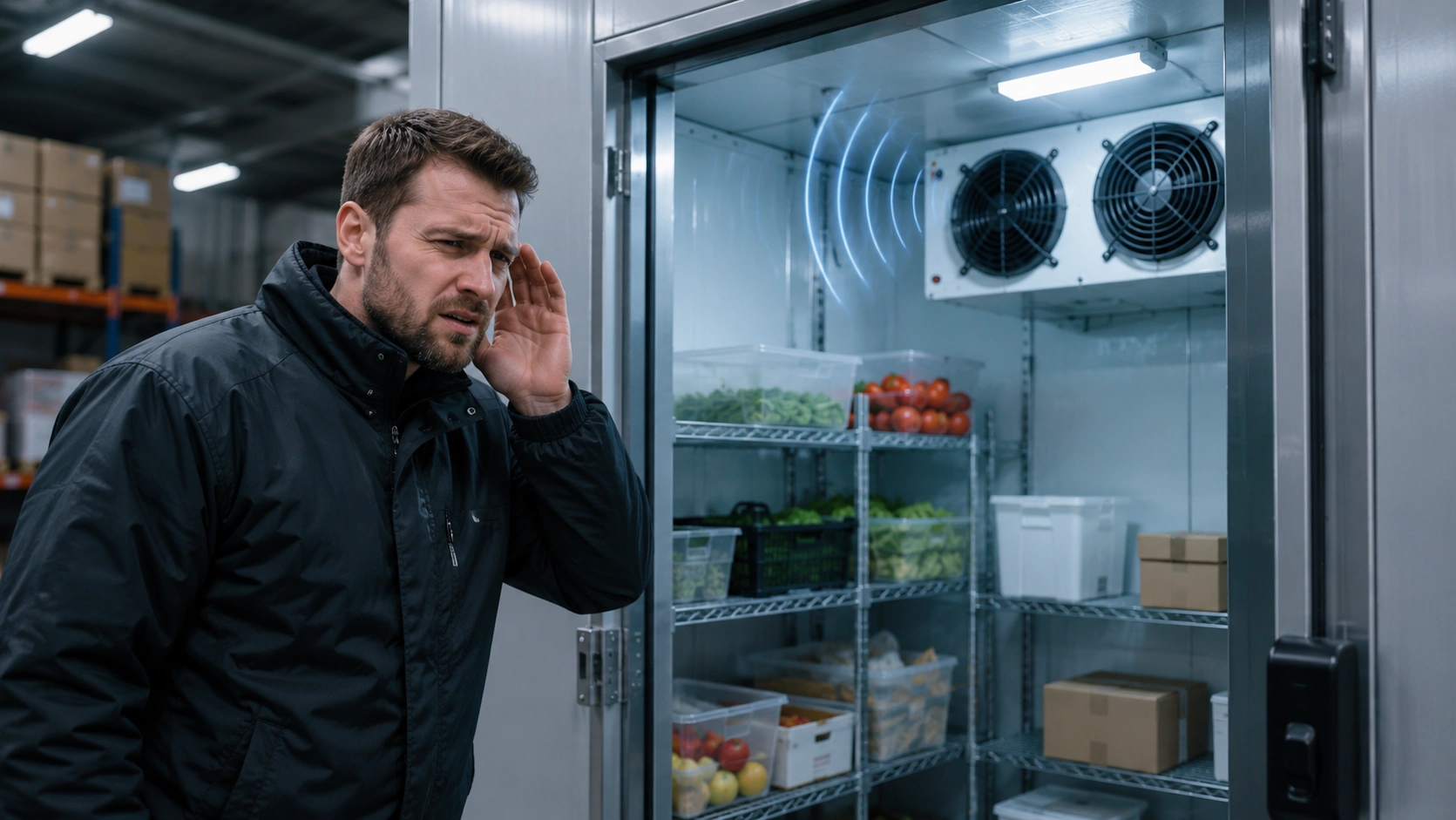
Strange Noises from Cold Room: What They Mean
When a cold room not working properly first begins to show signs of trouble, unusual noises are often the earliest warning signal. Many businesses ignore rattles, buzzing, grinding, or hissing sounds because cooling performance may still seem normal. However, those noises can indicate developing faults that may eventually lead to costly breakdowns, product loss, and unexpected downtime.
For restaurants, hospitals, warehouses, food distributors, and pharmaceutical facilities, understanding what these sounds mean can help prevent major refrigeration failures. Industry experts consistently identify unusual operating noises as one of the first indicators of mechanical wear, airflow restrictions, compressor problems, or refrigerant issues.
In this guide, we explain the most common cold room noises, what causes them, and when professional intervention is necessary.
Why Cold Room Noises Should Never Be Ignored
Commercial refrigeration systems contain compressors, evaporator fans, condenser fans, motors, refrigerant lines, and electrical components that operate continuously. Over time, wear and tear can cause these components to produce sounds that indicate declining performance.
This matters because refrigeration systems are often the largest energy consumer in cold storage facilities. Studies show that refrigeration equipment can account for approximately 80% of electricity consumption in cold storage operations, while refrigeration systems may represent between 25% and 85% of a business’s total energy use.
A small mechanical issue that begins as a strange noise can quickly escalate into higher energy costs and a complete cooling failure.
Hissing Sounds: Possible Refrigerant Problems
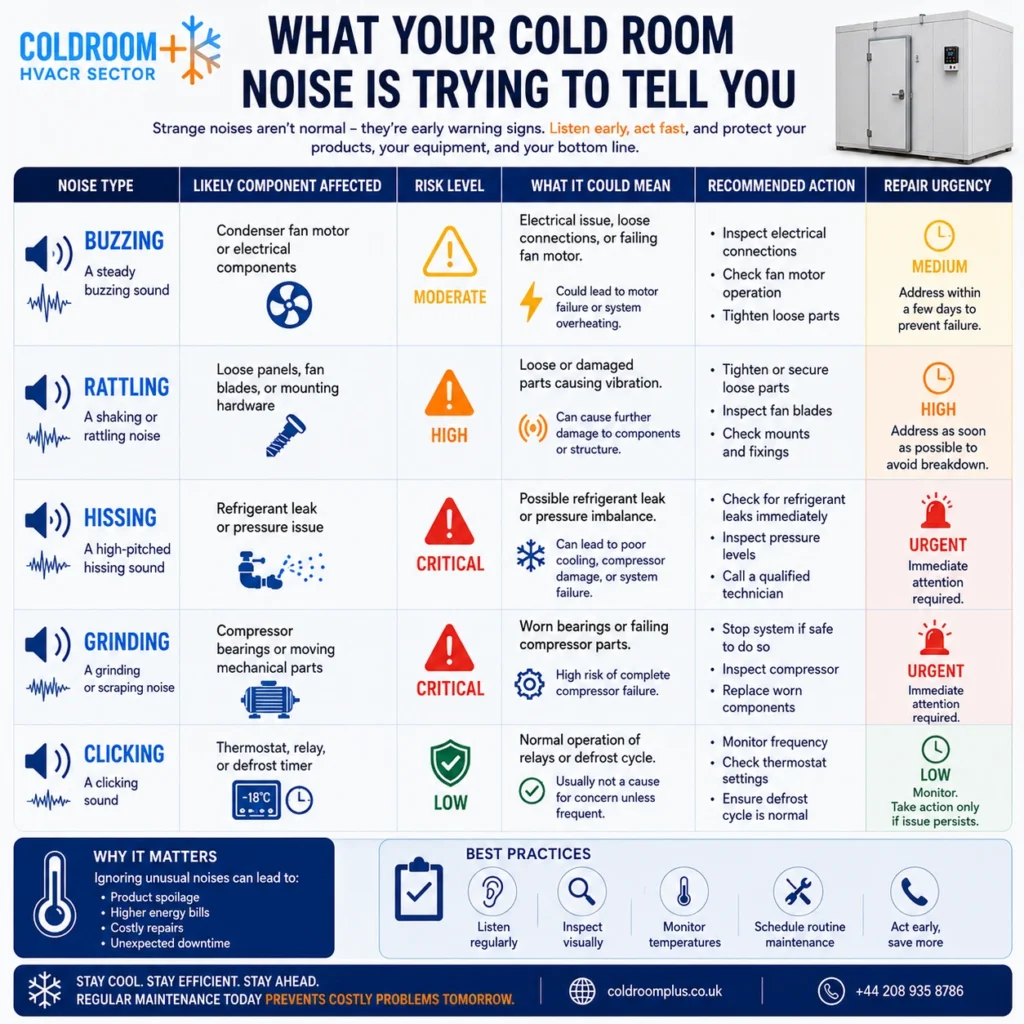
A hissing noise is one of the most concerning sounds in commercial refrigeration systems.
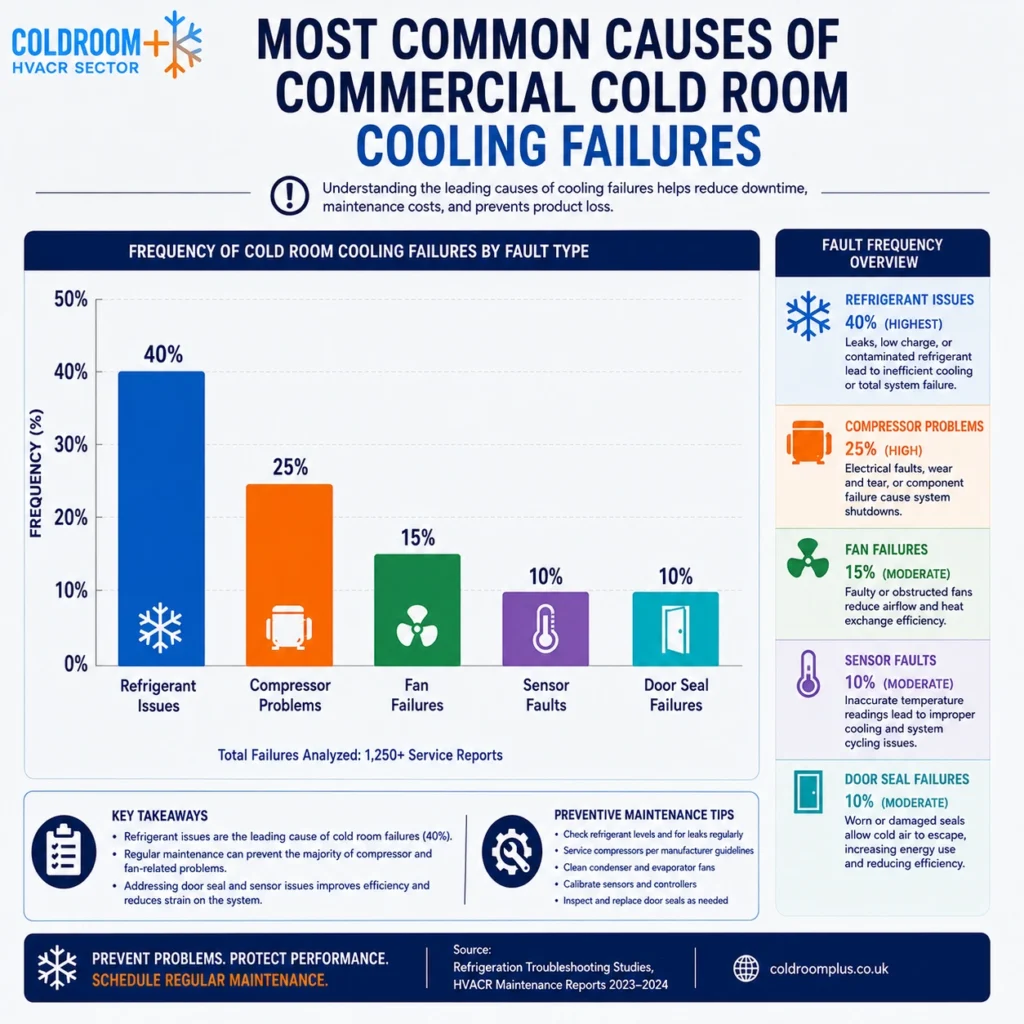
In many cases, it may indicate refrigerant escaping through a leak. Refrigerant is essential for heat transfer, and even a small loss can reduce cooling efficiency significantly. Low refrigerant levels are among the most common causes of cooling problems in commercial cold rooms.
Common Causes of Hissing
Refrigerant Leaks
Leaks may develop due to:
- Corroded pipework
- Damaged connections
- Vibrations loosening joints
- Aging refrigeration components
Expansion Valve Issues
A faulty expansion valve can create abnormal pressure changes that sometimes generate hissing sounds.
What You Should Do
If hissing is accompanied by rising temperatures or a cold room not working efficiently, immediate inspection is recommended. Refrigerant handling requires certified refrigeration engineers.
Grinding Noises: Motor or Bearing Failure
Grinding sounds usually indicate mechanical wear.
Cold room systems rely heavily on motors and bearings inside evaporator and condenser fan assemblies. When lubrication deteriorates or bearings become damaged, metal components may begin rubbing together.
Industry maintenance guides consistently identify faulty motor bearings as a major source of unusual refrigeration noise.
Signs That Accompany Grinding
Reduced Airflow
Air circulation may become weaker throughout the cold room.
Uneven Temperatures
Some areas may remain cold while others become noticeably warmer.
Increased Energy Consumption
Damaged bearings force motors to work harder, increasing electricity usage.
Ignoring these noises can eventually lead to motor failure and complete airflow loss.
Buzzing Sounds: Electrical or Compressor Issues
A persistent buzzing noise should never be dismissed.
The compressor acts as the heart of the refrigeration cycle. It maintains refrigerant circulation and system pressure throughout the cooling process. Compressor inefficiency directly impacts overall cold room performance.
Possible Causes
Compressor Starting Problems
Electrical faults can prevent the compressor from operating correctly.
Loose Electrical Connections
Damaged wiring or loose terminals may create buzzing sounds before complete failure occurs.
Contactor Problems
Electrical contactors can wear over time and create abnormal vibrations.
Warning Signs
If the buzzing becomes louder while the room struggles to maintain temperature, there is a strong possibility that the system is approaching a major breakdown.
This is often reported when businesses experience cold room problems Leeds refrigeration engineers frequently encounter during emergency callouts.
Rattling Noises: Loose Components
Rattling is often one of the simplest problems to fix.
However, it can also signal larger mechanical issues if left unresolved.
Maintenance standards for commercial cold rooms recommend checking compressors, fan motors, and refrigeration assemblies for loose screws and mounting hardware whenever unusual noises occur.
Common Sources
Loose Panels
Cold room panels and protective covers can vibrate during operation.
Refrigerant Pipe Vibration
Pipework may move excessively when support brackets loosen.
Fan Guards
Damaged or loose fan guards often create repetitive rattling sounds.
Early intervention can prevent component damage caused by continuous vibration.
Clicking Sounds: Normal or Warning Sign?
Not all clicking sounds indicate a fault.
Thermostats, relays, and control systems often create normal clicking noises during operation.
However, repeated rapid clicking may indicate:
- Electrical relay failure
- Thermostat malfunction
- Compressor start capacitor problems
- Control board issues
If clicking occurs continuously without the compressor starting, professional diagnostics are recommended.
Banging or Knocking Sounds
Loud banging sounds require immediate attention.
These noises may result from:
Compressor Internal Damage
Internal components may be wearing or failing.
Refrigerant Slugging
Liquid refrigerant entering the compressor can cause significant mechanical stress.
Pipe Movement
Improperly secured refrigerant lines can strike nearby structures during operation.
These issues can rapidly escalate into expensive repairs if ignored.
When Strange Noises Mean Your Cold Room Is About to Fail
Certain symptoms indicate urgent attention is required.
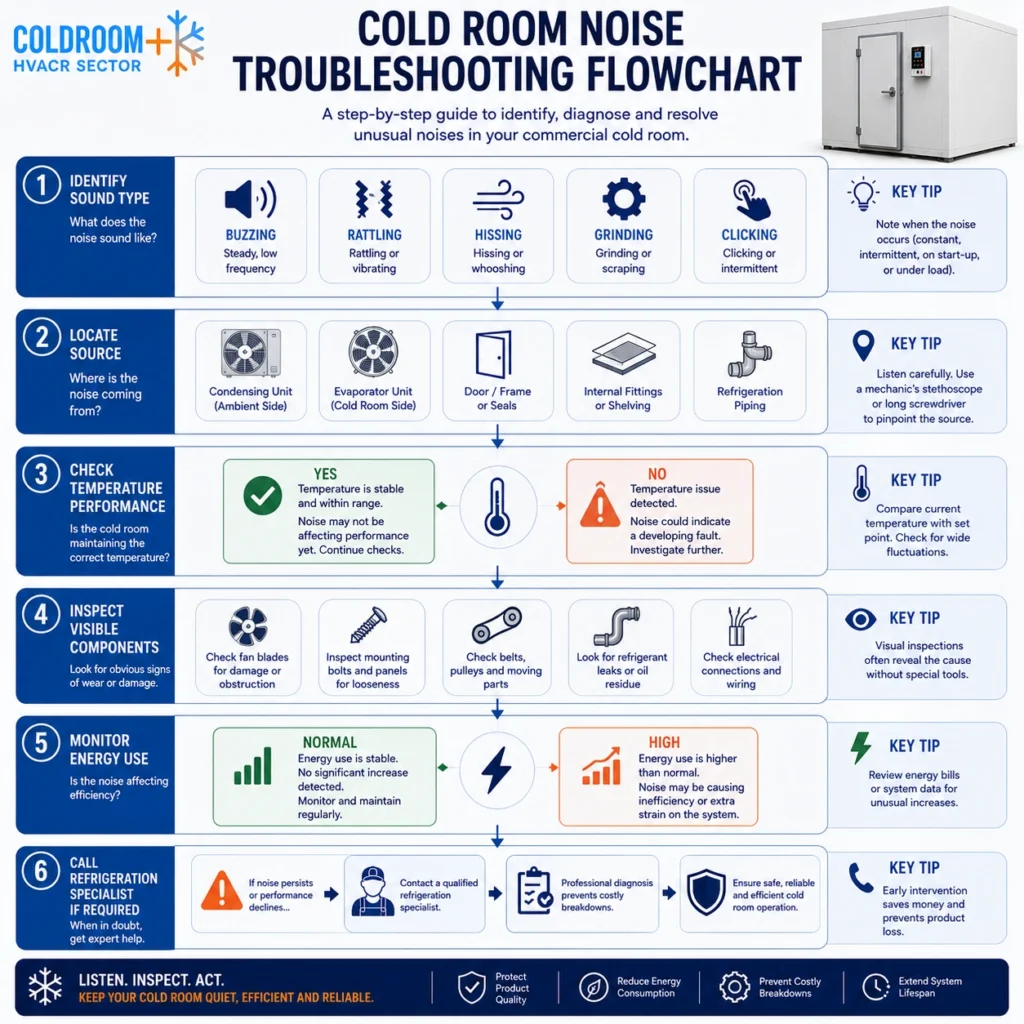
If strange noises are accompanied by any of the following, immediate service should be arranged:
Symptom | Risk Level | Action Required |
Rising room temperature | High | Immediate inspection |
Ice buildup on evaporator | High | Service call |
Compressor not starting | Critical | Emergency repair |
Water leaks | High | Inspection required |
Electrical burning smell | Critical | Shut system down |
Continuous loud grinding | Critical | Immediate repair |
These warning signs often indicate that a cold room not working issue is already developing and may soon lead to total refrigeration failure.
Cold Room Noise & Fault Diagnostic Tool
Analyze irregular acoustics, ice conditions, and system data to uncover underlying mechanical faults before they cause total system failure.
System Diagnostics Engineering Report
Immediate Recommended Technical Action:
-
Cold Room Plus Engineering Diagnostics Assessment:
How Preventive Maintenance Reduces Noise-Related Breakdowns
Regular maintenance remains the most effective way to avoid unexpected refrigeration failures.
Routine inspections can identify:
- Worn bearings
- Loose components
- Refrigerant leaks
- Airflow restrictions
- Electrical faults
- Sensor issues
Industry maintenance guidelines recommend ongoing monitoring of compressor performance, fan operation, refrigerant levels, and temperature consistency to ensure reliable cold room operation.
Businesses experiencing recurring cold room problems Leeds technicians frequently encounter often discover that preventative servicing could have prevented emergency repairs altogether.
Have you recently noticed buzzing, grinding, hissing, or rattling from your cold room system? Share the type of noise you’re hearing and when it occurs—our refrigeration specialists can help you understand whether it’s a minor issue or an early warning of a larger breakdown.
Frequently Asked Questions (FAQs)
1. Why is my cold room making a strange noise?
Strange noises from a cold room can indicate several issues, including loose components, worn fan bearings, refrigerant leaks, compressor problems, or electrical faults. Identifying the type of noise can help determine the underlying cause before it leads to a complete system breakdown.
2. Can a refrigerant leak cause a cold room to stop working?
Yes. Refrigerant leaks reduce the system’s ability to remove heat effectively, causing temperature fluctuations and reduced cooling performance. If left untreated, a refrigerant leak can eventually result in a cold room not working properly and increase energy costs.
3. What does a buzzing noise from a cold room mean?
A buzzing noise often points to electrical issues, loose wiring, faulty contactors, or compressor problems. If the buzzing is persistent or gets louder, it is important to arrange a professional inspection to prevent further damage.
4. Why is my cold room fan making a grinding sound?
Grinding sounds usually indicate worn bearings, motor wear, or debris interfering with the fan assembly. Continuing to operate the system with grinding noises can lead to fan failure and reduced airflow throughout the cold room.
5. Is it normal for a cold room compressor to make noise?
Some compressor noise is normal during operation. However, loud knocking, banging, rattling, or excessive vibration may indicate internal compressor damage or mounting issues that require immediate attention.
6. What are the most common cold room problems in Leeds businesses experience?
Common cold room problems Leeds businesses encounter include refrigerant leaks, compressor failures, evaporator icing, faulty thermostats, blocked condensers, fan motor issues, and electrical faults that affect temperature control and efficiency.
7. When should I call a cold room repair specialist?
You should contact a cold room repair specialist if you notice unusual noises combined with rising temperatures, ice buildup, water leaks, inconsistent cooling, electrical burning smells, or repeated system shutdowns.
8. Can poor maintenance cause cold room breakdowns?
Yes. Lack of regular maintenance is one of the leading causes of commercial refrigeration failures. Routine servicing helps identify worn components, refrigerant issues, airflow restrictions, and electrical faults before they become costly repairs.
9. Why is my cold room rattling during operation?
Rattling noises are commonly caused by loose panels, fan guards, pipework, mounting brackets, or vibrating refrigeration components. While often simple to fix, prolonged rattling can lead to more serious mechanical damage.
10. How can I prevent my cold room from developing noise-related problems?
Regular preventive maintenance, cleaning condenser coils, checking fan motors, inspecting refrigerant levels, tightening loose components, and scheduling professional servicing can significantly reduce the risk of noise-related cold room failures.