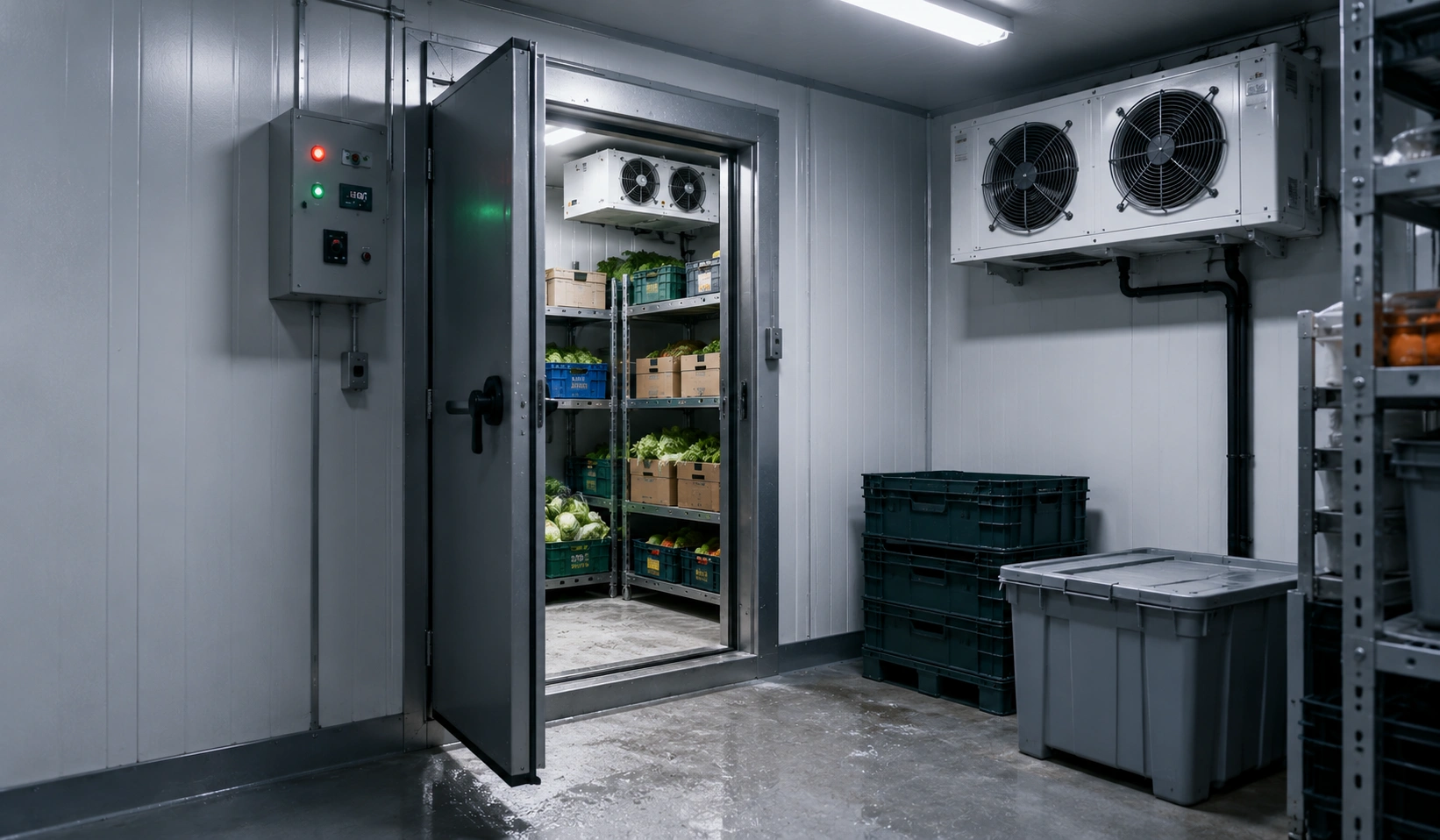
Cold Room Broken Down? What to Do in the First 30 Minutes
A cold room broken situation can turn into a costly emergency faster than most business owners expect. Whether you store fresh food, pharmaceuticals, flowers, dairy products, or beverages, every minute without proper refrigeration increases the risk of product damage and financial loss. Acting quickly during the first 30 minutes can often prevent thousands of pounds in wasted stock and reduce the chances of major equipment failure.
The good news is that not every breakdown becomes a disaster. By following the right steps immediately, protecting your inventory, and contacting experienced cold room engineers Leeds businesses trust, you can minimise downtime and get your refrigeration system back to normal safely.
Why the First 30 Minutes Matter So Much
A cold room is designed to maintain stable temperatures that slow bacterial growth and preserve product quality. Once refrigeration stops, temperatures begin to rise depending on insulation quality, room size, door openings, and ambient conditions.
The UK’s Food Standards Agency explains that chilled food should generally be stored at 8°C or below, while many businesses operate at 0–5°C for additional safety. Temperature excursions outside safe limits increase food safety risks and product spoilage. WHO cold-chain guidance also stresses that temperature stability is essential for temperature-sensitive products.
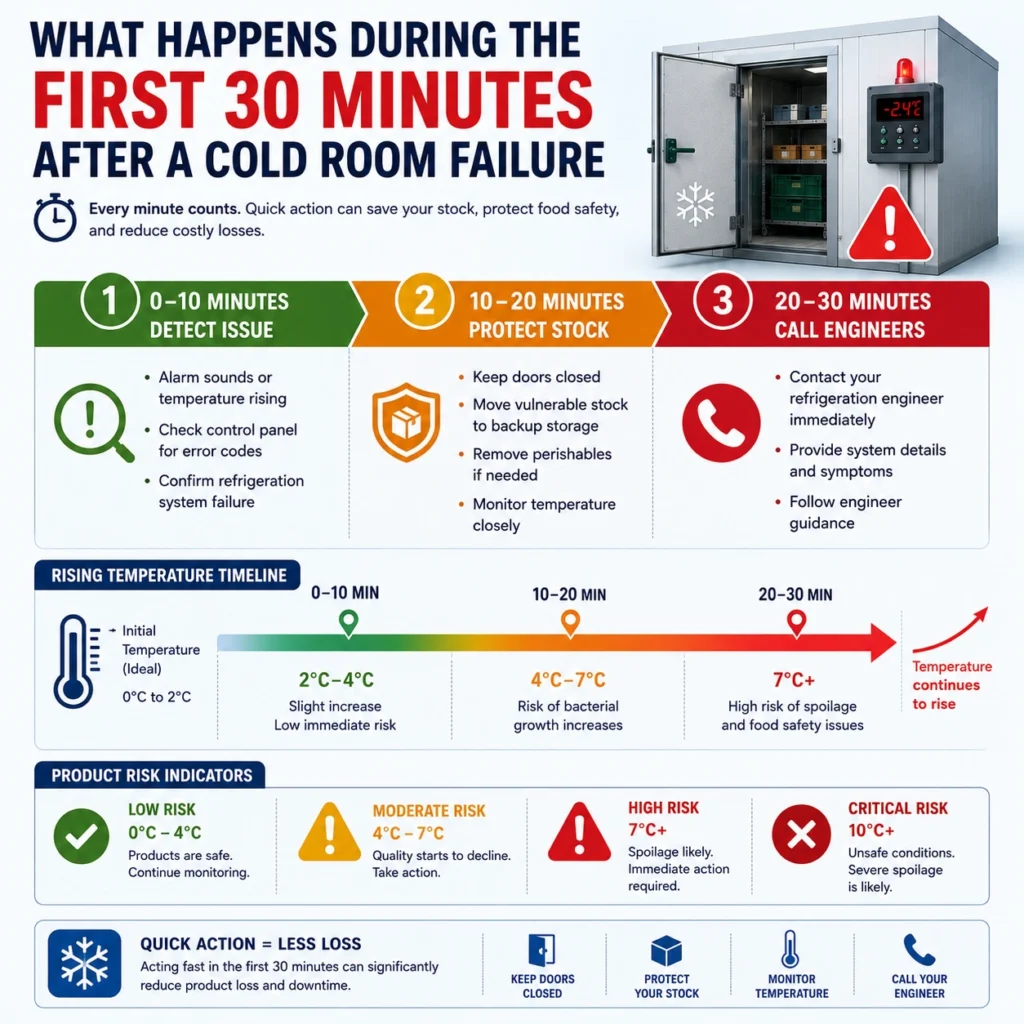
The First 10 Minutes: Stay Calm and Check the Basics
Many refrigeration emergencies are caused by relatively simple issues.
Before assuming the refrigeration system has completely failed, perform several quick visual checks.
Check Whether Power Has Been Lost
Look for:
- Tripped circuit breakers
- Power outage affecting the building
- Emergency isolation switch accidentally activated
- Display panel switched off
If the entire premises has lost power, avoid repeatedly opening the cold room door.
Check the Controller
Modern cold rooms display alarm codes.
Look for:
- High temperature alarm
- Sensor error
- Compressor fault
- Defrost warning
Take photographs of any error codes before resetting anything.
Keep the Door Closed
This is one of the biggest mistakes businesses make.
Every door opening allows warm air inside, increasing compressor recovery time once repairs begin.
According to cold-chain guidance, maintaining the internal environment is critical during unexpected temperature events.
Cold Room Temperature Risk Calculator
Minutes 10–20: Protect Your Stock
Once you’ve confirmed the cooling system has stopped working, focus on protecting your inventory.
Different products tolerate temperature rises differently.
Prioritise High-Value Products
Move only the most temperature-sensitive products if an alternative refrigerated space is immediately available.
Avoid unnecessary handling because every movement exposes products to warmer conditions.
Record Temperatures
Use:
- Digital probes
- Data loggers
- Wireless monitoring systems
Keeping accurate records helps with:
- Insurance claims
- Food safety compliance
- Warranty discussions
- Product quality assessment
WHO qualification guidance recommends continuous temperature monitoring for temperature-controlled storage.
| Situation | Recommended Action | Avoid |
|---|---|---|
| Power outage | Keep doors closed | Frequent inspections |
| Controller alarm | Record alarm code | Immediate reset |
| Refrigeration stopped | Call engineer | Continue loading stock |
| Rising temperature | Monitor products | Guessing temperatures |
| Small issue suspected | Perform visual checks | Attempting repairs yourself |
Minutes 20–30: Call Qualified Engineers
If the problem hasn’t been resolved quickly, contact professional refrigeration engineers immediately.
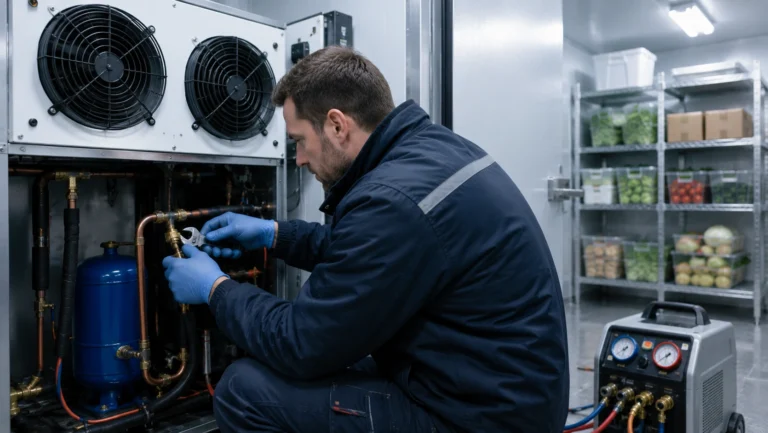
Attempting DIY refrigeration repairs can:
- Damage compressors
- Cause refrigerant leaks
- Void warranties
- Create electrical hazards
This is where experienced cold room engineers Leeds businesses rely on become invaluable.
Qualified engineers can diagnose problems involving:
- Refrigerant leaks
- Compressor failures
- Electrical faults
- Controller issues
- Condenser problems
- Evaporator icing
Coldroomplus uses:
- F-Gas Certified engineers
- Level 3 RACHP Qualified Technicians
- Genuine spare parts
- Emergency Repairs & Ongoing Support
These qualifications help ensure repairs meet UK refrigeration regulations while reducing repeat failures.
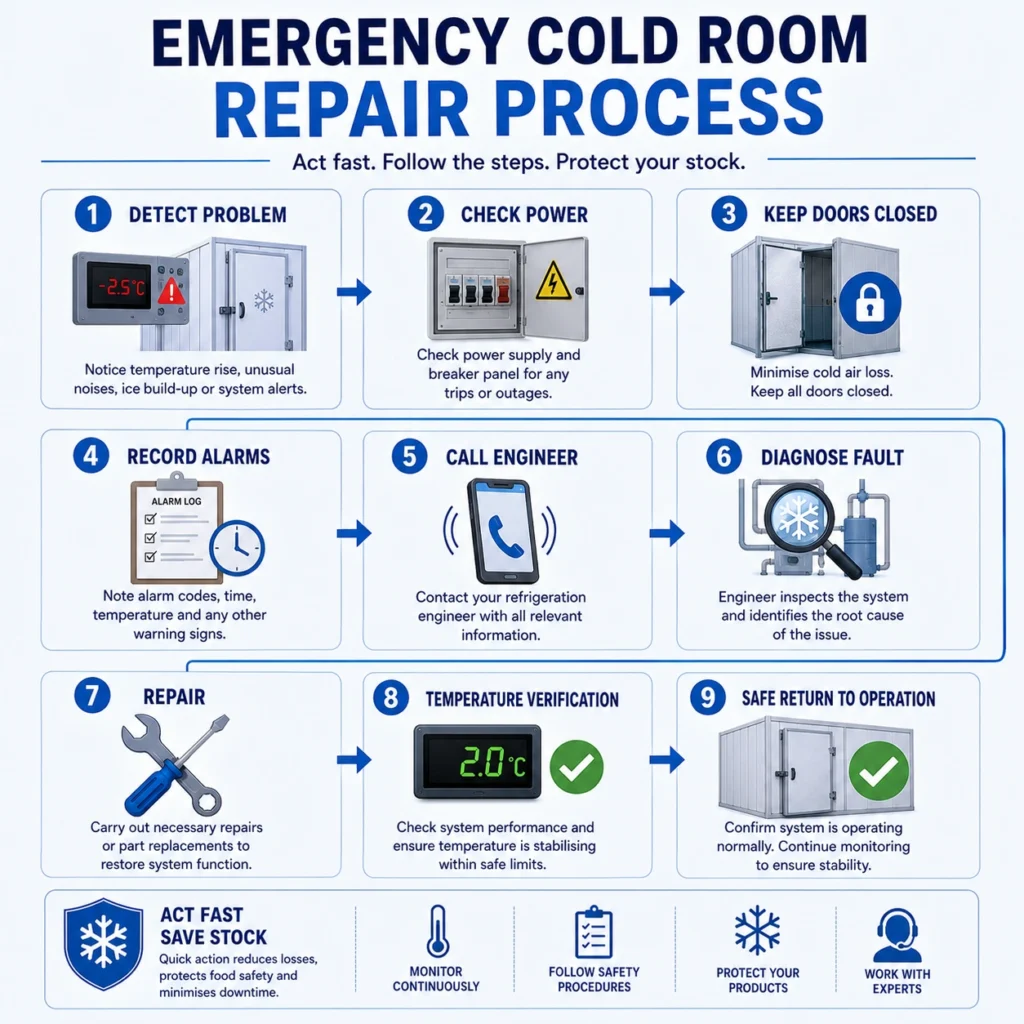
Common Reasons a Cold Room Stops Working
Although every breakdown is different, engineers regularly encounter several recurring issues.
Refrigerant Leak
Low refrigerant reduces cooling efficiency.
Warning signs include:
- Longer cooling cycles
- Ice build-up
- Warm temperatures
- Compressor constantly running
Compressor Failure
The compressor is the heart of every refrigeration system.
When it fails, cooling stops almost immediately.
Dirty Condenser
Dust and grease reduce heat transfer.
The system works harder, uses more electricity and eventually overheats.
Faulty Door Seals
Warm air entering through damaged seals creates excess frost and forces the refrigeration system to run continuously.
Electrical Faults
Loose wiring, failed contactors and damaged control boards frequently cause sudden shutdowns.
Recent industry guidance identifies declining refrigeration efficiency, compressor wear and refrigerant loss among the most common causes of temperature instability.
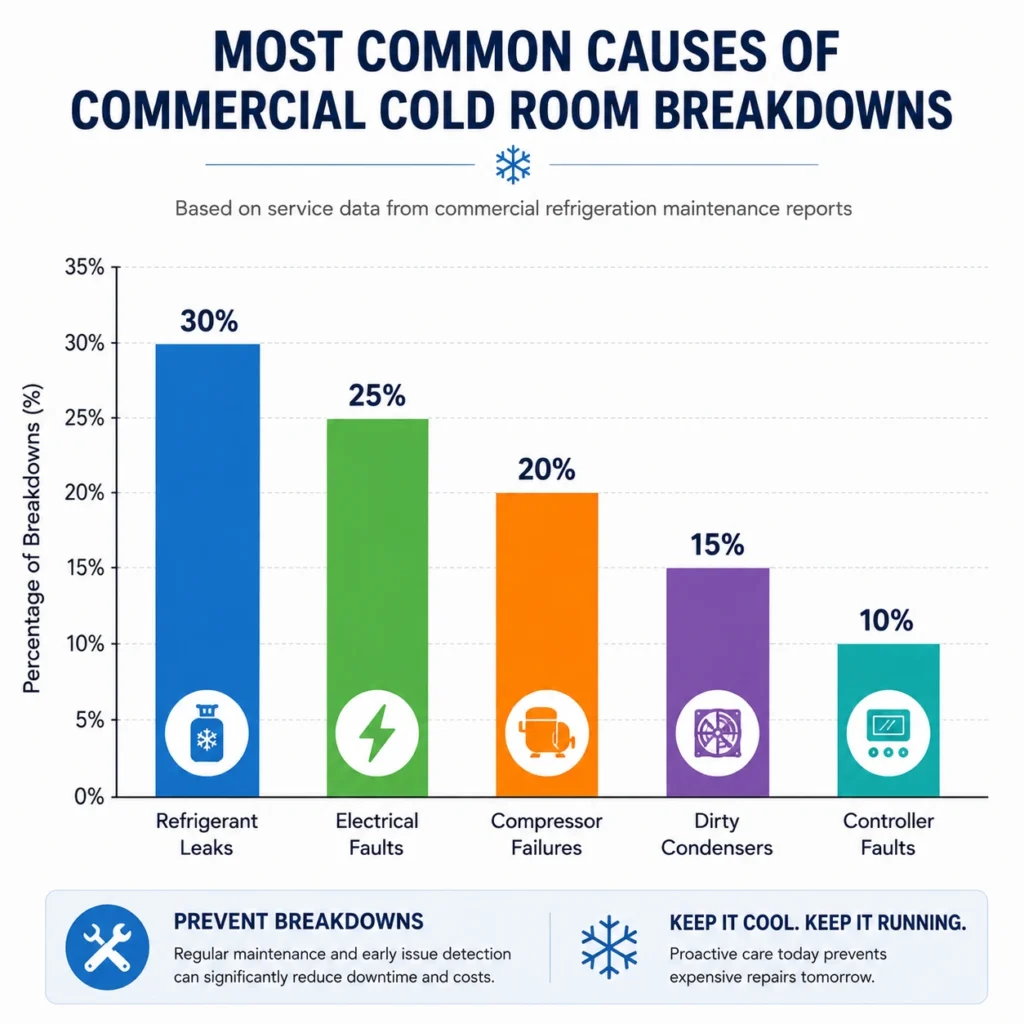
What You Should Never Do
Some actions make the situation much worse.
Avoid:
- Resetting breakers repeatedly
- Opening doors every few minutes
- Moving every product unnecessarily
- Adding ice inside the room
- Attempting refrigerant repairs
- Ignoring warning alarms
Professional diagnosis is almost always faster and less expensive than repairing damage caused by incorrect troubleshooting.
Want a tailored recommendation or quick quote? Reach out today
How Preventive Maintenance Reduces Emergency Breakdowns
Many refrigeration emergencies are preventable.
Routine servicing helps identify:
- Refrigerant leaks
- Worn electrical components
- Fan motor problems
- Dirty condensers
- Sensor failures
Coldroomplus recommends planned maintenance because small faults are usually far cheaper to fix than complete system failures.
Customers also benefit from:
- Competitive Pricing
- Tailored Solutions for Every Industry
- Energy-Efficient, Cost-Saving Systems
- UK-Wide Coverage
- 1 Year Extended Warranty with Genuine Spare Parts
- Bespoke Cold Rooms Built to Your Exact Needs
For businesses located within 50 miles, a Free Site Survey helps identify hidden risks before they become expensive breakdowns.
Signs You Need Emergency Help Immediately
Call professional engineers without delay if you notice:
- Temperature rising rapidly
- Burning smell
- Refrigerant leak
- Loud compressor noises
- Complete power loss
- Electrical burning
- Water pooling excessively
- Food or medicine approaching unsafe temperatures
Emergency response often prevents product losses that far exceed repair costs.
Want a tailored recommendation or quick quote? Reach out today
Protect Your Business Before Small Problems Become Big Ones
A refrigeration breakdown rarely happens at a convenient time. The businesses that recover fastest are usually those with an emergency plan, trained staff, and access to qualified refrigeration engineers. Acting quickly during those first 30 minutes can protect valuable stock, reduce downtime, and prevent a minor issue from becoming a major operational disruption.
Frequently Asked Questions (FAQs)
1. What should I do first if my cold room is broken?
If your cold room is broken, stay calm and avoid opening the door unnecessarily. Check whether there is a power outage, inspect the control panel for error codes, and verify that no circuit breakers have tripped. Keep the door closed to retain cold air, record the temperature, and contact qualified refrigeration engineers as soon as possible to prevent stock loss.
2. How long can a cold room stay off before stock is damaged?
The safe time depends on the type of products stored, the insulation quality, and the room temperature. A well-insulated cold room may hold its temperature for a short period if the door remains closed, but perishable foods and temperature-sensitive products can quickly become unsafe if temperatures rise above recommended storage levels. Continuous temperature monitoring is essential during any breakdown.
3. Can I still use my cold room if it is not cooling properly?
A cold room that is not maintaining the correct temperature should not be relied upon for storing food, medicines, or other temperature-sensitive products. Continuing to use a faulty system may lead to spoiled stock, food safety issues, and further damage to the refrigeration equipment. Arrange an inspection by qualified engineers immediately.
4. What are the most common reasons a cold room breaks down?
Common causes include refrigerant leaks, compressor failure, dirty condenser coils, faulty evaporator fans, damaged door seals, electrical faults, blocked airflow, and malfunctioning temperature controllers. Regular servicing helps identify these issues before they cause a complete breakdown.
5. How quickly should I call cold room engineers in Leeds after a breakdown?
You should contact experienced cold room engineers Leeds businesses trust as soon as you notice that the system has stopped cooling or the temperature is rising unexpectedly. Fast professional assistance can reduce downtime, protect valuable stock, and prevent more expensive repairs.
6. Is it safe to repair a commercial cold room myself?
No. Commercial refrigeration systems contain electrical components, refrigerants, and pressurised equipment that should only be handled by qualified professionals. DIY repairs can create safety risks, damage expensive components, void warranties, and breach UK F-Gas regulations.
7. How often should a commercial cold room be serviced?
Most commercial cold rooms should receive professional servicing at least twice a year. Businesses with heavy daily usage, such as restaurants, supermarkets, food manufacturers, florists, and pharmaceutical facilities, may benefit from quarterly maintenance to improve reliability and energy efficiency.
8. How can I prevent my cold room from breaking down?
Preventive maintenance is the best way to reduce unexpected failures. Regular cleaning of condenser coils, checking refrigerant levels, inspecting door seals, monitoring temperatures, replacing worn components, and scheduling routine servicing all help extend the life of your refrigeration system and reduce operating costs.
9. What are the warning signs that my cold room needs emergency repairs?
Early warning signs include rising temperatures, unusual noises, excessive ice build-up, water leaks, frequent alarm notifications, a compressor that runs continuously, higher electricity bills, or food not staying as cold as expected. Ignoring these symptoms can lead to complete system failure.
10. Why should I choose Coldroomplus for emergency cold room repairs?
Coldroomplus provides rapid emergency support with F-Gas Certified and Level 3 RACHP Qualified Technicians. The company offers UK-Wide Coverage, Competitive Pricing, Emergency Repairs & Ongoing Support, Genuine Spare Parts, a 1 Year Extended Warranty, and tailored refrigeration solutions for businesses across multiple industries, helping minimise downtime and protect valuable stock.