Refrigerant Leak Repair in Cold Rooms: What to Do
A refrigerant leak is one of the most common yet potentially costly problems affecting commercial cold rooms. Whether you operate a restaurant, hospital, food warehouse, pharmaceutical facility, or retail business, a refrigerant leak can quickly compromise temperature control, increase energy costs, and put valuable stock at risk.
Many businesses searching for cold room repair Leeds services only discover a refrigerant issue after noticing rising electricity bills, inconsistent temperatures, or spoiled products. By the time the problem becomes obvious, the leak may have already caused significant strain on the refrigeration system.
According to the U.S. Environmental Protection Agency (EPA), refrigerant leaks not only reduce system performance but also contribute to greenhouse gas emissions, making prompt detection and repair essential for both operational efficiency and environmental compliance.
Understanding what causes refrigerant leaks, how to identify them, and what actions to take can help businesses avoid expensive breakdowns and extend the lifespan of their cold room equipment.
Why Refrigerant Leaks Are a Serious Problem
A cold room relies on refrigerant to absorb and transfer heat. When refrigerant escapes from the system, cooling performance immediately begins to decline.
Even a small leak can have a significant impact. Research published by ASHRAE and industry refrigeration studies shows that refrigerant losses can increase energy consumption and place additional stress on compressors, often leading to premature equipment failure.
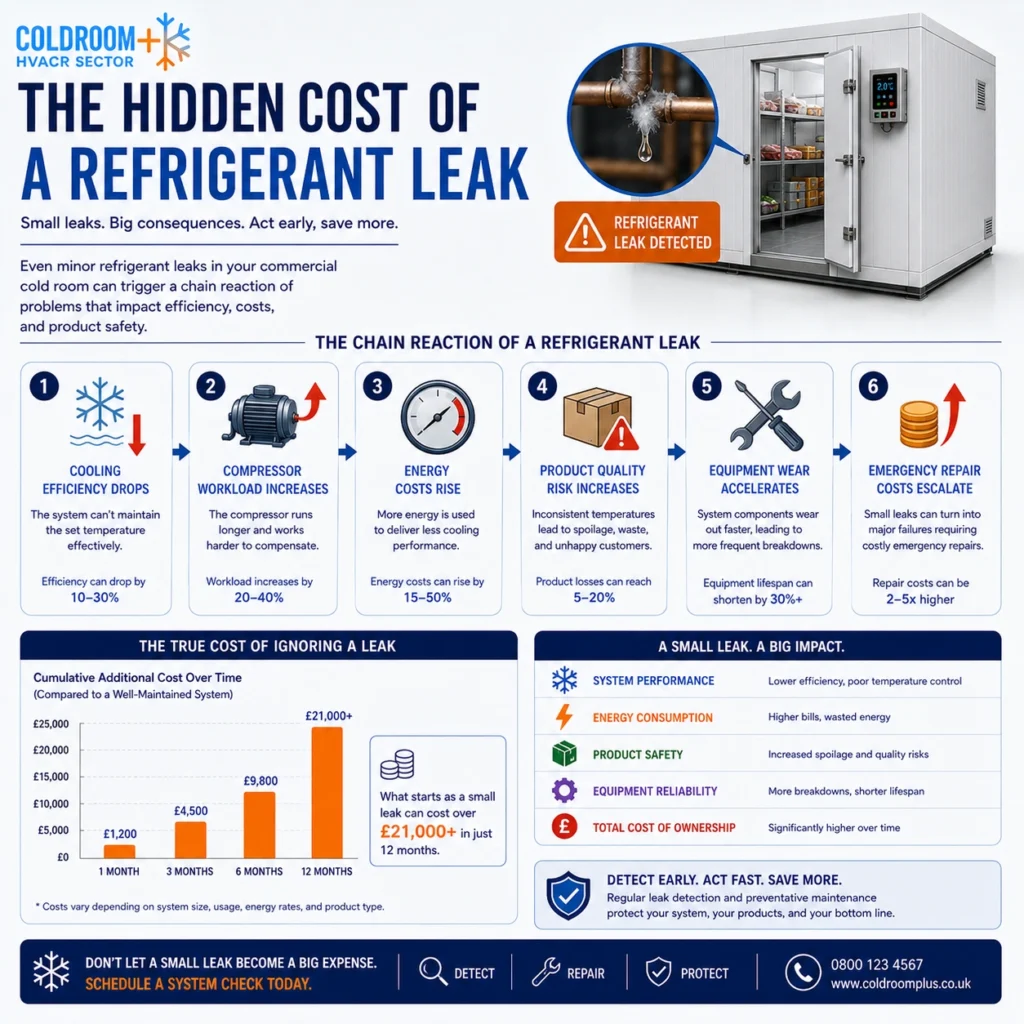
As refrigerant levels drop, the system must work harder and run longer to maintain the desired temperature. This results in:
- Higher electricity consumption
- Increased wear on compressors
- Reduced cooling efficiency
- Temperature fluctuations
- Risk of product spoilage
- Costly emergency repairs
In food storage environments, even minor temperature deviations can lead to compliance concerns and inventory losses.
Common Causes of Refrigerant Leaks in Cold Rooms
Refrigerant leaks rarely occur without warning. Most develop gradually due to wear, vibration, corrosion, or installation issues.
Corroded Pipework
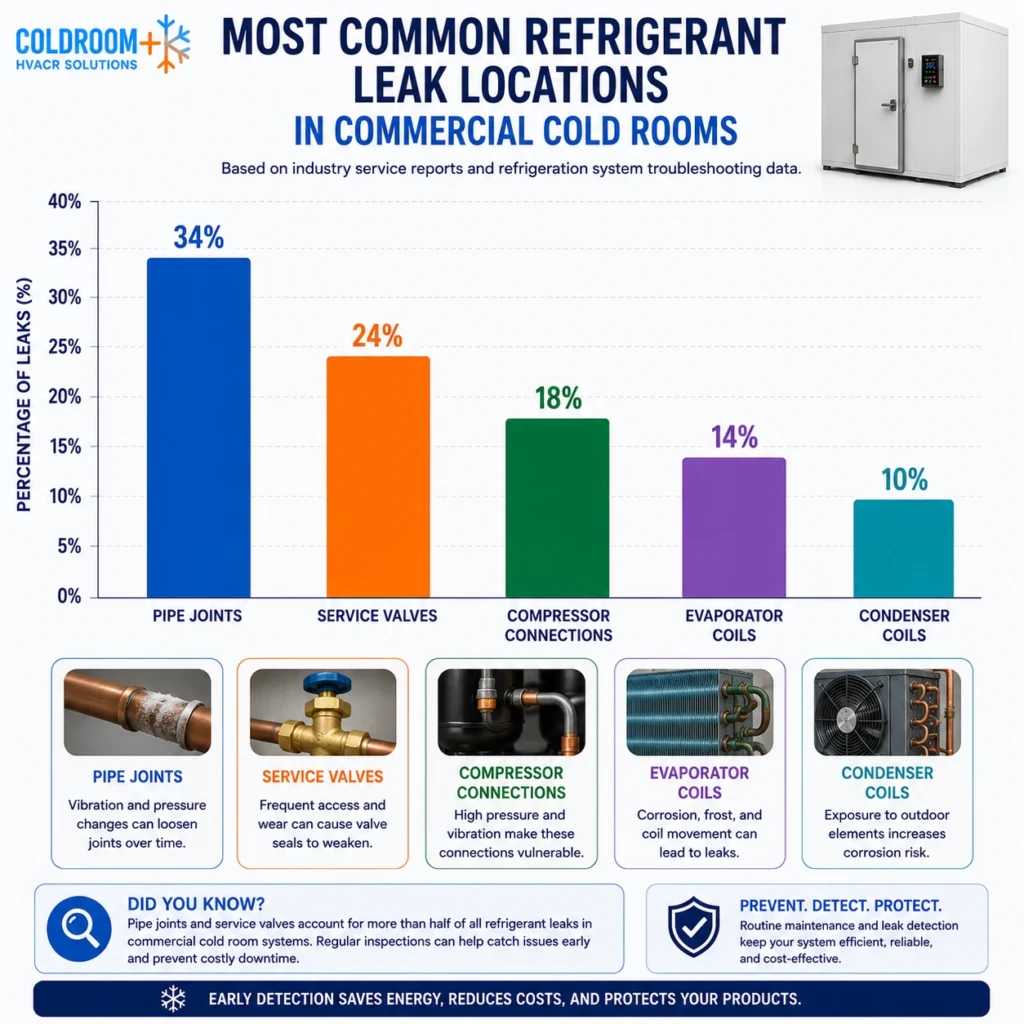
Over time, moisture, chemicals, and environmental contaminants can corrode copper pipework and joints. Tiny holes can form, allowing refrigerant to escape slowly.
Vibration Damage
Compressors and condensers generate constant vibration. If pipe supports loosen or fittings become stressed, cracks can eventually develop.
Poor Maintenance
Regular inspections often identify minor issues before they become major leaks. Systems that are not routinely serviced are more likely to experience refrigerant loss.
Damaged Valves and Connections
Service valves, flare fittings, and brazed joints are common leak locations. Even small imperfections can allow refrigerant to escape over time.
Ageing Equipment
Older refrigeration systems naturally become more susceptible to leaks as seals deteriorate and components wear out.
Signs Your Cold Room May Have a Refrigerant Leak
Recognising the warning signs early can prevent extensive system damage.
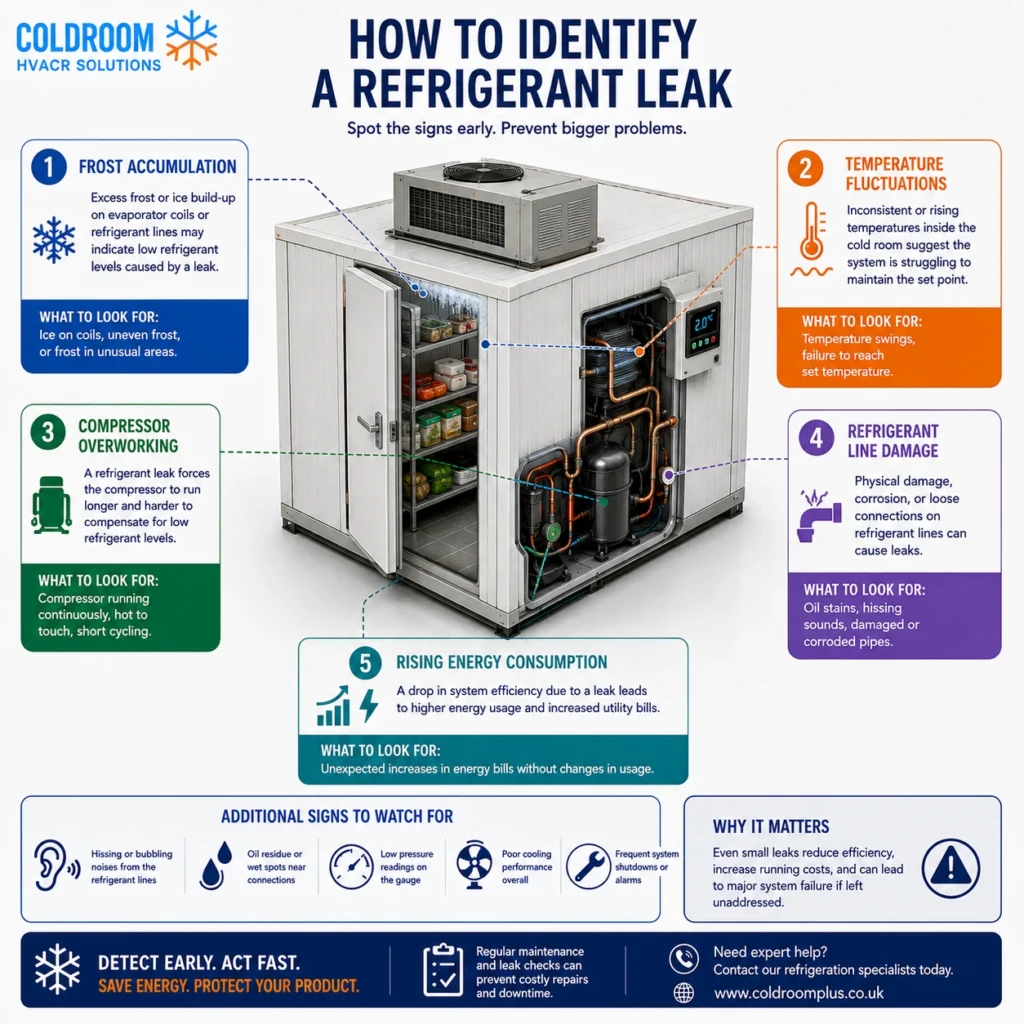
Rising Energy Bills
One of the earliest indicators is a sudden increase in electricity usage. Low refrigerant forces the system to operate longer to achieve target temperatures.
Inconsistent Temperatures
If your cold room struggles to maintain a stable temperature, refrigerant loss could be affecting heat transfer efficiency.
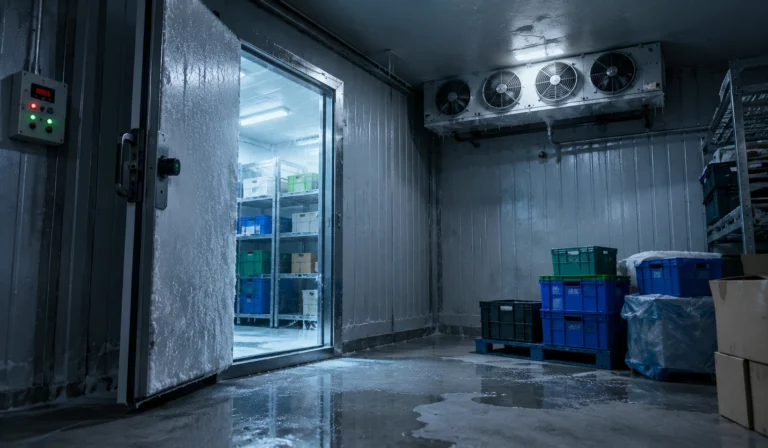
Ice Build-Up
Evaporator coils may develop excessive frost or ice when refrigerant levels become insufficient.
Longer Running Times
A refrigeration system operating continuously without reaching its setpoint often indicates an underlying refrigerant issue.
Unusual Noises
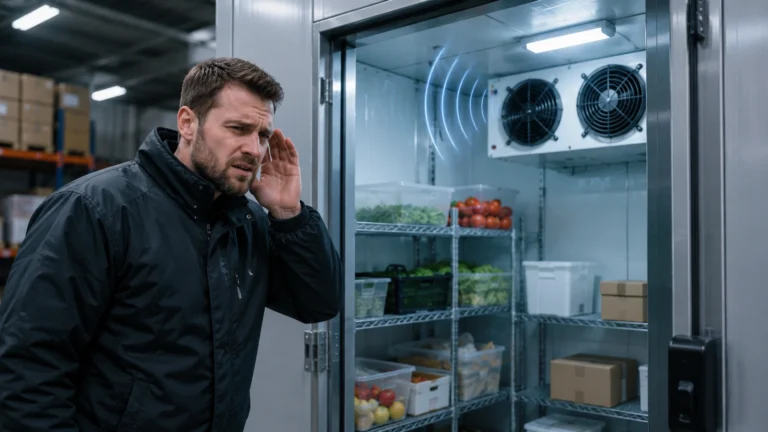
Hissing or bubbling sounds near refrigerant lines can indicate escaping gas.
Product Temperature Variations
Businesses storing food, medicines, or temperature-sensitive products may notice quality issues before equipment alarms activate.
What To Do If You Suspect a Refrigerant Leak
Step 1: Monitor Temperatures Immediately
Check and record cold room temperatures. If temperatures begin rising above safe storage levels, move critical stock to alternative refrigerated storage if available.
Step 2: Avoid DIY Repairs
Refrigeration systems contain pressurised refrigerants that require specialist handling. Attempting repairs without proper certification can create safety risks and potentially damage equipment further.
The EPA notes that refrigerants must be properly recovered and managed during servicing to prevent environmental harm.
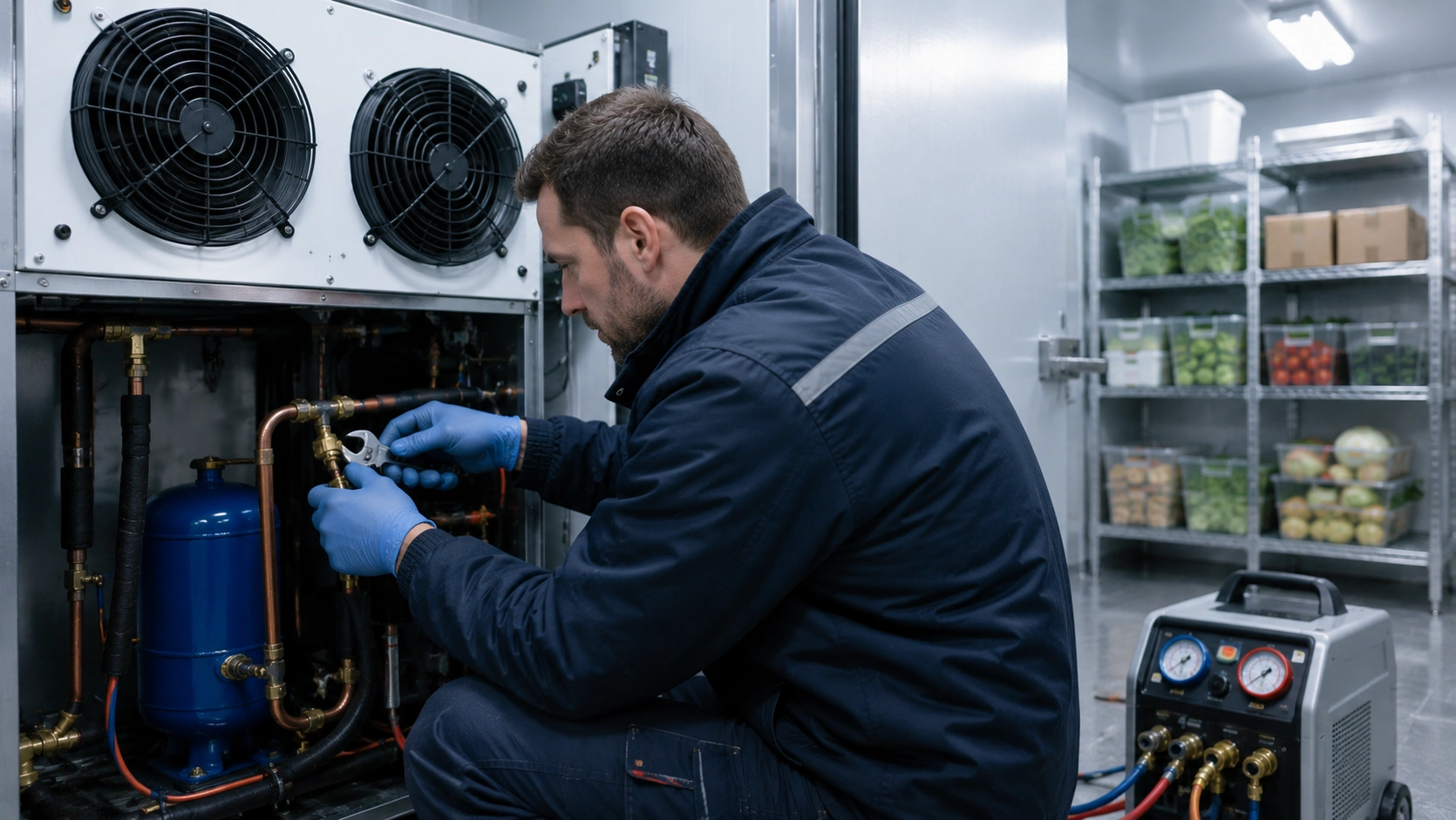
Step 3: Contact a Qualified Refrigeration Specialist
Businesses searching for a cold room engineer near me should choose a qualified refrigeration engineer with experience diagnosing commercial cold room systems.
Professional leak detection equipment can identify even extremely small refrigerant leaks before they become major failures.
Step 4: Protect Stored Products
Review stock temperatures and prioritise high-risk products. This is particularly important for food, pharmaceutical, and healthcare environments.
How Engineers Detect Refrigerant Leaks
Modern leak detection methods are highly accurate and allow engineers to pinpoint leaks quickly.
Electronic Leak Detection
Advanced electronic detectors can identify minute refrigerant concentrations in the air and help locate hidden leaks.
Industry guidance increasingly recommends continuous refrigerant monitoring in larger refrigeration facilities to improve safety and efficiency.
Nitrogen Pressure Testing
Engineers often pressurise systems with dry nitrogen to identify pressure drops and locate leaks.
UV Dye Testing
A fluorescent dye is introduced into the system, making leak points visible under ultraviolet light.
Bubble Testing
Special leak detection solutions are applied to suspect areas where escaping gas creates visible bubbles.
The Refrigerant Leak Repair Process
Once the leak is located, engineers follow a structured repair process.
Repair Stage | Purpose |
Leak Detection | Identify exact source |
Refrigerant Recovery | Safely remove remaining refrigerant |
Component Repair | Repair or replace damaged section |
Pressure Testing | Verify leak elimination |
Vacuum Procedure | Remove moisture and contaminants |
Refrigerant Recharge | Restore correct refrigerant levels |
Performance Testing | Confirm operational efficiency |
Proper repair involves more than simply adding refrigerant. Recharging a system without repairing the leak only provides a temporary solution and increases operating costs.
Cold Room Refrigerant Leak Cost Calculator
Calculate the hidden electrical waste, financial loss, and catastrophic mechanical breakdown risks caused by a low refrigerant charge.
Refrigerant Loss Impact Analysis
Cold Room Plus Thermodynamic Assessment:
The Cost of Delaying Refrigerant Leak Repairs
Many businesses postpone repairs because the cold room still appears to function.
However, delayed action often creates far greater expenses.
Research from refrigeration industry studies shows annual refrigerant leakage rates in some commercial systems can reach 10% to 25%, significantly increasing operational costs and environmental impact.
Delaying repairs can result in:
- Compressor failure
- Product spoilage
- Increased energy consumption
- Emergency callout charges
- Regulatory compliance concerns
- Shortened equipment lifespan
According to EPA-related industry analysis, effective leak management and detection can generate substantial cost savings by reducing refrigerant replacement requirements.
Preventing Future Refrigerant Leaks
The best approach is prevention through proactive maintenance.
Regular servicing helps identify wear before leaks develop.
Schedule Routine Inspections
Routine inspections allow engineers to check refrigerant pressures, pipework condition, and component performance.
Install Leak Detection Systems
Automatic leak detection technology provides early warning and can significantly reduce refrigerant losses.
Monitor Energy Usage
Unexpected increases in energy consumption often reveal refrigeration inefficiencies before visible symptoms appear.
Maintain Accurate Service Records
Tracking refrigerant usage over time helps identify recurring leak issues and supports compliance requirements.
When to Call a Cold Room Repair Specialist
Some issues require immediate professional attention.
If your cold room experiences temperature instability, excessive frost buildup, rising energy costs, or repeated refrigerant top-ups, it is time to seek expert assistance.
A qualified cold room engineer near me can perform a comprehensive diagnosis and determine whether a leak, component failure, or system inefficiency is responsible.
Businesses requiring cold room repair Leeds services should prioritise rapid intervention to minimise downtime, protect stock, and prevent larger equipment failures.
Many refrigerant leaks begin as tiny, almost undetectable problems before developing into major failures. When was the last time your refrigeration system underwent a professional leak inspection, and could your facility benefit from a proactive maintenance review before the next unexpected breakdown?
Frequently Asked Questions (FAQs)
1. What are the signs of a refrigerant leak in a cold room?
Common signs include rising energy bills, inconsistent temperatures, ice buildup on evaporator coils, longer running times, unusual hissing sounds, and reduced cooling performance. If you notice any of these issues, professional cold room repair should be arranged immediately.
2. How much does refrigerant leak repair cost for a commercial cold room?
The cost depends on the leak location, refrigerant type, system size, and whether components need replacement. Minor repairs may be relatively inexpensive, while extensive leaks requiring major parts can cost significantly more. A professional inspection is the best way to obtain an accurate quote.
3. Can a cold room operate with a refrigerant leak?
A cold room may continue operating for a short period, but efficiency will decline rapidly. Running a system with low refrigerant can increase energy consumption, damage the compressor, and lead to costly breakdowns or product spoilage.
4. How do engineers find refrigerant leaks in cold rooms?
Qualified refrigeration engineers use electronic leak detectors, nitrogen pressure testing, UV dye testing, and soap bubble tests to accurately locate leaks, even in hard-to-reach areas of the system.
5. How quickly should a refrigerant leak be repaired?
A refrigerant leak should be repaired as soon as it is detected. Delaying repairs can result in higher energy bills, reduced cooling performance, environmental concerns, and potential failure of critical refrigeration components.
6. How often should a commercial cold room be inspected for refrigerant leaks?
Most commercial cold rooms should be professionally inspected at least once or twice per year. High-use environments such as restaurants, hospitals, warehouses, and food processing facilities may require more frequent maintenance checks.
7. Why is my cold room not maintaining the correct temperature?
Temperature fluctuations can be caused by refrigerant leaks, faulty thermostats, damaged door seals, blocked airflow, evaporator issues, or compressor problems. A professional diagnosis is recommended to identify the exact cause.
8. How can I prevent refrigerant leaks in my cold room?
Regular maintenance, routine leak inspections, monitoring refrigerant levels, checking pipework for corrosion, and repairing worn components promptly can significantly reduce the risk of refrigerant leaks.
9. Do refrigerant leaks increase electricity costs?
Yes. When refrigerant levels drop, the refrigeration system must work harder and run longer to maintain temperatures. This increased workload can significantly raise electricity consumption and operating costs.
10. Where can I find a reliable cold room engineer near me?
Look for experienced commercial refrigeration specialists who provide cold room diagnostics, leak detection, refrigerant repairs, emergency callouts, and preventative maintenance services. Choosing a qualified cold room engineer near me helps ensure safe and effective repairs.