Annual Maintenance Checklist for Walk-In Freezers
A walk-in freezer is one of the most important systems inside any food business, supermarket, warehouse, pharmacy, catering company, or hospitality environment. It operates continuously, often 24 hours a day, maintaining frozen temperatures that protect stock quality, food safety, and operational reliability.
Yet many businesses only think about refrigeration servicing after something goes wrong.
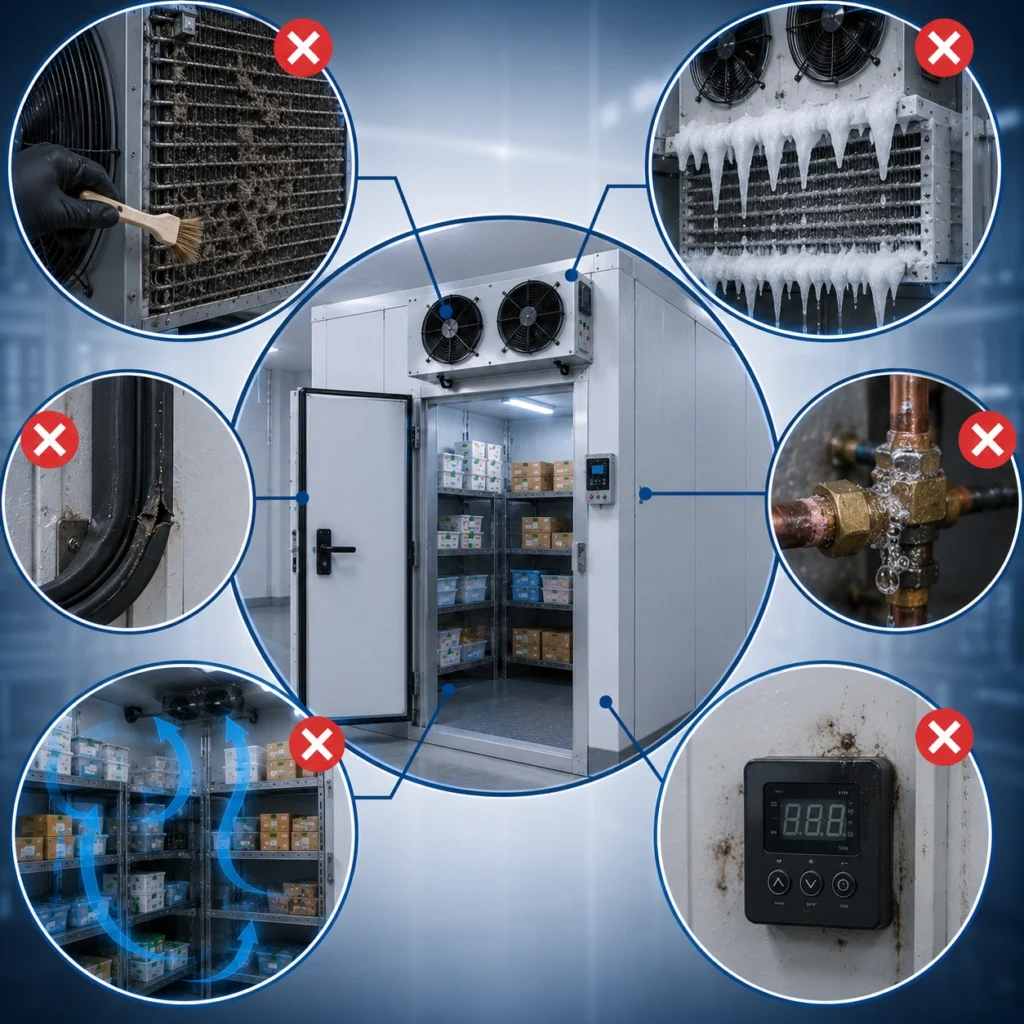
The problem is that refrigeration failures rarely happen suddenly. Most breakdowns begin with smaller issues such as restricted airflow, worn door seals, dirty condenser coils, refrigerant leaks, or excessive ice build-up. Left unresolved, these problems gradually increase electricity consumption, reduce cooling performance, and place additional strain on refrigeration components.
This is why regular walk in freezer maintenance has become increasingly important across the UK.
According to the Carbon Trust, refrigeration systems can account for up to 50% of electricity usage in some food businesses. Even relatively small inefficiencies can significantly increase operational costs over time.
For businesses searching online for walk in freezer service or looking for reliable walk in freezer service near me, preventative maintenance is often one of the most cost-effective ways to reduce long-term refrigeration expenses while improving system reliability.
Why Annual Walk-In Freezer Maintenance Is So Important
Walk-in freezers operate under constant pressure.
Compressors run continuously, evaporator systems handle ongoing moisture loads, and airflow systems work constantly to maintain stable temperatures. Over time, even normal wear can affect refrigeration performance significantly.
Without regular servicing, small problems often escalate into major failures.
For example, a damaged freezer door seal may initially appear insignificant. However, over time it allows warm air into the freezer, forcing compressors to work harder while increasing moisture and ice formation.
Similarly, dirty condenser coils reduce heat transfer efficiency, causing refrigeration systems to consume more electricity while reducing cooling performance.
According to guidance from the British Refrigeration Association, preventative maintenance remains one of the most effective ways to improve refrigeration reliability and reduce operating costs.
What Happens During Professional Walk-In Freezer Service?
Professional freezer servicing involves much more than checking temperatures.
Experienced refrigeration engineers inspect the entire refrigeration system to identify inefficiencies, safety concerns, airflow restrictions, and early signs of component wear before serious failures occur.
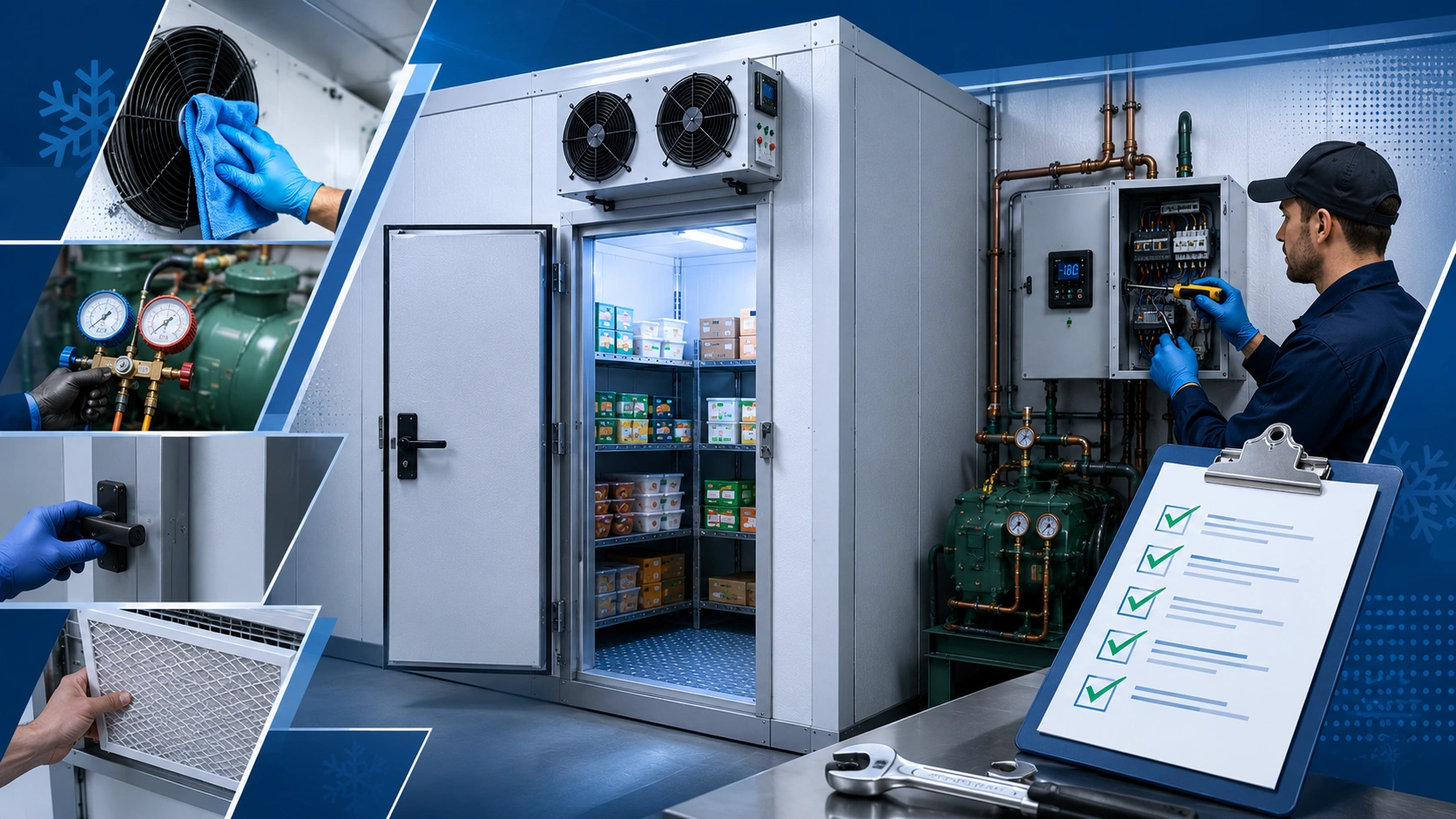
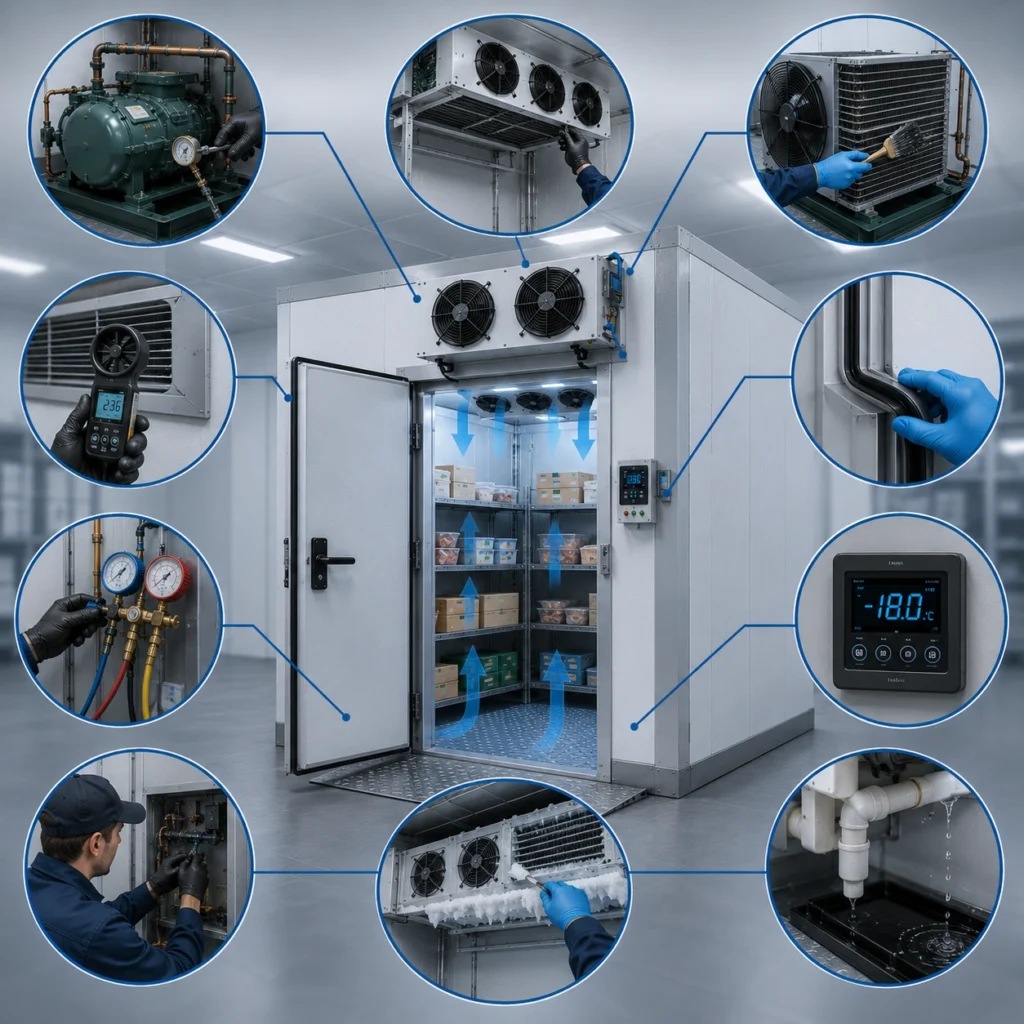
During a typical walk in freezer service, engineers usually inspect refrigerant pressures, compressor performance, electrical systems, airflow efficiency, evaporator coils, condenser cleanliness, defrost operation, and temperature calibration.
Airflow management is especially important because poor airflow often causes uneven temperatures, ice accumulation, and excessive compressor cycling.
Door seals are also carefully checked because damaged gaskets allow moisture and warm air into the freezer, increasing refrigeration demand and reducing energy efficiency.
For businesses operating freezers continuously throughout the year, these inspections help prevent costly operational disruptions later.
The Biggest Maintenance Issues Businesses Commonly Miss
Many refrigeration problems develop gradually, making them difficult to notice without professional inspection.
One of the most common overlooked issues is condenser coil contamination.
Dust, grease, and debris accumulate on condenser surfaces over time, reducing heat rejection efficiency and increasing compressor workload.
Another common problem is evaporator ice build-up.
Excessive ice restricts airflow and forces refrigeration systems to work harder to maintain target temperatures.
Businesses also frequently overlook thermostat calibration problems. Even small temperature inaccuracies can affect frozen food storage performance and energy efficiency.
According to Food Standards Agency guidance, frozen food should normally be stored at -18°C or below to maintain food safety standards.
This means accurate freezer temperature control is extremely important for food businesses and pharmaceutical storage environments.
Want a tailored recommendation or quick quote? Reach out today
How Regular Maintenance Reduces Energy Costs
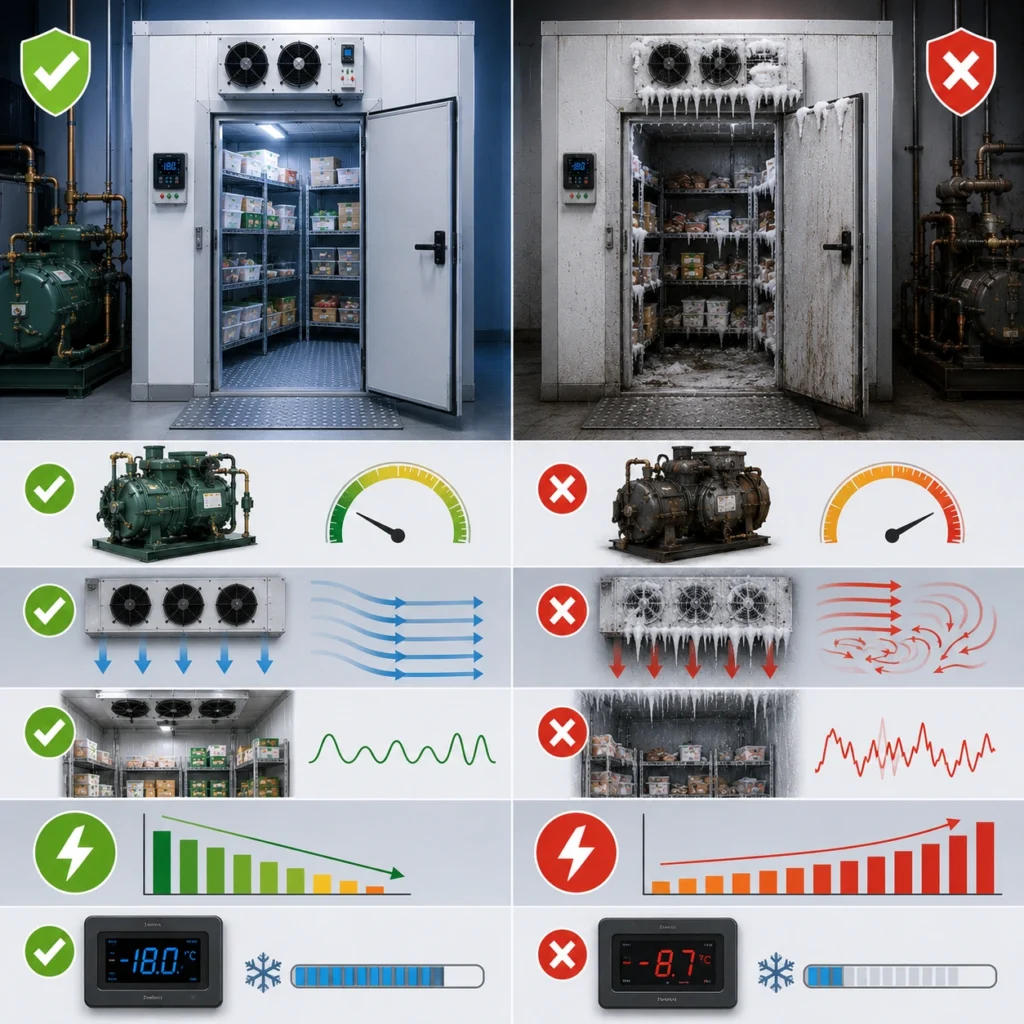
Energy efficiency is one of the biggest financial reasons businesses invest in regular walk-in freezer maintenance.
Refrigeration systems operate continuously, meaning even small inefficiencies can create substantial electricity costs over time.
According to Carbon Trust refrigeration research, poorly maintained refrigeration equipment can consume significantly more energy than properly serviced systems.
Several maintenance issues directly increase operating costs:
Maintenance Problem | Effect on Refrigeration System |
Dirty condenser coils | Higher compressor workload |
Worn door seals | Warm air infiltration |
Ice accumulation | Reduced airflow efficiency |
Refrigerant leaks | Longer cooling cycles |
Blocked evaporators | Uneven freezer temperatures |
As UK electricity prices remain elevated, refrigeration efficiency has become a major operational priority for businesses across multiple industries.
Proper servicing not only improves cooling performance but also helps extend compressor lifespan and reduce emergency repair costs.
Why Refrigerant Leaks Must Never Be Ignored
Refrigerant leaks are among the most serious issues refrigeration engineers check during annual servicing.
Leaks reduce cooling performance, increase electricity usage, and may create environmental compliance concerns under UK F-Gas regulations.
According to UK Government F-Gas guidance, refrigeration systems containing fluorinated gases must be maintained properly to reduce environmental harm and greenhouse gas emissions.
Small refrigerant leaks often develop slowly and may initially go unnoticed.
Common warning signs include:
- Rising electricity bills
- Longer compressor run times
- Reduced cooling performance
- Ice formation
- Difficulty maintaining freezer temperatures
Regular walk in freezer service inspections help identify refrigerant problems before major equipment damage occurs.
Why Temperature Monitoring Is Critical
Temperature stability is essential for protecting frozen food, pharmaceuticals, and temperature-sensitive stock.
Even short temperature fluctuations can affect product quality and compliance standards.
During professional maintenance visits, engineers typically inspect:
- Thermostat accuracy
- Temperature sensors
- Defrost controls
- Alarm systems
- Controller calibration
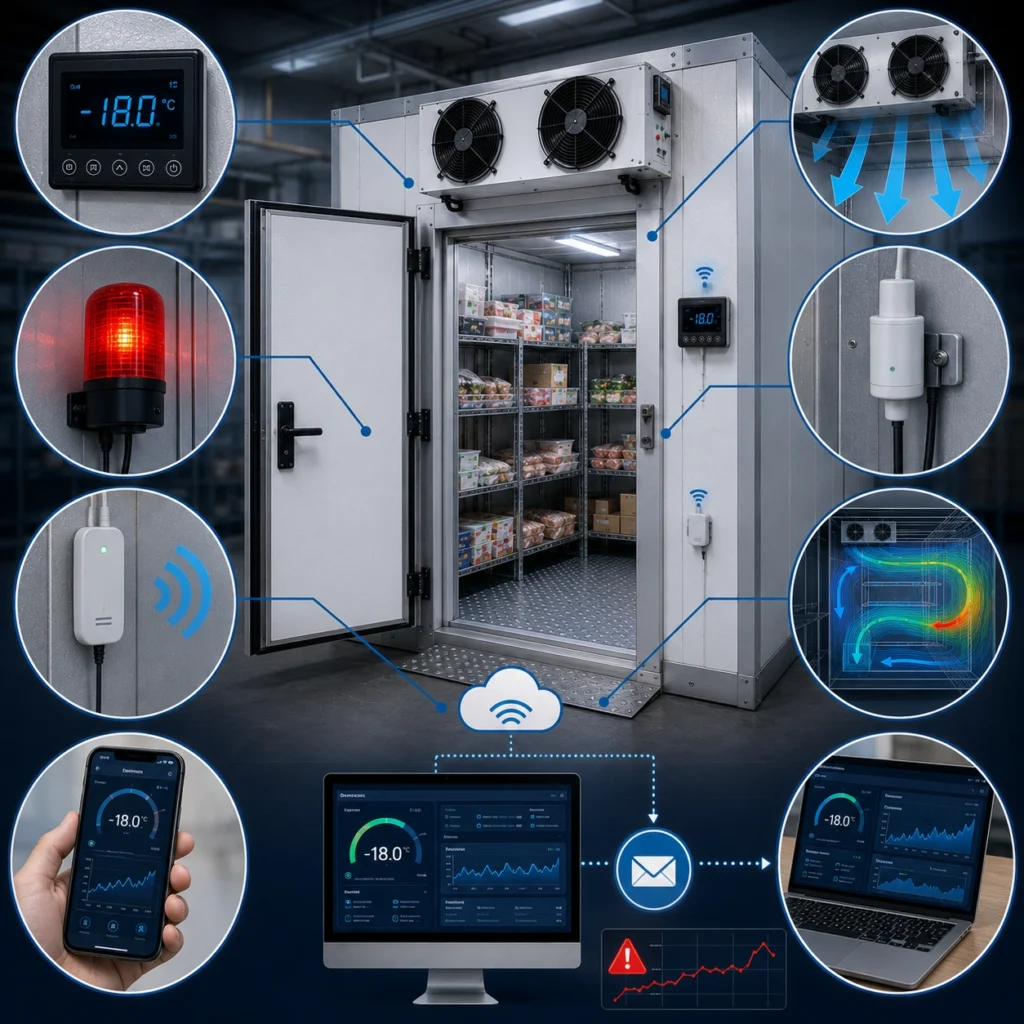
Modern monitoring systems now allow many businesses to track freezer temperatures continuously and receive alerts if temperatures move outside safe operating ranges.
This additional monitoring helps reduce the risk of unnoticed refrigeration failures.
Why Preventative Maintenance Costs Less Than Emergency Repairs
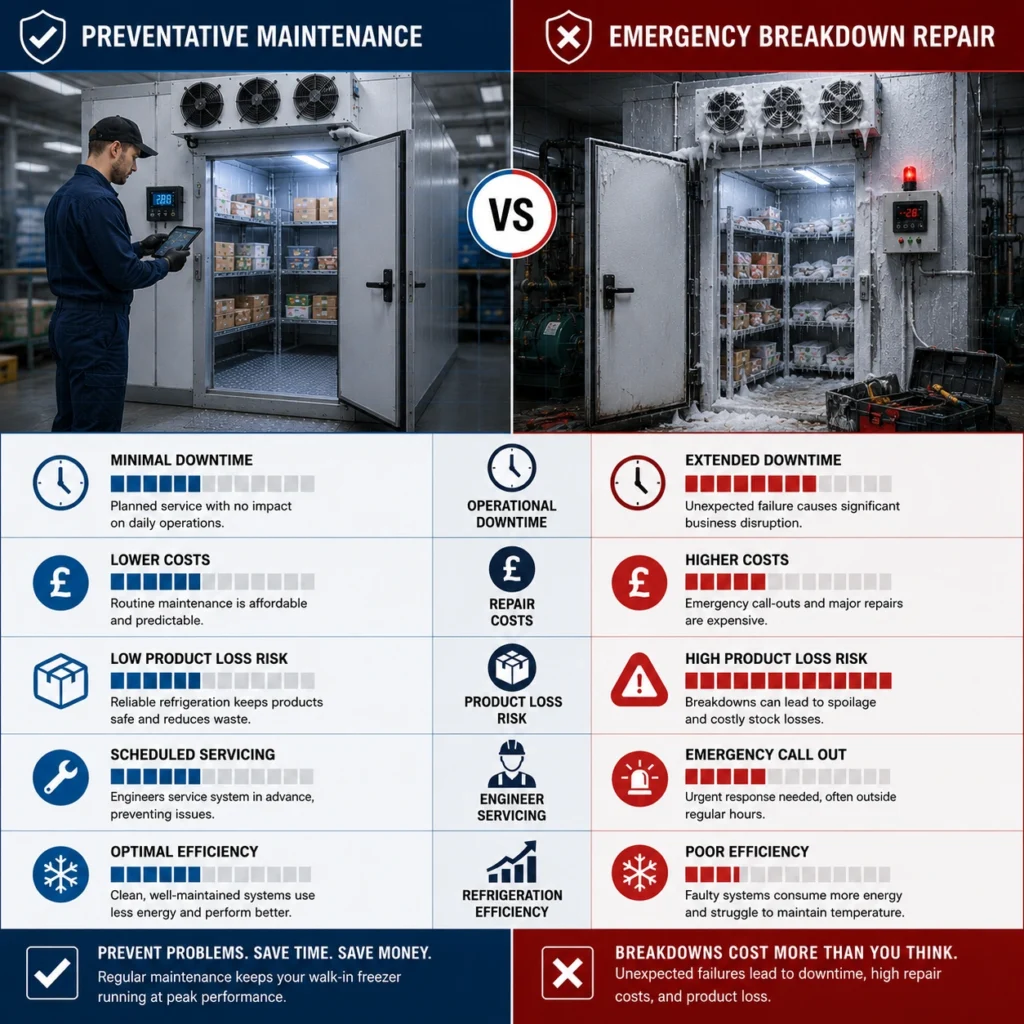
Emergency freezer breakdowns are often extremely expensive.
A major refrigeration failure can lead to:
- Product loss
- Business interruption
- Emergency engineer callouts
- Higher repair costs
- Compliance risks
- Increased energy bills
Preventative maintenance helps reduce these risks significantly by identifying problems before critical components fail.
According to industry guidance from the British Refrigeration Association, planned refrigeration maintenance improves long-term reliability while reducing overall operational costs.
For businesses searching online for walk in freezer service near me, preventative maintenance contracts are becoming increasingly common because they help reduce unexpected downtime.
Why Domestic Walk-In Freezer Maintenance Is Increasing Too
Although commercial refrigeration dominates the market, residential walk-in freezer systems are becoming increasingly popular across the UK.
Luxury homes, outdoor kitchens, country estates, and large domestic properties now use freezer rooms for:
- Bulk food storage
- Meal preparation
- Home entertaining
- Outdoor kitchen refrigeration
- Long-term frozen storage
Like commercial systems, domestic freezer rooms also require regular maintenance to maintain efficiency and prevent premature refrigeration wear.
As residential refrigeration systems become more advanced, homeowners are paying closer attention to servicing and energy efficiency as well.
Want a tailored recommendation or quick quote? Reach out today
What Businesses Across Leeds Are Prioritising Today
Businesses throughout Leeds are placing increasing emphasis on refrigeration efficiency, preventative servicing, and operational reliability as energy costs continue rising across the UK.
Restaurants, supermarkets, food production facilities, florists, warehouses, and pharmaceutical businesses all rely heavily on stable freezer performance to protect stock quality and maintain daily operations.
As refrigeration systems become more advanced and compliance requirements continue evolving, businesses are focusing more closely on:
- Energy-efficient refrigeration
- Preventative maintenance planning
- Refrigeration monitoring systems
- F-Gas compliance
- Compressor efficiency
- Long-term operational costs
For many companies, regular walk in freezer maintenance is no longer viewed as an optional servicing expense. It is increasingly considered an essential part of protecting refrigeration reliability, controlling energy costs, and avoiding expensive operational disruption.
FAQs – Annual Maintenance Checklist for Walk-In Freezers
1. Why is walk-in freezer maintenance important?
Regular walk in freezer maintenance helps improve refrigeration efficiency, reduce energy costs, prevent unexpected breakdowns, and extend equipment lifespan. Proper servicing also helps maintain safe storage temperatures for frozen food and temperature-sensitive products.
2. How often should a walk-in freezer be serviced?
Most commercial walk-in freezers should receive professional servicing at least once or twice per year depending on usage levels, operating conditions, and refrigeration load. High-use commercial systems may require more frequent inspections.
3. What is included in a walk in freezer service?
A professional walk in freezer service typically includes refrigerant checks, condenser cleaning, evaporator inspection, airflow testing, thermostat calibration, electrical safety inspection, compressor performance checks, and defrost system testing.
4. Can poor maintenance increase freezer energy costs?
Yes. Dirty condenser coils, damaged door seals, refrigerant leaks, and restricted airflow can force refrigeration systems to work harder, increasing electricity consumption and operating costs.
5. What temperature should a walk-in freezer operate at?
Most commercial walk-in freezers should maintain temperatures around -18°C to safely store frozen food products and maintain food safety standards.
6. What are the signs a walk-in freezer needs servicing?
Common signs include excessive ice build-up, rising electricity bills, unusual noises, inconsistent temperatures, poor cooling performance, longer compressor run times, and visible door seal damage.
7. How long do walk-in freezers last?
A properly maintained walk-in freezer can typically last between 15 and 25 years depending on usage, maintenance quality, refrigeration design, and operating conditions.
8. Why are condenser coils important in freezer maintenance?
Condenser coils remove heat from the refrigeration system. Dirty or blocked coils reduce heat transfer efficiency, forcing compressors to work harder and increasing energy usage.
9. Can refrigerant leaks affect freezer performance?
Yes. Refrigerant leaks reduce cooling capacity, increase compressor strain, raise electricity consumption, and may create environmental compliance issues under UK F-Gas regulations.
10. What causes ice build-up inside a walk-in freezer?
Ice build-up is often caused by damaged door seals, poor airflow, frequent door opening, defrost system issues, or refrigerant problems. Excessive ice can reduce efficiency and damage refrigeration components over time.
11. Is preventative freezer maintenance cheaper than emergency repairs?
In most cases, yes. Preventative maintenance helps identify small issues before they become major refrigeration failures, reducing repair costs, downtime, and product loss risks.
12. Do domestic walk-in freezers require maintenance too?
Yes. Residential walk-in freezer systems also require regular servicing to maintain energy efficiency, prevent refrigeration issues, and extend equipment lifespan.