What to Do When Your Cold Room Breaks Down Overnight
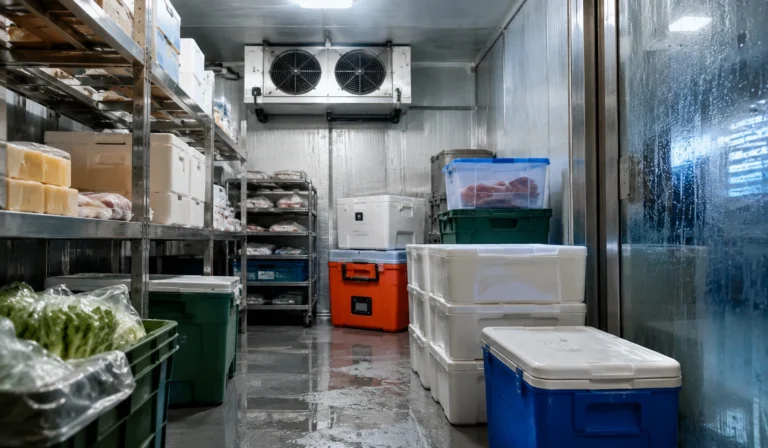
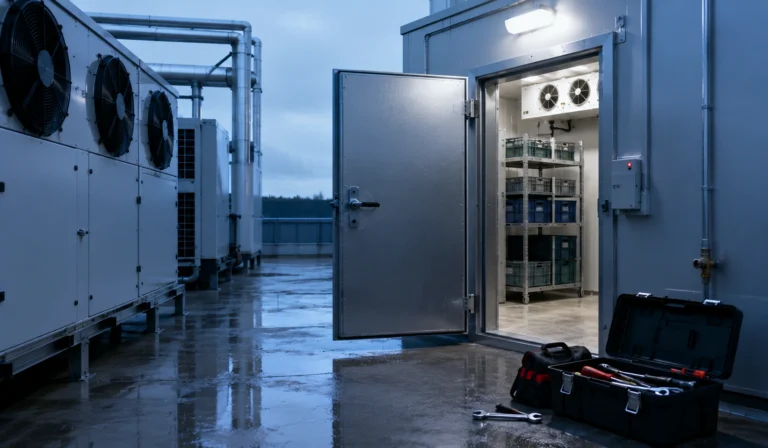
Few business emergencies create as much pressure as waking up to discover a cold room breakdown overnight. Whether you run a restaurant, supermarket, food production facility, pharmacy, florist, or hospitality business, every passing minute can put valuable stock, food safety, and customer trust at risk.
The good news is that the first hour after discovering the problem often determines whether the situation becomes a minor disruption or a major financial loss. Knowing exactly what to do—and what to avoid—can protect thousands of pounds worth of products while helping engineers restore your refrigeration system faster.
Why Overnight Cold Room Breakdowns Are So Serious
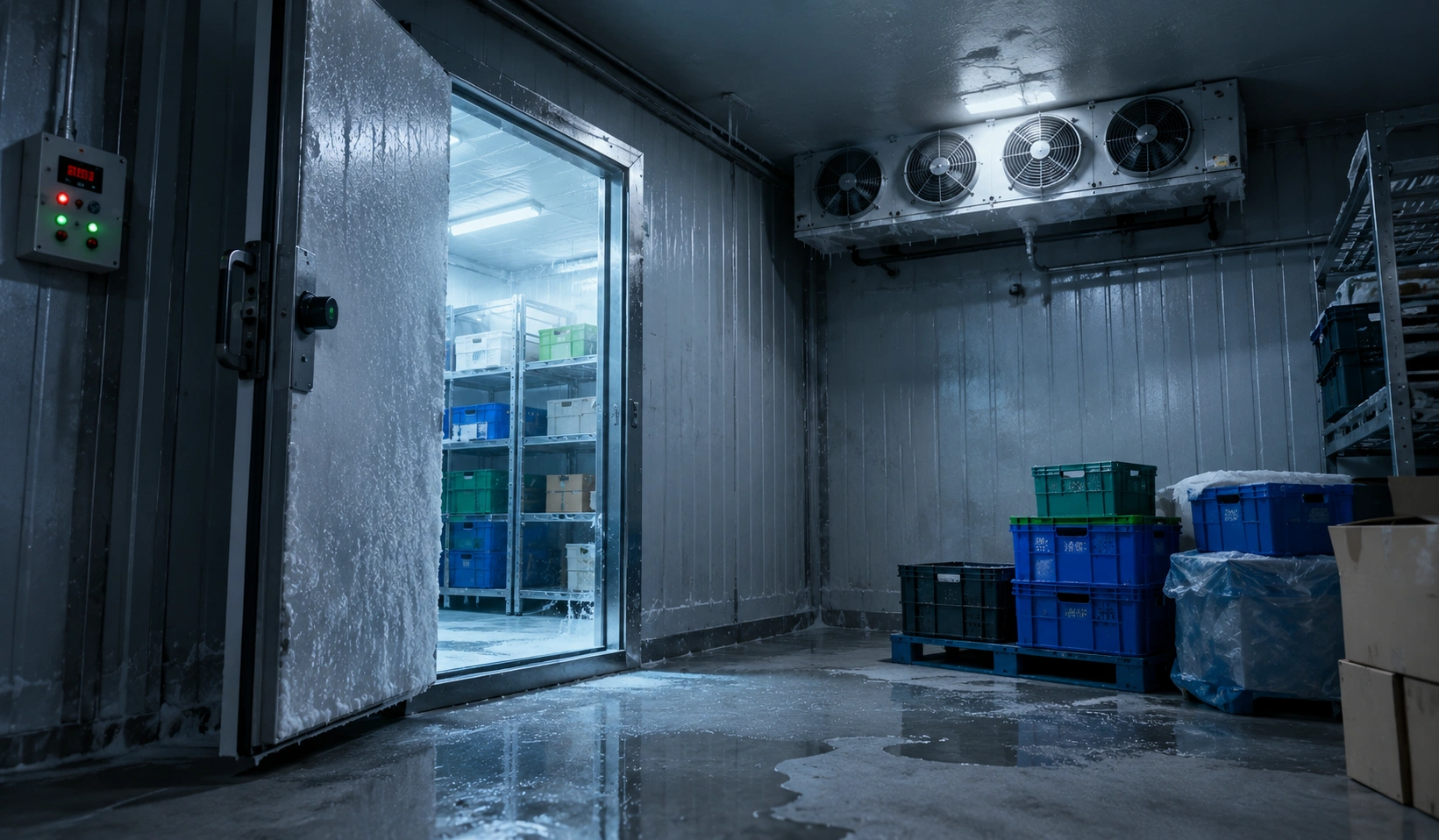
Unlike many equipment failures, refrigeration problems continue causing damage while everyone is asleep.
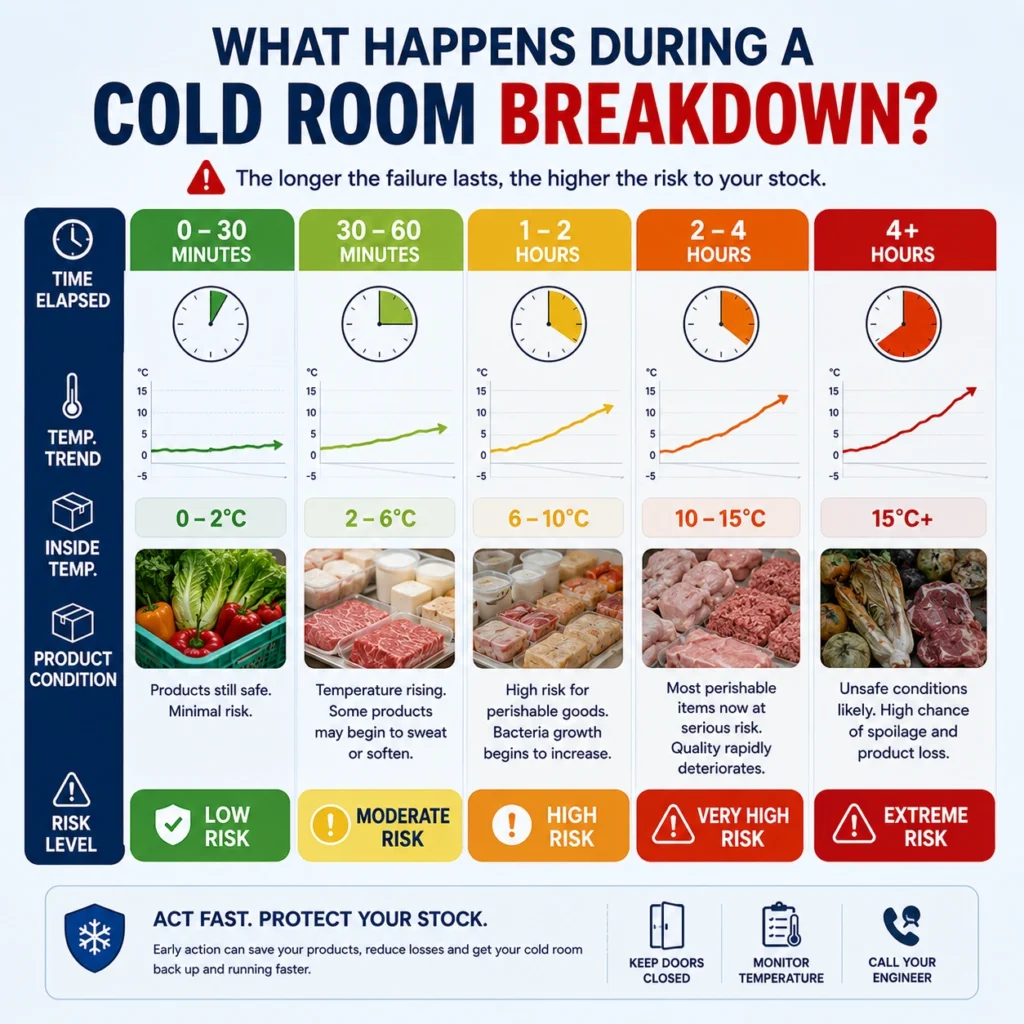
As the temperature rises inside the cold room, bacteria multiply more rapidly, food quality begins to decline, and sensitive products can become unusable. The longer the system remains outside its required temperature range, the greater the financial impact.
The Cold Chain Federation highlights that maintaining an uninterrupted cold chain is essential for food quality, pharmaceutical safety, and supply chain reliability. Equipment failures remain one of the biggest causes of cold chain interruptions.
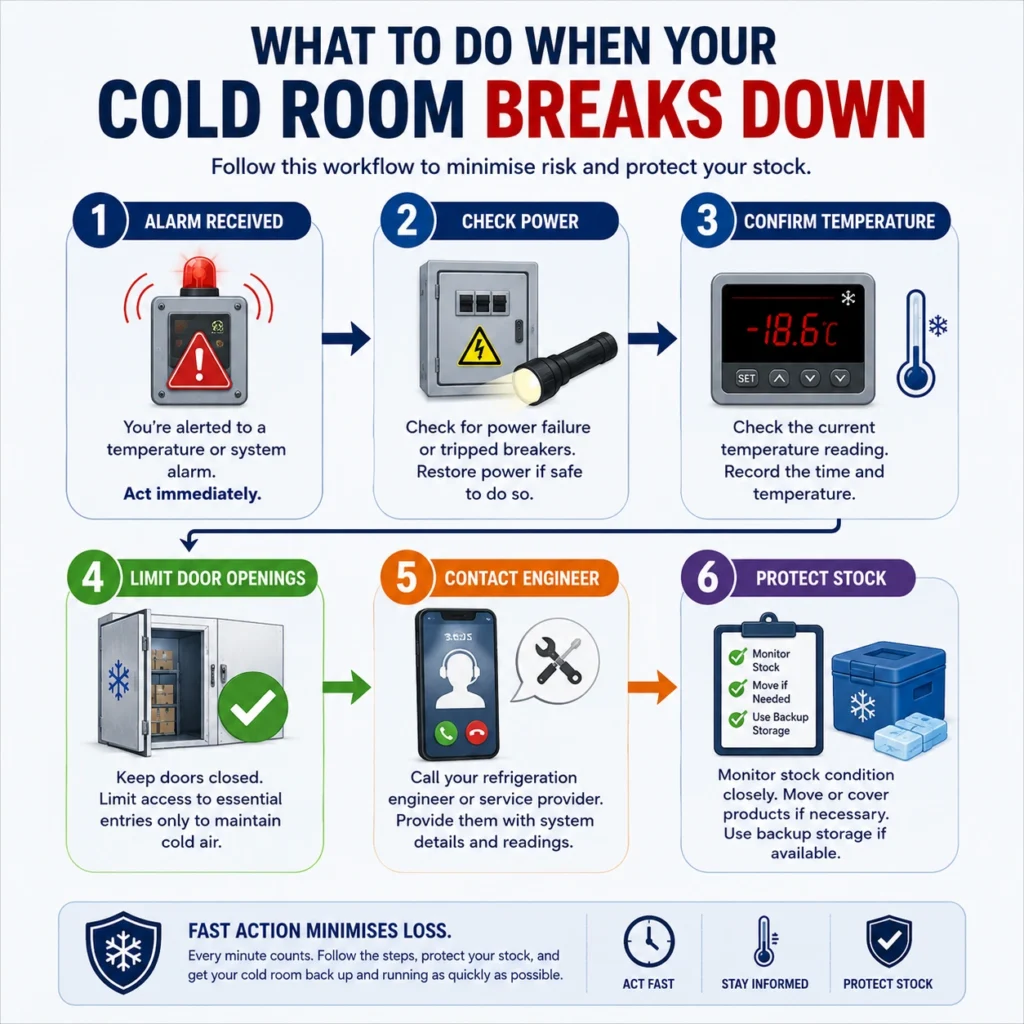
The First 15 Minutes: Stay Calm and Assess the Situation
Finding your cold room warm can trigger panic, but rushing into unnecessary actions often makes matters worse.
Instead, begin with a quick assessment.
Check whether:
- The power supply is working
- Circuit breakers have tripped
- The controller displays an alarm code
- Interior lights still operate
- The condenser appears to be running
- Doors have been left open accidentally
Many overnight issues are caused by power interruptions rather than complete refrigeration failures.
If your business has remote temperature monitoring, review the alert history to determine when temperatures first began rising.
Do Not Keep Opening the Door
One of the biggest mistakes people make is repeatedly opening the cold room to “check.”
Every time the door opens, warm air enters while cold air escapes.
The U.S. Food and Drug Administration (FDA) recommends keeping refrigerated spaces closed during power interruptions because unopened refrigerated environments maintain safe temperatures significantly longer than frequently opened ones.
Instead:
- Check temperatures remotely if possible.
- Open the door only when absolutely necessary.
- Move products only after making a clear recovery plan.
Check the Temperature Before Moving Any Stock
Not every refrigeration fault immediately ruins stored products.
Many modern cold rooms retain acceptable temperatures for some time if doors remain closed.
Use a calibrated temperature probe or digital monitoring system to determine:
| Temperature Status | Recommended Action |
|---|---|
| Within safe range | Leave stock inside |
| Slightly elevated | Monitor closely |
| Unsafe temperature | Begin product protection plan |
| Rapidly rising | Contact emergency engineer immediately |
Never guess temperatures.
Accurate readings help determine whether products remain compliant with food safety regulations.
Protect Your Most Valuable Stock First
If temperatures continue increasing, prioritise the products that are most sensitive.
Generally, businesses should move:
- Pharmaceuticals
- Fresh seafood
- Raw meat
- Dairy products
- Prepared meals
- Fresh flowers
- Frozen products
Transfer stock only into another verified temperature-controlled environment.
Avoid placing products into domestic refrigerators unless they can safely maintain commercial storage temperatures.
Cold Room Stock Risk Calculator
Document Everything
Documentation helps protect your business if insurance claims become necessary.
Record:
- Time the problem was discovered
- Temperature readings
- Alarm notifications
- Products affected
- Photos of controller displays
- Engineer arrival time
- Repairs completed
Many insurance providers request detailed evidence following refrigeration failures.
The Cold Chain Federation also recommends maintaining clear operational records for managing cold chain risks.
Want a tailored recommendation or quick quote? Reach out today
Call Emergency Cold Room Breakdown Engineers Quickly
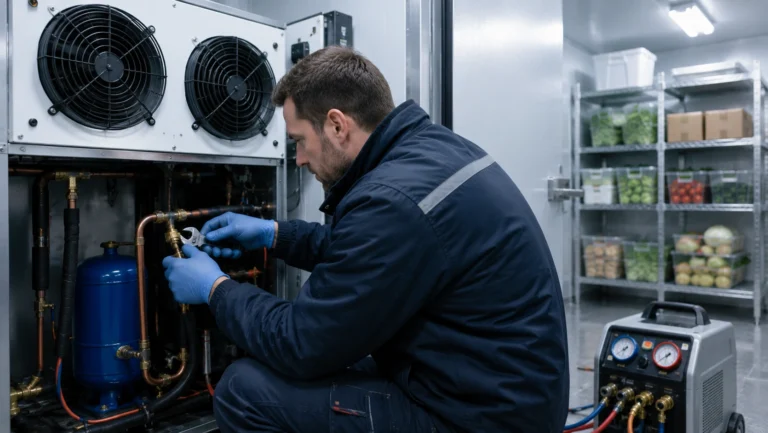
If basic checks do not restore operation within a few minutes, professional assistance should be arranged immediately.
Experienced cold room breakdown engineers in Leeds can often identify whether the issue involves:
- Compressor failure
- Refrigerant leak
- Electrical faults
- Controller malfunction
- Condenser problems
- Fan motor failure
- Sensor faults
- Defrost system issues
Providing accurate information before engineers arrive helps reduce diagnosis time.
Prepare details including:
- Cold room size
- Current temperature
- Alarm code
- Equipment manufacturer
- Recent servicing history
- Time the issue began
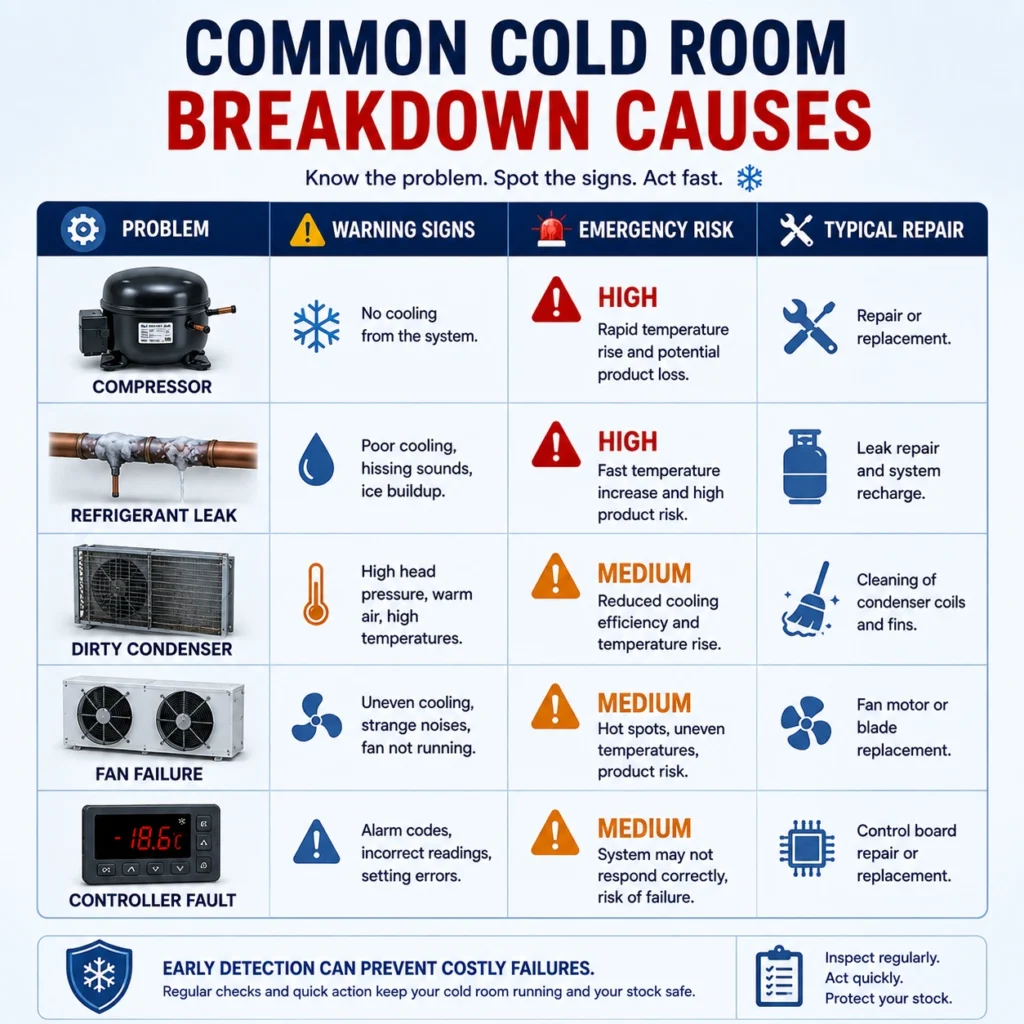
Common Causes of Overnight Cold Room Breakdowns
Most overnight failures develop long before they become obvious.
Common causes include:
Compressor Problems
The compressor is the heart of the refrigeration system.
Mechanical wear, overheating, or electrical faults can stop cooling completely.
Refrigerant Leaks
Low refrigerant reduces cooling performance until temperatures gradually increase.
Leaks should always be repaired by qualified refrigeration engineers.
Electrical Supply Problems
Power cuts, damaged wiring, loose connections, and failed contactors frequently cause unexpected shutdowns.
Backup power systems help reduce this risk.
Dirty Condensers
Blocked condenser coils reduce heat removal, forcing compressors to work harder.
Poor maintenance significantly increases failure risk.
Fan Motor Failure
Without proper airflow, evaporators cannot distribute cooling evenly throughout the cold room.
Control System Faults
Temperature controllers, sensors, and electronic boards occasionally fail, preventing the system from operating correctly.
Want a tailored recommendation or quick quote? Reach out today
Can You Prevent Most Overnight Breakdowns?
Many emergency callouts are preventable.
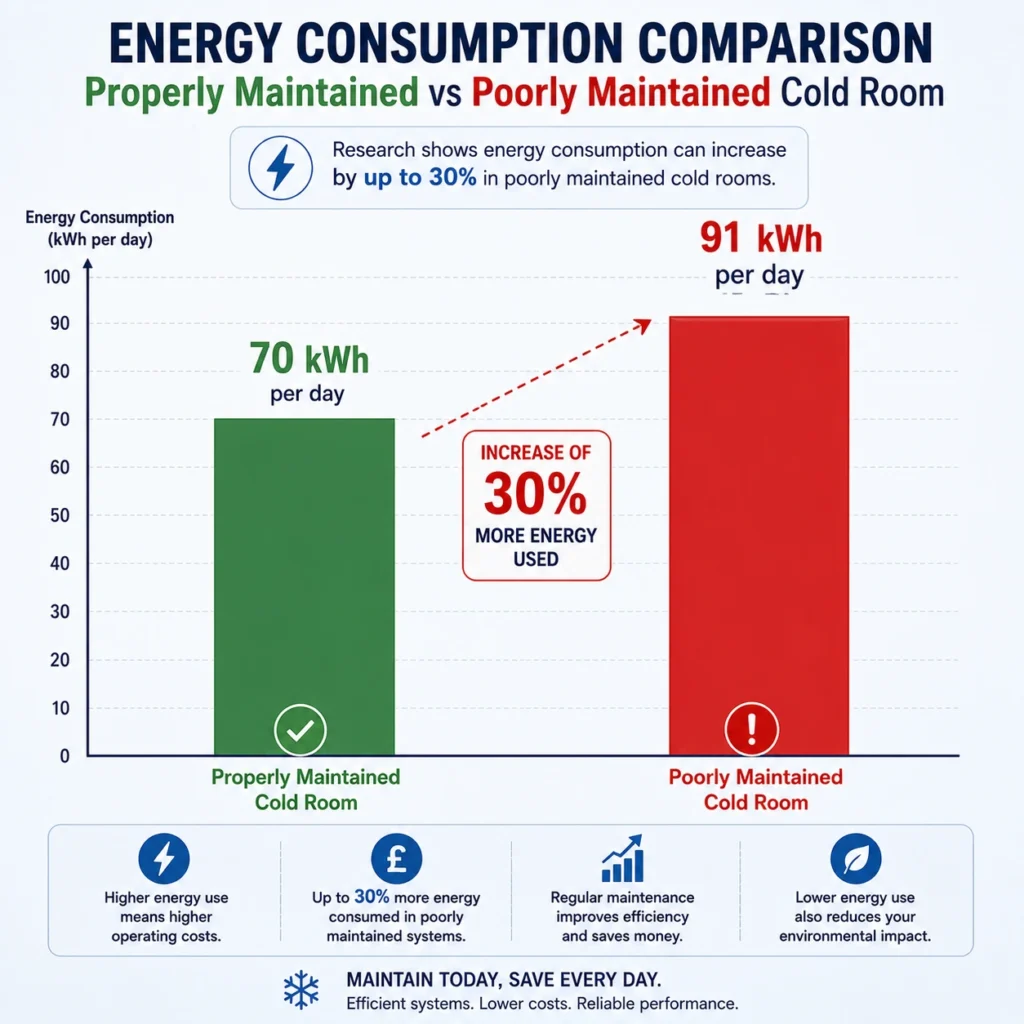
Research published in Frontiers in Sustainable Food Systems found that poorly maintained cold storage systems can consume up to 30% more energy, while operational issues increase equipment stress and reduce reliability.
Preventative maintenance helps identify:
- Refrigerant losses
- Worn compressors
- Electrical faults
- Dirty condensers
- Faulty fans
- Temperature sensor issues
Routine servicing is almost always less expensive than emergency stock loss.
How Remote Monitoring Can Save Thousands
Modern monitoring systems alert managers immediately when temperatures begin changing.
Instead of discovering a breakdown the next morning, alerts can arrive within minutes via:
- SMS
- Mobile apps
- Building management systems
Earlier intervention often prevents complete stock loss.
Recent industry guidance also encourages better monitoring, resilience planning, and energy management to improve cold chain reliability.
What Information Should You Give Emergency Engineers?
When speaking with cold room breakdown engineers in Leeds, providing accurate information speeds up diagnosis.
Useful information includes:
- Equipment make and model
- Current room temperature
- Alarm codes
- Whether power is available
- Recent maintenance history
- Products being stored
- Approximate time cooling stopped
This allows engineers to arrive with suitable tools and replacement parts where possible.
If your refrigeration system stopped working tonight, would every member of your team know exactly what to do during the first 30 minutes? Share your emergency plan—or tell us what’s missing—and start the conversation before the next unexpected breakdown happens.
Frequently Asked Questions (FAQs)
1. What should I do first during a cold room breakdown?
The first step during a cold room breakdown is to keep the cold room door closed to prevent warm air from entering. Check the power supply, inspect the control panel for alarm codes, and verify whether the circuit breaker has tripped. If the system does not restart, contact professional emergency refrigeration engineers immediately to minimise stock loss.
2. How long can food stay safe during a cold room breakdown?
The safe time depends on the type of products stored, the room’s insulation, the outside temperature, and how often the door is opened. A well-insulated cold room can maintain safe temperatures for a limited period if the door remains closed. Always monitor the internal temperature using a calibrated thermometer before deciding whether products are still safe to use.
3. What are the most common causes of a cold room breakdown?
Common causes include compressor failure, refrigerant leaks, electrical faults, dirty condenser coils, faulty evaporator fans, blocked air circulation, sensor failures, and controller malfunctions. Regular servicing helps identify these issues before they result in an unexpected breakdown.
4. When should I call emergency cold room breakdown engineers in Leeds?
You should contact cold room breakdown engineers Leeds as soon as you notice that the cold room is no longer maintaining the required temperature or if alarm codes indicate a system fault. Early intervention helps reduce downtime, prevent stock loss, and avoid more expensive repairs.
5. Can a power cut cause a cold room breakdown?
Yes. Power failures are one of the most common reasons for a cold room to stop cooling. After power is restored, check whether the refrigeration system has restarted correctly. If it remains off or displays error codes, an engineer should inspect the equipment.
6. Can I continue using my cold room after it starts cooling again?
Not immediately. Before using the cold room again, confirm that it has returned to the correct operating temperature and remains stable. Products that were exposed to unsafe temperatures should be assessed according to food safety guidelines before being sold or used.
7. How can I prevent an overnight cold room breakdown?
Routine preventative maintenance is the most effective way to reduce the risk of overnight failures. Regular inspections, condenser cleaning, refrigerant checks, electrical testing, and replacing worn components can identify problems before they cause an emergency.
8. How often should a commercial cold room be serviced?
Most commercial cold rooms should be professionally serviced at least every six months. However, businesses with high usage, such as restaurants, supermarkets, food manufacturers, and pharmaceutical facilities, may benefit from quarterly maintenance to improve reliability and energy efficiency.
9. What information should I provide when reporting a cold room breakdown?
To help engineers diagnose the issue quickly, provide the equipment make and model, current temperature, alarm codes, the time the problem started, recent maintenance history, and the type of products stored inside the cold room.
10. Why is remote temperature monitoring important for cold rooms?
Remote monitoring systems provide instant alerts when temperatures rise above safe limits, allowing businesses to respond before valuable stock is damaged. These systems help reduce downtime, improve food safety compliance, and minimise financial losses caused by unexpected refrigeration failures.