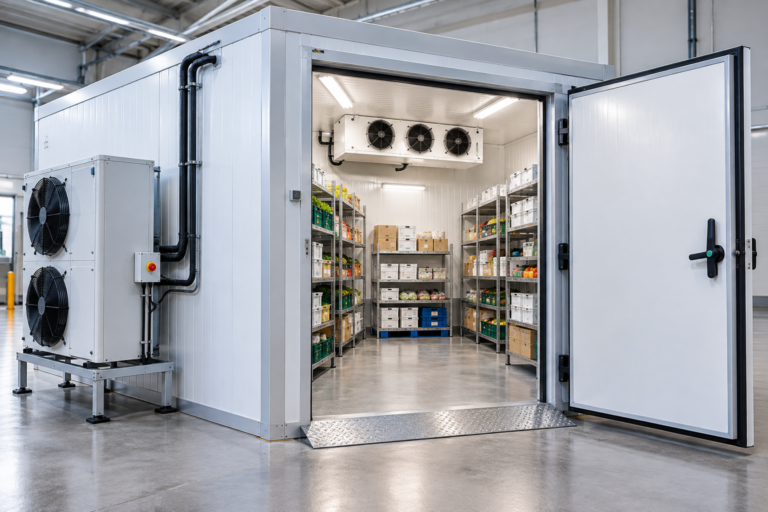
Cold Room Installation in Wetherby: Fast, Local and F-Gas Certified
If your Wetherby business stores meat, dairy, fresh produce, prepared food or frozen goods, reliable refrigeration is not optional. Your cold room must keep products at the right temperature every day, even during busy periods.
That makes choosing the right team for cold room installation Wetherby businesses can trust an important decision.
A well-designed cold room can protect stock, improve storage space, support food safety and help control energy use. A poorly designed one can do the opposite.
This guide explains what to look for before you buy, how installation works, what affects the price, why F-Gas certification matters and how to keep your system working efficiently.
Why Wetherby Businesses Need Reliable Cold Storage
Wetherby has a mix of food businesses, hospitality venues, retailers, caterers and other commercial operations that may need dependable temperature-controlled storage.
For these businesses, refrigeration is about much more than keeping food cold.
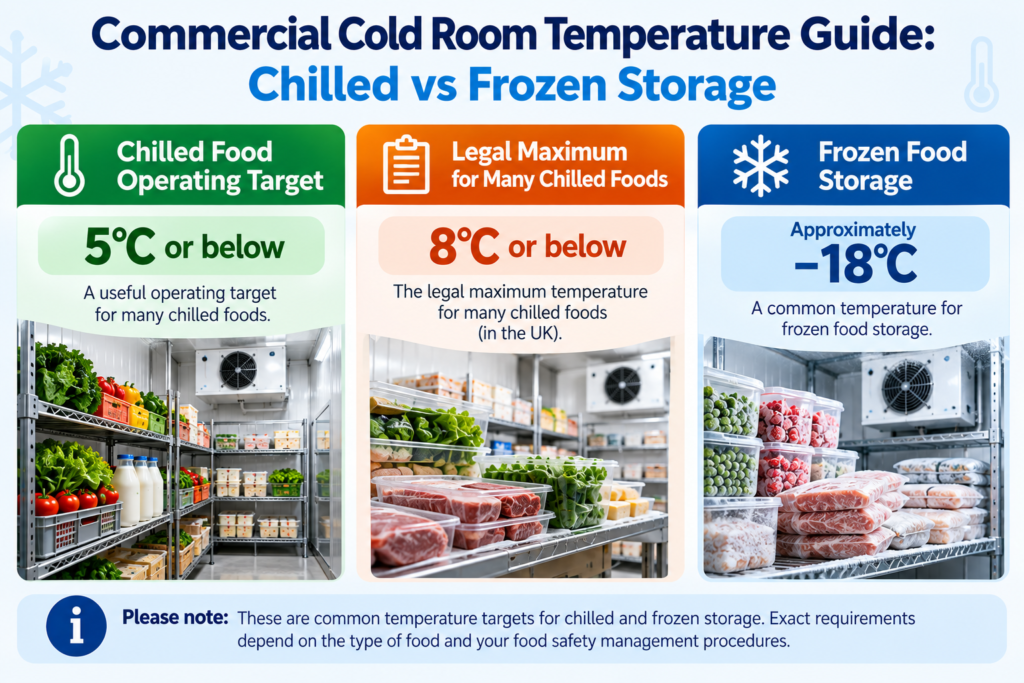
The Food Standards Agency recommends keeping fridges at 5°C or below. For food businesses in England, Wales and Northern Ireland, cold food must generally be stored at 8°C or below, subject to the applicable food-safety rules and exceptions.
This difference is important.
Five degrees is a useful operating target, while 8°C is the legal maximum for many chilled foods. Your food safety management system should determine the controls that apply to your business.
Frozen food needs different conditions. A freezer normally operates around -18°C to keep frozen products in suitable condition.
The FSA‘s research also shows why regular monitoring matters. In its Kitchen Life 2 research, some food businesses had average fridge temperatures above the recommended 5°C, while one business had an average above the legal 8°C limit. The research identified daily temperature checks and clear routines as important factors in better compliance.
A cold room should therefore be designed around your actual stock, working routine and temperature requirements.
What Type of Cold Room Does Your Business Need?
There is no single cold room that suits every business.
A small café may need a compact walk-in chiller, while a food wholesaler may require a much larger room with higher storage capacity. A business selling frozen products will need a freezer room rather than a standard chilled room.
| Cold Room Type | Typical Use | Main Consideration |
|---|---|---|
| Chiller room | Meat, dairy, produce and prepared food | Stable chilled temperature |
| Freezer room | Frozen food and long-term storage | Lower temperature and stronger insulation |
| Modular cold room | Shops, kitchens and growing businesses | Flexible installation |
| Bespoke cold room | Unusual or restricted spaces | Designed around the building |
| Large commercial cold room | Food production and distribution | Capacity, airflow and energy use |
The important question is not simply, “How big should my cold room be?”
Ask instead, “How much stock will I store, how often will people enter, and what temperature must the products maintain?”
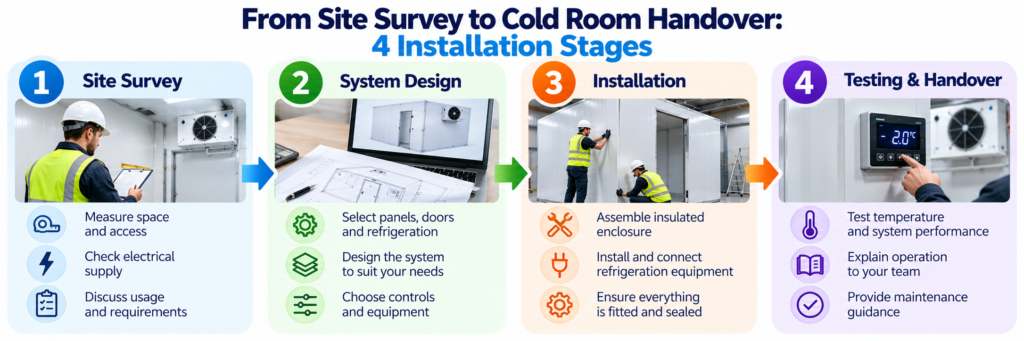
What Happens During Cold Room Installation?
A good installation should begin long before the first panel is fitted.
Step 1: Site Survey
The engineer first looks at the available space.
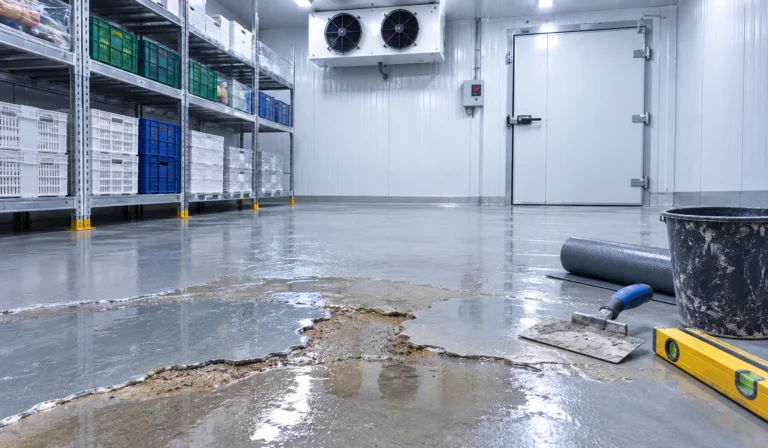
They should check dimensions, access, floor condition, electrical supply, ventilation, drainage where required and the position of the refrigeration equipment.
They should also ask how you use the room.
How much stock goes inside? How often is the door opened? Is the room used all day? Do deliveries arrive at busy times?
These questions can affect the final design.
Step 2: System Design
The installer then selects suitable insulation, refrigeration capacity, doors, controls and other components.
The room should be large enough for your current needs without creating unnecessary unused space.
Insulation is especially important.
A well-insulated room makes it easier for the refrigeration system to maintain the required temperature because less heat enters from outside.
Step 3: Installation
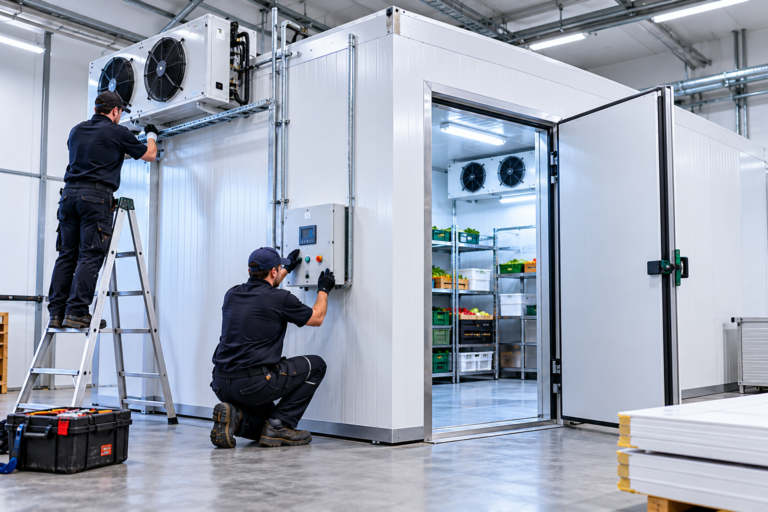
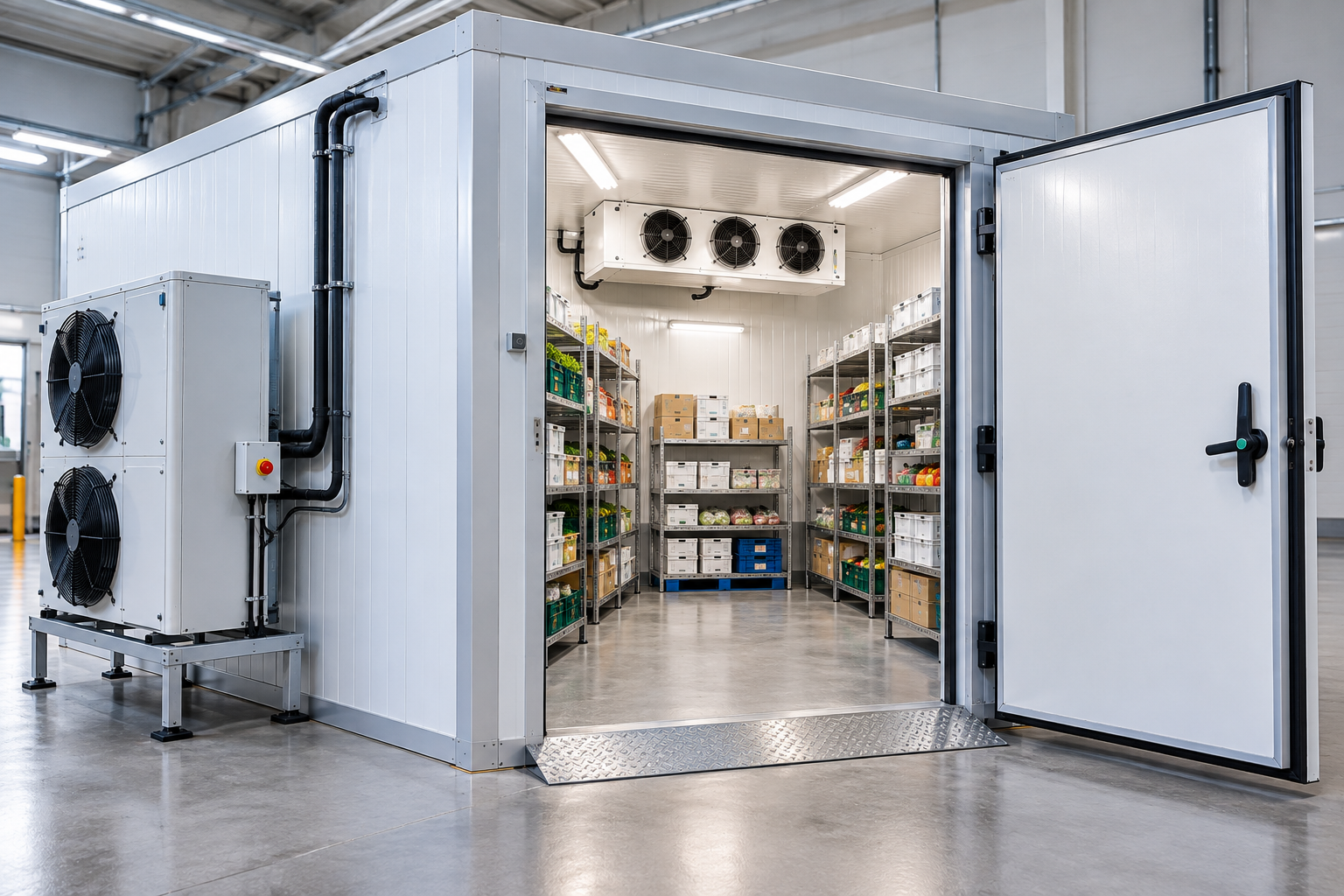
The insulated panels are assembled, the door is fitted and the refrigeration equipment is connected.
Electrical work and controls are completed as part of the installation where required.
The installation should be planned to cause as little disruption to your business as possible.
Step 4: Testing and Handover
The system should then be tested under operating conditions.
The engineer should explain the controls and provide relevant documentation, including information about the equipment, refrigerant, warranty and maintenance requirements.
Do not treat handover as an afterthought.
Knowing how to operate and monitor the room correctly can make a major difference to performance.
Why F-Gas Certification Matters
F-Gas rules are an important part of commercial refrigeration.
F-Gases are fluorinated greenhouse gases used in some refrigeration, air conditioning and heat-pump systems. UK rules control who can work with these gases and how equipment must be managed.
The current UK Government guidance states that individuals working with F-Gas equipment need the appropriate qualifications. For stationary refrigeration systems, this covers activities such as installation, servicing, maintenance, leak checking, refrigerant recovery and decommissioning.
There is also a company-certification requirement when a business services stationary F-Gas equipment belonging to another organisation.
That means you should not simply ask, “Are you experienced?”
Ask whether the engineer has the correct F-Gas qualification and whether the company has the required certification for the work being carried out.
What About Leak Checks?
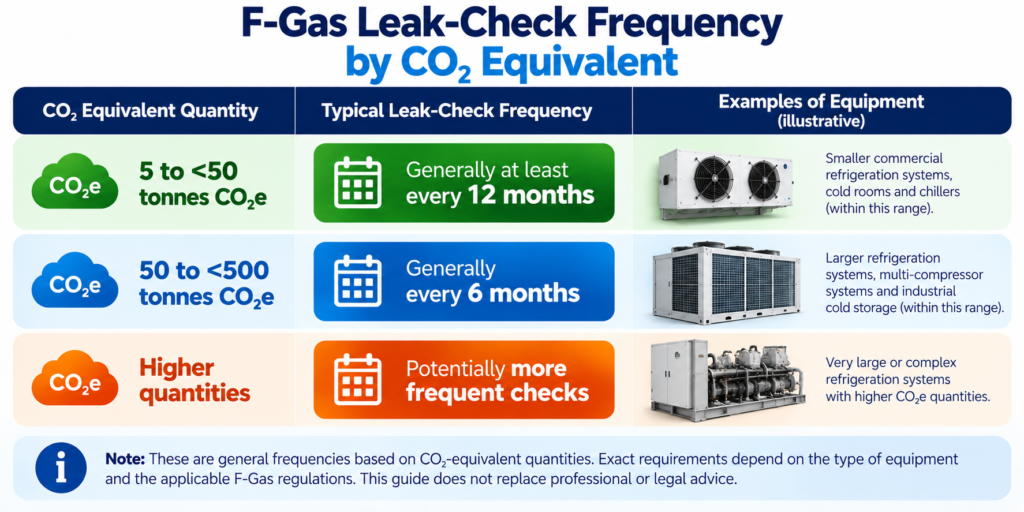
Leak-check requirements depend on the amount and type of F-Gas in the equipment.
For common HFC systems, the UK Government states that equipment containing between 5 and less than 50 tonnes of CO₂ equivalent generally requires leak checks at least every 12 months. Equipment containing 50 to less than 500 tonnes generally requires checks every six months, while higher quantities can require more frequent checks.
If a leak is found, it must be repaired as soon as possible and the repair checked again within one month.
Businesses also have record-keeping duties for relevant equipment containing 5 tonnes of CO₂ equivalent or more, including details of gas, maintenance and leak checks. Records generally need to be kept for five years.
Your installer should explain which requirements apply to your specific system.
How to Make Your Cold Room More Energy Efficient
Cold rooms can run for long hours, so efficiency matters.
The first step is good insulation.
If the insulation is poor or damaged, heat can enter the room more easily. The refrigeration system then has to work harder to remove that heat.
Door management is also important.
Every time the door opens, warmer air enters the room. If staff leave the door open while moving stock, the system may need to run harder to recover the temperature.Simple habits can help.
Keep the door closed when it is not being used. Check door seals regularly. Keep airflow around refrigeration equipment clear. Clean components according to the manufacturer’s maintenance guidance.
Temperature monitoring matters too.
The FSA‘s research found that daily routines for checking and recording refrigeration temperatures can help food businesses maintain safer storage conditions.
Do not set the room colder than your products require.
Running a chiller at an unnecessarily low temperature can waste energy without providing a useful benefit.
Key Takeaways
Reliable cold storage starts with good planning.
The right room should match the products you store, the temperature you need, your available space and the way your staff use it.
A proper site survey can help prevent expensive design mistakes.
F-Gas requirements should also be checked before installation or servicing. The UK Government makes clear that people carrying out relevant work on F-Gas refrigeration equipment need the correct qualifications, while companies working on equipment belonging to other businesses may also need company certification.
Finally, remember that installation is only the beginning.
Temperature checks, sensible door use, good maintenance and prompt repairs all help keep your cold room reliable.
Is your Wetherby business losing space, stock or money because your current refrigeration system is no longer meeting your needs—and would a properly designed cold room solve the problem?
Frequently Asked Questions
1. What is the best temperature for a commercial cold room?
For many chilled foods, 5°C or below is a useful operating target, while the legal maximum for many chilled foods in England, Wales and Northern Ireland is 8°C. The correct temperature should always be based on the food being stored and your food safety management procedures.
2. How long does cold room installation take?
The time depends on the size and complexity of the project, as well as site access and preparation work. A small modular room may be installed quickly, while a large bespoke cold room can take considerably longer.
3. Do cold room installers need F-Gas certification?
Where the work involves activities covered by F-Gas requirements, the engineer must have the correct qualification. A company servicing stationary refrigeration equipment for another business may also need the required company certification.
4. How often should a commercial cold room be serviced?
There is no single service interval that applies to every cold room because equipment, usage and manufacturer requirements vary. A planned maintenance schedule is sensible, while F-Gas leak checks must be carried out at legally required intervals where the system falls within the relevant thresholds.
5. How can I reduce my cold room electricity costs?
Start with good insulation, properly sealing doors and sensible temperature settings. Regular maintenance and keeping refrigeration components clean and unobstructed can also help the system work efficiently.
6. Can a cold room be built to fit a small or unusual space?
Yes, modular and bespoke cold rooms can be designed around many different spaces. A professional site survey is important because door position, ceiling height, access and refrigeration equipment all need to be considered.
7. Is a walk-in chiller better than several upright fridges?
It depends on your business and storage needs. A walk-in cold room can provide more organised storage and easier access for larger stock volumes, but the best option depends on available space, usage and the required temperature.
8. What records should I keep for an F-Gas refrigeration system?
For relevant equipment containing 5 tonnes of CO₂ equivalent or more, records can include the quantity and type of gas, gas added during maintenance, mandatory leak-check results and recovery or disposal information. The UK Government states that these records generally need to be kept for five years.
9. What should I check before accepting a cold room quotation?
Check the room size, temperature range, insulation, refrigeration equipment, controls, installation work and warranty. You should also confirm what maintenance, emergency support and any electrical or building work are included.
10. What happens if my cold room develops a refrigerant leak?
A suspected refrigerant leak should be dealt with by an appropriately qualified professional. Where mandatory F-Gas leak-check rules apply, the UK Government states that a detected leak must be repaired as soon as possible and the repair checked again within one month.