
Cold Room for Catering Services: Temporary and Mobile Solutions
Outdoor weddings. Food festivals. Corporate events. Sporting venues. Pop-up kitchens. Every catering business faces one common challenge—keeping food at the right temperature from preparation until service. A reliable cold room for catering services is no longer just an advantage. It is often the difference between serving safe, fresh food and risking costly food spoilage or food safety issues.
Unlike permanent restaurant kitchens, catering businesses often work in changing locations with varying storage demands. Temporary and mobile cold rooms solve this problem by providing flexible refrigeration wherever it’s needed. Whether you’re catering for 100 guests or 5,000 attendees, choosing the right cold storage solution helps protect food quality, meet legal requirements, and improve operational efficiency.
Why Catering Businesses Need Flexible Cold Storage
Catering is very different from operating a fixed commercial kitchen. Every event presents unique challenges.
One week you may be serving food inside a hotel. The next week you could be operating from a field during a music festival.
Traditional refrigeration often cannot provide enough storage or flexibility.
Temporary cold rooms allow caterers to safely store:
- Fresh meat
- Dairy products
- Seafood
- Desserts
- Prepared meals
- Fresh vegetables
- Drinks
- Floral decorations for events
According to the UK Food Standards Agency (FSA), chilled food should normally be stored at 8°C or below, although many commercial caterers aim for 0–5°C to maximise food freshness and shelf life.
Maintaining these temperatures consistently becomes much easier with dedicated mobile refrigeration than with multiple domestic refrigerators.
What Is a Temporary or Mobile Cold Room?
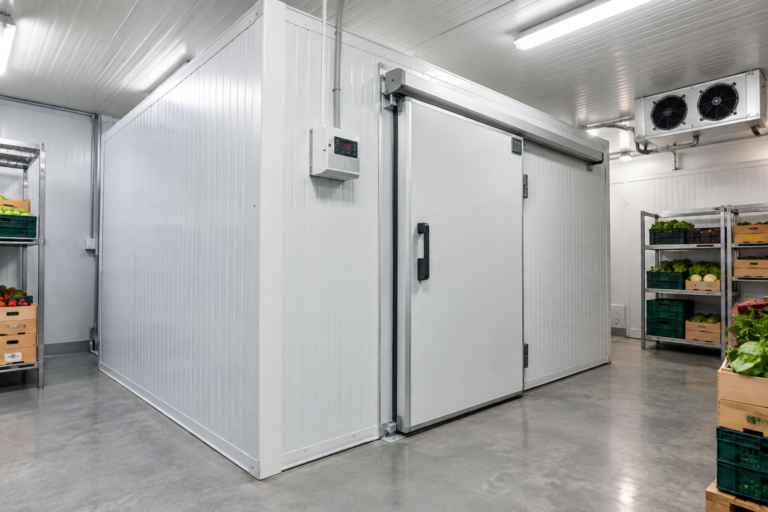
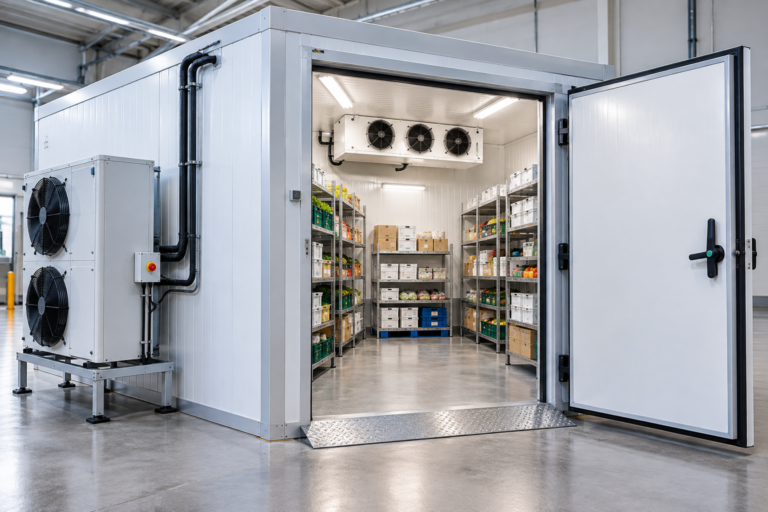
A temporary cold room is a fully insulated refrigeration unit installed for short-term or seasonal use.
Unlike permanent cold rooms built into commercial premises, temporary units can be:
- Delivered to event locations
- Installed quickly
- Removed after use
- Expanded if demand increases
Some units are container-based, while others use modular insulated panels assembled directly on-site.
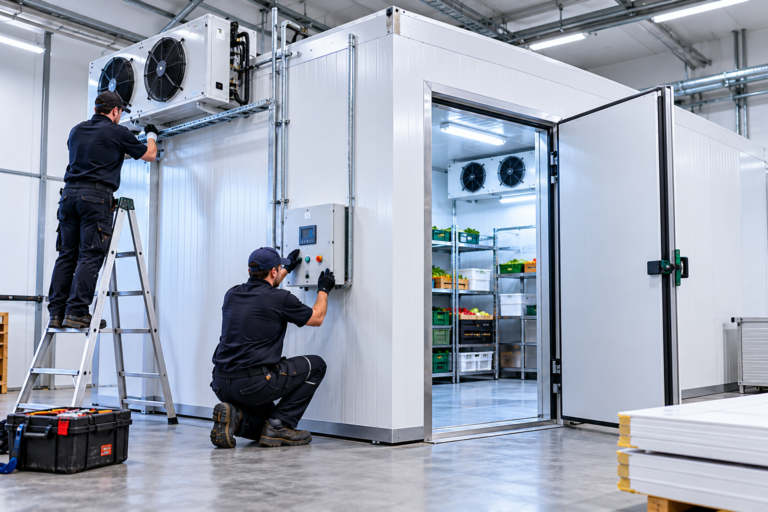
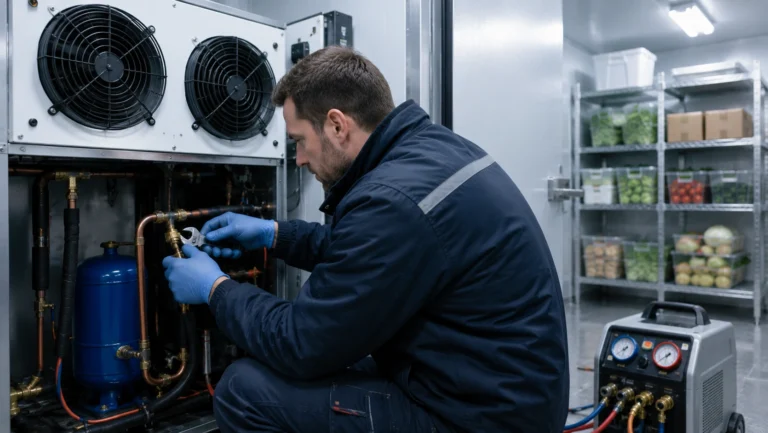
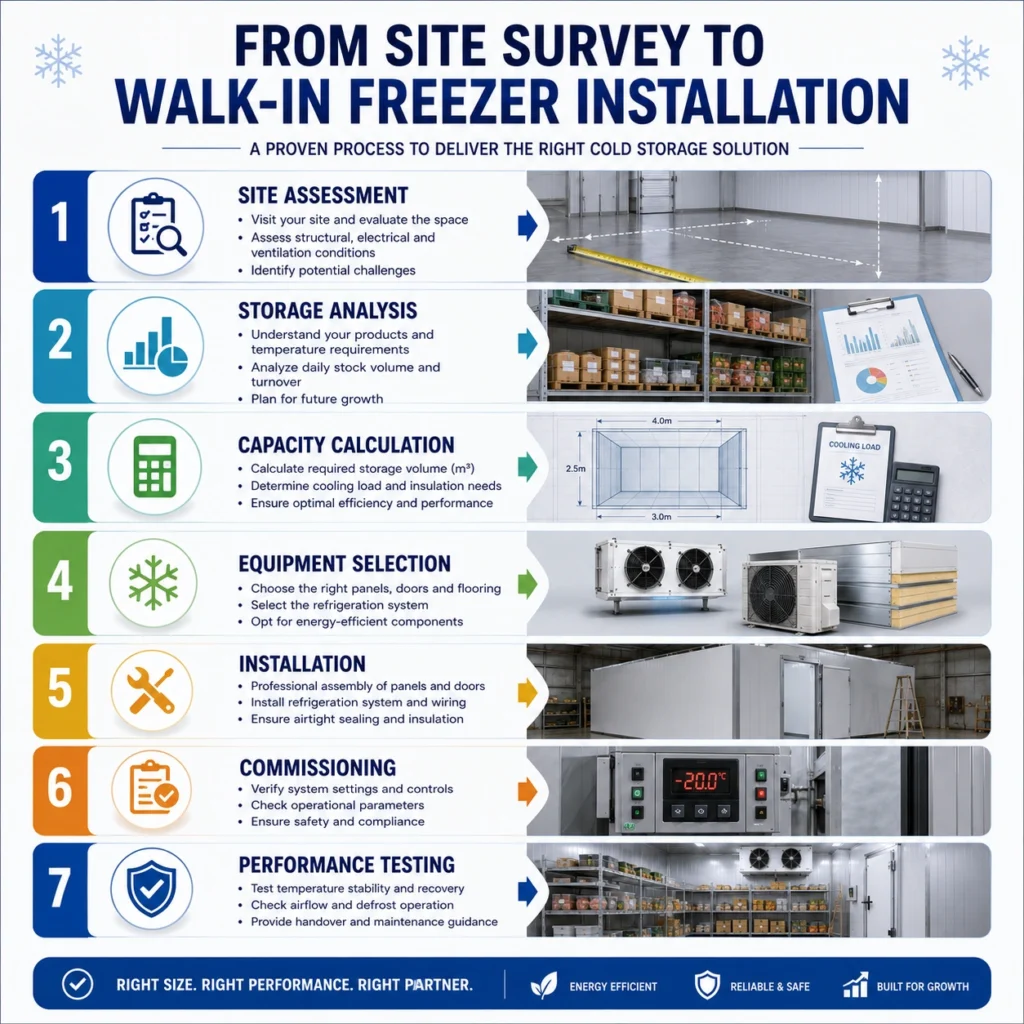
Professional cold room installation engineers ensure every system maintains consistent cooling, efficient airflow and safe electrical connections regardless of installation location.
Common Applications
Temporary refrigeration is commonly used for:
- Wedding catering
- Outdoor festivals
- Sporting events
- Christmas markets
- Film production catering
- Exhibition centres
- Emergency kitchen replacements
- Seasonal hospitality businesses
This flexibility explains why mobile refrigeration demand continues growing across the events industry.
How Temporary Cold Rooms Help Food Safety
Food safety is the biggest reason caterers invest in temporary refrigeration.
The “temperature danger zone” allows bacteria to multiply rapidly when food remains too warm.
The UK Food Standards Agency recommends keeping chilled foods cold enough to minimise bacterial growth during storage and transport.
A properly maintained cold room provides:
- Stable temperatures
- Better air circulation
- Reduced cross contamination
- Less door opening compared with multiple fridges
- Improved organisation
Instead of constantly moving food between cool boxes and refrigerators, staff can work from one organised storage area.
This also reduces unnecessary handling.
Maintaining Temperature During Busy Events
Large catering operations often experience frequent door openings.
Modern commercial cold rooms minimise temperature fluctuations through:
- Fast recovery refrigeration systems
- Quality insulated panels
- Proper door seals
- Efficient evaporator fans
- Digital temperature monitoring
These features help food remain within safe storage temperatures throughout busy service periods.
Choosing the Right Cold Room Size
Selecting the correct size depends on much more than guest numbers.
Professional cold room installation engineers usually consider:
| Event Size | Typical Cold Room Capacity | Suitable For |
|---|---|---|
| Up to 150 guests | Small Modular Cold Room | Private parties |
| 150–500 guests | Medium Walk-in Cold Room | Weddings |
| 500–2,000 guests | Large Mobile Cold Room | Festivals |
| 2,000+ guests | Multiple Linked Cold Rooms | Large outdoor events |
Choosing an oversized unit increases running costs.
Choosing one that’s too small leads to overcrowding, blocked airflow and uneven cooling.
Experienced engineers calculate storage needs based on food volume rather than guest numbers alone.
Temporary vs Permanent Cold Rooms
| Feature | Temporary Cold Room | Permanent Cold Room |
|---|---|---|
| Installation Time | Usually installed within 1–2 days | Typically takes several days to weeks, depending on project complexity |
| Mobility | Portable and can be relocated between sites | Fixed in one location and cannot be easily moved |
| Best Suited For | Catering events, festivals, weddings, seasonal demand, and emergency refrigeration | Restaurants, hotels, food manufacturers, supermarkets, and permanent commercial kitchens |
| Storage Capacity | Available in various modular sizes for short-term use | Custom-built to meet long-term storage requirements |
| Flexibility | Easy to expand, relocate, or remove after use | Expansion usually requires additional construction work |
| Installation Cost | Lower upfront cost when rented | Higher initial investment for permanent installation |
| Rental Availability | Commonly available for daily, weekly, or monthly hire | Generally purchased as a long-term business asset |
| Energy Efficiency | Modern units are energy efficient for temporary operations | Designed for continuous, long-term energy-efficient performance |
| Maintenance Requirements | Minimal during short-term hire; provider often handles servicing | Regular planned maintenance is required to ensure reliability |
| Typical Applications | Outdoor catering, corporate events, exhibitions, sporting events, film productions, and temporary kitchens | Food processing facilities, cold storage warehouses, commercial kitchens, healthcare, and retail businesses |
Want a tailored recommendation or quick quote? Reach out today
Energy Efficiency Matters More Than Ever
Energy costs remain one of the largest operating expenses for hospitality businesses.
Modern refrigeration systems use improved insulation, electronic expansion valves and high-efficiency compressors that consume significantly less electricity than older equipment.
According to the International Energy Agency (IEA), improvements in refrigeration efficiency are essential for reducing energy consumption while maintaining cooling performance.
For catering businesses operating temporary facilities, efficient refrigeration lowers generator requirements and fuel costs during outdoor events.
Planning Ahead Prevents Expensive Problems
Last-minute refrigeration arrangements often create unnecessary stress.
Professional planning normally includes:
- Estimating food volume
- Checking electrical supply
- Confirming delivery access
- Allowing airflow around refrigeration units
- Planning product loading schedules
- Monitoring temperatures throughout the event
Professional cold room installation engineers usually inspect these factors before installation to avoid delays on event day.
Want a tailored recommendation or quick quote? Reach out today
Common Mistakes Catering Businesses Make
Many refrigeration problems are preventable.
Some of the most common mistakes include:
- Hiring refrigeration that’s too small
- Blocking evaporator airflow
- Leaving doors open too long
- Mixing raw and cooked foods
- Ignoring temperature monitoring
- Delaying maintenance
Even small temperature increases can reduce product shelf life.
The US Food and Drug Administration (FDA) advises maintaining proper cold storage temperatures throughout the food chain to reduce foodborne illness risks.
Should You Rent or Buy?
This depends largely on how frequently refrigeration is required.
Businesses catering occasional weddings or seasonal festivals often find temporary rental more economical.
Companies running daily catering contracts may benefit from purchasing their own modular cold room.
Professional cold room installation engineers can assess expected usage patterns and recommend the most cost-effective solution over several years rather than focusing only on upfront costs.
What to Look for Before Booking a Mobile Cold Room
Not all refrigeration units perform equally.
Before booking temporary refrigeration, check:
- Temperature range
- Insulation quality
- Floor loading capacity
- Internal lighting
- Door access
- Alarm systems
- Digital temperature monitoring
- Emergency support availability
Working with experienced cold room installation engineers ensures equipment is correctly installed, tested and operating safely before food arrives.
Keeping Every Event Running Smoothly
Every successful catering event depends on careful planning behind the scenes. Temporary and mobile cold rooms give caterers the flexibility to store food safely, adapt to changing venues and handle seasonal demand without compromising quality. With the right refrigeration capacity, proper installation and reliable temperature control, businesses can reduce waste, protect food safety and keep service running efficiently—even during the busiest events.
Have you ever faced refrigeration challenges during a catering event? What type of mobile cold room would best suit your business? Share your experience or questions in the comments—we’d love to hear from you.
Frequently Asked Questions (FAQs)
1. What is a cold room for catering services?
A cold room for catering services is a temperature-controlled storage unit designed to keep food, drinks, and ingredients fresh during events, weddings, festivals, and temporary catering operations. It provides significantly more storage space than standard commercial refrigerators while maintaining consistent temperatures that help meet food safety regulations.
2. Why do catering businesses need temporary cold rooms?
Temporary cold rooms provide flexible refrigerated storage for short-term events where permanent refrigeration is unavailable or insufficient. They help caterers safely store perishable food, reduce spoilage, improve workflow, and comply with UK food hygiene requirements during busy events.
3. How do I choose the right size cold room for my catering business?
The ideal cold room size depends on several factors, including the number of guests, menu type, food preparation schedule, storage duration, and available installation space. Professional cold room installation engineers can assess your requirements and recommend the most suitable capacity to ensure efficient cooling without wasting energy.
4. What temperature should a catering cold room be set at?
Most catering cold rooms are operated between 0°C and 5°C for chilled foods, while frozen storage should remain at -18°C or below. Maintaining the correct temperature helps preserve food quality, extend shelf life, and reduce the risk of bacterial growth.
5. Can a mobile cold room be installed for outdoor catering events?
Yes. Mobile cold rooms are specifically designed for outdoor events such as weddings, festivals, sporting events, corporate functions, and temporary kitchens. They can be installed quickly by experienced cold room installation engineers and provide reliable refrigeration wherever it is needed.
6. How long does it take to install a temporary cold room?
Most temporary cold rooms can be delivered and installed within one or two days, depending on the unit size, site access, electrical supply, and project requirements. Larger modular systems may require additional installation time.
7. What are the benefits of hiring professional cold room installation engineers?
Professional cold room installation engineers ensure the refrigeration system is installed safely, operates efficiently, and maintains the required temperatures. They also check insulation, electrical connections, airflow, refrigeration performance, and compliance with UK safety standards.
8. Is renting a temporary cold room better than buying one?
Renting is often the most cost-effective option for seasonal businesses, one-off events, and emergency refrigeration needs. Buying a cold room is generally more suitable for businesses that require refrigerated storage throughout the year. The best option depends on your operational requirements and long-term budget.
9. How can a temporary cold room improve food safety during catering events?
A temporary cold room maintains stable storage temperatures, reduces food handling, improves organisation, and minimises the risk of food contamination. Proper refrigeration helps caterers comply with food hygiene regulations while keeping ingredients fresh throughout the event.
10. How often should catering cold rooms be serviced?
Commercial catering cold rooms should typically be professionally serviced at least once or twice a year, depending on usage. Regular maintenance helps identify refrigerant leaks, worn components, airflow issues, and temperature inconsistencies before they lead to costly breakdowns or food loss.