
Cold Room Maintenance Bristol: 8 Problems Regular Checks Can Prevent
Reliable cold room maintenance Bristol businesses depend on helps keep food, medicines and other temperature-sensitive products at the right temperature. Without regular inspections, a small fault can turn into spoiled stock, unexpected repair bills or hours of lost business.
Whether you run a restaurant, supermarket, hotel, food production facility or commercial kitchen, preventive maintenance can help your refrigeration equipment work safely and efficiently. Understanding the warning signs makes it easier to act before a minor problem becomes an expensive emergency.
Why Regular Cold Room Maintenance Matters
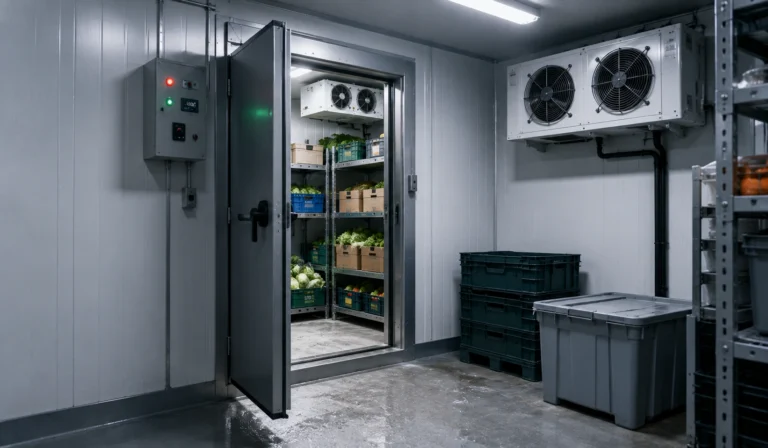
A commercial cold room relies on several components working together. These include the refrigeration system, evaporator, condenser, fans, door seals, temperature controls and insulation. A fault in one component can affect the entire system.
Regular maintenance helps identify worn parts, restricted airflow, refrigerant leaks and temperature control problems before they cause serious disruption. In the UK, the Food Standards Agency provides guidance on keeping chilled food at safe temperatures, while the Health and Safety Executive outlines requirements relevant to refrigeration systems and workplace safety.
For businesses storing chilled food, the FSA generally recommends keeping it at 5°C or below. Your specific operating temperature should also reflect the products stored, applicable legal requirements and manufacturer guidance.
8 Problems Cold Room Maintenance in Bristol Can Prevent
1. Unexpected Temperature Changes
A cold room that struggles to maintain its set temperature can put stored products at risk. Faulty sensors, damaged door seals, dirty condenser coils or refrigerant problems may cause temperatures to rise without an obvious warning.
Regular servicing helps identify these faults before they affect stock. Staff should also record temperatures at suitable intervals and investigate unusual readings instead of relying only on the controller display.
2. Refrigeration System Breakdowns
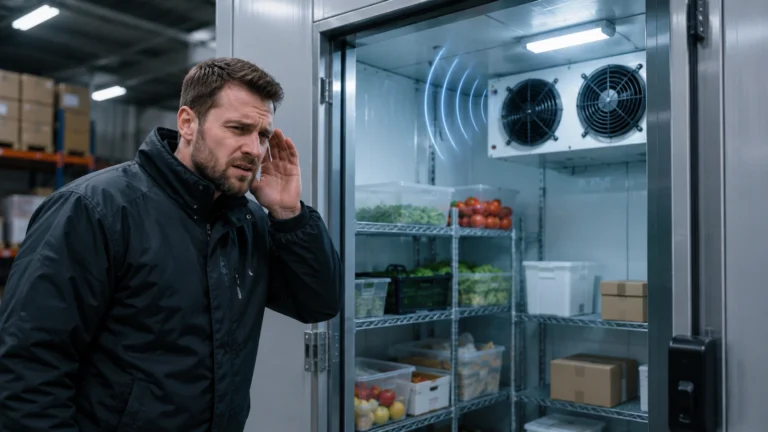
Compressors, fans and electrical components experience wear during normal operation. Unusual noises, repeated system restarts or longer cooling cycles can indicate that something needs attention.
A planned inspection can identify worn components and electrical faults before they cause a complete shutdown. This is particularly important for businesses that cannot afford to lose a full day’s stock or interrupt production.
3. Ice Build-Up on Evaporator Coils
Some homes need a hot water cylinder, new pipework, electrical upgrades or changes to their heating controls. These extras can increase the initial quote, so check whether the price includes equipment, labour, commissioning and any necessary modifications.
The evaporator removes heat from the cold room. When airflow is restricted or the defrost system fails, ice can build up on the coils and reduce cooling performance.
An engineer can inspect the defrost controls, fans, drainage and coil condition. Staff should never chip ice away with sharp tools, as this can damage equipment and create a refrigerant leak.
4. Damaged Door Seals and Heat Loss
Cold air escapes through worn seals, while warm, moist air enters the room. This makes the refrigeration system work harder and can increase energy use.
Check the door gasket for cracks, gaps and loose sections. Make sure doors close properly and are not left open during deliveries. Replace damaged seals promptly, and have persistent condensation around door frames investigated.
5. Blocked Condenser Coils and Higher Energy Bills
Dust, grease and debris can collect on condenser coils, making it harder for the system to release heat. The compressor may then run for longer periods to maintain the required temperature.
Regular cleaning, carried out safely and according to manufacturer instructions, helps maintain heat transfer. A technician should also inspect condenser fans, ventilation clearances and operating pressures where appropriate.
6. Refrigerant Leaks and Poor Cooling Performance
A refrigerant leak can reduce cooling capacity and harm the environment. Possible warning signs include declining performance, repeated cooling problems and unexplained changes in operating behaviour.
Under UK F-gas rules, certain refrigeration systems require leak checks at intervals determined by their refrigerant charge and carbon dioxide equivalent. The government explains these requirements in its official F-gas leak-check guidance.
Only appropriately qualified professionals should investigate and repair refrigerant circuit faults. Simply adding more refrigerant without finding the cause does not solve the underlying problem.
7. Blocked Drainage and Water Leaks
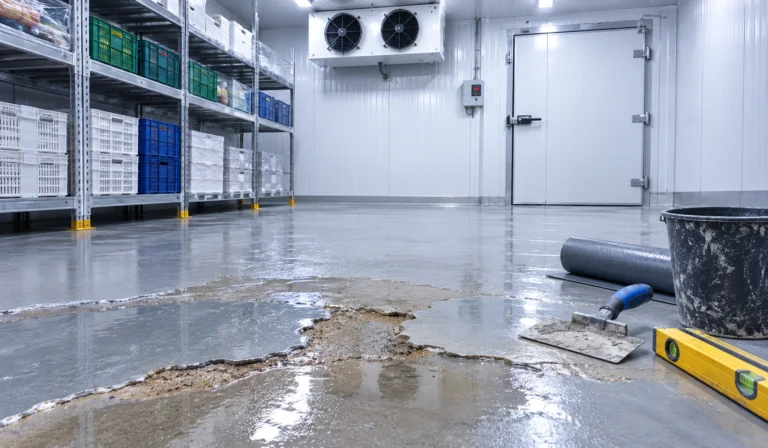
Defrost water needs a clear route away from the evaporator. Blocked drains can cause water to collect on the floor, encourage ice formation and create slipping hazards.
Routine checks should look for standing water, unusual odours and visible drainage blockages. Persistent leaks need professional attention because they may indicate a blocked drain, damaged pipework or a defrost fault.
8. Damaged Insulation and Poor Temperature Control
Cracked wall panels, damaged floor insulation and gaps around joints can allow heat to enter the cold room. Damaged vapour barriers may also contribute to condensation and deterioration.
Inspect accessible panels, door frames and joints for visible damage. If a cold room repeatedly struggles to reach its target temperature despite apparently normal refrigeration operation, ask an engineer to assess the insulation and temperature controls.

How Often Should a Cold Room Be Serviced?
The right maintenance schedule depends on the system, operating hours, room conditions, stock requirements and manufacturer recommendations. A busy commercial kitchen may need more frequent attention than a lightly used storage room.
Check | Suggested frequency |
Temperature readings and door closure | Daily or according to the site’s food safety procedures |
Visible checks for leaks, ice and unusual noise | Daily |
Condenser, evaporator and drainage inspection | According to the service plan and operating conditions |
Professional preventive servicing | Commonly every 3–6 months, adjusted to the equipment and risk |
Mandatory F-gas leak checks | At legally prescribed intervals, where applicable |
The three-to-six-month servicing interval is a practical starting point, not a universal legal requirement. Your refrigeration engineer should recommend a schedule suited to the equipment.
What Does Professional Cold Room Servicing Include?
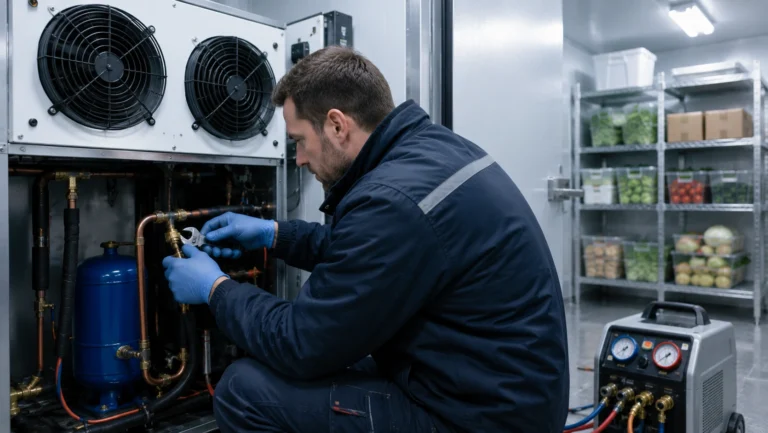
A proper service should assess the complete system, rather than focus on the component that appears faulty. Depending on the equipment, an engineer may inspect electrical connections, compressor operation, fans, coils, drainage, door seals, sensors and defrost controls.
They should also review temperature performance, identify unusual operating patterns and explain any repairs that are needed. Where applicable, refrigerant leak checks and record-keeping must follow the relevant legal requirements.
Coldroomplus provides cold room maintenance and servicing for commercial refrigeration systems. When choosing a contractor in Bristol, check their relevant qualifications, service coverage, emergency arrangements and ability to maintain your specific equipment.
How Much Does Cold Room Maintenance Cost?
There is no single price for every cold room. The cost depends on its size, refrigeration type, condition, accessibility and the work required.
A routine inspection may cost considerably less than an emergency compressor repair or replacement of damaged insulation. Larger systems may also need more time to inspect and maintain.
Ask for a quote that separates the planned service from replacement parts, refrigerant-related work and additional repairs. A maintenance agreement may help you budget for routine visits, but check exactly what it covers and whether emergency call-outs are charged separately.
A Practical Cold Room Maintenance Checklist
Use this checklist as part of your daily operating routine, alongside the manufacturer’s instructions and your site’s food safety procedures.
Daily and routine checks
0 of 7
- Record the cold room temperature and investigate unusual readings.
- Check that doors close fully and seals are intact.
- Look for unusual noises, excessive ice or visible water leaks.
- Keep stored products clear of evaporator airflow.
- Keep the area around external condenser units unobstructed.
- Report recurring alarms or slow cooling to a qualified engineer.
- Record service visits, faults, repairs and follow-up actions.
This checklist supports routine checks. It does not replace professional servicing, legally required inspections or your food safety procedures.
Have you noticed temperature fluctuations, unusual noises or rising energy bills in your cold room? Which of these eight problems would you most like to prevent at your Bristol premises?

Frequently Asked Questions
1. How often should a commercial cold room be serviced?
Many businesses arrange professional servicing every three to six months, although the correct interval depends on the equipment, usage and operating environment. Follow the manufacturer’s guidance and ask your engineer to recommend a suitable schedule.
2. What temperature should a commercial cold room be kept at?
For chilled food businesses in England, Wales and Northern Ireland, the legal maximum for storing cold food is generally 8°C, while the Food Standards Agency recommends setting fridges at 5°C or below. Always follow the requirements for your products and any stricter storage instructions that apply.
3. What are the signs that a cold room needs maintenance?
Common warning signs include rising temperatures, unusual noises, excessive ice, water leaks and doors that do not seal properly. Repeated alarms or longer cooling cycles also justify prompt investigation.
4. Can regular maintenance reduce cold room energy bills?
Yes, maintaining clean heat exchangers, sound door seals and correctly operating controls can reduce unnecessary energy use. The actual savings depend on the system’s condition and how it is operated.
5. Why is my cold room not reaching its set temperature?
Possible causes include restricted airflow, dirty condenser coils, faulty sensors, damaged seals, excessive stock loading or refrigeration faults. Avoid repeatedly changing the controls without identifying the cause, as this may hide the underlying problem.
6. What should I do if a cold room breaks down?
Keep the door closed, check the temperature using a reliable method and move vulnerable stock to suitable alternative storage if necessary. Follow your food safety procedures, document temperature exposure and contact a qualified refrigeration engineer.
7. Are F-gas leak checks required for commercial cold rooms?
Certain systems containing fluorinated greenhouse gases must undergo leak checks at legally specified intervals based on their refrigerant charge and carbon dioxide equivalent. A qualified professional can confirm which requirements apply to your equipment.
8. Can staff carry out cold room maintenance themselves?
Staff can perform routine visual checks, monitor temperatures, keep access areas clear and report faults. Refrigerant handling, electrical repairs and other specialist work should be left to appropriately qualified professionals.
9. What is included in a cold room maintenance contract?
A contract may include scheduled inspections, cleaning, operational testing and condition reports, depending on the provider. Check whether replacement parts, emergency attendance, refrigerant work and follow-up repairs are included or charged separately.
10. How do I choose a cold room maintenance company in Bristol?
Look for relevant refrigeration qualifications, suitable commercial experience, clear quotations and documented service reports. Confirm that the provider covers your Bristol premises and can support the type of cold room you operate.