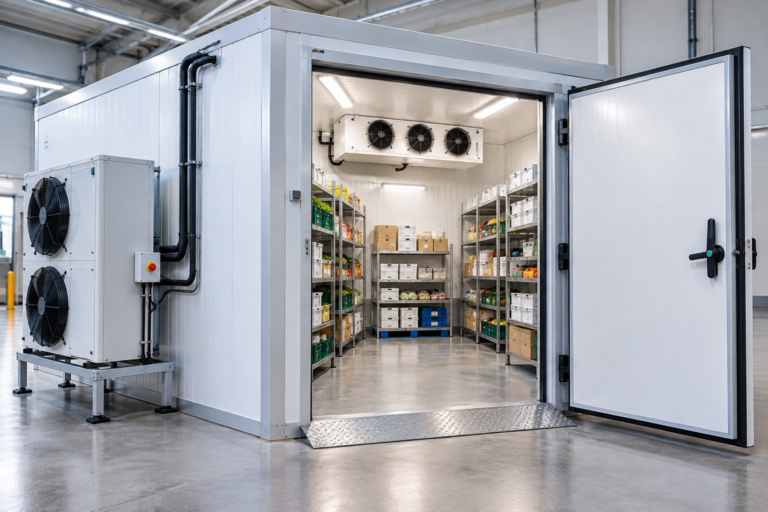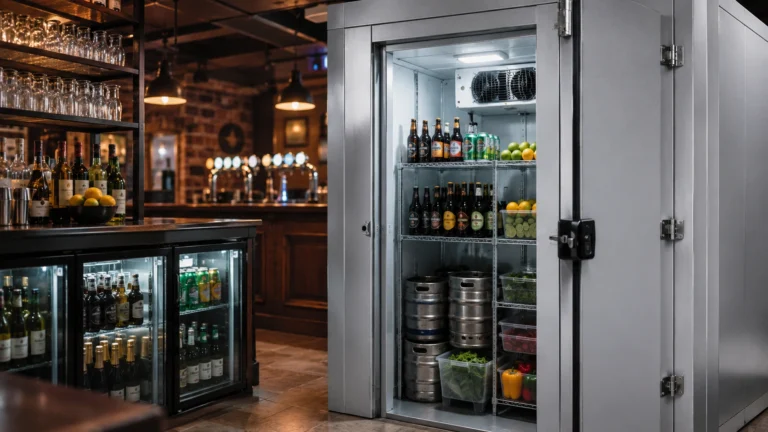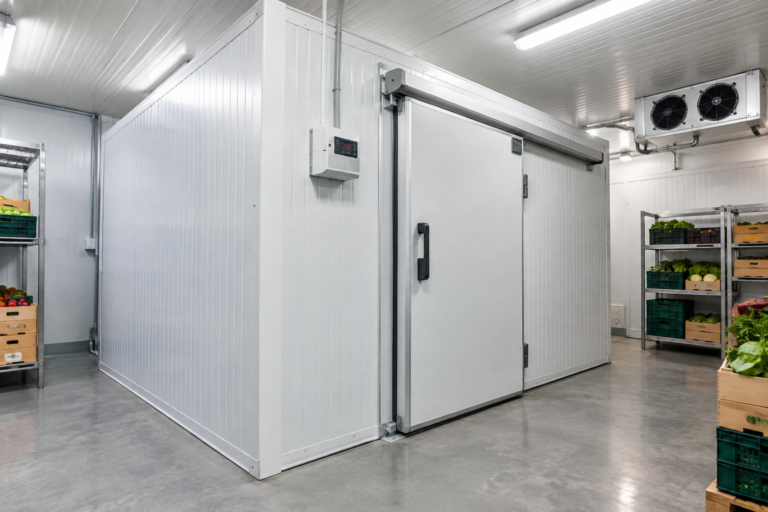
Cold Room Installation in Pudsey: A Local Business Owner’s Guide
If you run a butcher, café, restaurant, takeaway, food shop or catering business, safe cold storage is not something you can afford to get wrong. That is why choosing the right team for cold room installation Pudsey businesses need is so important.
A good cold room should keep food at the right temperature, use energy wisely and fit the way your business works. It should also be easy to clean, simple to monitor and reliable during busy periods.
Pudsey has a strong local business community, with a traditional market and many food and drink businesses serving the area. Leeds City Council describes Pudsey Market as a traditional local market with a loyal customer base, while local business directories show a wide range of cafés, restaurants, takeaways and food retailers in the area.
So, whether you are opening a new food business or replacing an old refrigeration room, getting the design right from the start can save you money and stress later.
Why Pudsey Businesses Need the Right Cold Room
Cold storage does much more than keep food cold.
It helps protect food quality, reduce waste and support good food safety practices. For a busy business, a refrigeration failure can quickly turn into spoiled stock and lost sales.
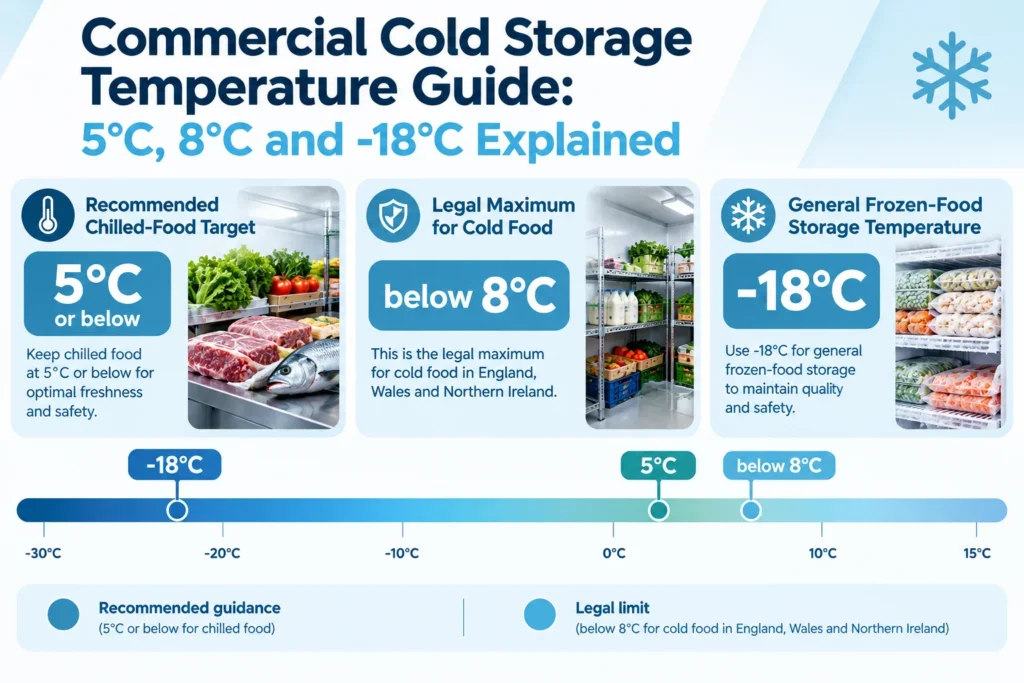
The Food Standards Agency says chilled food should generally be kept at 5°C or below. For food businesses in England, Wales and Northern Ireland, cold food must legally be stored below 8°C. Frozen food should generally be kept at -18°C.
That difference between the recommended target and the legal limit is important.
For example, if your cold room is regularly running at 7°C, you should not simply say, “It is below 8°C, so everything is fine.” The FSA recommends that food businesses aim for the safer 0–5°C range and act when temperatures rise above the recommended level.
A properly designed cold room gives you better control.
It also gives staff enough space to store products correctly instead of filling small commercial fridges beyond their useful capacity.
What Type of Cold Room Does Your Business Need?
There is no single cold room that works for every business.
A butcher may need chilled storage for meat and prepared products. A restaurant may need a walk-in chiller close to its kitchen. A food wholesaler may need much more space, while a small café may need a compact room designed around a limited footprint.
The first question is therefore not, “How much does a cold room cost?”
It is, “What does my business actually need?”
Chiller or Freezer?
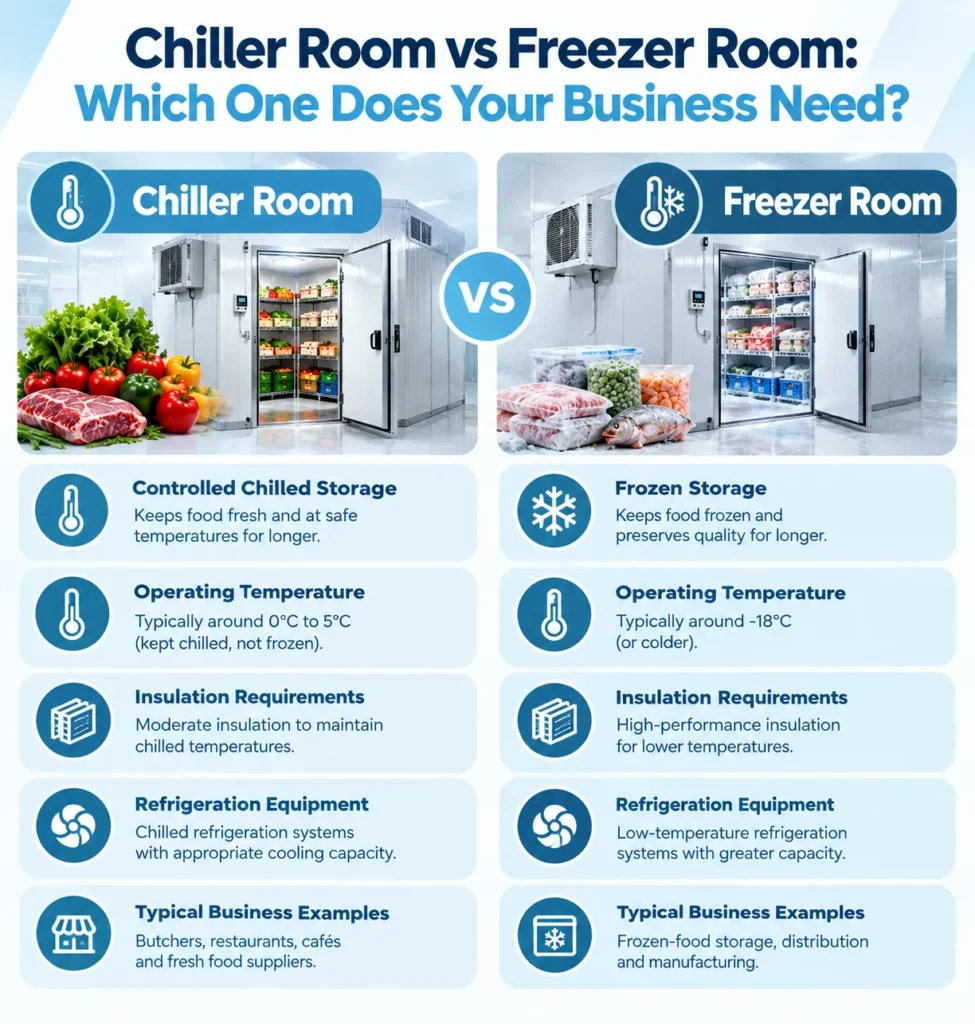
A chiller room is designed for products that need controlled chilled storage.
A freezer room is designed for frozen goods and operates at much lower temperatures.
This affects the insulation, refrigeration equipment, doors and controls used in the installation.
Freezer rooms need particularly good insulation because the temperature difference between the room and the outside environment is much greater.
Cold Room Installation in Pudsey: What the Process Looks Like
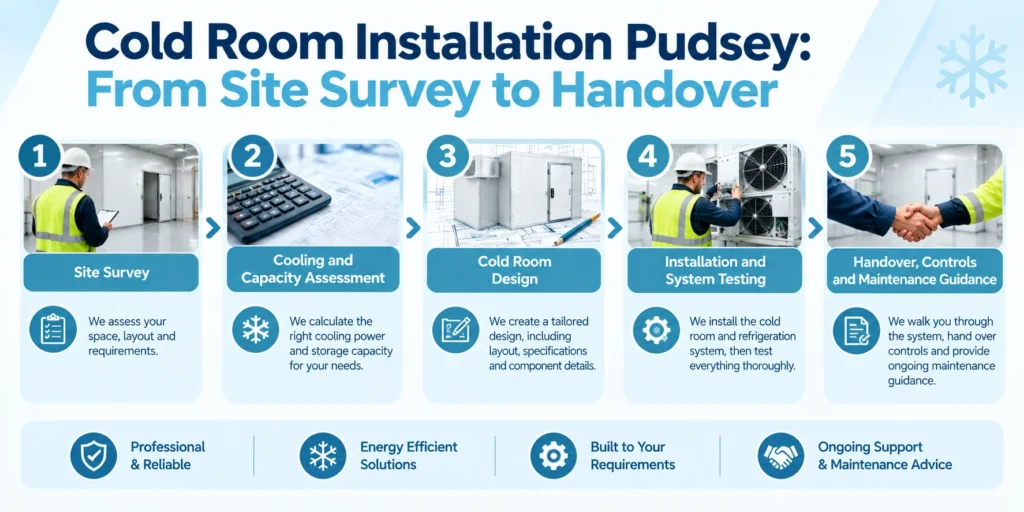
A professional cold room installation Pudsey project should begin with a site survey.
This is where the engineer looks at your available space, building layout, electrical supply, expected stock levels and required temperature.
The survey matters because a cold room is not simply a box with a cooling unit attached.
The engineer needs to calculate the cooling requirement and understand factors such as how often the door will open, how much warm product enters the room and how much heat comes from nearby equipment.
The next stage is design.
The correct panels, insulation, door, refrigeration system, controls and layout are selected for your needs.
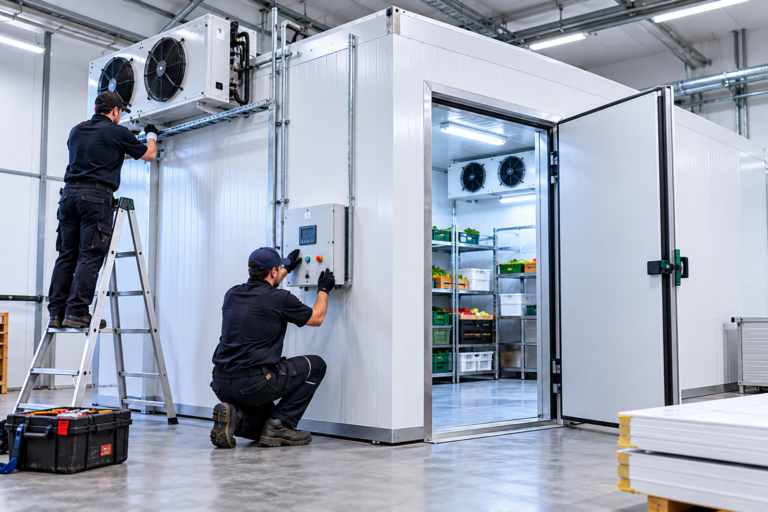
Installation then brings the design to life. The insulated panels are assembled, the refrigeration equipment is fitted and the system is connected and tested.
A proper handover should explain how to use the controls and how to monitor temperatures.
You should also know what maintenance is required and what to do if the room starts losing temperature.
A rushed installation may look cheaper at first, but poor insulation, bad airflow or incorrect equipment sizing can increase running costs and reduce reliability.
F-Gas Rules Every Business Owner Should Know
F-Gas is short for fluorinated greenhouse gases.
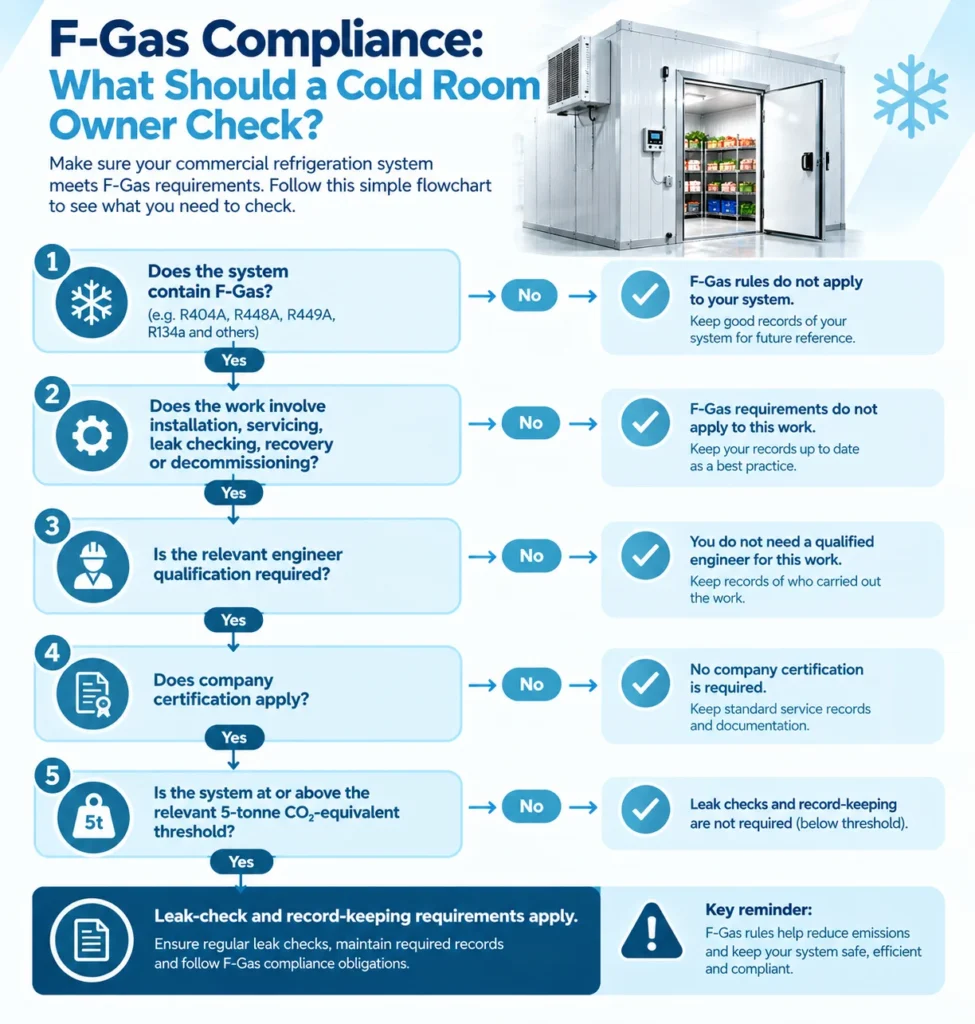
Some refrigeration systems use these gases as refrigerants. Because certain F-Gases have a high global warming impact, UK rules control how they are handled.
The important point for a business owner is simple: do not assume that anyone who calls themselves a refrigeration engineer can legally carry out every type of refrigerant work.
The UK Government states that people working on stationary refrigeration, air conditioning and heat pump equipment containing F-Gas need the relevant qualifications for activities such as installation, servicing, leak checking, gas recovery and decommissioning.
There are also rules about company certification when a contractor works on equipment belonging to other businesses.
What About Leak Checks?
Leak-check duties depend on the amount and global warming potential of the refrigerant.
For equipment containing F-Gas equivalent to 5 tonnes or more of CO₂, the UK Government guidance sets out mandatory leak-check requirements. Equipment containing 5 to less than 50 tonnes of CO₂ equivalent generally needs checking at least every 12 months, while higher quantities require more frequent checks.
Businesses also have record-keeping duties for equipment at or above the relevant 5-tonne threshold. These records can include the type and quantity of gas, leak checks, gas added during maintenance and recovery information, and must generally be kept for five years.
Your refrigeration contractor should be able to explain what applies to your particular system.
Common Cold Room Mistakes That Cost Businesses Money
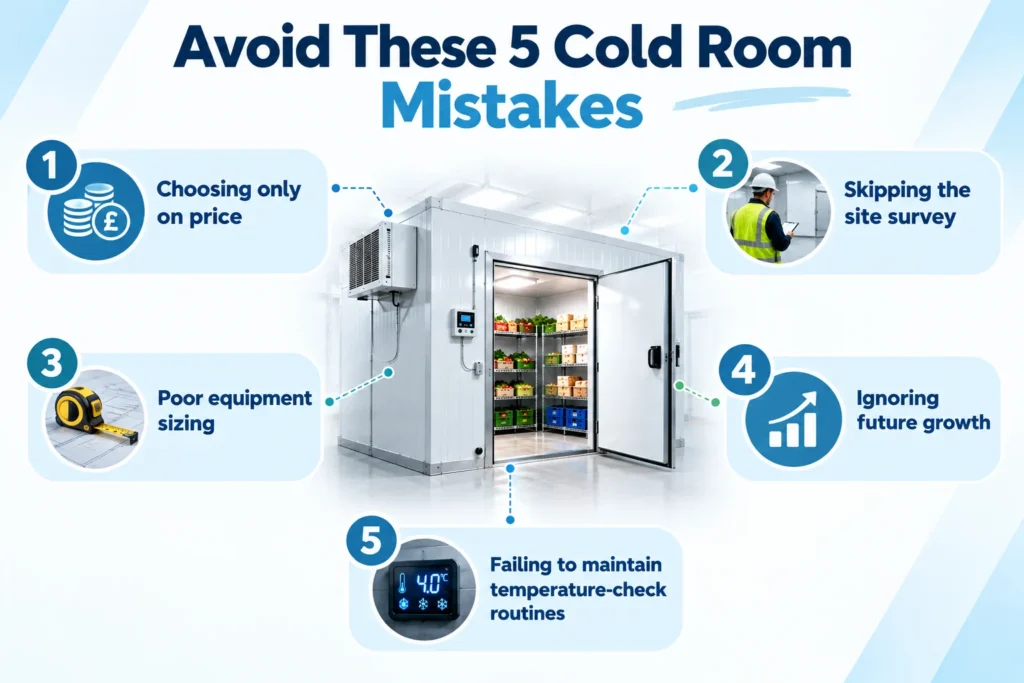
One common mistake is choosing a system based only on the lowest quotation.
A cheaper installation may use unsuitable equipment or provide less insulation. If the system then consumes more electricity or breaks down more often, the original savings can disappear quickly.
Another mistake is ignoring the site survey.
Your available space may look simple, but refrigeration performance depends on much more than room dimensions.
Businesses also sometimes forget about future growth.
If you expect to increase deliveries, add new menu items or take on more customers, tell your engineer before the design is finalised.
It may be easier to build some extra capacity into the original design than to replace the entire system later.
Temperature records are another area that should not be overlooked.
The FSA‘s research into food businesses found that temperature-check routines and a strong compliance culture were important factors in keeping chilled food at the correct temperature.
In simple terms, having a good cold room is not enough.
Your staff also need a clear routine for checking it.
These figures should only be used as a starting point, not as a quotation.
Key Takeaways
A successful cold room starts with the right design.
Before you choose an installer, think about what you store, how much space you need, how often the door will open and how your staff will use the room.
Make sure the system can maintain the correct temperature and that you understand your legal responsibilities.
Check the contractor’s qualifications, company certification where required and experience with commercial refrigeration.
Finally, do not forget running costs.
Good insulation, suitable equipment, proper temperature settings and regular maintenance can help your cold room work efficiently for years.
For a local business owner, the goal is simple: safe storage, reliable cooling, sensible energy use and fewer unexpected breakdowns.
Ready to give your Pudsey business safer storage, better temperature control and lower refrigeration worries? What would you like your new cold room to improve first?
Frequently Asked Questions
What temperature should a commercial cold room be?
The FSA recommends that chilled food is kept at 5°C or below, while food businesses in England, Wales and Northern Ireland must legally keep cold food below 8°C. Frozen food should generally be stored at -18°C.
How long does cold room installation take?
Installation time depends on the room size, design, access and refrigeration equipment. A small and simple room may be completed quickly, while a larger bespoke project can take longer, so a reliable installer should provide a timeline after the site survey.
Do I need an F-Gas certified engineer for my cold room?
Where the work involves activities covered by F-Gas rules, the engineer must have the appropriate qualification. Businesses should also check that a contractor working on their equipment has the required company certification where applicable.
How much does a cold room cost?
There is no single price because cold rooms vary greatly in size and specification. The final cost can depend on insulation, refrigeration capacity, doors, controls, electrical work, access and installation complexity.
Should I choose a chiller or freezer room?
Choose a chiller room when your products need controlled chilled storage and a freezer room when they must remain frozen. The two systems use different temperature ranges and can require different insulation and refrigeration equipment.
Can I install a cold room outside my business?
Yes, outdoor cold rooms can be designed for suitable locations. However, the engineer needs to consider weather exposure, drainage, access, electrical supply, equipment location and protection from the elements before confirming the design.
How can I reduce cold room energy costs?
Keep doors closed, maintain good door seals, avoid unnecessarily low temperature settings and arrange regular maintenance. Choosing efficient equipment and proper insulation at the installation stage can also reduce long-term running costs.
How often should a commercial cold room be serviced?
The right service interval depends on the equipment, refrigerant, usage and manufacturer requirements. Businesses should also follow any applicable F-Gas leak-check rules, which can require checks at least every 12 months or more often for systems with higher CO₂-equivalent quantities.
Do I need to keep records for my refrigeration system?
Some equipment containing F-Gas equivalent to 5 tonnes or more of CO₂ is subject to record-keeping requirements. These records can include refrigerant details, maintenance, leak checks and gas recovery information and generally need to be kept for five years.
What should I ask a cold room installer before hiring them?
Ask about qualifications, company certification, experience, warranty, maintenance, emergency repairs and exactly what the quotation includes. It is also sensible to ask how the proposed system has been sized for your building and how much future expansion it can support.