Cold Room Installation in Ilkley: A Local Business Owner’s Guide
Running a food business in Ilkley means keeping products fresh, safe and ready for customers. Restaurants, cafes, butchers, hotels, caterers and food shops all need dependable refrigeration. That is why choosing the right cold room installation in Ilkley solution is more than a storage decision. It can affect food safety, energy bills, daily work and even how much stock you can hold.
A well-designed cold room should match your space, products and working routine. It should also be easy to clean, simple to monitor and built to keep a steady temperature.
This guide explains what Ilkley business owners should know before buying or replacing a commercial cold room.
Why Ilkley Businesses Need Reliable Cold Storage
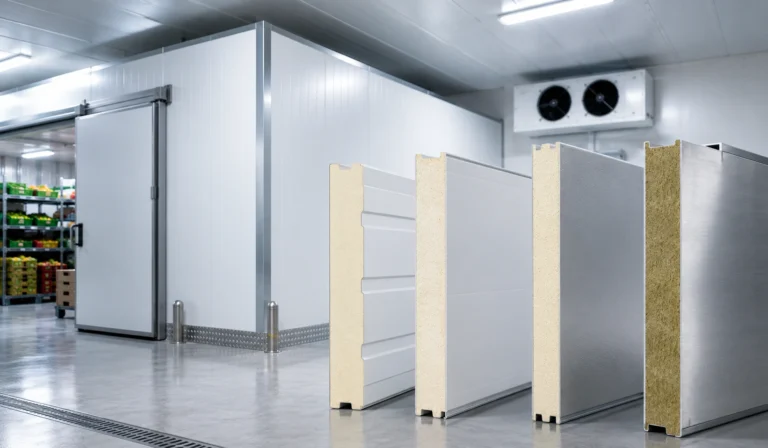
A cold room gives a business much more storage space than a normal commercial fridge. It can make stock easier to organise while helping staff move in and out quickly during busy periods.
For a restaurant, this could mean storing meat, dairy, vegetables and prepared ingredients in one controlled area. For a butcher, it may provide the space needed for larger deliveries. A hotel or caterer may need even more room during busy periods.
Food safety is the biggest reason to get the system right.
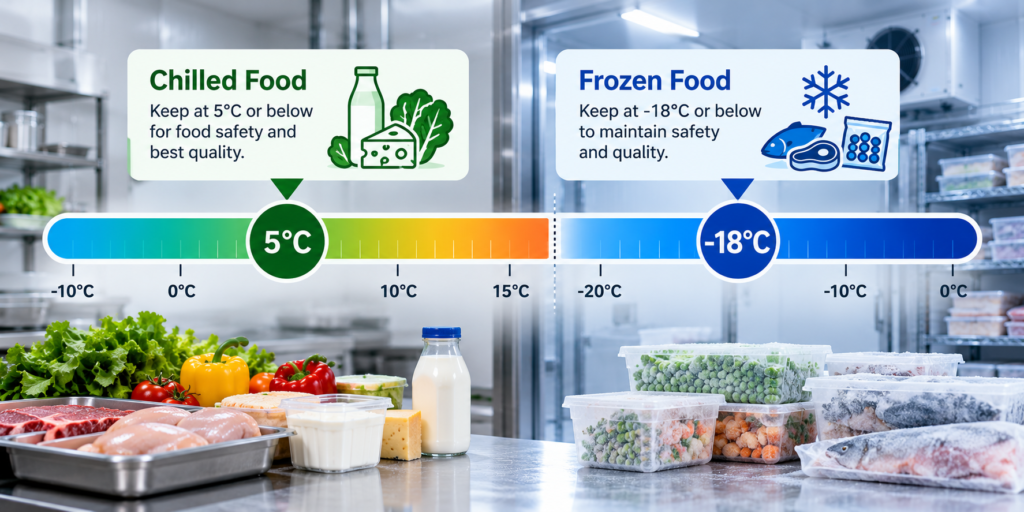
The Food Standards Agency recommends that fridges and chilled display equipment are set at 5°C or below. In England, Wales and Northern Ireland, chilled food must legally be kept at 8°C or below. Frozen food should generally be kept at -18°C or colder.
This difference matters. Five degrees is the recommended operating target, while eight degrees is the legal maximum for chilled food.
The FSA also recommends regular temperature checks. Its research found that some food businesses had average fridge temperatures above the recommended 5°C level, showing why simply trusting the display is not enough.
What Temperature Should a Cold Room Be?
There is no single temperature that suits every cold room.
The correct setting depends on what you store and the instructions for those products. A chilled food room will normally operate differently from a freezer room or a specialist storage area.
For many chilled food businesses, a setting around 0°C to 5°C is suitable, provided it matches the food being stored. Frozen storage generally needs temperatures around -18°C or colder.
Your HACCP procedures and product instructions should always guide the final temperature.
Temperature control is also about more than the number on the controller.
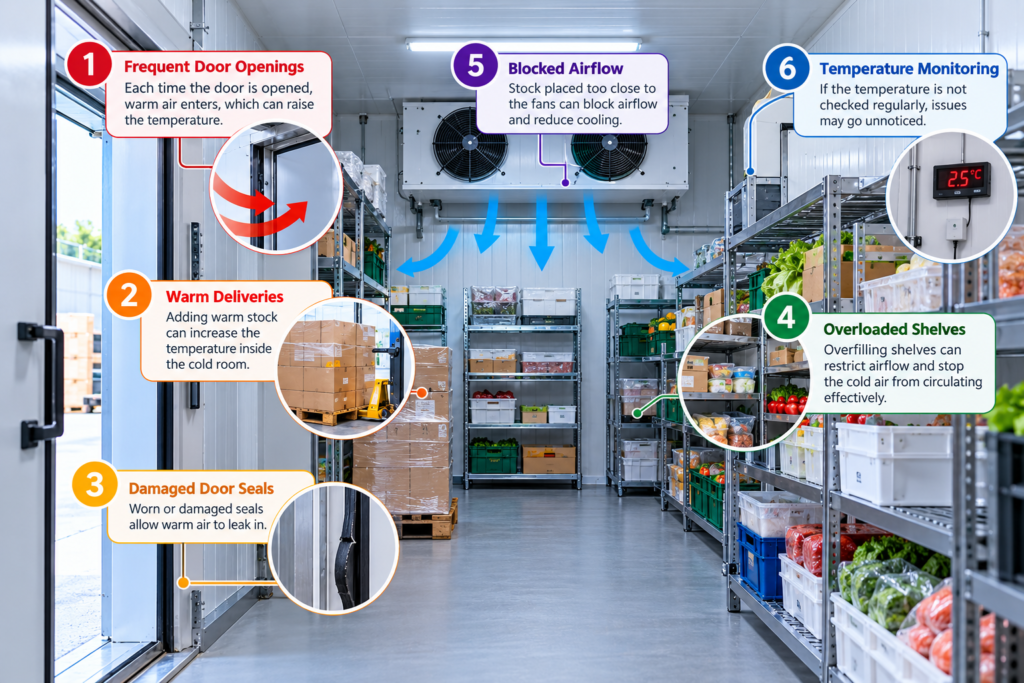
Door openings, warm deliveries, poor seals, overloaded shelves and blocked airflow can all affect the real temperature inside the room.
For this reason, a good installation should include suitable temperature monitoring. The University of Bath also recommends digital temperature displays and regular checking because displayed settings do not always tell the whole story.
If a cold room is regularly struggling to reach its target temperature, do not simply turn the setting lower. The problem could be poor airflow, damaged insulation, a failing component or a system that is too small for the job.
How Cold Room Installation in Ilkley Work
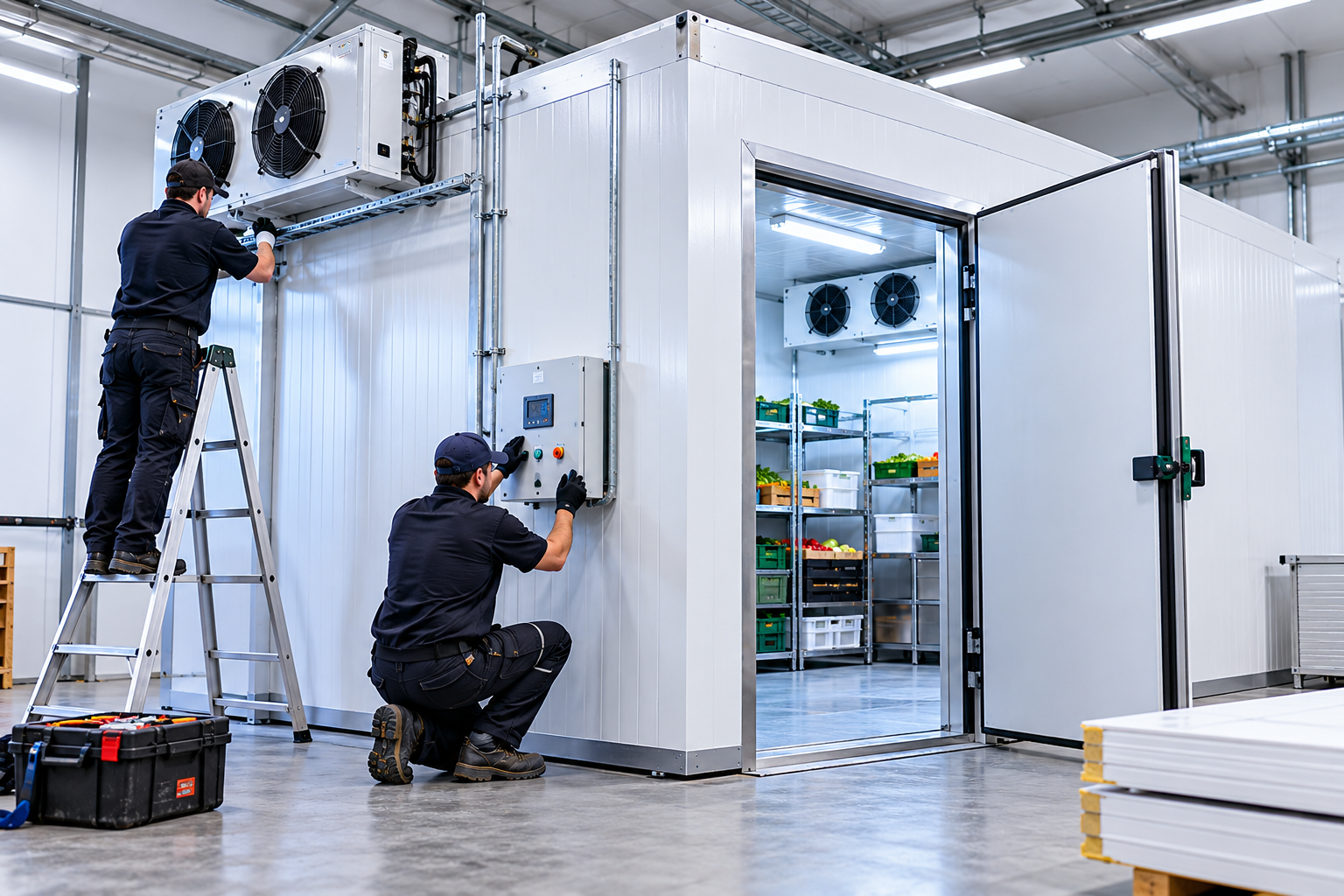
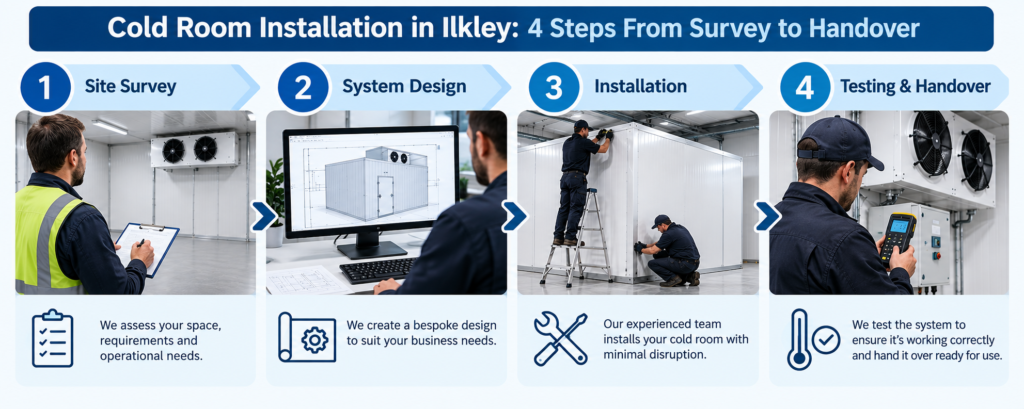
A professional cold room installation Ilkley project should start with a proper site survey.
The engineer needs to look at the available space, access, electrical supply, ventilation and the way your business uses the room.
They should also ask what products you store, how much stock you hold and how often the door is opened.
Step 1: Site Survey
The survey identifies practical problems before installation starts.
For example, a narrow doorway may affect panel delivery. A small plant area may affect where the refrigeration equipment can be placed. A busy kitchen may need a door designed for frequent use.
Step 2: System Design
The next step is choosing the correct room size, insulation, refrigeration system, door and controls.
A freezer needs stronger cooling and insulation than a standard chiller.
A bespoke room may also make better use of an awkward space than a standard modular design.
Step 3: Installation
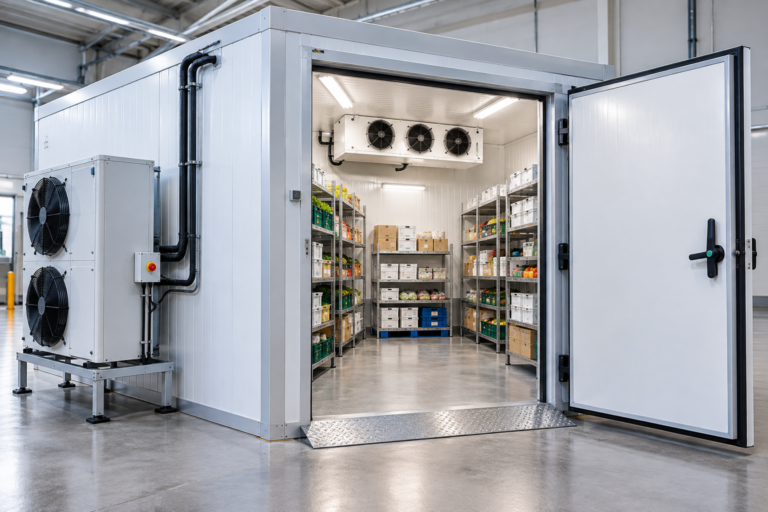
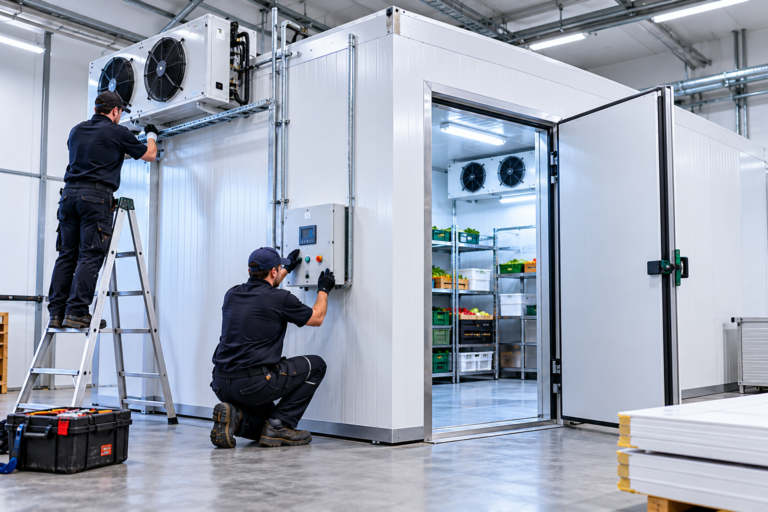
The insulated panels are assembled, the floor and joints are sealed, the door is fitted and the refrigeration equipment is connected.
Electrical work and drainage may also be needed depending on the design.
Step 4: Testing and Handover
Once installed, the system should be tested to confirm that it reaches and maintains the required temperature.
You should also be shown how to use the controller and temperature monitoring system.
How Much Does a Cold Room Cost?
The cost of cold room installation in Ilkley can vary widely because every project has a different specification.
Current UK 2026 pricing information suggests that small walk-in chillers can start at around £4,000, while medium commercial rooms may cost around £8,000 to £20,000. Larger or bespoke systems can go beyond £25,000, with site work, power and drainage potentially adding to the total.
These are only guide prices.
The final quotation can depend on the room dimensions, temperature range, insulation, refrigeration equipment, door type, electrical work and installation conditions.
A freezer will normally cost more than a similar-sized chiller because it needs more demanding refrigeration and insulation.
It is also important to look beyond the purchase price.
A cheaper system may cost more to run if it has poor insulation, inefficient equipment or weak temperature control.
The International Institute of Refrigeration and Efficiency for Access, in a technical guide published through the UK Government, highlights energy efficiency and informed component and refrigerant choices when specifying cold rooms.
Smart buying tip: Ask for an itemised quotation that separates equipment, installation, electrical work, controls and any additional site preparation.
How to Reduce Cold Room Energy Costs
Cold rooms can operate day and night, so energy efficiency should be considered before installation.
The first step is good insulation.
A well-insulated room reduces the amount of heat entering the storage area. Door discipline matters too. Every time the door opens, warm air enters and the refrigeration system has to work harder.
Keep the door closed when staff are not moving stock.
Check door seals regularly. A damaged seal can allow cold air to escape continuously.
Airflow is also important. Do not pack products tightly against evaporators or block vents. Cold air needs space to move around the room.
Temperature settings should be sensible too. Making a chiller much colder than the product requires can waste energy without adding useful protection.
The University of Bath recommends comparing energy use when buying cold-storage equipment and checking actual temperatures rather than relying only on a control setting.
Regular maintenance also matters because dirty coils, poor airflow and worn components can reduce performance.
Key takeaway: The cheapest cold room to buy is not always the cheapest cold room to own. Look at energy use, maintenance and expected working life before making your decision.
Key Takeaways
Good cold room installation Ilkley planning starts before the equipment arrives.
Think about what you store, how much you store, how often staff open the door and what temperature your products require.
Check the installer’s qualifications, ask for a proper site survey and compare the full cost of ownership rather than just the first quotation.
Most importantly, build temperature checks and maintenance into your normal business routine.
A well-designed cold room should make your daily work easier, protect your stock and help control long-term energy costs.
Ready to make your cold storage safer, more efficient and better suited to your Ilkley business? What would you like your new cold room to solve first—limited storage, high energy bills or unreliable temperature control?
Frequently Asked Questions
1. How much does cold room installation cost in Ilkley?
A small commercial walk-in chiller in the UK can start at around £4,000, while medium systems can reach £8,000 to £20,000 or more. The actual price depends on room size, temperature, insulation, refrigeration equipment and site requirements.
2. What temperature should a commercial cold room be?
For many chilled food applications, the target is around 0°C to 5°C, but the correct temperature depends on the products stored and their instructions. The FSA recommends chilled equipment be set at 5°C or below, while chilled food must legally be kept at 8°C or below in England, Wales and Northern Ireland.
3. Do cold room installers need F-Gas certification?
Where the work involves activities covered by F-Gas rules, the engineer must have the appropriate qualification. GOV.UK specifically includes installation, servicing, maintenance, leak checking and refrigerant recovery among activities requiring relevant qualifications.
4. How long does cold room installation take?
The time depends on the size and complexity of the project. A small modular room may be installed quickly, while a large bespoke room can take longer because of building work, electrical requirements and refrigeration installation.
5. Is a bespoke cold room better than a standard model?
Not always, but a bespoke design can be useful when your available space has an unusual shape or when your business has special storage needs. The best choice is the one that gives you the right capacity, temperature control and workflow without wasting space or energy.
6. How can I lower my cold room electricity bill?
Start by keeping doors closed, checking door seals, maintaining airflow and using the correct temperature setting. Efficient equipment and good insulation also matter, and the University of Bath recommends comparing energy use when choosing cold-storage equipment.
7. How often should a commercial cold room be serviced?
The right service schedule depends on the equipment, usage and manufacturer’s instructions. Regular professional maintenance is useful because it can identify worn parts, airflow problems and refrigeration faults before they cause a major breakdown.
8. Can a cold room be installed in a small restaurant?
Yes, provided the available space and electrical supply are suitable. A site survey can help determine whether a compact modular room, bespoke room or another refrigeration option gives the best use of the available space.
9. Should I repair or replace my old cold room?
Repair may make sense when the room is structurally sound and the refrigeration system remains efficient. Replacement may be better when breakdowns are frequent, insulation is poor, energy use is high or the room no longer meets your business needs.
10. What should I ask a cold room installer before hiring them?
Ask about relevant F-Gas qualifications, company certification where required, previous commercial refrigeration experience, the proposed system, warranty and aftercare. You should also ask for a site survey and a clear quotation that explains what is included.