Cold Room Installation in Halifax: A Local Business Owner’s Guide
If you run a food shop, restaurant, bakery, butcher, catering business or food production site in Halifax, reliable refrigeration is not optional. Fresh food needs the right temperature every day, and one refrigeration failure can quickly turn into spoiled stock, lost money and a food safety problem.
That is why choosing the right cold room installation Halifax service matters. The right cold room should match your products, available space, daily workload and budget. It should also be easy to maintain and efficient enough to avoid wasting energy.
This guide explains what Halifax business owners should know before buying a cold room, from choosing the right design to understanding F-Gas rules, running costs, maintenance and common installation mistakes.
Why Halifax Businesses Need a Reliable Cold Room
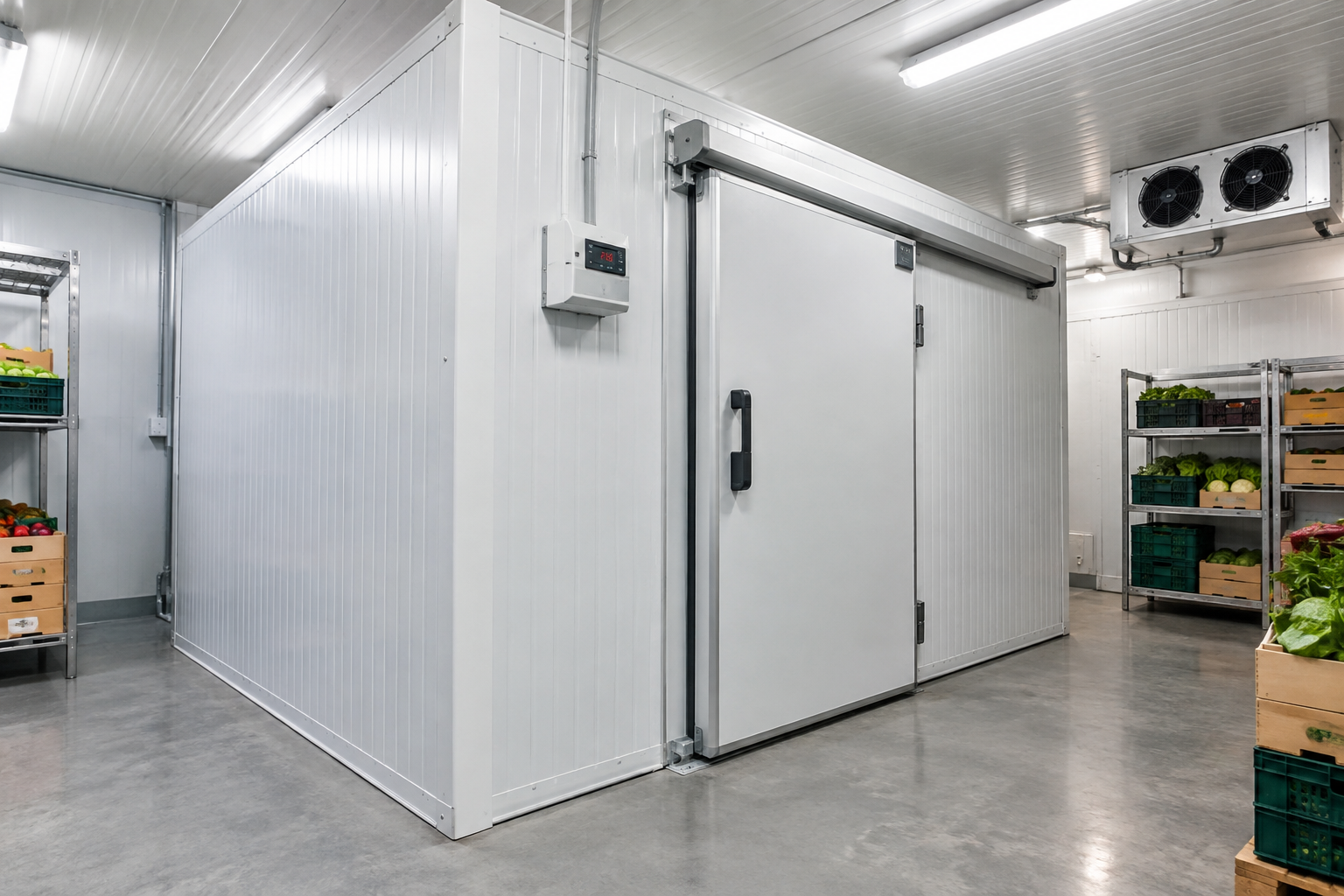
A cold room is much more than a large fridge. It is a controlled storage area designed to keep food and other products at a suitable temperature for longer periods.
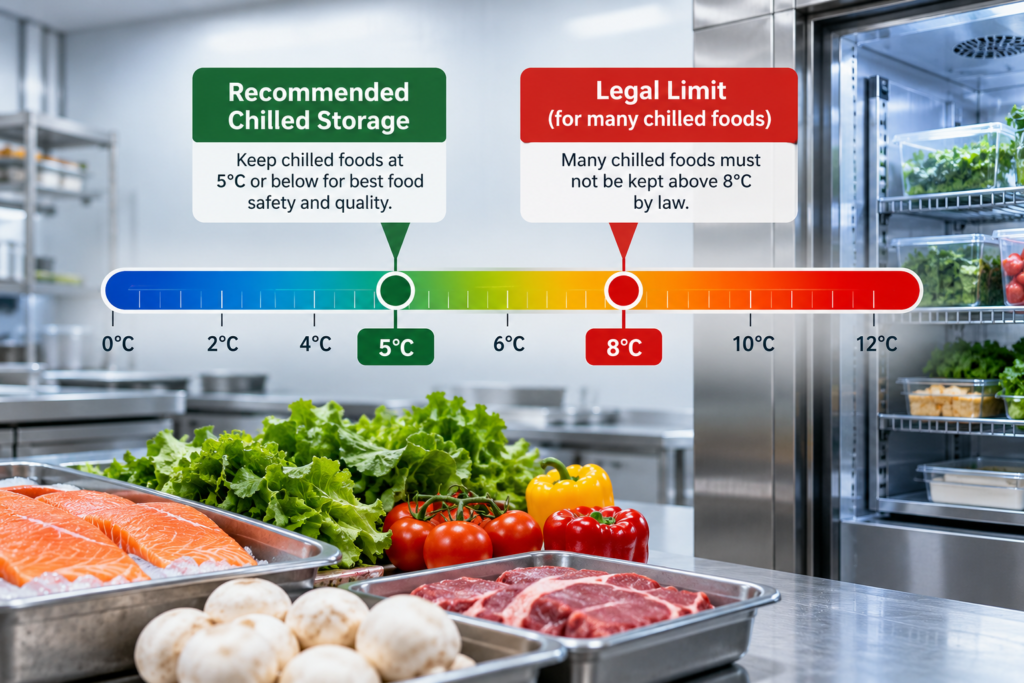
For food businesses, temperature control is closely linked to food safety. The Food Standards Agency says chilled food should generally be kept at 5°C or below, while food businesses in England must keep cold food below 8°C unless specific legal exemptions apply.
That difference is important.
Five degrees is a recommended target for chilled storage, while eight degrees is the legal limit for many chilled foods. Your own food safety plan may require a tighter temperature range depending on the products you handle.
What Type of Cold Room Does Your Business Need?
Before you ask for a price, decide what you actually need the room to do.
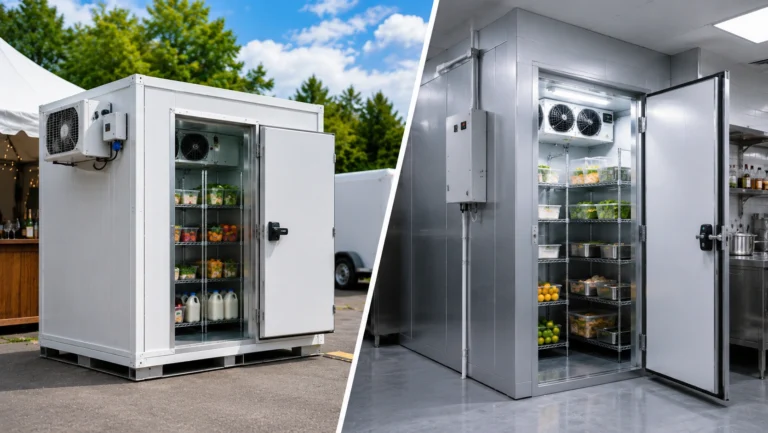
A chiller cold room is commonly used for fresh food. Depending on the product and food safety plan, temperatures are often around 2°C to 5°C.
A freezer cold room works at much lower temperatures. Around -18°C is a common target for frozen food storage, although the correct temperature depends on the product and operating requirements. Danfoss notes that cold-room temperatures vary according to the application and gives approximately 2°C to 5°C for walk-in fresh-food storage and around -18°C for walk-in freezer rooms.
There are also specialist cold rooms for products that need different conditions.
| Cold Room | Typical Use | Main Consideration |
|---|---|---|
| Chiller | Fresh food, dairy, meat and prepared food | Stable chilled temperature |
| Freezer | Frozen food and long-term storage | Strong insulation and low-temperature refrigeration |
| Produce room | Fruit and vegetables | Product-specific temperature and airflow |
| Bespoke room | Specialist commercial use | Designed around the exact process |
Cold Room Installation in Halifax: What the Process Looks Like
A good cold room installation Halifax project starts with planning, not drilling and panel fitting.
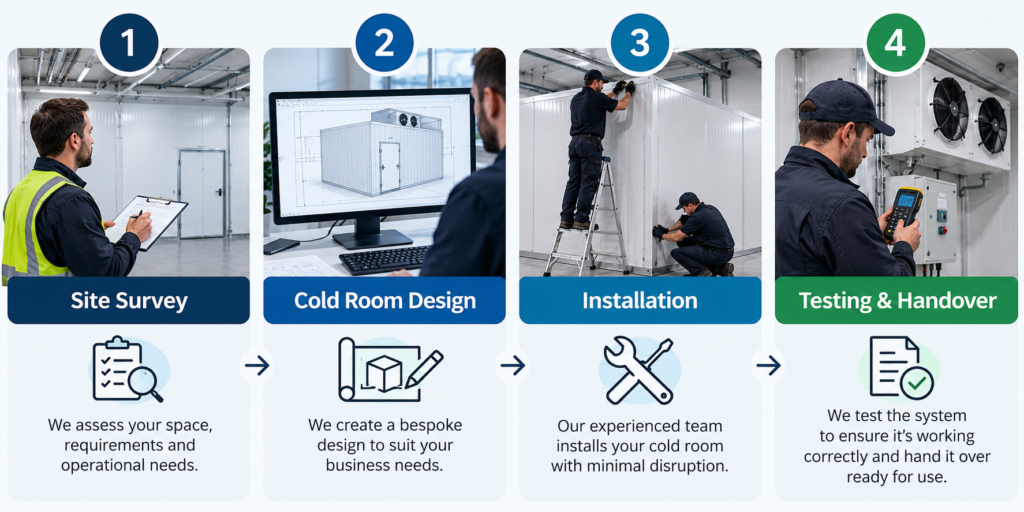
Step 1: Site Survey
The engineer first looks at your premises.
They measure the available area and discuss what you need to store. They should also consider electrical supply, access, ventilation, door position and how the room will be used.
This is one of the most important stages because every business has a different cooling load.
Step 2: Cold Room Design
The next stage is selecting the correct room structure and refrigeration equipment.
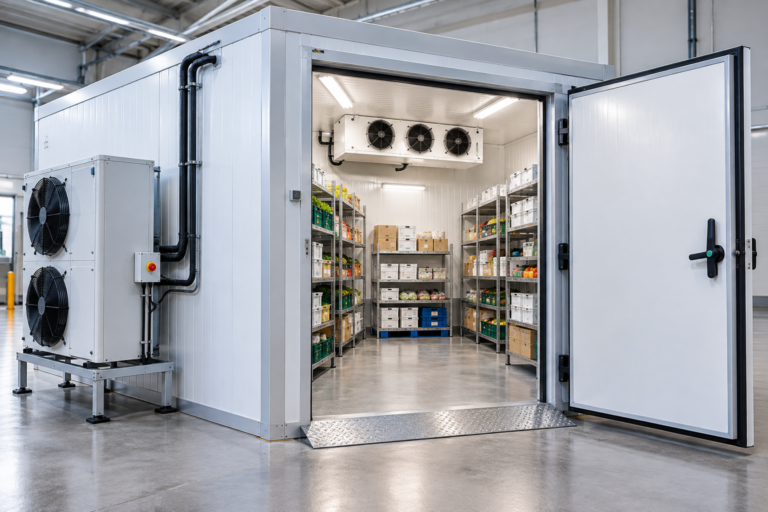
Insulated panels form the walls, ceiling and, where required, the floor. The refrigeration system normally includes an outdoor condensing unit and an evaporator inside the cold room.
Danfoss explains that the basic cold-room system includes insulated panels, a door, a condensing unit, an evaporator, expansion equipment and temperature controls.
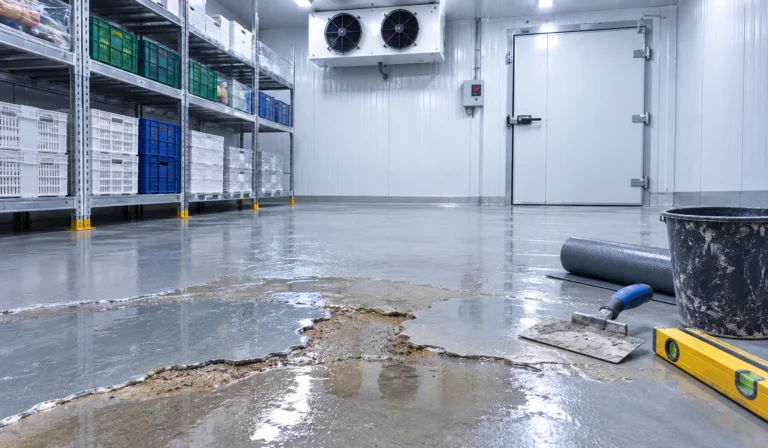
Freezer rooms need special attention to floors and insulation. Danfoss notes that freezer floors should be insulated and may require a heating system to prevent frost heave and damage to the structure.
Step 3: Installation
Once the design is approved, the insulated panels are assembled and sealed.
The door is fitted, the refrigeration equipment is connected and the electrical work is completed.
A good installation is about more than making the room cold. Seals, joints, airflow, drainage, controls and equipment positioning can all affect how well the room performs.
Step 4: Testing and Handover
The final stage is testing.
The engineer should check that the room reaches and maintains the required temperature. You should also be shown how the controls work and what to do if the temperature rises unexpectedly.
Ask for information about the equipment, warranty, refrigerant, servicing and emergency support before the project is signed off.
How Much Does a Cold Room Cost?
There is no single price for a commercial cold room.
The cost depends on the room size, temperature, insulation, refrigeration system, access, electrical work and installation complexity.
A small chiller room will normally cost less than a large freezer room because freezer systems require stronger refrigeration and insulation.
Custom features can also increase the price.
For example, a business may need a larger door, special flooring, extra shelving, remote temperature monitoring or a system designed for frequent door opening.
The best way to compare prices is to ask for a complete quotation rather than an equipment-only price.
Your quotation should clearly explain the room size, insulation, refrigeration equipment, installation work, electrical requirements, controls, commissioning and warranty.
Do not automatically choose the cheapest quote.
A low purchase price can become expensive if the system uses more electricity, struggles to hold temperature or needs frequent repairs.
A better question is:
What will this cold room cost me over five or ten years?
That brings energy use, maintenance and reliability into the buying decision.
Why F-Gas Certification Matters
Refrigerants are an important part of modern refrigeration systems.
Some refrigerants are fluorinated greenhouse gases, commonly called F-Gases. Because some F-Gases have a high global warming impact, UK rules control who can work on equipment containing them.
The UK Government states that individuals must have the correct qualifications to work on equipment containing F-Gas. This includes installing, servicing, maintaining, leak checking, recovering gas and decommissioning relevant stationary refrigeration equipment.
There is also a company-level requirement in many situations.
If a company services stationary refrigeration equipment containing F-Gas for other businesses, it must have the required company certification.
So when comparing cold room engineers Halifax businesses can use, do not simply ask whether they have experience.
Ask about their F-Gas certification too.
Key Takeaways
A successful cold room project starts with the right design.
Your room should match the products you store, the temperature they need, the amount of stock you hold and how often staff use the space.
A proper site survey can prevent many problems before installation starts.
You should also check the engineer’s qualifications, particularly where F-Gas work is involved. UK Government guidance makes clear that individuals working with relevant F-Gas equipment need the correct qualifications.
Finally, do not stop thinking about the cold room once it has been installed.
Temperature checks, clean equipment, good door seals, clear airflow and planned maintenance all help protect your stock and control running costs.
With more than 25 years of experience, F-Gas-certified engineers and Level 3 RACHP-qualified technicians, Coldroomplus provides tailored cold-room solutions, free site surveys within 50 miles and ongoing support for businesses that need dependable refrigeration.
Frequently Asked Questions
1. What temperature should a commercial cold room be?
There is no single temperature for every cold room because different products have different storage needs. The Food Standards Agency recommends that fridges are kept at 5°C or below, while many chilled foods must legally be kept below 8°C.
2. How long does cold room installation take?
The time depends on the room size, design and site conditions. A straightforward small or medium installation may be completed quickly, while a large bespoke project can take longer because of extra refrigeration, electrical and building work.
3. How much does a cold room cost?
The price depends on size, temperature, insulation, refrigeration equipment and installation complexity. The best way to get an accurate figure is to have the site surveyed and receive a detailed quotation based on your actual requirements.
4. Do cold room engineers need F-Gas certification?
Yes, where the work involves equipment covered by F-Gas requirements. The UK Government states that individuals need the correct qualifications for activities such as installation, servicing, maintenance, leak checking and refrigerant recovery.
5. Should I choose a chiller or freezer cold room?
Choose a chiller when your products need chilled storage and a freezer when they need frozen storage. The correct choice depends on your products, required temperature, storage period and business process.
6. How can I reduce my cold room electricity costs?
Start by keeping doors closed, maintaining good door seals, cleaning the condenser and keeping evaporator airflow clear. Danfoss also recommends using the correct thermostat setting and reducing unnecessary air exchange.
7. How often should a cold room be serviced?
The right service schedule depends on the equipment, operating conditions and manufacturer’s instructions. A planned maintenance programme is sensible for commercial refrigeration because it can help identify problems before they cause a major temperature failure.
8. Do I need to record my cold room temperature?
Food businesses should have suitable temperature monitoring as part of their food safety controls. The FSA recommends regular temperature checks, while MyHACCP guidance says monitoring records should show details such as the date, time and actual result.
9. Can a cold room be made to fit an unusual space?
Yes, commercial cold rooms can be designed around many different buildings and operating needs. A site survey is important because the engineer can assess the available space, access, door position, insulation and refrigeration requirements before designing the room.
10. What should I ask before choosing a cold room installer?
Ask about relevant qualifications, F-Gas certification, experience, warranty, spare parts, maintenance and emergency support. You should also make sure the quotation explains exactly what equipment and installation work are included.