Need Blast Chiller Installation in Halifax? Book a Free Site Survey
If you run a restaurant, hotel, school kitchen, or food factory in Halifax, blast chiller installation in Halifax is one of the smartest moves you can make.
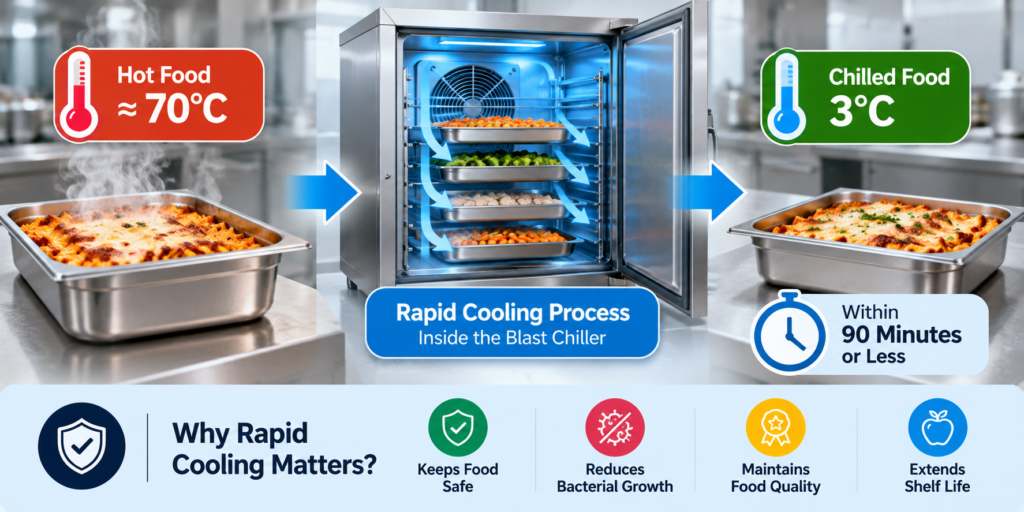
A blast chiller cools hot food fast. Really fast. It takes food from about 70°C down to 3°C in 90 minutes or less. That speed helps keep food safe, supports food safety checks, and can help reduce waste and operating costs.
But choosing and installing a blast chiller is not as simple as buying a machine and plugging it in. You need the right size, enough space, suitable power, good airflow, and a qualified engineer who understands commercial refrigeration.
This guide explains everything you need to know about blast chiller installation in Halifax. You will learn what the law says, how much installation can cost, how to choose the right installer, what happens during a professional installation, and how to keep your blast chiller working properly.
What Is a Blast Chiller And Why Does Your Kitchen Need One?
A blast chiller is a powerful refrigeration unit built for one important job: cooling cooked food very quickly.
A normal fridge cools food slowly. That slow cooling can create a food safety risk because bacteria can grow quickly when food stays at unsafe temperatures for too long.
Food safety experts refer to the range between 8°C and 63°C as the danger zone.
When hot food is left on a counter, it can remain in this temperature range for hours. During this time, bacteria can multiply. This can make people ill and may also create problems during food safety inspections.
A blast chiller helps solve this problem by forcing cold air around the food. This allows food to pass through the danger zone much faster.
The Food Standards Agency says cooked food should be cooled from 70°C to 3°C within 90 minutes. A properly selected and operated blast chiller can make this process much easier for a busy commercial kitchen.
Benefits of a Blast Chiller
Blast chillers can offer several benefits to restaurants, hotels, catering businesses, schools, and food production facilities.
They can help you:
- Cool cooked food quickly.
- Support safer food handling.
- Reduce food waste.
- Prepare large batches during quieter periods.
- Store prepared food for later service.
- Improve kitchen workflow.
- Make batch cooking easier.
- Maintain more consistent food temperatures.
For a busy kitchen, these benefits can make a blast chiller a useful part of the food preparation process.
How Much Does Blast Chiller Installation Cost in Halifax?
The cost of blast chiller installation in Halifax depends on several factors.
The size of the unit is one of the biggest factors. A small undercounter model will normally cost much less than a large roll-in or walk-in system designed for a hotel or food production facility.
As a general guide:
| Blast Chiller Type | Approximate Equipment Cost |
|---|---|
| Countertop/Undercounter | £2,000–£4,000 |
| Mid-size Reach-in | £5,000–£10,000 |
| Large Roll-in/Walk-in | £15,000–£30,000+ |
These figures are indicative rather than fixed prices.
Installation Costs
The installation itself can also affect your final budget.
A straightforward installation may add approximately £500–£1,500.
A more complex project involving new electrical supplies, drainage, ventilation, access work, or other building modifications may add approximately £2,000–£5,000.
Do Not Ignore Running Costs
The purchase price is only part of the cost.
You also need to consider electricity consumption, maintenance, servicing, repairs, and refrigerant-related costs.
An energy-efficient blast chiller can help reduce ongoing energy use. When comparing models, look at the equipment’s efficiency and refrigerant requirements rather than focusing only on the purchase price.
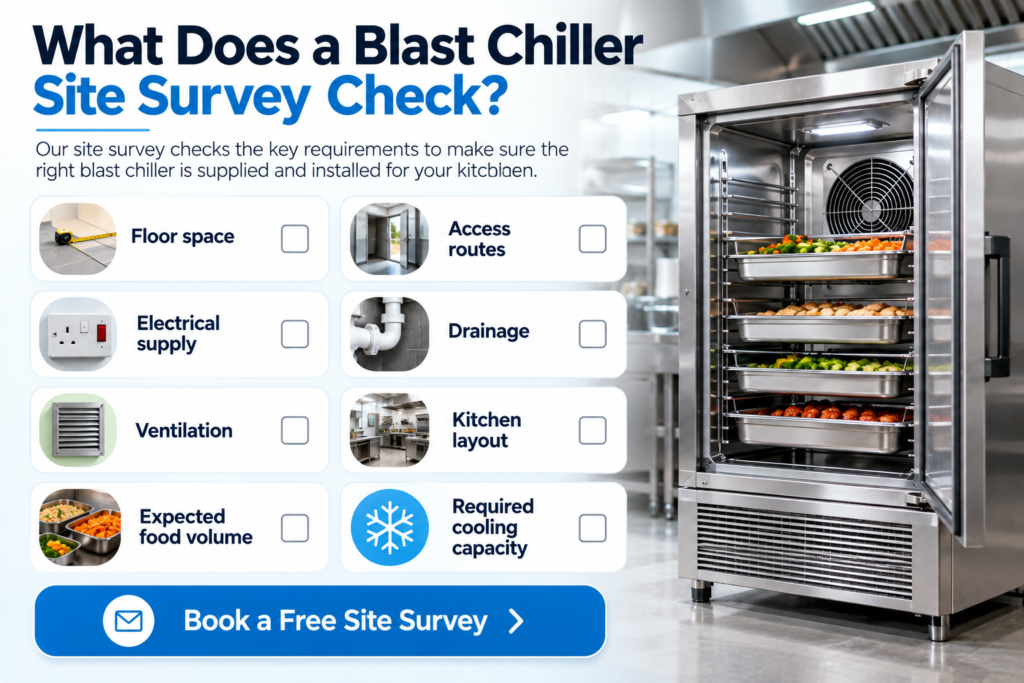
Why a Site Survey Matters
The best way to get an accurate quotation is to arrange a professional site survey.
An engineer can check:
- Available floor space.
- Access routes.
- Electrical supply.
- Drainage.
- Ventilation.
- Kitchen layout.
- Expected food volume.
- Required cooling capacity.
A proper survey helps you avoid buying a machine that is too small, too large, or unsuitable for your kitchen.
Choosing the Right Blast Chiller Installation Company in Halifax
Choosing the right blast chiller installation company Halifax businesses can rely on is important.
A poor installation can lead to breakdowns, inefficient operation, food safety problems, and unnecessary costs.
Before hiring an installer, check the following.
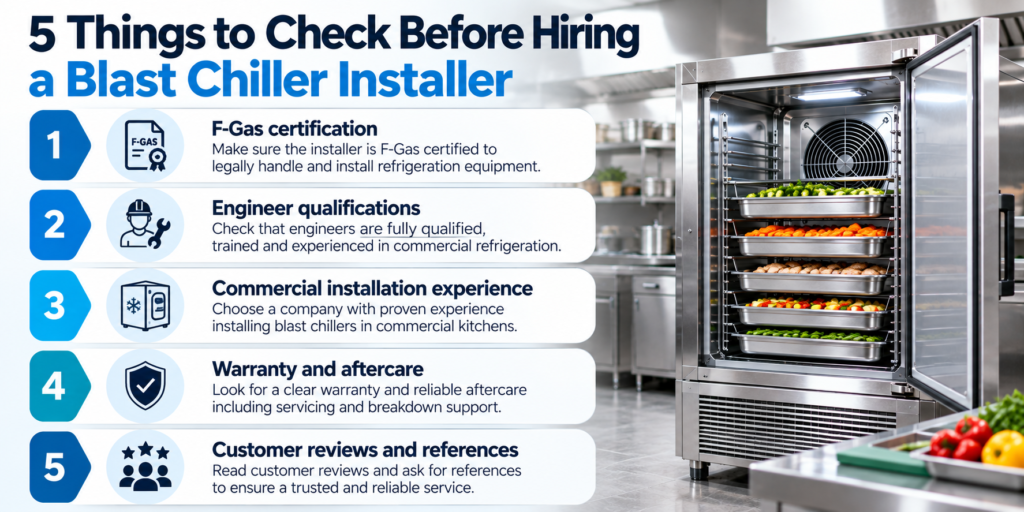
1. Check F-Gas Certification
Ask whether the company and engineer have the correct F-Gas certification for the work being carried out.
You can also ask for the certification number and verify the company where appropriate.
2. Check Engineer Qualifications
Look for engineers with relevant refrigeration qualifications, such as Level 3 RACHP qualifications.
RACHP stands for Refrigeration, Air Conditioning and Heat Pumps.
Proper qualifications show that the engineer has received relevant technical training.
3. Ask About Experience
Ask how many commercial blast chillers the company has installed.
Experience matters because commercial kitchens can have difficult access, unusual layouts, high cooling demands, and strict operating schedules.
A company with extensive refrigeration experience is more likely to understand these challenges.
4. Check Warranty and Aftercare
Do not look only at the installation price.
Ask what warranty is included and whether the company provides:
- Servicing.
- Repairs.
- Emergency support.
- Replacement parts.
- Preventative maintenance.
Having one company that can support the equipment after installation can make future problems easier to manage.
5. Read Reviews and References
Customer reviews can help you understand how an installer handles real projects.
Look for evidence of:
- Reliable installation.
- Good communication.
- Professional engineers.
- Fast support.
- Quality workmanship.
Maintenance Tips to Keep Your Blast Chiller Running
Good maintenance can help your blast chiller remain reliable for many years.
Follow these basic practices.
Clean the Interior Regularly
Clean shelves, walls, surfaces, and other accessible areas.
Remove food debris and check the door seals.
A damaged or dirty seal can allow warm air into the cabinet.
Keep the Condenser Clean
The condenser releases heat from the refrigeration system.
Dust and dirt can restrict airflow.
Clean the condenser according to the manufacturer’s instructions and arrange professional cleaning where required.
Check the Temperature Probe
The temperature probe plays an important role in monitoring food temperature.
Check it regularly and make sure it is working correctly.
If you notice unusual temperature readings, arrange a professional inspection.
Book Professional Servicing
Arrange professional servicing at suitable intervals based on equipment, usage, operating conditions, and manufacturer recommendations.
An engineer can inspect the refrigeration system, check components, identify developing faults, and carry out required maintenance.
Keep F-Gas Records Updated
Where F-Gas record-keeping requirements apply, keep the necessary documentation up to date.
Record relevant refrigerant work, servicing, leak checks, and refrigerant additions.
Good records can help demonstrate that your equipment is being managed properly.
What size blast chiller does your kitchen need, and when can we visit for your free site survey?
Frequently Asked Questions
1. What is a blast chiller used for?
A blast chiller cools hot food very quickly. It can help take food from around 70°C to 3°C within 90 minutes or less, supporting safer food handling and storage.
2. Is a blast chiller a legal requirement in the UK?
The law does not simply require every food business to own a blast chiller. However, food businesses must cool food safely and meet applicable food safety requirements. A blast chiller can make rapid cooling much easier for many commercial kitchens.
3. How long does blast chiller installation take?
Many straightforward installations can be completed in one day. Larger or more complicated projects may take two or three days, depending on the site and installation requirements.
4. What size blast chiller do I need?
The right size depends on how much food you prepare, the size of your kitchen, your operating schedule, and how quickly food needs to be cooled. A professional site survey can help identify the appropriate capacity.
5. Can I install a blast chiller myself?
Refrigerant-related work should not be carried out as a DIY project. Where F-Gas requirements apply, appropriately qualified engineers must carry out the relevant work. Professional installation also helps protect equipment performance and warranty conditions.
6. How much does a blast chiller cost to run?
Running costs depend on the unit’s size, efficiency, usage, operating conditions, and electricity prices. Efficient equipment can help reduce energy consumption compared with older or less efficient systems.
7. What is the difference between a blast chiller and a blast freezer?
A blast chiller is designed to rapidly cool food for chilled storage. A blast freezer is designed to freeze food for longer-term frozen storage. Some commercial units can perform both functions.
8. How often does a blast chiller need servicing?
The ideal service frequency depends on the equipment, usage, operating conditions, and manufacturer’s recommendations. High-use commercial equipment may require more frequent attention.
9. What happens if my blast chiller breaks down?
A breakdown can create a serious food safety and operational problem. If the unit stops working, protect food according to your food safety procedures and arrange professional diagnosis as soon as possible.
10. Do you offer blast chiller installation outside Halifax?
Many commercial refrigeration installers cover Halifax and other parts of Yorkshire. Cold Room Plus offers UK-wide coverage and free site surveys within 50 miles of Halifax.