Cold Room Refrigerant Checks: What Maintenance Engineers Look For
A cold room can appear to be working perfectly while a hidden refrigerant problem is slowly reducing its performance. That is why cold room refrigerant inspections are one of the most important parts of routine maintenance. A small leak or incorrect refrigerant charge can increase running costs, reduce cooling capacity, shorten compressor life, and even lead to unexpected system failure.
Professional maintenance engineers do much more than simply top up refrigerants. They carefully inspect every part of the refrigeration system to make sure it is operating safely, efficiently, and within manufacturer recommendations. Regular refrigerant checks also help businesses avoid costly downtime, protect valuable stock, and reduce environmental impact.
According to the U.S. Environmental Protection Agency (EPA), refrigerant leaks remain one of the biggest causes of inefficient commercial refrigeration systems, while industry studies show that even small leaks can significantly increase operating costs if left untreated.
Why Cold Room Refrigerant Matters More Than Most People Think
Refrigerant is the working fluid that absorbs heat from inside the cold room and releases it outside through the condenser. Without the correct refrigerant charge, even the best-designed refrigeration system cannot maintain stable temperatures.
When refrigerant levels begin to fall, the system has to work much harder to reach its target temperature. This means:
- Higher electricity consumption
- Longer compressor run times
- Poor temperature control
- Increased wear on expensive components
- Greater risk of complete system failure
In food storage, pharmaceuticals, hospitality, and manufacturing, even a small temperature fluctuation can result in spoiled products, regulatory issues, and financial losses.
Industry research published by ASHRAE shows that refrigerant management is a major factor in improving refrigeration efficiency while reducing greenhouse gas emissions from cooling equipment.
What Happens During a Professional Refrigerant Check?
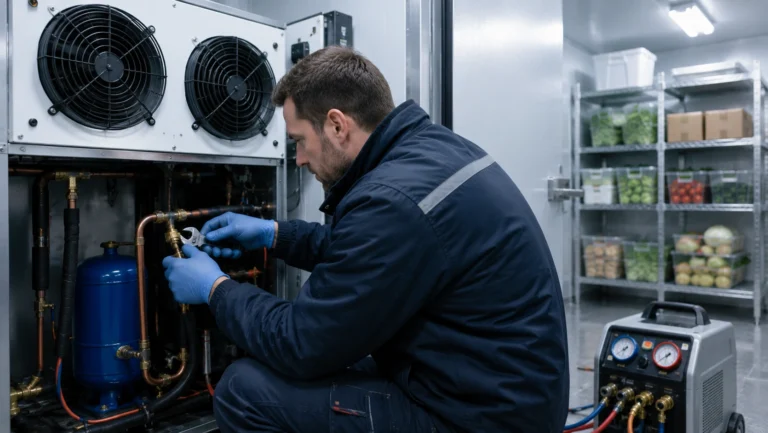
Many business owners believe engineers simply connect gauges and measure pressure. In reality, a complete refrigerant inspection involves several technical checks designed to identify problems before they become expensive repairs.
Experienced cold room engineers Leeds businesses trust will inspect both the refrigeration circuit and the system’s operating conditions to determine whether the refrigerant is performing correctly.
The inspection usually begins with a visual assessment before any instruments are connected.
1. Checking for Refrigerant Leaks
Finding refrigerant leaks is always the first priority.
Even a tiny leak can gradually reduce cooling performance without obvious warning signs.
Modern engineers commonly inspect:
- Pipe joints
- Brazed connections
- Service valves
- Evaporator coils
- Condenser coils
- Compressor fittings
- Pressure switches
Electronic leak detectors, UV dyes, nitrogen pressure testing, and soap bubble solutions may all be used depending on the system.
Research published on refrigeration leakage found that flare fittings and brazed joints are among the most common sources of refrigerant leaks in commercial refrigeration systems.
Measuring Refrigerant Pressures
Pressure readings tell engineers how efficiently refrigerant is circulating through the system.
However, pressure alone never provides the full picture.
Maintenance engineers compare readings with:
- Ambient temperature
- Cold room temperature
- Evaporating temperature
- Condensing temperature
- Manufacturer performance charts
Abnormal readings may indicate:
| System Reading | Possible Cause | Likely Action |
|---|---|---|
| Low suction pressure | Refrigerant leak | Leak detection and repair |
| High discharge pressure | Dirty condenser or overcharge | Clean condenser or recover refrigerant |
| Low head pressure | Low ambient conditions | Inspect controls |
| Uneven pressures | Expansion valve issues | Further diagnostics |
Professional engineers avoid adding refrigerants simply because pressure appears low. Instead, they identify the root cause first.
Superheat and Subcooling Tell the Real Story
One of the biggest differences between experienced refrigeration engineers and inexperienced technicians is the use of superheat and subcooling measurements.
Rather than relying only on pressure gauges, engineers calculate these values to understand whether refrigerant is flowing correctly through the evaporator and condenser.
Superheat
Superheat measures how much the refrigerant gas has been heated after leaving the evaporator.
High superheat may indicate:
- Refrigerant shortage
- Expansion valve restrictions
- Poor evaporator performance
Low superheat could suggest:
- Flooding
- Expansion valve overfeeding
- Liquid refrigerant returning to the compressor
Subcooling
Subcooling measures how much the liquid refrigerant has cooled before entering the expansion valve.
Incorrect subcooling often points towards:
- Incorrect refrigerant charge
- Condenser problems
- Restrictions within the refrigeration circuit
By comparing these measurements with manufacturer specifications, engineers can quickly identify hidden faults that pressure readings alone cannot detect.
Inspecting Compressor Performance
The compressor is the heart of every refrigeration system.
When refrigerant levels are incorrect, the compressor is usually the first major component to suffer.
During maintenance, engineers monitor:
- Running amperage
- Oil condition
- Discharge temperature
- Suction temperature
- Noise levels
- Vibration
- Cycling frequency
If refrigerant has leaked over time, the compressor may overheat because it relies on refrigerant returning through the suction line for cooling.
Studies and maintenance guidance from the EPA highlight that repairing leaks early helps reduce equipment stress while improving long-term system reliability.
Want a tailored recommendation or quick quote? Reach out today
Checking Condenser Performance
The condenser removes heat from the refrigerant after it leaves the compressor. If it cannot release heat efficiently, the entire refrigeration system has to work harder. This increases energy use and places extra stress on key components.
During a refrigerant inspection, maintenance engineers check whether the condenser is clean, unobstructed, and operating at the correct temperature. They also inspect the condenser fan motors, blades, electrical connections, and airflow. Dirt, grease, leaves, or debris can reduce heat transfer, causing higher head pressure and reduced cooling performance.
According to the U.S. Department of Energy, keeping condenser coils clean can improve refrigeration efficiency and lower operating costs because heat exchange becomes much more effective.
Examining the Evaporator Coil
While the condenser releases heat, the evaporator absorbs it from inside the cold room.
Engineers carefully inspect the evaporator for:
- Ice build-up
- Blocked airflow
- Dirty coil surfaces
- Fan motor operation
- Drain line blockages
- Uneven frost patterns
An evaporator covered in dirt or ice cannot absorb heat effectively. In many cases, the refrigerant itself is not the problem. Instead, poor airflow creates symptoms that resemble a refrigerant fault.
Maintenance engineers always confirm the root cause before recommending repairs or adding refrigerant.
Want a tailored recommendation or quick quote? Reach out today
Why Refrigerant Should Never Be "Topped Up" Without Investigation
One of the biggest misconceptions about commercial refrigeration is that refrigerant naturally runs out over time.
In reality, refrigerant circulates inside a sealed system. If the level has dropped, it almost always means there is a leak that needs to be found and repaired.
Simply adding more refrigerant without fixing the leak may:
- Waste money
- Reduce system efficiency
- Cause repeat breakdowns
- Increase environmental impact
- Lead to expensive compressor damage
Experienced cold room engineers Leeds businesses rely on following a leak-first approach. They locate the fault, repair it, pressure-test the system, evacuate moisture, and recharge the refrigerant according to the manufacturer’s specifications.
Cold Room Maintenance Planner
Generate a custom inspection schedule, preventative checklist, and annual service calendar tailored to your facility's operational demands.
Checking Refrigerant Temperatures and System Efficiency
Modern refrigeration maintenance goes beyond pressure gauges.
Engineers also measure:
- Suction line temperature
- Liquid line temperature
- Compressor discharge temperature
- Ambient air temperature
- Cold room temperature
- Air entering and leaving the evaporator
These measurements help determine whether the refrigeration cycle is operating efficiently.
Digital refrigeration analysers combine these readings to calculate system performance in real time. This allows engineers to identify developing issues before they become costly failures.
Inspecting Electrical Components During Refrigerant Checks
Refrigerant performance cannot be separated from electrical performance.
During every maintenance visit, engineers normally inspect:
- Compressor contactors
- Capacitors
- Electrical terminals
- Temperature sensors
- Pressure switches
- Control panels
- Safety cut-outs
Loose electrical connections can increase compressor temperatures and cause intermittent faults that appear to be refrigerant-related.
Routine electrical inspections help ensure the refrigeration system operates safely and reliably.
Why Accurate Refrigerant Records Matter
Professional maintenance engineers keep detailed records after every refrigerant inspection.
Typical service reports include:
- Refrigerant type
- Refrigerant charge weight
- Operating pressures
- Superheat
- Subcooling
- Leak inspection results
- Temperature readings
- Repairs completed
- Recommended future work
These records make it easier to identify gradual performance changes over time. They also support compliance with environmental regulations and help businesses plan preventative maintenance.
According to the UK Government F-Gas Regulations, organisations responsible for certain refrigeration systems must maintain refrigerant records and ensure work is carried out by appropriately qualified personnel.
Warning Signs Your Cold Room Refrigerant May Need Attention
Many refrigeration problems begin with small warning signs that are easy to ignore. Spotting them early can help prevent expensive repairs and protect temperature-sensitive stock.
Watch for:
- The cold room takes longer to reach the set temperature.
- The compressor runs almost continuously.
- Ice forms in unusual places on the evaporator.
- Energy bills begin to rise without explanation.
- Cooling performance becomes inconsistent.
- Unusual hissing sounds suggest a possible refrigerant leak.
- Products no longer remain at the correct storage temperature.
- High-pressure or low-pressure alarms activate frequently.
If any of these symptoms appear, arranging a professional inspection promptly can reduce the risk of a major system failure.
How Often Should Refrigerant Checks Be Carried Out?
The ideal inspection schedule depends on several factors, including the type of cold room, operating hours, ambient conditions, and the value of the products being stored.
As a general guide:
| Cold Room Type | Suggested Refrigerant Inspection Frequency |
|---|---|
| Restaurants and cafés | Every 6 months |
| Retail food storage | Every 6 months |
| Pharmaceutical cold rooms | Every 3–6 months |
| Food manufacturing | Every 3 months |
| Distribution warehouses | Every 6 months |
| High-usage industrial facilities | Quarterly or based on operating hours |
Facilities with continuous operation or critical stock should consider more frequent inspections as part of a preventative maintenance programme.
Keep Your Cold Room Performing at Its Best
A well-maintained refrigeration system does far more than keep products cold. Regular cold room refrigerant checks help improve energy efficiency, reduce the likelihood of costly breakdowns, extend equipment life, and maintain stable storage temperatures.
Every inspection provides valuable insight into the health of the refrigeration system. Identifying leaks, verifying refrigerant charge, checking superheat and subcooling, and inspecting associated components all contribute to reliable long-term performance.
When was the last time your cold room refrigerant was professionally checked? Have you noticed longer cooling times, higher energy bills, or unusual noises? Share your experience or contact a qualified engineer before a small issue turns into an expensive repair.
Frequently Asked Questions (FAQs)
1. What is cold room refrigerant?
Cold room refrigerant is the cooling fluid that circulates through a refrigeration system to absorb heat from inside the cold room and release it outside through the condenser. Without the correct refrigerant charge, the system cannot maintain the required storage temperature efficiently.
2. How often should cold room refrigerant be checked?
Most commercial cold rooms should have their refrigerant checked every 6 months as part of routine preventative maintenance. However, high-use facilities such as food manufacturers, pharmaceutical businesses, and distribution centres may require inspections every 3 months to ensure reliable performance.
3. What are the signs of low refrigerant in a cold room?
Common signs include longer cooling times, higher electricity bills, continuous compressor operation, uneven temperatures, ice build-up on the evaporator, poor cooling performance, and unusual hissing noises that may indicate a refrigerant leak.
4. Can a cold room lose refrigerant naturally over time?
No. Refrigerant operates inside a sealed system and should not decrease during normal operation. If refrigerant levels are low, there is usually a leak that should be located and repaired before the system is recharged.
5. Why is refrigerant leak detection important?
Refrigerant leak detection helps prevent compressor damage, reduces energy consumption, maintains consistent cooling performance, protects valuable stock, and ensures compliance with environmental regulations. Early leak detection also helps avoid expensive emergency repairs.
6. What do maintenance engineers check during a refrigerant inspection?
Professional engineers inspect refrigerant pressures, superheat, subcooling, leak points, compressor performance, condenser efficiency, evaporator condition, electrical components, operating temperatures, and overall system performance to ensure the cold room is working efficiently.
7. Can I simply top up refrigerant if my cold room is not cooling properly?
No. Simply adding refrigerant without identifying the cause of the problem can lead to repeated failures and higher repair costs. A qualified engineer should first locate and repair any leaks before recharging the refrigeration system according to the manufacturer’s specifications.
8. How does low refrigerant affect energy bills?
Low refrigerant forces the compressor to run longer to maintain the required temperature. This increases electricity consumption, reduces system efficiency, and accelerates wear on major components, resulting in higher operating costs.
9. How long does a professional cold room refrigerant inspection take?
A standard refrigerant inspection usually takes between 1 and 3 hours, depending on the size of the cold room, the type of refrigeration system, and whether any faults or refrigerant leaks are discovered during testing.
10. Why should I hire professional cold room engineers in Leeds for refrigerant maintenance?
Experienced cold room engineers Leeds businesses rely on have the specialist equipment and F-Gas qualifications needed to safely inspect, diagnose, repair, and recharge commercial refrigeration systems. Regular professional maintenance helps improve efficiency, extend equipment life, minimise breakdowns, and protect temperature-sensitive stock.