Cold Room Floor Repair: Dealing with Damaged or Wet Floors
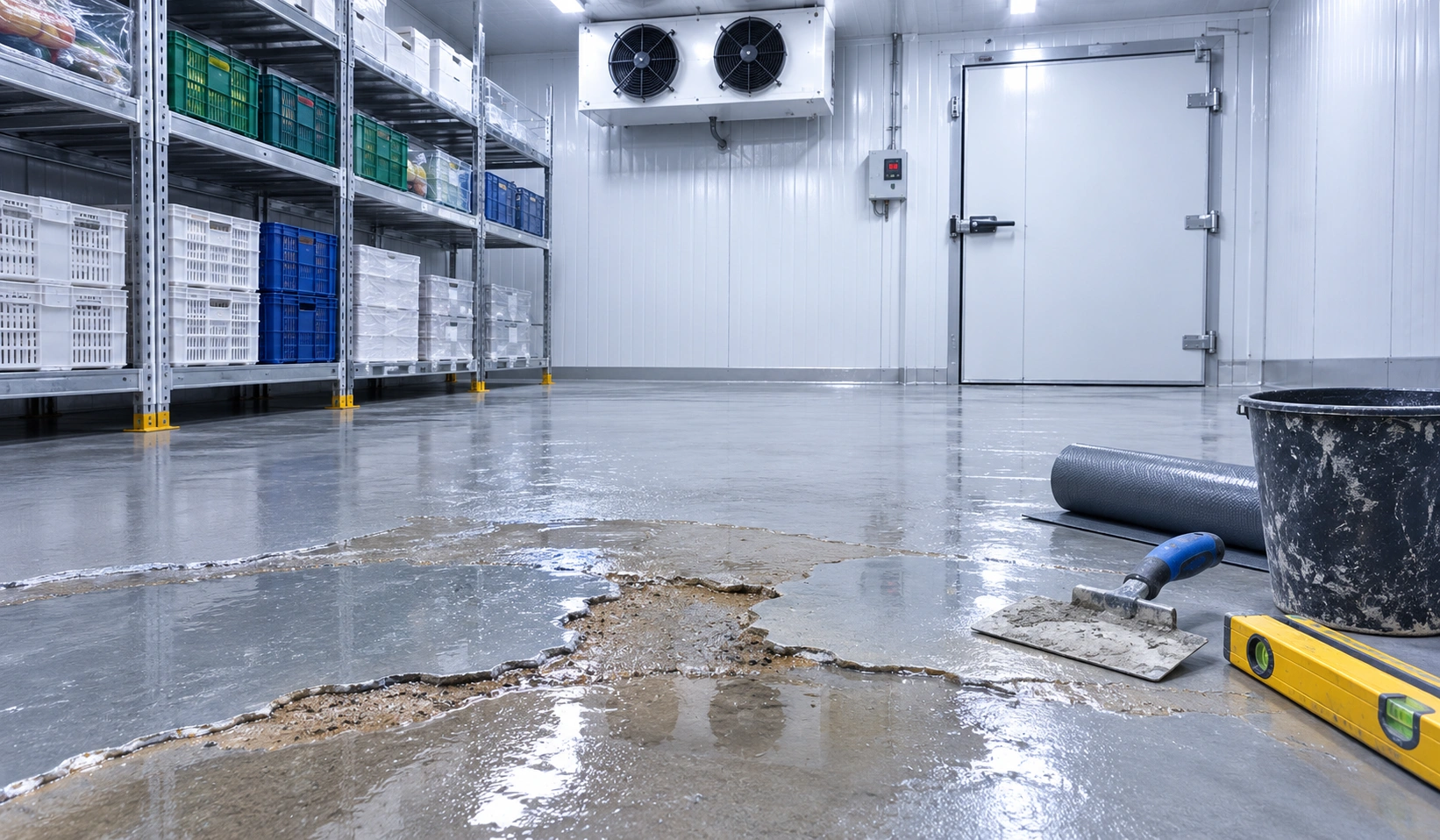
A damaged cold room floor is often easy to ignore—until it starts affecting product quality, staff safety, and energy bills. What begins as a small crack, soft spot, or patch of standing water can quickly turn into a much larger problem if left untreated. That is why understanding cold room floor repair is essential for any business that depends on reliable temperature-controlled storage.
Cold room floors do much more than support pallets and equipment. They protect insulation, stop moisture from entering the structure, and help maintain stable temperatures. When the floor becomes damaged, the entire cold room can lose efficiency, increasing running costs and creating health and safety risks. According to industry guidance, proper floor insulation and moisture protection are essential for maintaining structural strength and preventing energy loss.
Why Cold Room Floors Matter More Than Most Businesses Realise
Unlike ordinary warehouse flooring, a cold room floor is built to withstand constant temperature changes, heavy traffic, moisture, and freezing conditions. Every layer—from the concrete base to the insulation and vapour barrier—works together to keep cold air inside while stopping heat and water from entering.
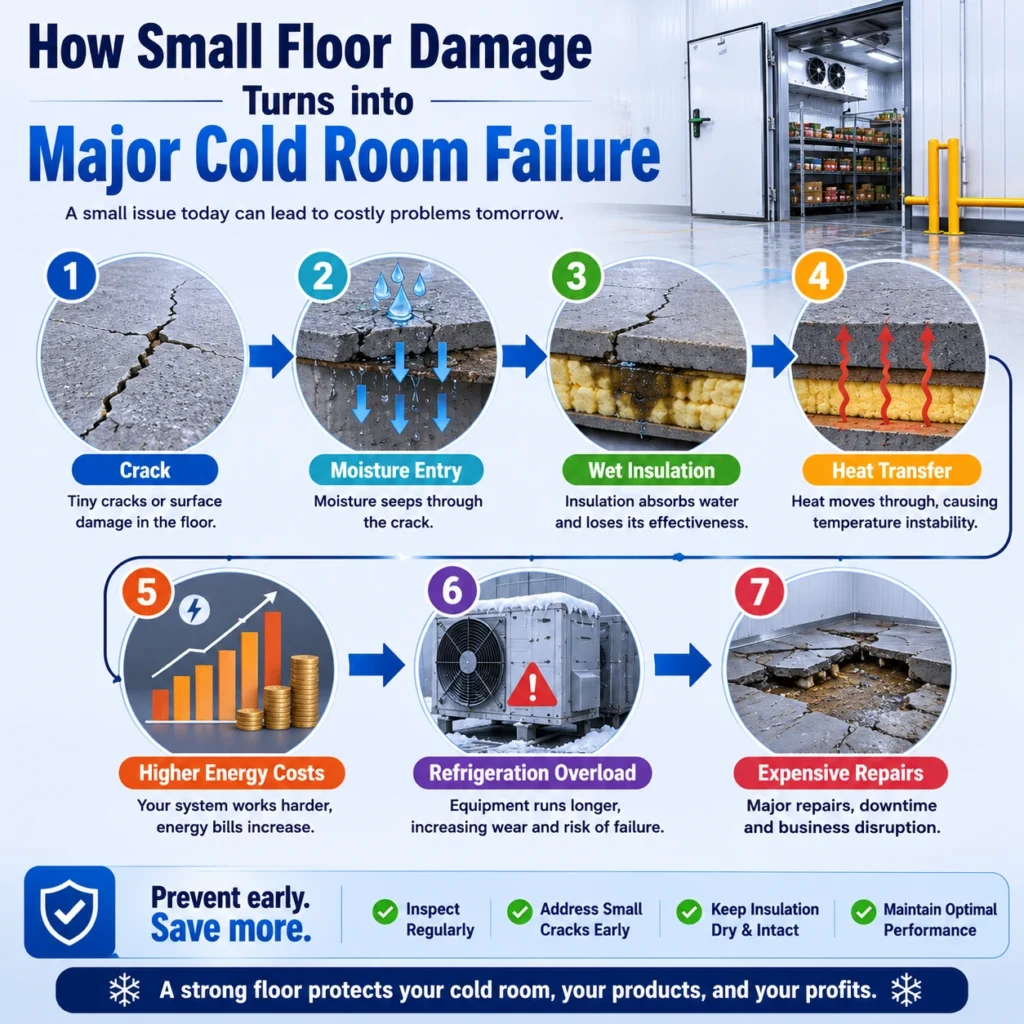
When one layer fails, several issues can develop at once. Moisture can soak into insulation, frost can form underneath the floor, and the refrigeration system has to work harder to maintain the correct temperature. Over time, these problems increase operating costs while shortening the lifespan of the entire cold room.
What Causes Cold Room Floor Damage?
Floor damage rarely happens overnight. Most repairs become necessary after months or years of gradual wear combined with moisture and heavy use.
Constant Moisture Exposure
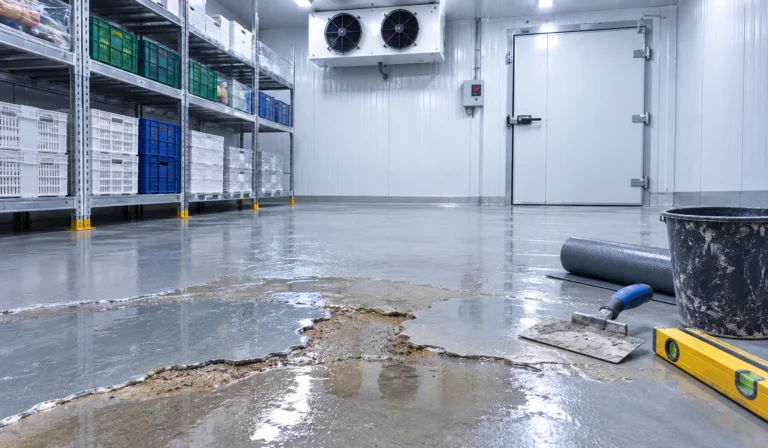
Water is one of the biggest threats to any cold room floor. Small leaks, cleaning water, condensation, or melted ice can slowly penetrate damaged joints or cracked surfaces.
Once moisture reaches the insulation layer, thermal performance drops significantly. Wet insulation loses much of its ability to resist heat transfer, forcing refrigeration equipment to run longer to maintain storage temperatures.
Heavy Forklift Traffic
Forklifts, pallet trucks, and loaded trolleys place enormous pressure on cold room floors every day.
Repeated impact can create:
- Surface cracks
- Joint separation
- Uneven flooring
- Broken concrete edges
These small defects often allow water to enter beneath the floor.
Failed Vapour Barrier
The vapour barrier prevents warm moisture from reaching the cold insulation underneath.
If this protective layer becomes damaged, condensation develops below the floor. Over time, trapped moisture weakens insulation, creates frost heave, and damages the concrete structure itself. Industry cold storage construction guidance identifies vapour barriers as one of the most important elements in preventing moisture-related floor failures.
Poor Drainage
Water should never remain on a cold room floor for long periods.
Blocked drains, uneven surfaces, or incorrect floor gradients allow standing water to collect. Besides damaging flooring materials, wet surfaces also increase slip risks for employees working inside refrigerated environments.
Common Signs Your Cold Room Floor Needs Repair
The earlier problems are detected, the lower the repair costs usually are.
Watch for these warning signs before they become serious structural issues.
Cracks That Continue Growing
Small hairline cracks are fairly common.
However, widening cracks often indicate movement beneath the floor or moisture entering the insulation layer. They should always be inspected before they spread further.
Wet Patches That Never Dry
Persistent damp areas usually point to hidden moisture beneath the surface.
Even if refrigeration equipment appears to be working normally, trapped water may already be damaging insulation.
Uneven or Raised Flooring
If sections of the floor begin lifting or becoming uneven, frost heave could be developing underneath.
This happens when moisture freezes below the floor and expands, pushing concrete upwards.
Damaged Floor Coatings
Protective coatings prevent water from reaching the structural floor.
Peeling, blistering or worn coatings expose concrete to moisture and chemical cleaning products, increasing long-term deterioration.
Higher Energy Bills
Many businesses first notice floor problems through rising electricity costs.
Poor floor insulation allows unwanted heat transfer, meaning refrigeration equipment runs for longer periods to maintain the same internal temperature. Well-insulated floors are recognised as a key factor in improving cold room energy efficiency.
| Issue | Minor Damage | Major Damage |
|---|---|---|
| Surface cracks | Local repair usually sufficient | May indicate structural movement |
| Standing water | Seal joints and improve drainage | Full moisture investigation required |
| Worn coating | Recoat affected area | Replace damaged flooring if moisture has penetrated |
| Uneven floor | Small levelling repair | Possible frost heave requiring reconstruction |
| Wet insulation | Limited drying if detected early | Often requires insulation replacement |
Cold Room Floor Damage Assessment Calculator
Evaluate floor wear, structural sub-floor frost heave risks, and determine necessary maintenance priorities.
Why Wet Cold Room Floors Should Never Be Ignored
Standing water is more than a housekeeping issue.
Moisture affects safety, refrigeration performance, and regulatory compliance at the same time.
The UK Health and Safety Executive places strong emphasis on reducing workplace slip hazards, especially in environments where water, ice, or condensation are present. Cold storage flooring should provide suitable slip resistance while remaining properly maintained to minimise accidents.
For food businesses, wet floors can also make cleaning more difficult and create conditions where contamination risks increase if maintenance is delayed.
Why Professional Repairs Deliver Better Long-Term Results
Many surface defects appear simple, but cold room flooring problems often extend well below the visible damage.
Experienced cold room repair engineers Leeds businesses trust typically investigate not only the flooring surface but also insulation, vapour barriers, structural movement, moisture penetration, and refrigeration performance before recommending repairs. Identifying the root cause prevents repeated failures and helps restore both safety and energy efficiency.
Want a tailored recommendation or quick quote? Reach out today
How Professional Cold Room Floor Repair Is Carried Out
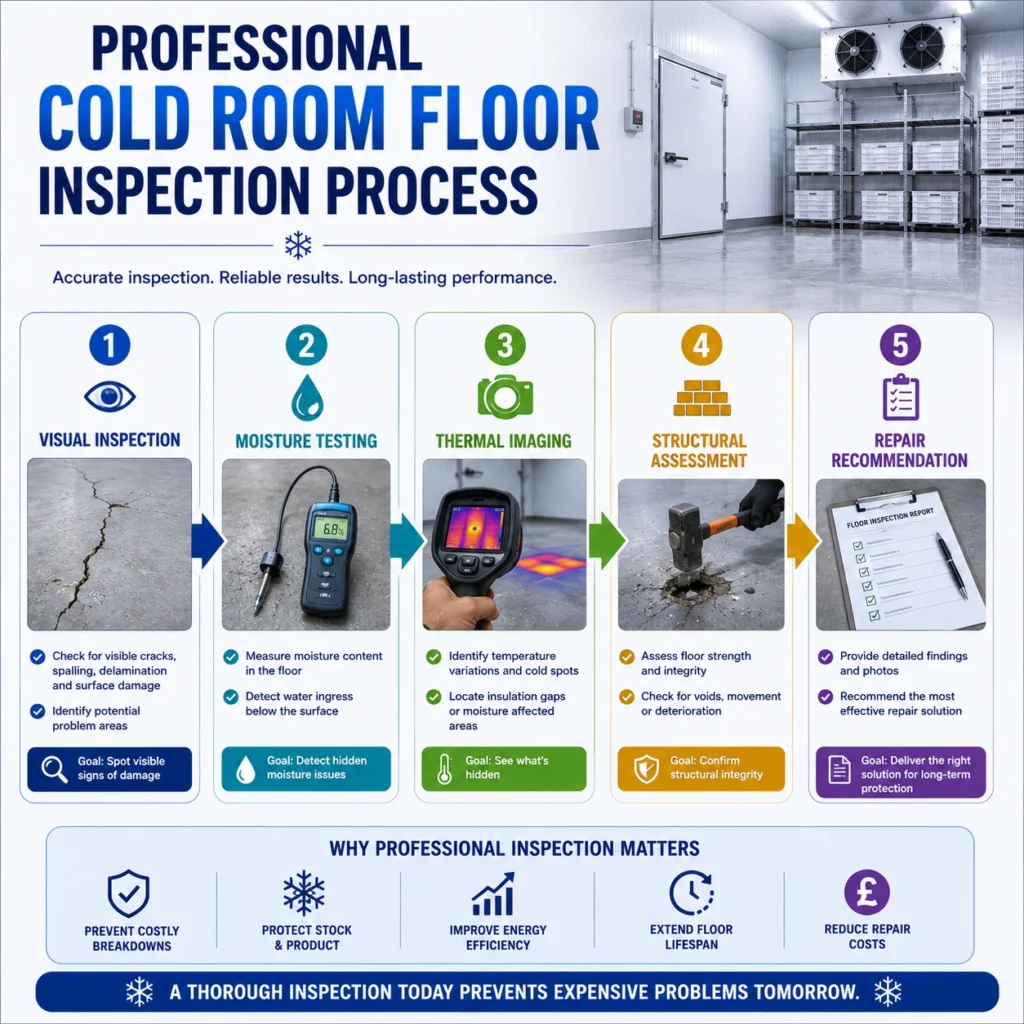
Every cold room is different, so the repair process depends on the condition of the floor, the amount of moisture present, and whether the insulation has been affected. A professional inspection helps identify the real cause before repairs begin.
Step 1: Complete Floor Inspection
The first stage is a detailed assessment of the entire floor. Repair engineers look for visible cracks, soft spots, damaged joints, uneven surfaces, water ingress, and signs of frost heave.
In many cases, moisture testing and thermal imaging can help locate hidden problems beneath the surface before repairs start.
Step 2: Remove Damaged Flooring
Loose concrete, damaged coatings, or broken floor sections are carefully removed. This prevents weak materials from affecting the new repair.
If water has reached the insulation, the damaged insulation must also be removed and replaced.
Step 3: Restore the Vapour Barrier
One of the most important stages is repairing or replacing the vapour barrier.
Without an effective moisture barrier, water can continue entering the floor structure, leading to repeated failures even after surface repairs.
Step 4: Install New Insulation
If insulation has become wet, it should not simply be left to dry.
Industry guidance shows that moisture significantly reduces insulation performance, making refrigeration systems work harder and increasing energy consumption. Installing new insulation restores the cold room’s thermal efficiency.
Step 5: Repair and Seal the Floor Surface
The final stage includes repairing concrete, applying industrial-grade floor coatings, sealing joints, and ensuring the surface is level and slip resistant.
Once complete, the floor is checked to confirm it can safely handle expected traffic and temperature conditions.
Repair or Replace? How to Decide
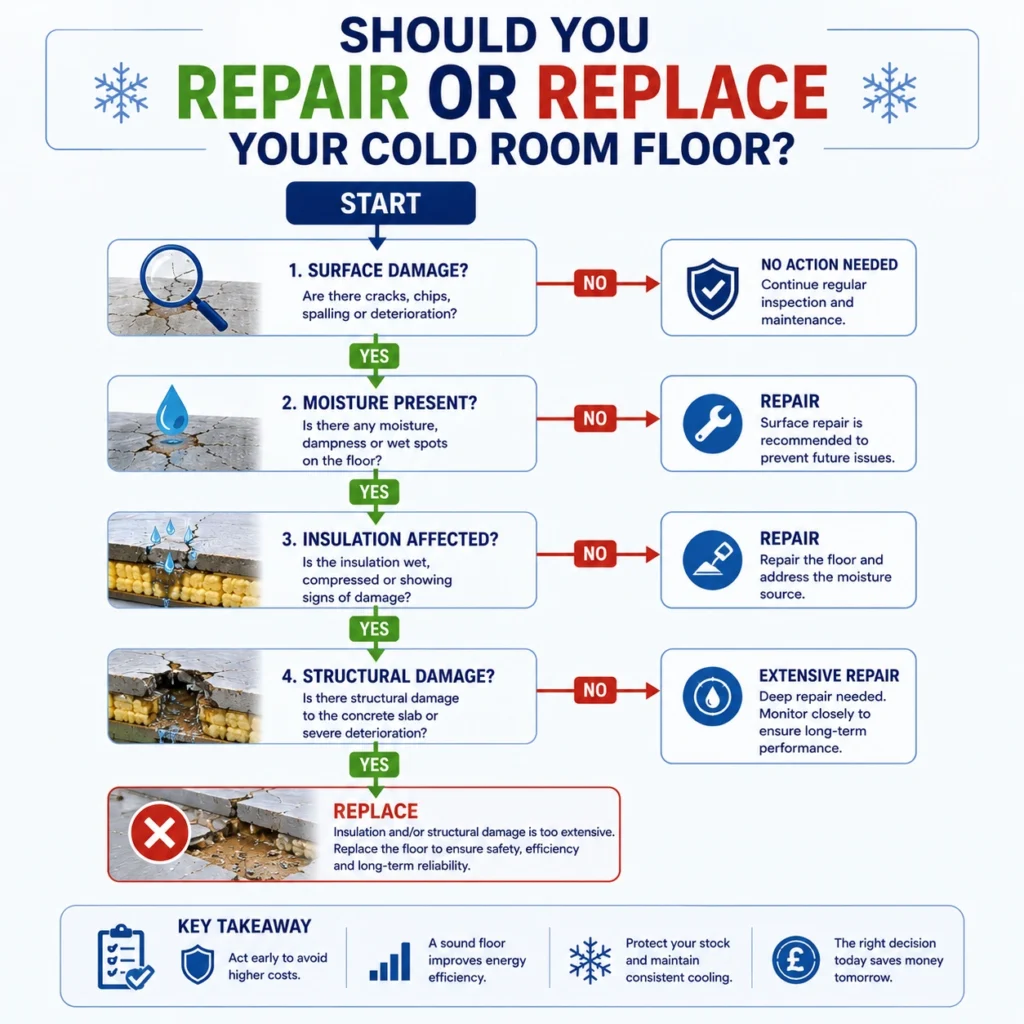
Not every damaged floor needs complete replacement.
If problems are identified early, repairs are usually faster, less disruptive, and more cost-effective.
Replacing only what is necessary helps reduce downtime while restoring the floor’s long-term performance.
Want a tailored recommendation or quick quote? Reach out today
What Affects Cold Room Floor Repair Costs?
The cost of cold room floor repair depends on several factors rather than a fixed price.
Older floors with extensive moisture damage naturally require more work than small surface repairs.
Common factors include:
- Size of the damaged area
- Type of flooring material
- Condition of the insulation
- Extent of water damage
- Need for vapour barrier replacement
- Access for repair equipment
- Whether refrigeration systems must be temporarily shut down
Arranging repairs early usually keeps costs much lower than waiting until structural damage develops.
Cold Room Maintenance Planner
Generate a custom inspection schedule, preventative checklist, and annual service calendar tailored to your facility's operational demands.
Preventing Future Cold Room Floor Damage
The best repair is the one you never need.
Routine inspections and planned maintenance help identify small issues before they become expensive structural problems.
Good maintenance includes:
- Inspecting floor joints every few months.
- Repairing small cracks immediately.
- Keeping drains clean and free-flowing.
- Removing standing water as soon as possible.
- Checking floor coatings for wear.
- Monitoring insulation performance during routine servicing.
- Avoiding overloading floors beyond their design capacity.
The UK Health and Safety Executive also recommends maintaining safe walking surfaces and promptly dealing with slip hazards to reduce workplace accidents.
When Should You Call Cold Room Repair Engineers?
Some warning signs should never be ignored.
Contact experienced cold room repair engineers Leeds businesses rely on if you notice:
- Floor movement becoming worse.
- Persistent standing water.
- Large cracks appear.
- Frost forming beneath the floor.
- Rising electricity costs without another explanation.
- Forklifts struggling over uneven surfaces.
- Repeated floor repairs in the same location.
Early inspections often prevent much larger repair projects later.
Have You Checked Your Cold Room Floor Recently?
Many businesses focus on refrigeration equipment but overlook the floor beneath it. Yet even small cracks or damp patches can affect energy efficiency, workplace safety, and the lifespan of the entire cold room.
When was the last time your cold room floor was professionally inspected? Share your experience in the comments, or contact the Coldroomplus team if you’d like expert guidance on identifying potential floor issues before they become costly repairs.
Frequently Asked Questions (FAQs)
1. What causes damage to a cold room floor?
Cold room floors can become damaged due to constant moisture exposure, heavy forklift traffic, poor drainage, failed vapour barriers, freezing and thawing cycles, or general wear over time. Small cracks or damaged joints can allow water to enter the insulation, leading to more serious structural problems if not repaired promptly.
2. How do I know if my cold room floor needs repair?
Common signs include visible cracks, standing water, uneven flooring, peeling floor coatings, soft spots, frost forming beneath the floor, or increasing energy bills. A professional inspection can identify hidden moisture damage before it becomes a costly repair.
3. Can a wet cold room floor affect refrigeration efficiency?
Yes. When moisture reaches the insulation beneath the floor, it reduces its thermal performance. This allows more heat to enter the cold room, causing the refrigeration system to work harder, increasing electricity consumption and operating costs.
4. Can cracked cold room floors be repaired without replacing the entire floor?
In many cases, yes. Minor cracks, damaged joints, and worn floor coatings can often be repaired without replacing the complete floor. However, if water has damaged the insulation or caused structural movement, partial or full floor replacement may be necessary.
5. How long does a cold room floor repair take?
Repair times depend on the extent of the damage. Small surface repairs may take only a few hours, while repairs involving insulation replacement or structural work can take several days. A professional assessment will provide a more accurate timeframe.
6. Is standing water inside a cold room dangerous?
Yes. Standing water creates slip hazards for employees and can damage insulation, flooring materials, and refrigeration efficiency. It may also increase the risk of contamination in food storage environments if not addressed quickly.
7. How much does cold room floor repair cost in the UK?
The cost varies depending on the size of the damaged area, flooring material, moisture penetration, insulation condition, and the complexity of the repair. A professional site inspection is usually required to provide an accurate quotation.
8. How can I prevent cold room floor damage?
Regular inspections, repairing small cracks early, maintaining floor coatings, keeping drainage systems clear, removing standing water quickly, and scheduling preventative maintenance can significantly extend the life of your cold room floor.
9. When should I call professional cold room repair engineers in Leeds?
You should contact experienced cold room repair engineers Leeds businesses rely on if you notice persistent water, growing cracks, uneven flooring, frost heave, damaged insulation, or unexplained increases in energy costs. Early intervention often prevents more expensive repairs.
10. How often should a cold room floor be inspected?
Most commercial cold rooms should have a visual inspection every month and a professional inspection at least once a year. Facilities with heavy forklift traffic or continuous operation may benefit from more frequent inspections to identify wear before it becomes a major issue.