Cold Room Insulation Panel Installation: Everything Explained
Keeping a cold room at the right temperature is about much more than installing refrigeration equipment. The real performance of any cold room depends on the quality of the cold room insulation panel used to create a sealed, energy-efficient environment. When insulation is installed correctly, it helps reduce energy waste, protects stored products, and lowers operating costs for years.
Whether you are planning a new cold room installation Leeds project or upgrading an existing facility, understanding how insulation panels work will help you make better decisions before construction begins.
Why Cold Room Insulation Panels Matter
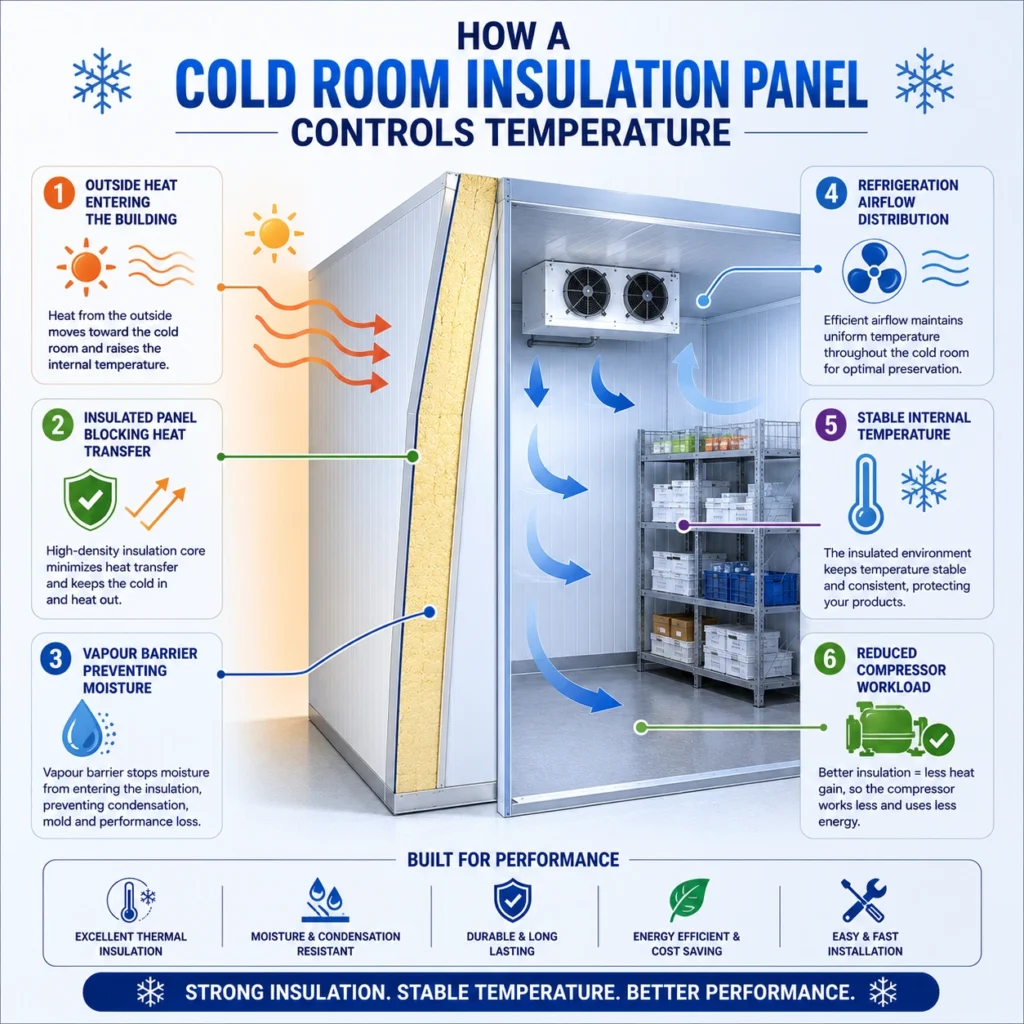
A refrigeration system constantly removes heat from inside a cold room. Poor insulation allows that heat to return, forcing compressors to work harder and consume more electricity.
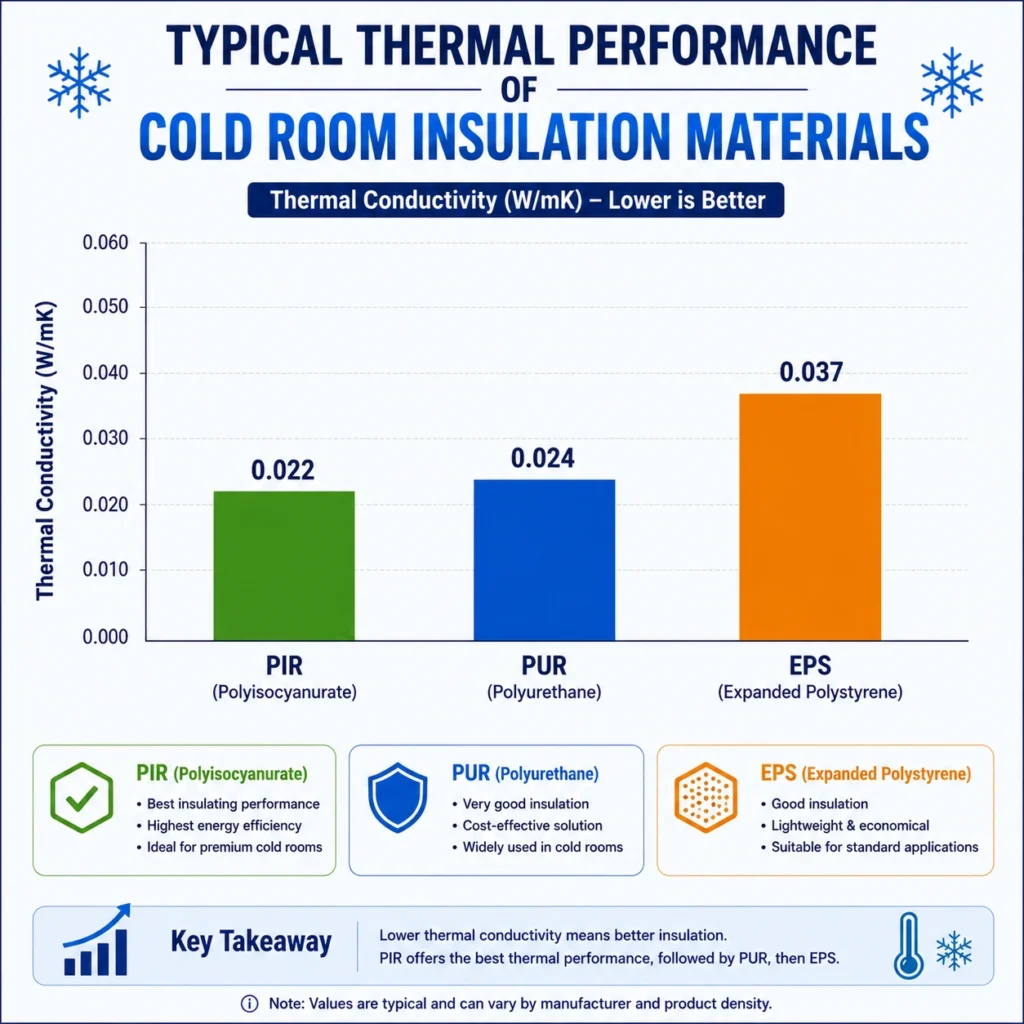
Modern insulated sandwich panels create a continuous thermal barrier that keeps temperatures stable while preventing moisture penetration and condensation. According to Kingspan, high-performance PIR insulated panels can achieve thermal conductivity values around 0.018–0.020 W/mK, making them among the most efficient insulation solutions available for commercial cold storage.
The demand for efficient cold storage continues to rise. Market research estimates the global cold room panel market reached approximately $11.4 billion in 2025 and is expected to grow steadily as food safety regulations, pharmaceutical storage requirements and cold-chain logistics expand worldwide.
What Is a Cold Room Insulation Panel?
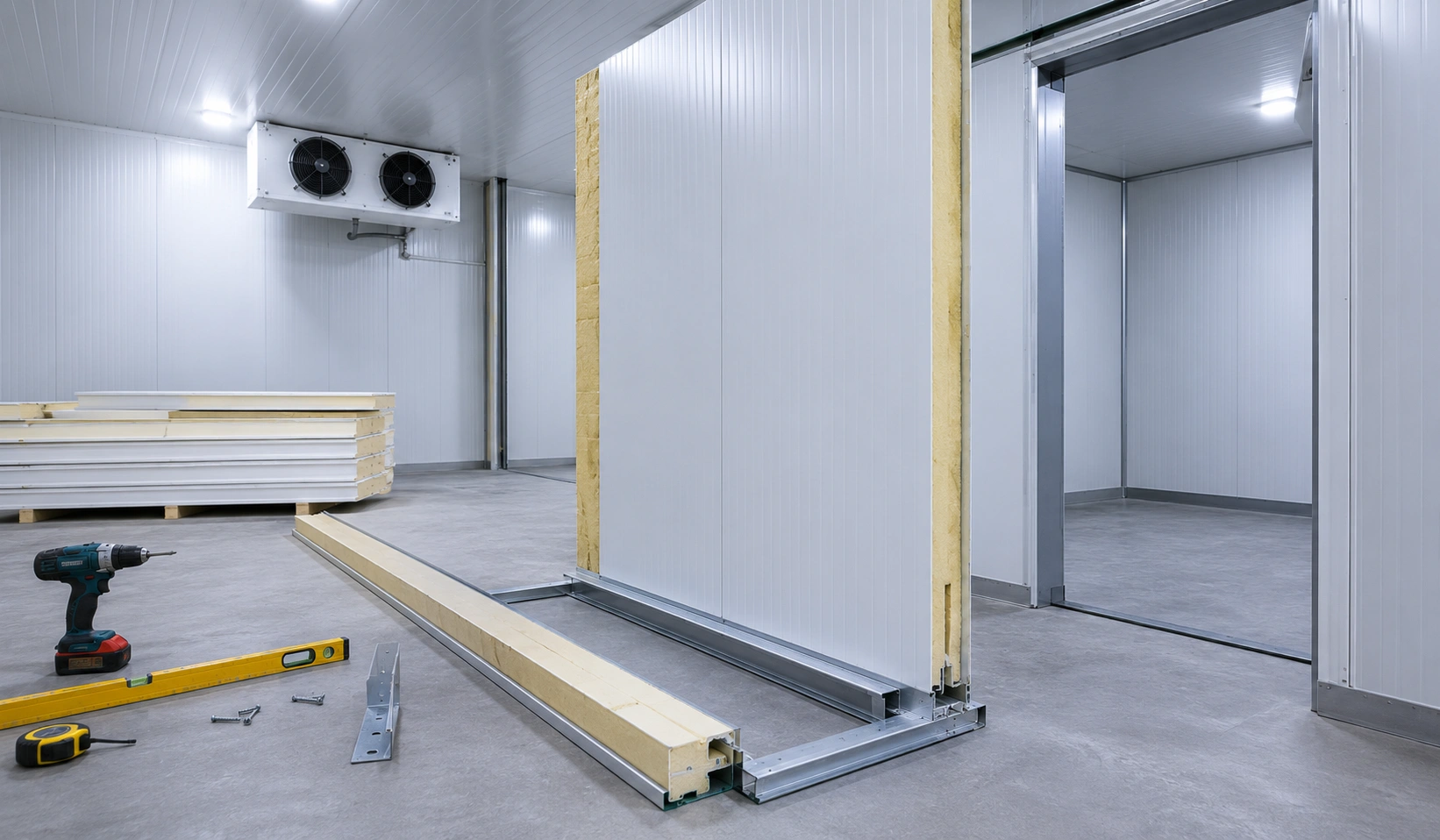
A cold room insulation panel is a factory-manufactured sandwich panel consisting of three main layers:
- External metal skin
- High-performance insulating foam core
- Internal hygienic metal lining
These panels are manufactured under controlled conditions before arriving on site. During installation, they connect together using cam-lock or tongue-and-groove systems to create an airtight enclosure.
Unlike traditional brick or timber construction, insulated panels provide both structural support and thermal insulation in one product, making installation significantly faster while improving energy performance.
Main Components of a Cold Room Insulation Panel
Steel Outer Skins
The outer steel sheets protect the insulation core from impact, corrosion and moisture. Food-grade coatings also make cleaning easier, helping businesses maintain hygiene standards.
Insulation Core
The centre of the panel performs the real insulation work. Its closed-cell foam traps tiny air pockets that dramatically reduce heat transfer.
The most common insulation materials include:
- PIR (Polyisocyanurate)
- PUR (Polyurethane)
- EPS (Expanded Polystyrene)
Among these, PIR has become increasingly popular because it offers excellent thermal efficiency together with improved fire performance compared with standard PUR panels.
Cam-Lock Joint System
Modern panels use precision cam-lock mechanisms that tightly pull neighbouring panels together.
This provides:
- excellent air tightness
- reduced thermal bridging
- faster installation
- easier future expansion
A properly sealed joint is just as important as the insulation itself because even small gaps can allow warm air to enter the cold room.
Types of Cold Room Insulation Panels
Different applications require different insulation materials. Selecting the correct panel depends on operating temperature, fire requirements, building regulations and budget.
PIR Panels
PIR panels are now widely used throughout commercial refrigeration.
Advantages include:
- Outstanding thermal performance
- Better fire resistance
- Lower long-term energy costs
- Excellent moisture resistance
Many food manufacturers, pharmaceutical facilities and distribution centres choose PIR panels for these reasons.
PUR Panels
PUR insulation has been used successfully for decades.
Benefits include:
- Strong insulation performance
- Competitive pricing
- High structural strength
- Suitable for many commercial cold rooms
PUR remains a reliable option where project budgets are tighter and fire specification requirements are lower.
EPS Panels
Expanded Polystyrene panels are generally chosen for projects where cost is the main consideration.
Although EPS is less expensive, it offers:
- Lower insulation value
- Greater panel thickness requirements
- Lower moisture resistance than PIR or PUR
Because of this, EPS is less common in modern commercial refrigeration facilities.
Choosing the Right Panel Thickness
Panel thickness has a direct effect on insulation performance.
Typical recommendations include:
| What to Look For | Why It Matters |
|---|---|
| Commercial refrigeration experience | Ensures the correct door is specified. |
| Quality insulated door panels | Better energy efficiency and durability. |
| Professional installation | Reduces air leaks and future repairs. |
| Availability of replacement parts | Minimises downtime. |
| Maintenance support | Keeps doors performing efficiently. |
| Knowledge of UK food industry requirements | Supports compliance and operational reliability. |
Selecting insulation that is too thin can increase electricity consumption for the life of the cold room, while over-specifying thickness may increase upfront costs unnecessarily.
For businesses planning cold room installation Leeds, installers usually recommend thickness based on room size, product type, operating temperature and local environmental conditions.
Cold Room Panel Thickness Calculator
Determine the optimal insulation profile, energy savings, and compressor load reduction tailored to your temperature dynamics.
Want a tailored recommendation or quick quote? Reach out today
How Is a Cold Room Insulation Panel Installed?
Installing a cold room insulation panel is a precise process that requires careful planning and skilled workmanship. Every stage affects the room’s energy efficiency, temperature stability and long-term durability. Even a small installation mistake can lead to air leaks, condensation and higher electricity costs.
For businesses investing in cold room installation in Leeds, following industry best practices helps ensure the cold room performs reliably for many years.
Step 1: Prepare the Installation Site
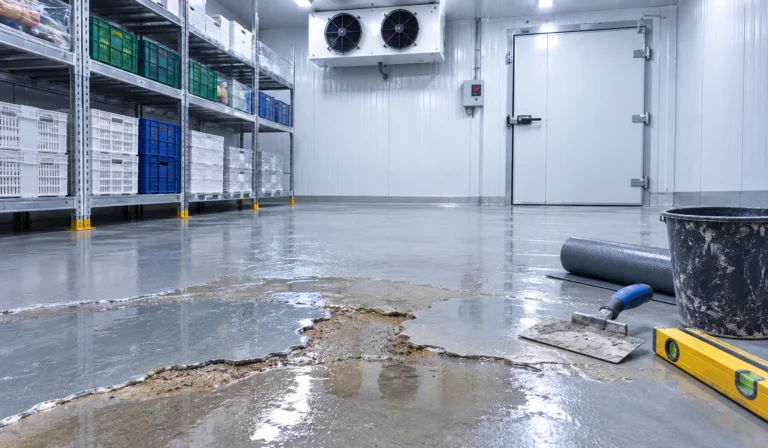
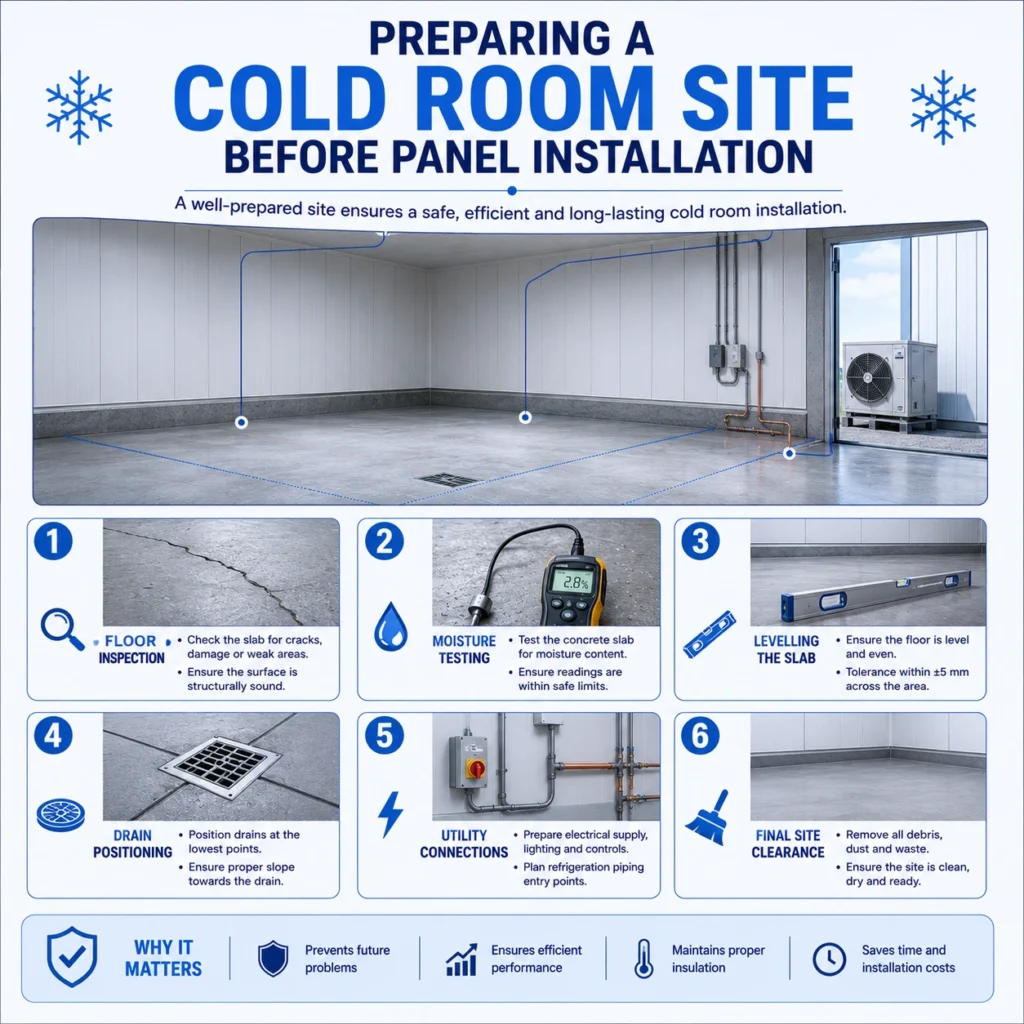
Before any panels are installed, the floor and surrounding structure must be inspected.
The installation area should be:
- Completely level
- Dry and clean
- Structurally sound
- Free from standing water
- Ready for electrical and refrigeration services
If the floor is uneven, the wall panels may not align correctly. This creates gaps that reduce insulation performance and make sealing more difficult.
Industry guidance from the International Institute of Refrigeration (IIR) highlights that proper building preparation is one of the most important factors affecting long-term cold room efficiency.
Step 2: Install the Floor (Where Required)
Not every cold room requires insulated flooring. Chillers operating above freezing temperatures often use the existing concrete floor.
However, freezer rooms usually require insulated floor panels because the ground beneath the room can freeze.
A typical freezer floor may include:
- Vapour barrier
- Insulation panels
- Reinforced concrete layer
- Protective floor finish
Without proper floor insulation, frost heave can develop beneath the slab, potentially causing structural damage over time.
According to the International Institute of Refrigeration, adequate floor insulation is essential for freezer rooms operating below 0°C.
Step 3: Install the Wall Panels
Wall panels are generally installed first.
Each cold room insulation panel is lifted into position and securely connected using factory-engineered cam-lock systems. These locking mechanisms pull adjacent panels tightly together, creating an almost airtight seal.
During installation, engineers continually check:
- Vertical alignment
- Panel spacing
- Joint tightness
- Surface level
Even a few millimetres of misalignment can affect the overall integrity of the cold room.
Step 4: Install the Ceiling Panels
Once the walls are complete, ceiling panels are fitted.
Large commercial cold rooms often use suspended ceiling supports to prevent movement over time.
Correct ceiling installation is important because warm air naturally rises. Poorly insulated ceilings allow heat to enter continuously, increasing compressor running time.
A properly sealed ceiling also reduces condensation during humid weather.
Step 5: Seal Every Joint
This stage is one of the most overlooked parts of installing a cold room insulation panel.
Every connection between panels must be sealed using approved food-safe sealants.
The seal prevents:
- Moisture ingress
- Warm air leakage
- Ice formation
- Condensation
- Mould growth
The European Cold Chain industry recommends maintaining airtight building envelopes to improve refrigeration efficiency and reduce operating costs.
Step 6: Install Cold Room Doors
A cold room is only as efficient as its door.
Modern insulated doors are designed to minimise air leakage while allowing smooth daily operation.
Door options include:
- Hinged doors
- Sliding doors
- Personnel doors
- Heavy-duty industrial doors
Additional features may include:
- Heated door frames
- Heated thresholds
- Emergency release handles
- Viewing windows
These features improve safety while reducing ice build-up around the doorway.
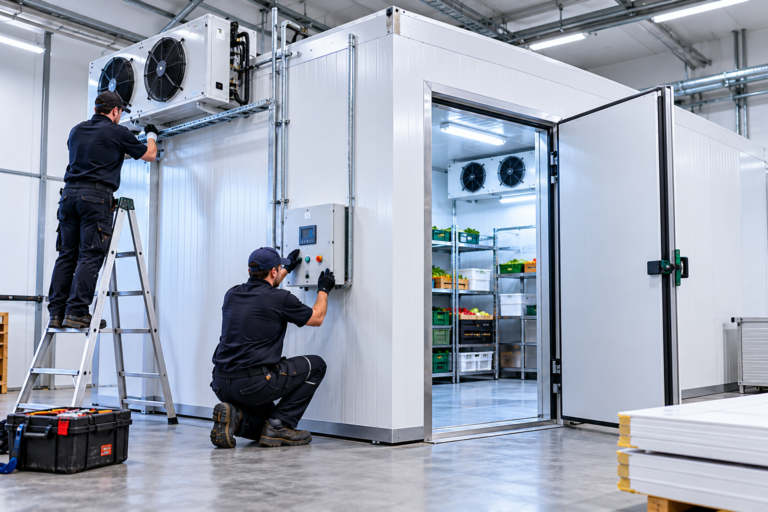
Step 7: Install Refrigeration Equipment
After the insulated structure is complete, refrigeration equipment is installed.
This typically includes:
- Evaporators
- Condensing units
- Pipework
- Expansion valves
- Temperature sensors
- Electrical controls
Correct refrigeration sizing is just as important as insulation quality.
According to the U.S. Department of Energy, improving refrigeration system efficiency can significantly reduce energy consumption in commercial cooling applications when combined with high-performance insulation.
Step 8: Performance Testing
Before handover, engineers perform several checks.
These normally include:
- Temperature stability testing
- Air leakage inspection
- Door alignment checks
- Refrigeration performance testing
- Electrical safety testing
Many installers also perform thermal imaging inspections to identify any hidden heat leaks.
A properly commissioned cold room should maintain consistent temperatures without excessive compressor cycling.
Cold Room Cooling Capacity Calculator
Calculate the required cooling duty, recommended compressor sizing, running costs, and insulation specs for your cold storage setup.
Common Cold Room Insulation Installation Mistakes
Even high-quality panels cannot perform well if installed incorrectly.
Here are some of the most common problems.
Poor Vapour Sealing
Tiny gaps allow moisture to enter the insulation.
Over time this reduces thermal performance and increases condensation.
Incorrect Panel Thickness
Choosing thinner panels to reduce upfront costs often increases electricity bills throughout the life of the cold room.
Weak Joint Connections
Ignoring Floor Insulation
This is especially problematic in freezer rooms.
Frozen ground beneath the slab can expand and damage the building foundation.
Incorrect Door Installation
Poorly fitted doors create constant air leakage.
Every time warm air enters the room, compressors must work harder to restore temperature.
Want a tailored recommendation or quick quote? Reach out today
Why Professional Installation Makes a Difference
Although insulated panels may appear straightforward to assemble, achieving long-term performance requires specialist knowledge.
Professional installers understand:
- Vapour control
- Structural loading
- Refrigeration integration
- Food safety regulations
- Thermal bridging
- Air leakage prevention
For companies planning cold room installation Leeds, experienced installation teams can also ensure compliance with UK building regulations and industry standards while helping reduce future maintenance costs.
Making the Right Choice for Long-Term Cold Room Performance
Every cold room insulation panel plays an important role in keeping products at the correct temperature while reducing energy consumption and protecting valuable stock. Choosing the right panel material, thickness and installation method can make a significant difference to operating costs, equipment lifespan and overall refrigeration performance.
Whether you’re building a new facility or upgrading an existing one, investing time in understanding insulation options today can help prevent expensive repairs and unnecessary energy losses in the future. Businesses planning a cold room installation Leeds project should also consider factors such as room usage, operating temperature, humidity levels and future expansion before selecting an insulation system.
As energy prices continue to rise and sustainability becomes increasingly important, well-insulated cold rooms are no longer simply an option—they’re a smart long-term investment for businesses that rely on reliable temperature-controlled storage.
Frequently Asked Questions (FAQs)
1. What is a cold room insulation panel?
A cold room insulation panel is a prefabricated insulated sandwich panel used to construct the walls, ceiling and, in some cases, the floor of a cold room. It consists of two metal sheets with a high-performance insulating core, such as PIR or PUR foam, to minimise heat transfer and maintain stable internal temperatures.
2. Which insulation material is best for a cold room?
PIR (Polyisocyanurate) insulation is widely considered the best choice for most commercial cold rooms because it offers excellent thermal performance, improved fire resistance and long-term energy efficiency. However, the ideal material depends on your operating temperature, budget and business requirements.
3. How thick should cold room insulation panels be?
The required panel thickness depends on the operating temperature. Chilled rooms typically use 80–100 mm panels, while freezer rooms generally require 120–150 mm panels. Ultra-low-temperature applications may need insulation panels up to 200 mm thick.
4. How long does a cold room insulation panel last?
High-quality cold room insulation panels can last 20–30 years or more when professionally installed and properly maintained. Regular inspections, prompt repairs and proper sealing help maximise their lifespan.
5. Can damaged cold room insulation panels be repaired?
Yes. Minor dents, damaged seals and joint issues can often be repaired without replacing the entire panel. However, panels with water damage, severe corrosion or compromised insulation may require replacement to maintain energy efficiency.
6. Why is proper installation of cold room insulation panels important?
Correct installation prevents air leaks, condensation, thermal bridging and excessive energy consumption. Properly installed panels also help maintain consistent temperatures, improve food safety and reduce refrigeration running costs.
7. What are the signs that cold room insulation panels need replacing?
Common signs include rising energy bills, condensation on walls, mould growth, damaged panel surfaces, ice build-up, fluctuating temperatures and visible gaps between panel joints. A professional inspection can determine whether repair or replacement is the best option.
8. How much does cold room insulation panel installation cost in the UK?
The cost varies depending on the cold room size, insulation thickness, panel type, door requirements, refrigeration equipment and installation complexity. A professional site survey is the best way to obtain an accurate quotation based on your specific project.
9. Are PIR insulation panels better than PUR panels?
Both provide excellent insulation, but PIR panels generally deliver better thermal efficiency and enhanced fire performance. This makes PIR a popular choice for modern commercial cold rooms, food production facilities and pharmaceutical storage.
10. Why choose Coldroomplus for cold room installation in Leeds?
Coldroomplus delivers bespoke cold room installation Leeds solutions using high-quality insulation panels designed for long-lasting performance, energy efficiency and compliance with UK industry standards. From new installations to panel replacements and upgrades, our experienced engineers provide tailored refrigeration solutions for businesses across multiple industries.