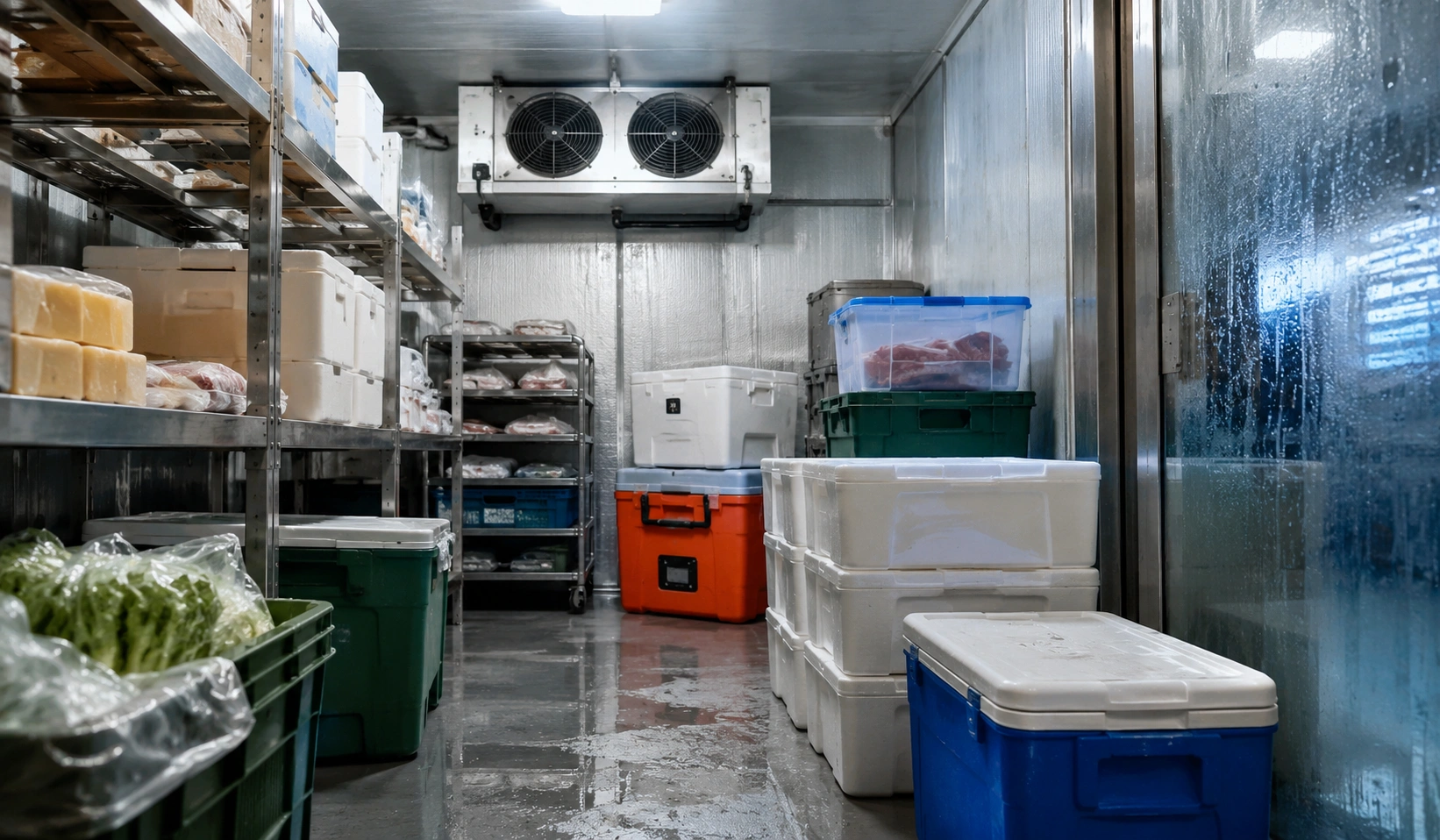
Cold Room Failure: How to Protect Your Stock Before the Engineer Arrives
A cold room failure can happen without warning. One minute your refrigeration system is working normally, and the next, temperatures begin rising while thousands of pounds worth of stock are at risk. Whether you run a restaurant, food factory, pharmacy, florist, butcher shop, or distribution centre, every minute counts when refrigeration stops working.
The good news is that the actions you take before professional cold room engineers arrive can make the difference between saving your products and suffering major financial losses. According to the U.S. Food and Drug Administration (FDA), keeping refrigeration doors closed during an outage significantly slows temperature increases, helping preserve food safety for longer.
Why Every Minute Matters During a Cold Room Failure
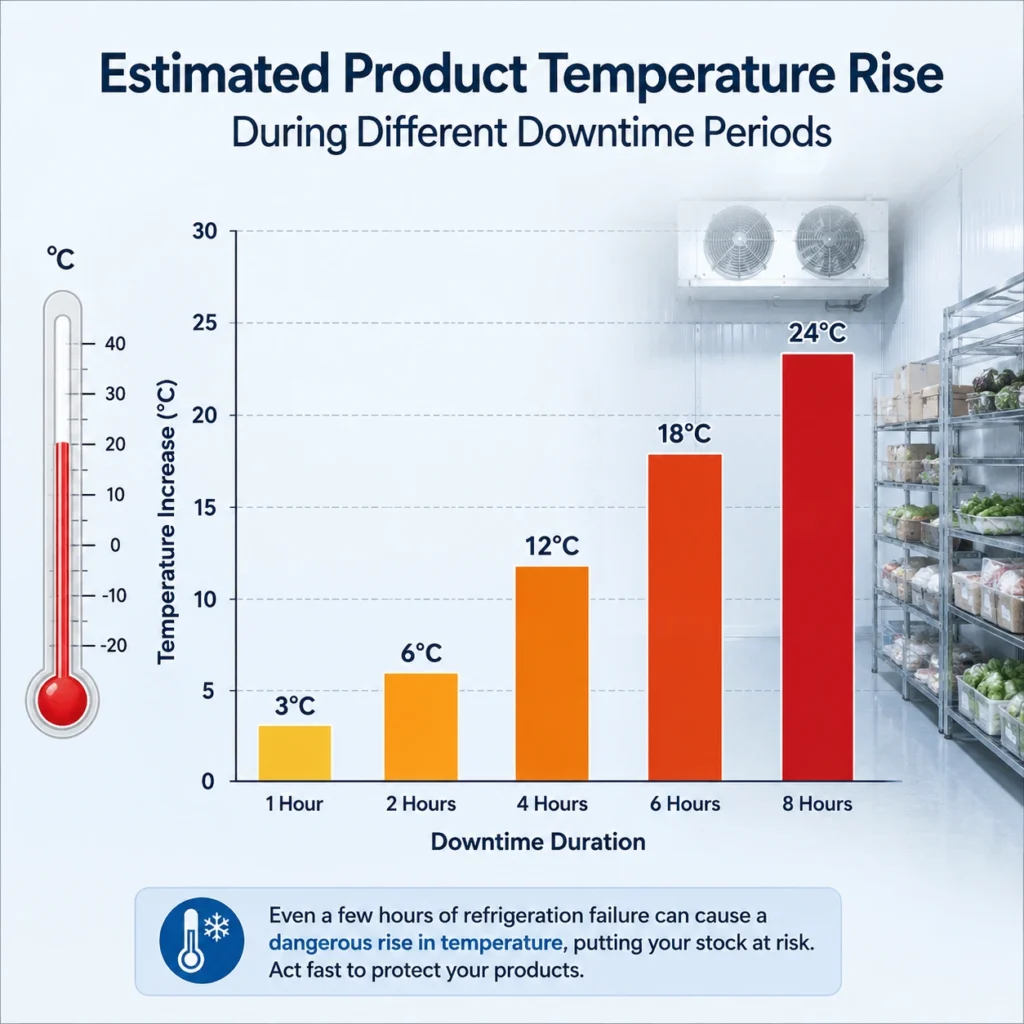
Cold rooms are designed to maintain precise temperatures that keep products safe, fresh, and compliant with food safety regulations. Once cooling stops, temperatures gradually rise, allowing bacteria to multiply more rapidly.
The FDA advises that refrigerated food generally remains safe for about four hours if doors stay closed during a power failure. Beyond that point, many perishable foods may become unsafe depending on their temperature history.
For many businesses, the financial impact extends far beyond replacing stock. A refrigeration breakdown may also result in:
- Lost sales
- Interrupted operations
- Food safety investigations
- Insurance claims
- Damage to customer trust
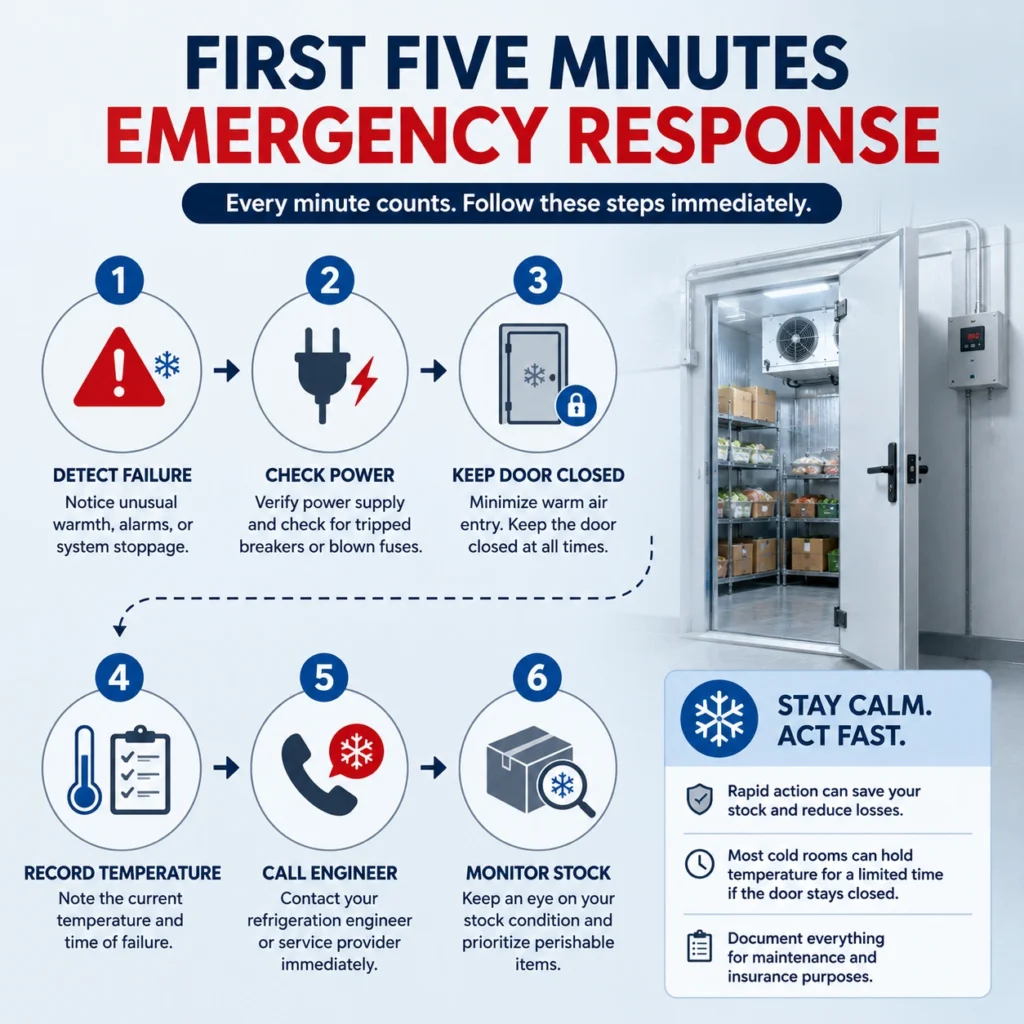
The First Five Minutes: Stay Calm and Assess the Situation
The worst mistake is rushing to open the cold room repeatedly.
Every door opening allows warm air inside while letting valuable cold air escape. According to FDA guidance, keeping doors closed is one of the simplest ways to preserve safe temperatures during refrigeration failures.
Instead:
- Check whether power is available.
- Confirm whether only the cold room has failed.
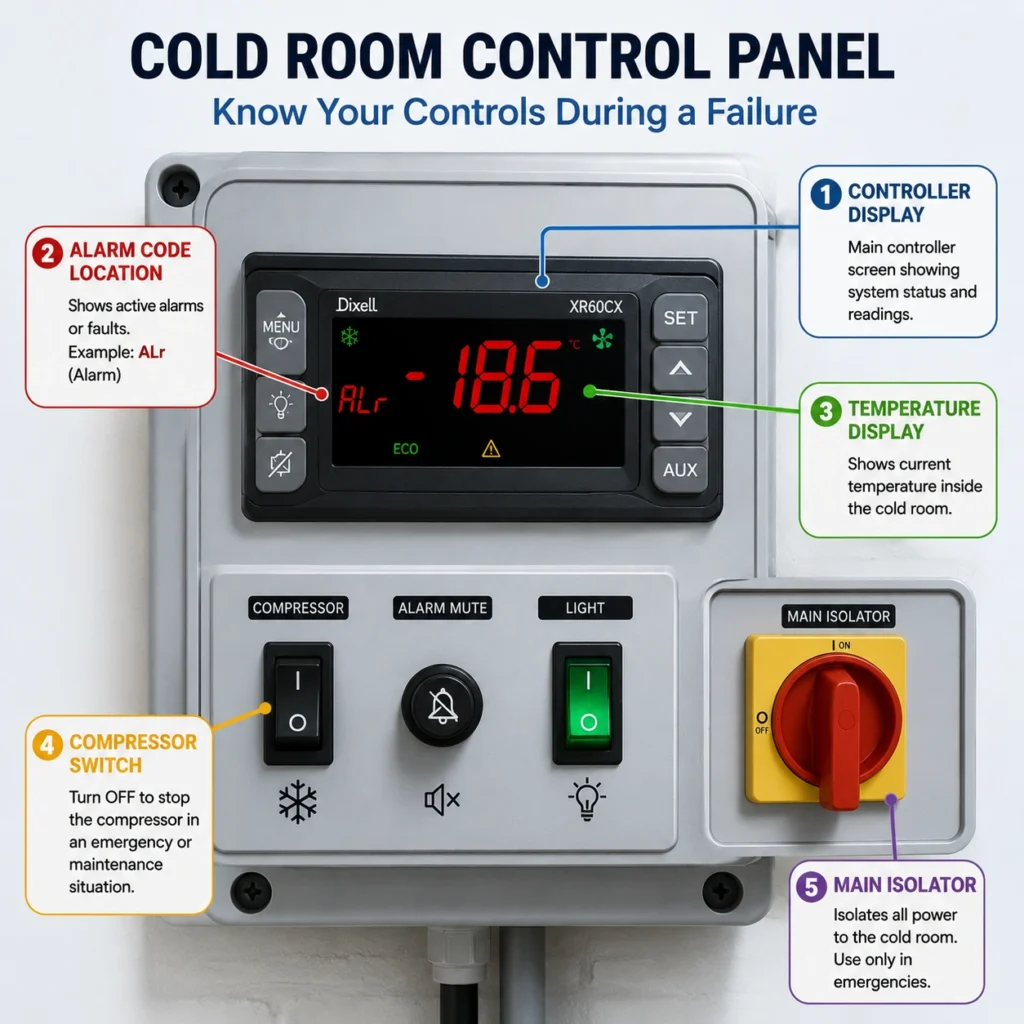
- Look for obvious alarm messages.
- Record the current temperature.
- Contact qualified cold room engineers immediately.
If your building has multiple cold rooms, verify whether the issue affects one system or the entire facility.
Identify Which Products Are Most at Risk
Not every product reacts the same way when temperatures increase.
Fresh meat, seafood, dairy products and prepared meals usually become unsafe much faster than bottled drinks or packaged produce.
Businesses should always prioritise high-risk products first.
| Product Type | Risk Level | Priority |
|---|---|---|
| Fresh Meat | Very High | Immediate |
| Seafood | Very High | Immediate |
| Dairy | High | Immediate |
| Prepared Meals | High | Immediate |
| Fruit & Vegetables | Medium | Moderate |
| Packaged Drinks | Low | Low |
This helps staff make better decisions while waiting for cold room engineers.
Monitor Temperatures Constantly
Temperature readings become extremely important during a refrigeration emergency.
Rather than guessing whether products remain safe, record temperatures every 15–30 minutes.
The FDA recommends using calibrated appliance thermometers rather than relying on product appearance or smell. Food may appear normal while still becoming unsafe.
Create a simple log including:
- Time
- Air temperature
- Product temperature (where possible)
- Staff initials
- Observations
These records may also support insurance claims and food safety inspections.
Cold Room Temperature Safety Calculator
Move Stock Only When Necessary
Many businesses immediately transfer products into another cold room.
While this can work, unnecessary movement also exposes products to warmer environments.
Before relocating stock, ask:
- Is another cold room operating correctly?
- Can products be transferred quickly?
- Will moving products reduce exposure?
Keep transfers organised to maintain traceability.
Avoid mixing products with different storage temperature requirements.
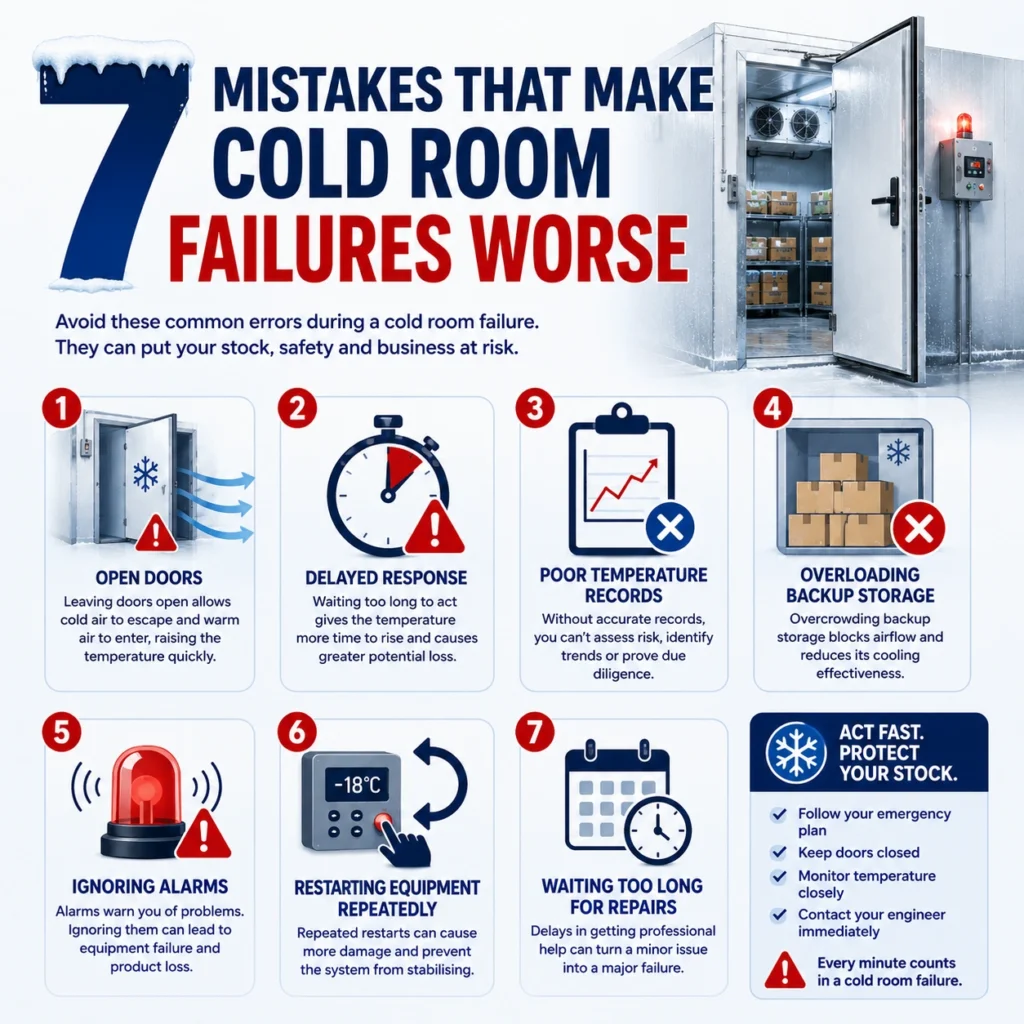
Avoid Common Mistakes During a Cold Room Failure
Small decisions often create bigger losses.
Common mistakes include:
- Leaving doors open
- Switching equipment on and off repeatedly
- Ignoring warning alarms
- Guessing food safety
- Delaying engineer callouts
- Throwing away stock before assessment
Professional cold room engineers can often determine whether equipment can be restarted safely or requires repair.
Want a tailored recommendation or quick quote? Reach out today
Protect Food Safety and Compliance
Food safety regulations require businesses to maintain safe storage temperatures.
According to the USDA, refrigerated food exposed to temperatures above safe limits for extended periods may need disposal because harmful bacteria cannot always be detected by appearance or smell.
Maintain documentation including:
- Temperature logs
- Alarm records
- Engineer reports
- Product disposal records
- Corrective actions
Good documentation demonstrates responsible management during inspections.
Prepare for the Engineer's Arrival
You can help cold room engineers diagnose the issue much faster by collecting useful information beforehand.
Prepare:
- Time failure started
- Alarm codes
- Temperature history
- Recent maintenance records
- Photos of the control panel
- Any unusual noises
- Signs of ice build-up
- Compressor behaviour
This information often reduces diagnostic time considerably.
Want a tailored recommendation or quick quote? Reach out today
Reduce Future Cold Room Failures
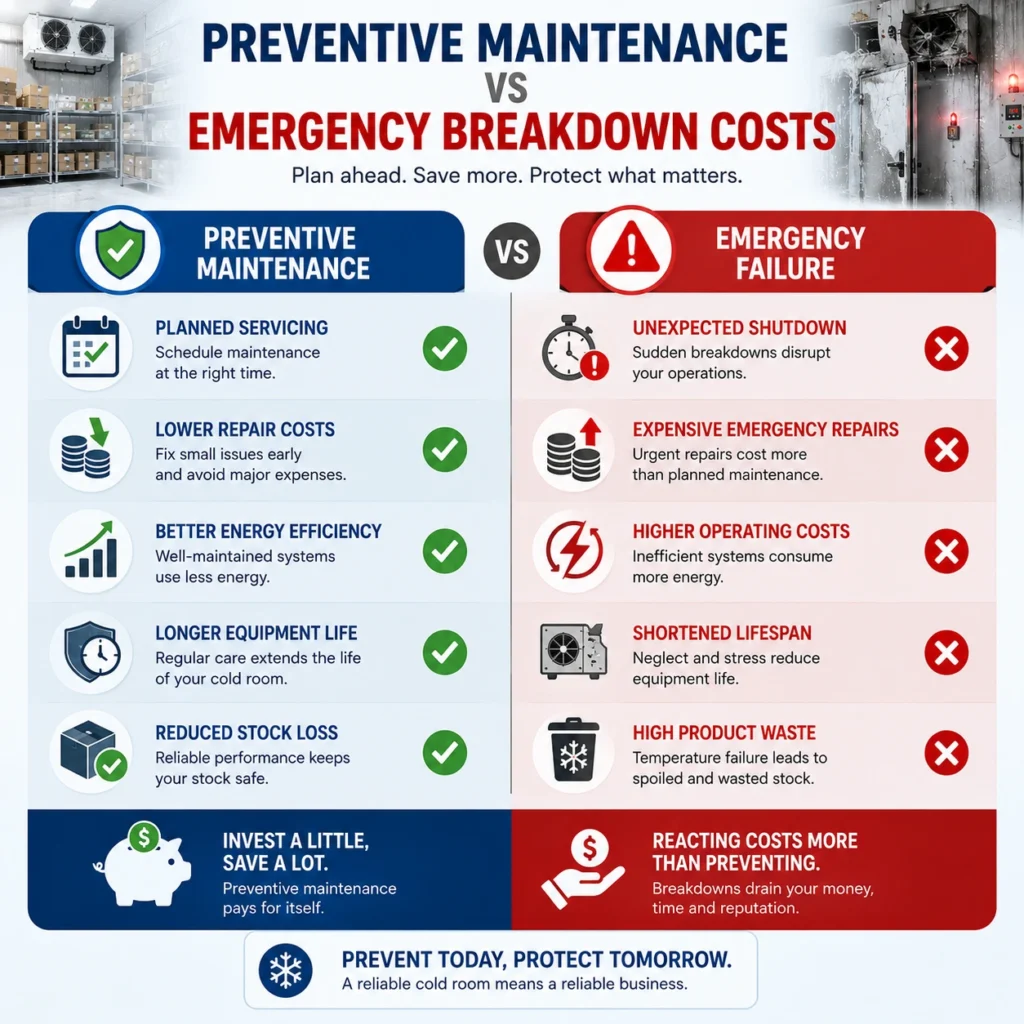
Many refrigeration emergencies can be prevented through regular maintenance.
Routine inspections help identify:
- Refrigerant leaks
- Dirty condensers
- Failing fans
- Electrical issues
- Sensor faults
- Worn door seals
Research published in Frontiers in Sustainable Food Systems found that poorly maintained cold storage systems can increase energy consumption by up to 30%, highlighting the importance of proper maintenance and efficient operation.
Preventive servicing also reduces unexpected downtime while extending equipment life.
Build an Emergency Response Plan Before You Need One
The best time to prepare is before a breakdown happens.
Every business should have an emergency cold room response procedure that staff can follow without hesitation.
Include:
- Emergency contact numbers
- Temperature recording sheets
- Product priority lists
- Backup storage locations
- Staff responsibilities
- Escalation procedures
Having a documented plan helps reduce confusion during high-pressure situations.
If your refrigeration stopped working tonight, would your team know exactly how to protect your stock before the cold room engineers arrived? Share your current emergency procedure in the comments—or identify the one improvement you’ll make this week to reduce future losses.
Frequently Asked Questions (FAQs)
1. What causes a cold room failure?
A cold room failure can happen for several reasons, including power outages, refrigerant leaks, faulty compressors, damaged evaporator fans, blocked condensers, electrical faults, thermostat problems, or poor maintenance. Regular servicing helps identify these issues before they lead to costly breakdowns.
2. What should I do immediately after a cold room failure?
As soon as you notice a cold room failure, keep the door closed to retain cold air, check whether the power supply is working, record the current temperature, and contact experienced cold room engineers. Avoid opening the door unnecessarily, as this allows warm air to enter and speeds up temperature loss.
3. How long will food stay safe during a cold room failure?
The safe storage time depends on the product type, starting temperature, and how often the door is opened. In general, keeping the cold room door closed helps maintain a safe temperature for longer. Temperature monitoring is essential, and any products that exceed recommended storage temperatures should be assessed before use.
4. When should I call cold room engineers?
You should contact cold room engineers immediately after identifying a refrigeration problem. Early intervention can reduce stock losses, minimise downtime, and prevent further damage to refrigeration equipment.
5. Can a cold room failure damage my refrigeration system permanently?
Yes. Continuing to operate a faulty refrigeration system or repeatedly restarting it without diagnosing the fault can cause further damage to compressors, electrical components, and refrigeration circuits. Professional diagnosis is recommended before restarting the system.
6. How can I reduce stock loss during a cold room failure?
The best way to reduce stock loss is to keep the cold room door closed, monitor temperatures regularly, prioritise high-risk products, move stock only when necessary, and arrange emergency repairs as quickly as possible. Having a documented emergency response plan also helps staff act faster.
7. How often should commercial cold rooms be serviced?
Most commercial cold rooms should be professionally serviced at least every six months. Businesses with heavy usage or food storage requirements may benefit from quarterly maintenance to improve reliability, energy efficiency, and food safety compliance.
8. What are the warning signs that a cold room may fail?
Common warning signs include rising temperatures, excessive ice build-up, unusual noises, water leaks, longer compressor run times, poor cooling performance, higher energy bills, and repeated alarm notifications. Addressing these signs early can help prevent unexpected breakdowns.
9. Can regular maintenance prevent cold room failure?
Yes. Preventive maintenance significantly reduces the risk of cold room failure by identifying worn components, refrigerant leaks, electrical issues, dirty condensers, and airflow problems before they become serious faults. Routine servicing also extends equipment lifespan and improves energy efficiency.
10. Why should I choose professional cold room engineers instead of attempting repairs myself?
Commercial refrigeration systems contain complex electrical and refrigerant components that require specialist knowledge and certified handling. Professional cold room engineers can accurately diagnose faults, carry out safe repairs, ensure compliance with F-Gas regulations, and restore the system with minimal downtime.