F-Gas Certified Engineers: Why You Need One for Walk-In Freezer Installation
When businesses invest in commercial refrigeration, they often focus heavily on freezer size, storage capacity, and installation costs. What many overlook is one of the most important factors of all: who actually installs the refrigeration system.
In the UK, refrigeration equipment containing fluorinated greenhouse gases must legally be handled by qualified engineers with the correct F-Gas certification. This is not simply a recommendation for best practice. It is a legal requirement under UK regulations.
For businesses planning walk-in freezer installation, choosing an F-Gas certified engineer directly affects compliance, refrigeration performance, energy efficiency, and long-term reliability.
Whether you operate a restaurant, supermarket, catering company, pharmacy, warehouse, or food production facility, understanding why F-Gas certification matters can help avoid serious operational and legal problems later.
For homeowners searching online for walk-in freezer installation near me or businesses planning walk-in freezer installation Leeds, refrigeration compliance is becoming increasingly important as environmental regulations continue tightening across the UK.
What Is F-Gas Certification?
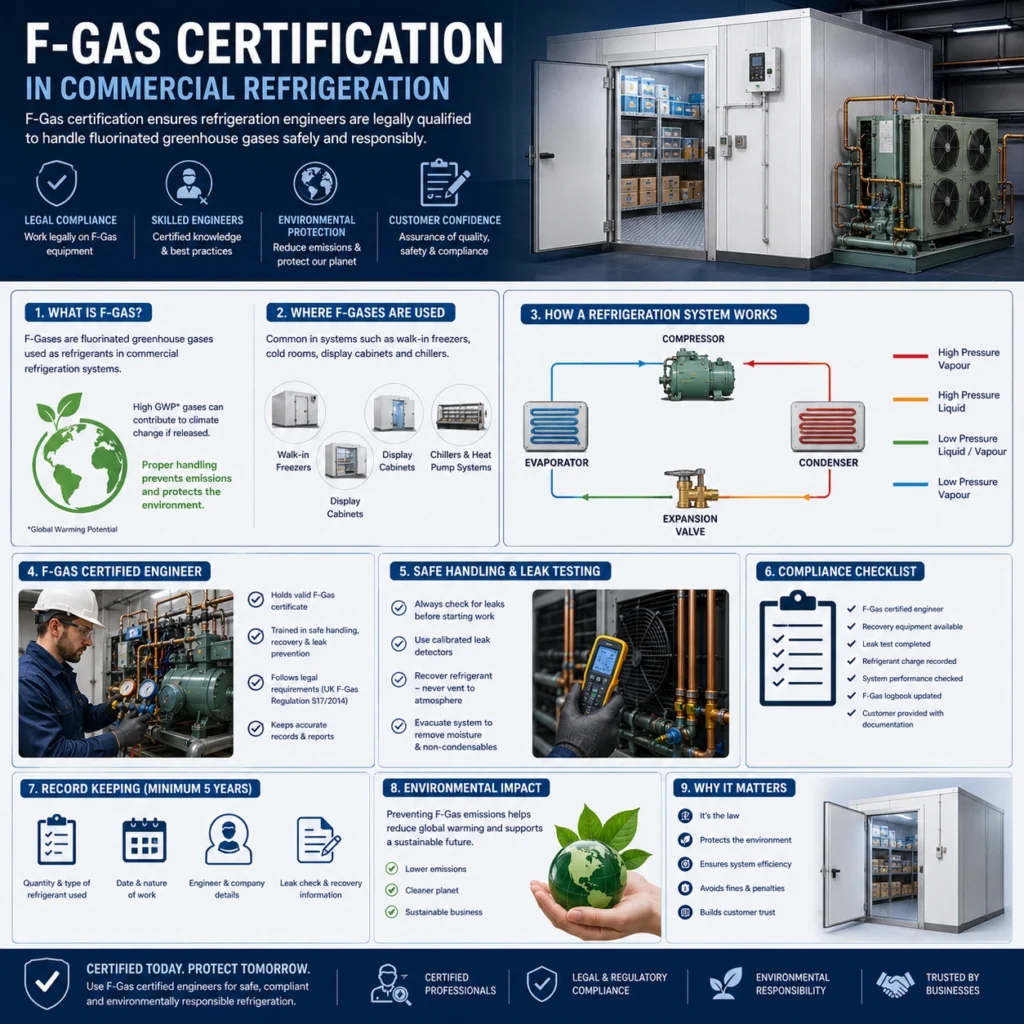
F-Gas certification refers to qualifications required for engineers who handle refrigeration systems containing fluorinated greenhouse gases.
These refrigerants are commonly used in:
- Walk-in freezers
- Cold rooms
- Commercial refrigeration systems
- Air conditioning systems
- Heat pumps
Because fluorinated gases can contribute significantly to global warming if released into the atmosphere, UK regulations require engineers working with these systems to hold approved F-Gas qualifications.
According to the UK Government guidance on fluorinated greenhouse gases, businesses handling refrigeration equipment containing F-Gases must comply with strict rules covering installation, maintenance, leak checking, recovery, and record keeping.
This means refrigeration engineers working on commercial freezer systems must be appropriately certified to legally carry out the work.
Why F-Gas Certification Matters for Walk-In Freezer Installation
A walk-in freezer installation involves far more than assembling insulated panels.
The refrigeration system itself contains refrigerants that must be handled safely and correctly to ensure:
- Environmental compliance
- Refrigeration efficiency
- Safe refrigerant charging
- Leak prevention
- Long-term system reliability
Incorrect refrigerant handling can cause serious issues including:
- Refrigerant leaks
- Poor cooling performance
- Compressor failure
- Increased energy consumption
- Regulatory breaches
According to the UK Government’s F-Gas regulations, non-compliance can result in enforcement action and financial penalties.
This is why businesses should always verify that engineers carrying out walk-in freezer installation work hold valid F-Gas qualifications.
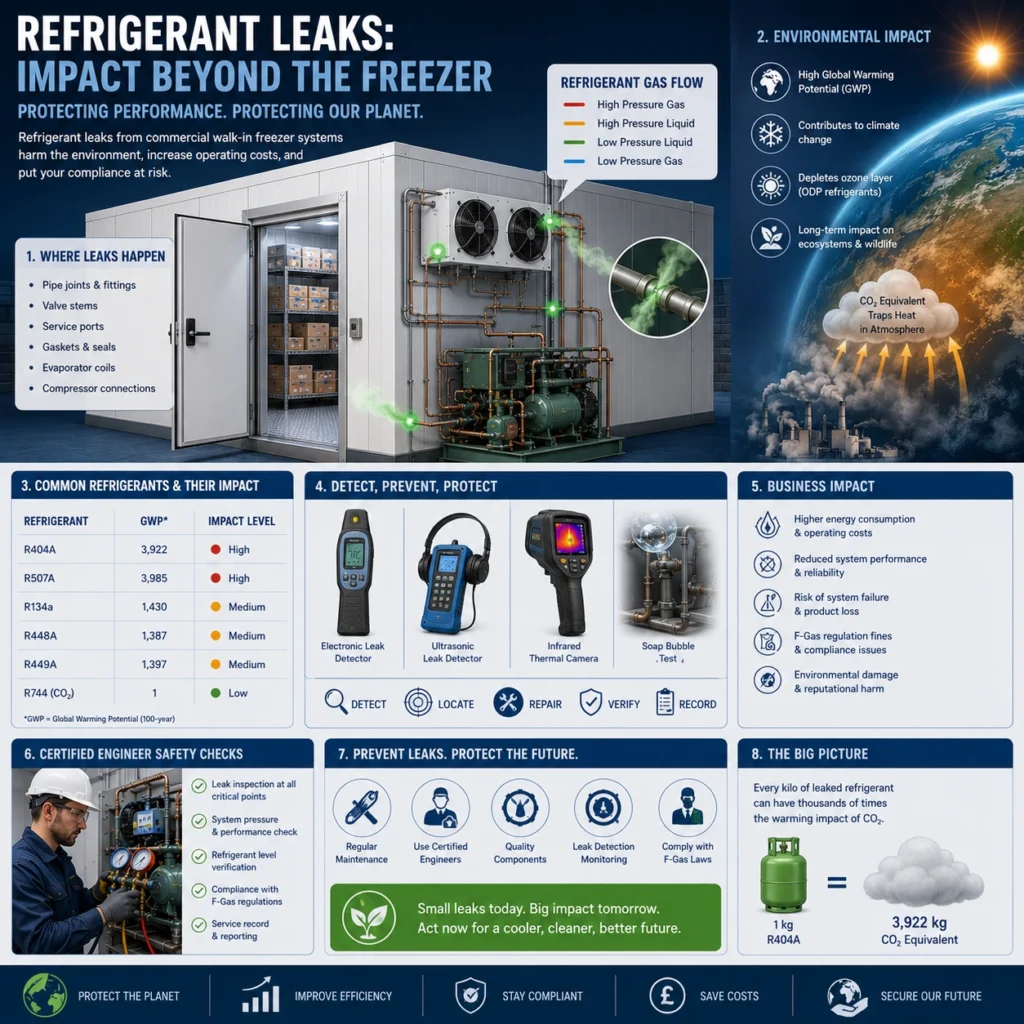
The Environmental Impact of Refrigerant Leaks
One reason F-Gas regulations exist is because refrigerant leaks can have a significant environmental impact.
Many refrigeration gases historically used in commercial cooling systems have high Global Warming Potential (GWP).
The UK Government and international climate agreements continue pushing the refrigeration industry toward lower-GWP refrigerants and stricter leak prevention measures.
According to the International Institute of Refrigeration, refrigeration and air conditioning systems are responsible for a substantial proportion of global energy usage and indirect greenhouse gas emissions.
This makes proper refrigeration installation increasingly important for environmental responsibility and long-term operational efficiency.
Want a tailored recommendation or quick quote? Reach out today
How F-Gas Certified Engineers Improve System Performance
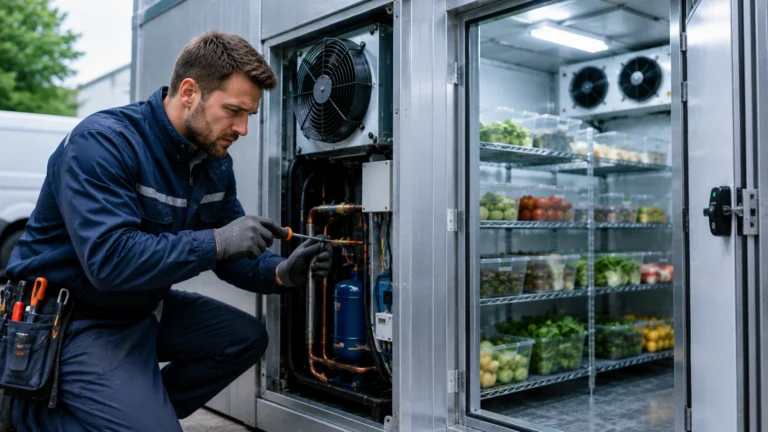
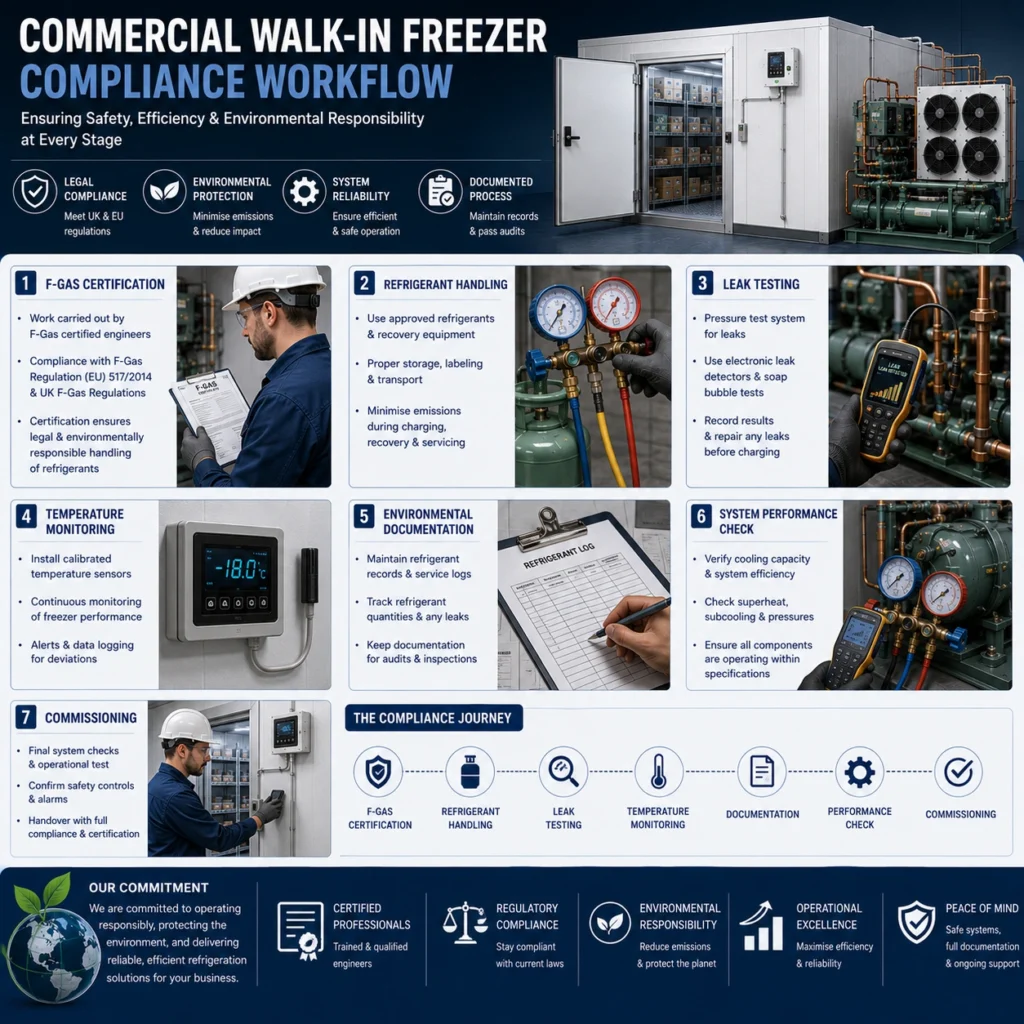
F-Gas certified engineers are trained to handle refrigeration systems correctly from installation through commissioning.
This directly affects how efficiently the freezer performs over time.
Correct refrigerant charging and airflow balancing help maintain:
- Stable freezer temperatures
- Lower energy usage
- Efficient compressor operation
- Reduced equipment wear
- Better product protection
Poor refrigerant charging is one of the most common causes of refrigeration inefficiency.
Even small refrigerant inaccuracies can increase compressor strain and electricity consumption significantly.
According to Carbon Trust refrigeration guidance, refrigeration systems can account for up to 50% of electricity usage in some food businesses.
This means inefficient installation practices can create substantial long-term operational costs.
Why Compliance Matters for Businesses
For commercial businesses, refrigeration compliance is not optional.
Restaurants, supermarkets, pharmaceutical companies, and food production facilities often operate under strict food safety and environmental regulations.
Improper refrigeration installation can create compliance risks involving:
- Food storage temperatures
- Refrigerant leak regulations
- Environmental standards
- Equipment maintenance requirements
Businesses may also require refrigeration documentation for insurance, audits, or environmental reporting purposes.
Using properly certified engineers helps ensure refrigeration systems meet current UK legal requirements from the start.
This is particularly important for larger freezer systems containing higher refrigerant volumes.
Why Cheap Installation Often Becomes Expensive Later
Some businesses try to reduce upfront costs by choosing the cheapest available refrigeration installer.
This often becomes expensive long term.
Poor refrigeration installation may lead to:
- Refrigerant leaks
- Higher electricity bills
- Compressor breakdowns
- Ice build-up
- Temperature instability
- Product loss
- Premature equipment failure
Fixing poorly installed refrigeration systems is often far more expensive than installing them properly in the first place.
The British Refrigeration Association and industry guidance consistently emphasise the importance of proper commissioning and preventative maintenance for long-term refrigeration efficiency.
For businesses searching online for walk-in freezer installation near me, installation quality should always matter more than simply finding the lowest quote.
F-Gas Regulations Are Becoming Increasingly Important
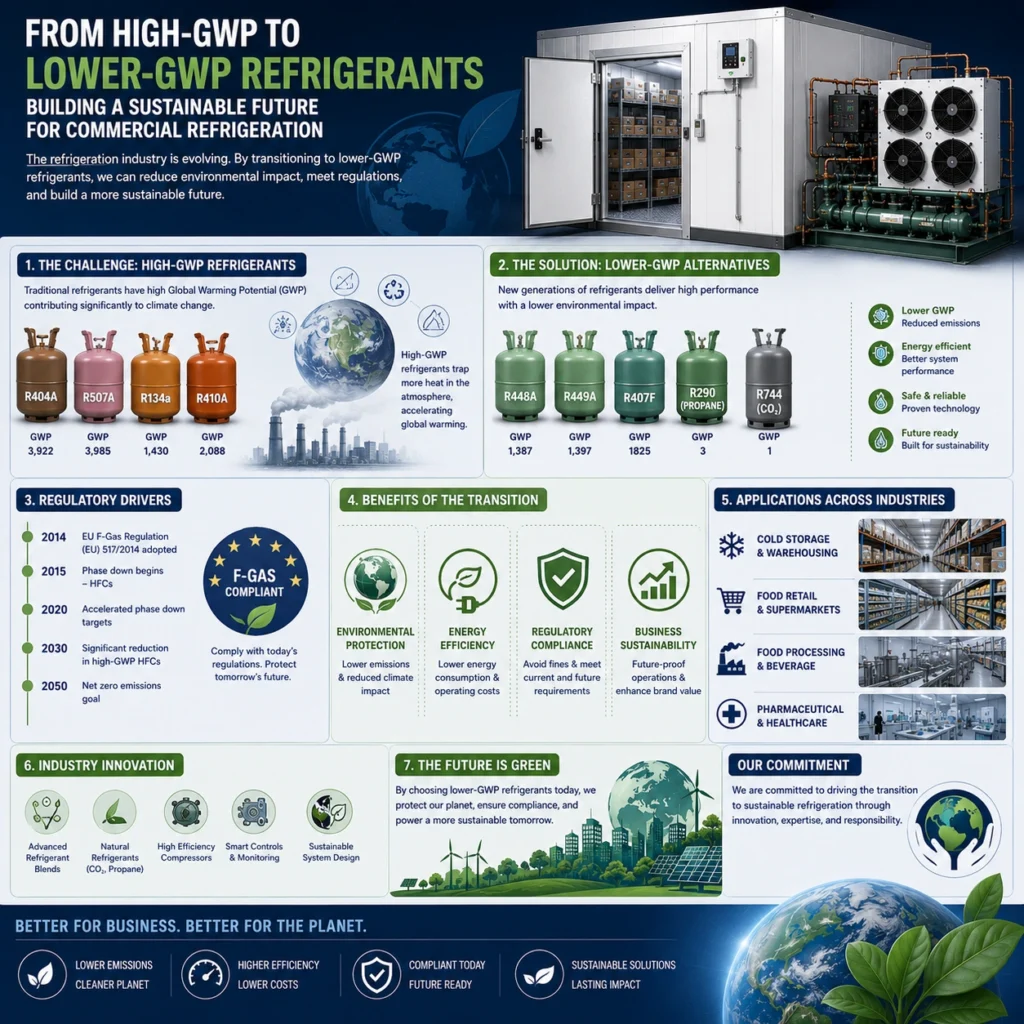
The refrigeration industry continues moving toward stricter environmental regulations and lower-GWP refrigerants.
As older refrigerants are phased down, refrigeration systems are becoming more technically advanced and compliance-focused.
According to UK Government F-Gas policy guidance, the phase-down of high-GWP refrigerants is part of broader efforts to reduce greenhouse gas emissions and improve environmental sustainability.
This means businesses installing refrigeration systems today should think long term about:
- Refrigerant compliance
- Future servicing requirements
- System efficiency
- Environmental performance
Working with qualified refrigeration engineers helps businesses prepare for these evolving industry standards.
Domestic Walk-In Freezer Installations Require Proper Refrigeration Handling Too
Although commercial refrigeration receives most attention, domestic walk-in freezer installations still involve refrigerants that must be handled correctly.
Luxury residential freezer rooms, outdoor kitchens, and large domestic cold storage systems increasingly use advanced refrigeration technologies similar to commercial applications.
This means homeowners should also ensure refrigeration engineers hold appropriate qualifications before installation begins.
Whether the project is commercial or residential, refrigerant safety and system efficiency remain equally important.
Want a tailored recommendation or quick quote? Reach out today
What Businesses Across Leeds Are Prioritising Today
Businesses throughout Leeds are increasingly prioritising refrigeration systems that deliver not only cooling performance but also compliance, efficiency, and long-term reliability.
Restaurants, supermarkets, food manufacturers, florists, and pharmaceutical businesses now pay far closer attention to:
- Refrigeration efficiency
- Environmental compliance
- Refrigerant management
- Energy costs
- Preventative maintenance
- Qualified refrigeration engineers
For many companies planning walk-in freezer installation Leeds, working with F-Gas certified engineers is no longer simply about legal compliance. It is about protecting long-term operational performance and reducing future refrigeration risks.
FAQs – Walk-In Freezer Installation
1. What is an F-Gas certified engineer?
An F-Gas certified engineer is a qualified refrigeration professional legally authorised to handle fluorinated refrigerants used in commercial refrigeration and air conditioning systems. Certification ensures the engineer can safely install, maintain, and service refrigeration equipment while complying with UK environmental regulations.
2. Is F-Gas certification legally required for walk-in freezer installation?
Yes. In the UK, refrigeration systems containing fluorinated gases must be installed and handled by properly certified F-Gas engineers. This is a legal requirement under UK F-Gas regulations.
3. Why is F-Gas certification important for walk-in freezer installation?
F-Gas certification helps ensure refrigerants are handled safely and correctly during installation. Proper refrigerant management improves system efficiency, reduces environmental impact, prevents refrigerant leaks, and helps businesses remain legally compliant.
4. What happens if a walk-in freezer is installed incorrectly?
Poor installation can cause refrigerant leaks, compressor damage, temperature instability, excessive energy consumption, ice build-up, and shortened equipment lifespan. Incorrect installation may also create compliance risks under UK refrigeration regulations.
5. How do refrigerant leaks affect the environment?
Many refrigeration gases have a high Global Warming Potential (GWP). Refrigerant leaks contribute to greenhouse gas emissions and environmental damage, which is why UK F-Gas regulations require strict leak prevention and refrigerant handling procedures.
6. Can non-certified engineers install commercial refrigeration systems?
No. Engineers working with refrigeration systems containing fluorinated refrigerants must hold valid F-Gas qualifications to legally install or service the equipment in the UK.
7. How can businesses check if an engineer is F-Gas certified?
Businesses should ask for proof of F-Gas certification before installation begins. Certified refrigeration engineers and companies should be able to provide current qualification details and compliance documentation.
8. Does F-Gas certification improve refrigeration efficiency?
Yes. F-Gas certified engineers are trained in proper refrigerant charging, leak prevention, airflow balancing, and commissioning procedures. This helps improve freezer efficiency, reduce energy consumption, and protect long-term system performance.
9. Do domestic walk-in freezers require F-Gas certified engineers?
Yes. Residential refrigeration systems containing fluorinated gases should also be installed and serviced by qualified F-Gas certified engineers to ensure safe refrigerant handling and system reliability.
10. Why are F-Gas regulations becoming stricter?
The UK refrigeration industry is moving toward lower-GWP refrigerants and tighter environmental standards to reduce greenhouse gas emissions and improve sustainability. This has increased the importance of refrigerant compliance and leak prevention.
11. How long does a professionally installed walk-in freezer last?
A professionally installed and well-maintained walk-in freezer can typically last between 15 and 25 years depending on usage, maintenance quality, and refrigeration system efficiency.
12. What businesses commonly need walk-in freezer installation?
Walk-in freezers are commonly used by restaurants, supermarkets, butchers, catering companies, florists, food manufacturers, pharmaceutical facilities, and warehouses requiring reliable frozen storage.