How Long Does It Take to Install a Walk-In Freezer in the UK?
When businesses plan to install walk-in freezer systems, one of the first concerns is usually timing. Restaurants cannot afford long downtime, supermarkets need uninterrupted frozen storage, and catering companies often work around tight operational schedules. Even homeowners installing luxury cold storage solutions want to know how disruptive the process will be.
The reality is that walk-in freezer installation times vary significantly depending on freezer size, building layout, refrigeration complexity, and site preparation.
A small modular freezer room may be operational within a day or two, while a larger industrial installation can take several weeks from preparation to final commissioning.
For businesses searching online for walk-in freezer installation or looking for walk-in freezer installation near me, understanding the full process helps avoid unrealistic expectations and costly delays later.
According to the British Frozen Food Federation, frozen food sales in the UK continue to rise steadily as businesses and consumers focus more on food preservation, reduced waste, and bulk storage efficiency. This continued demand is one reason commercial freezer installations are becoming increasingly common across the hospitality, retail, and food production sectors.
What Actually Happens During Walk-In Freezer Installation?
Installing a walk-in freezer involves far more than assembling insulated panels.
Every commercial refrigeration project starts with careful planning because freezer performance depends heavily on airflow, insulation quality, refrigeration sizing, and site conditions.
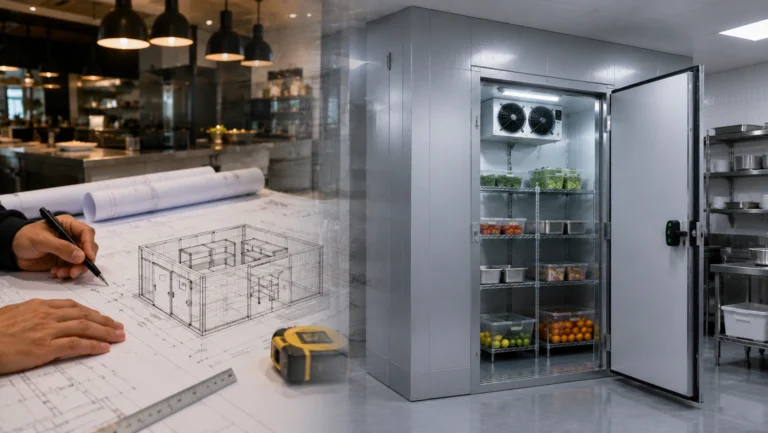
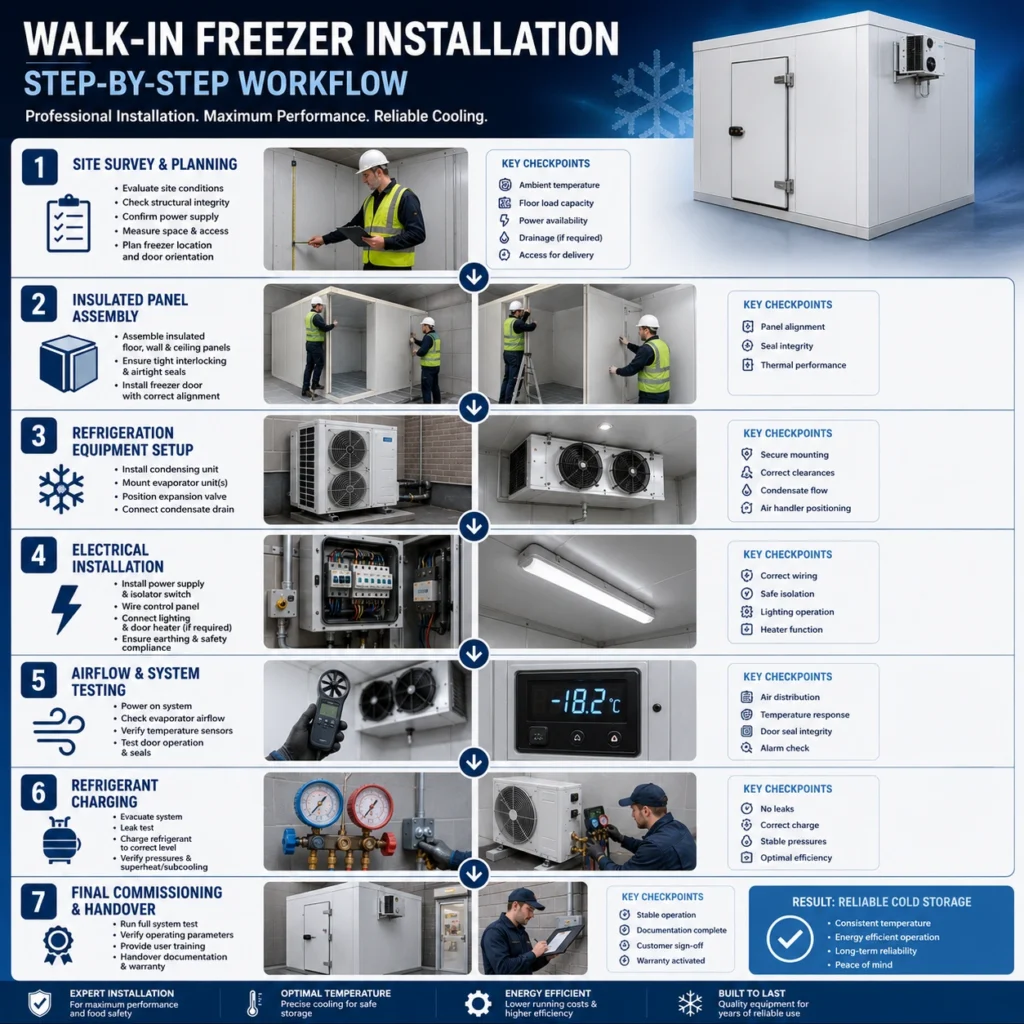
The process normally begins with a site survey where refrigeration engineers assess:
- Available space
- Ventilation requirements
- Access restrictions
- Electrical supply
- Drainage arrangements
- Heat load requirements
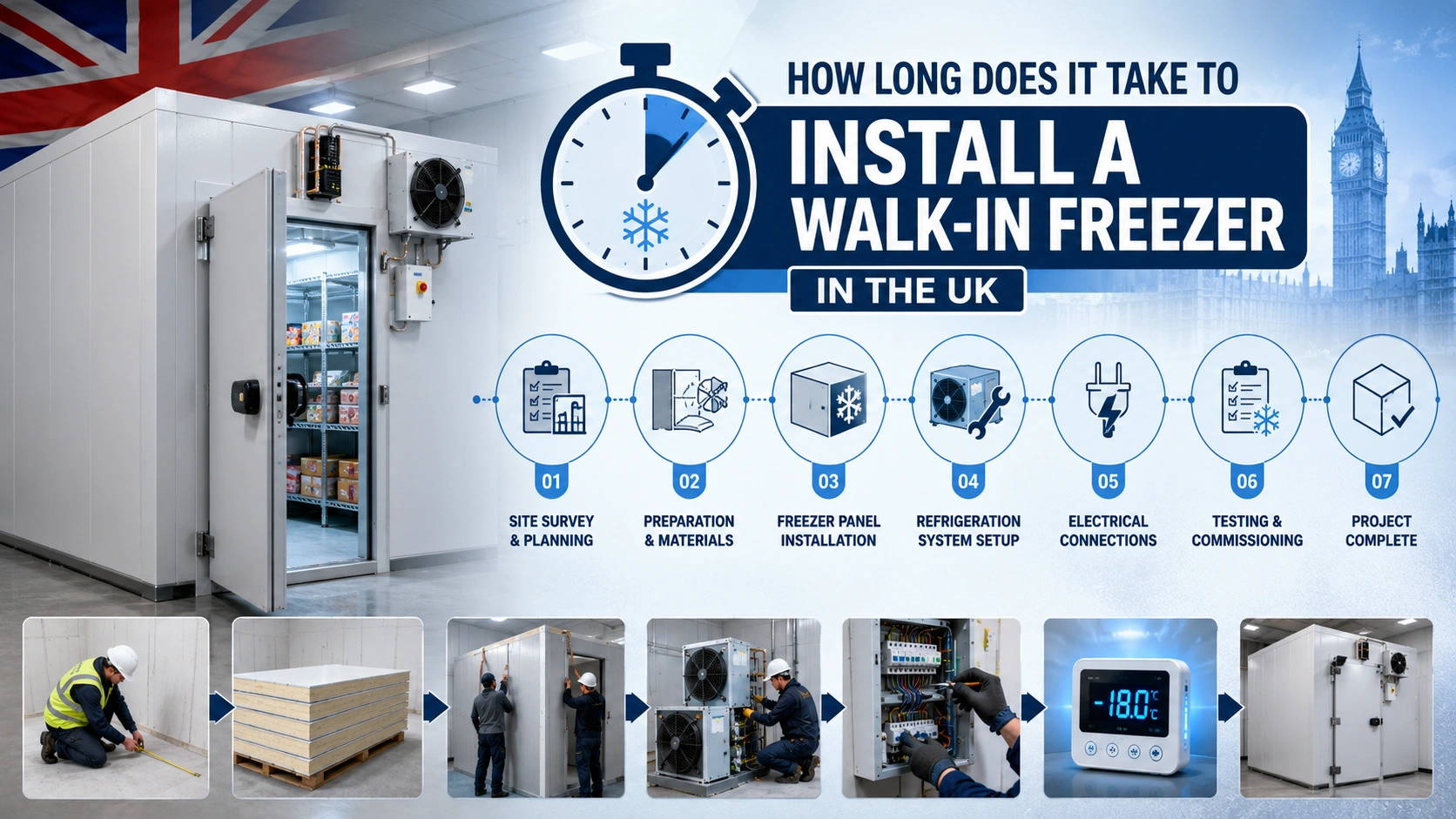
Once these factors are confirmed, the installation itself usually includes insulated panel assembly, refrigeration equipment installation, electrical setup, temperature calibration, and full system testing.
For smaller freezer rooms, these stages may move quickly. Larger commercial projects, however, often involve far more coordination between refrigeration engineers, electricians, contractors, and facility managers.
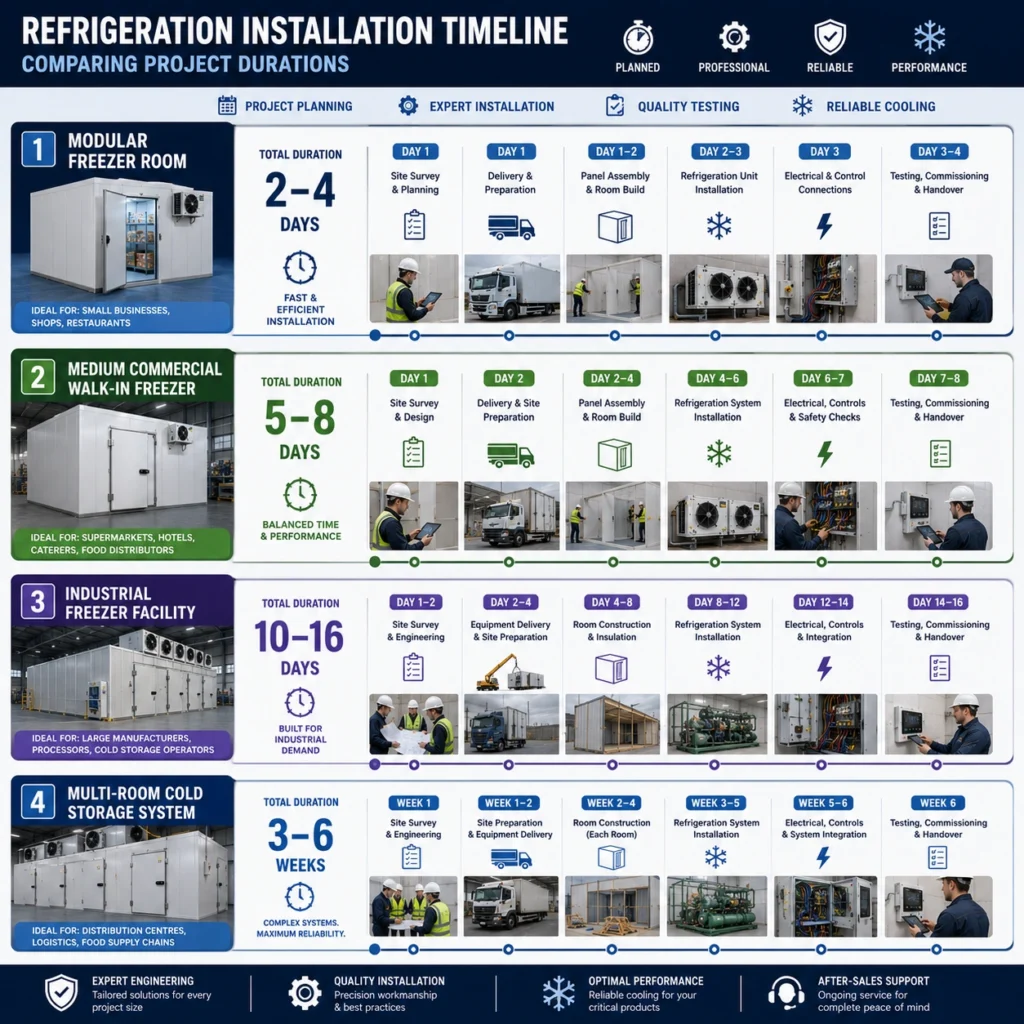
Average Walk-In Freezer Installation Time in the UK
Most standard commercial walk-in freezer installations in the UK are completed within one to five days once equipment arrives on site.
However, installation times can vary dramatically depending on project complexity.
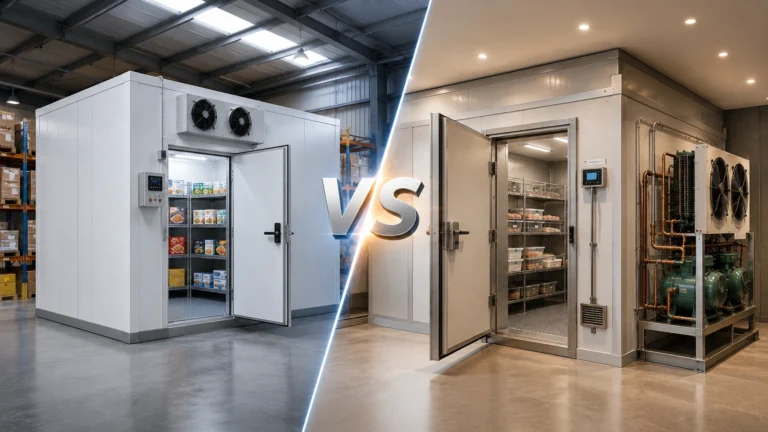
Walk-In Freezer Type | Typical Installation Time |
Small Modular Freezer Room | 1–2 Days |
Medium Commercial Walk-In Freezer | 2–5 Days |
Large Industrial Freezer Facility | 1–3 Weeks |
Multi-Room Refrigeration Systems | Several Weeks |
These timeframes typically include assembly, refrigeration setup, testing, and commissioning.
Projects involving structural modifications, difficult access, or advanced refrigeration controls often take longer.
According to Star Refrigeration efficiency guidance, proper commissioning and airflow balancing are critical for long-term refrigeration performance and should never be rushed during installation.
Why Site Preparation Often Determines Installation Speed
One of the biggest factors affecting installation time is site preparation.
Businesses often assume installation starts when freezer panels arrive, but preparation work usually begins much earlier.
For example, refrigeration systems may require
- Dedicated electrical supplies
- Reinforced flooring
- Drainage adjustments
- Ventilation improvements
- Structural access modifications
If these requirements are not handled in advance, installation delays become much more likely.
Busy commercial environments can also slow projects down.
Restaurants, supermarkets, and warehouses frequently require installations to happen around operational hours to minimise disruption. This means engineers may need to work overnight or in phases rather than continuously.
For businesses searching for walk-in freezer installation near me, choosing installers experienced in live commercial environments can make a major difference in project efficiency.
Want a tailored recommendation or quick quote? Reach out today
Why Refrigeration Commissioning Matters So Much
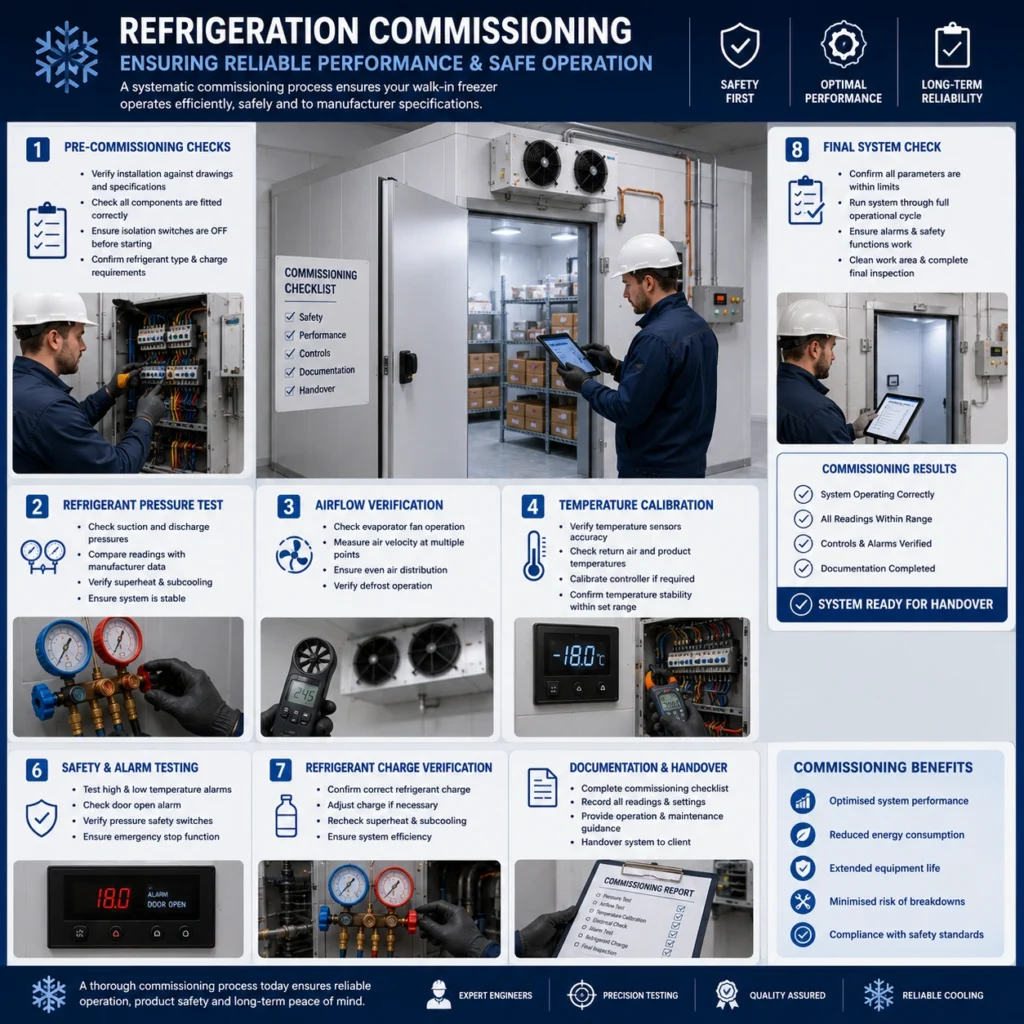
Commissioning is one of the most important stages of any walk-in freezer installation.
This process involves testing and calibrating the refrigeration system to ensure stable long-term operation.
During commissioning, engineers typically check:
- Refrigerant pressures
- Airflow performance
- Defrost cycles
- Temperature stability
- Electrical safety
- Controller accuracy
Although commissioning adds time to the project, skipping or rushing this stage can create serious future problems.
Poorly commissioned systems often experience:
- Temperature fluctuations
- Ice build-up
- Compressor strain
- Excessive energy usage
- Premature equipment failure
According to the Carbon Trust, refrigeration can account for up to 50% of energy use in food businesses. This means even relatively small inefficiencies can create major operational costs over time.
Can Businesses Continue Operating During Installation?
In many cases, yes.
Smaller freezer rooms are often installed while businesses continue operating normally, especially if installation zones are separated from customer-facing areas.
Larger commercial freezer installations, however, may require temporary operational adjustments depending on:
- Delivery access
- Power shutdown requirements
- Refrigeration pipe routing
- Ceiling work
- Flooring preparation
Many restaurants and supermarkets schedule freezer installations during quieter periods to minimise disruption.
Planning installation around stock deliveries and business schedules is also extremely common.
Experienced refrigeration contractors typically coordinate installation stages carefully to reduce downtime wherever possible.
Domestic Walk-In Freezer Installations Are Increasing Too
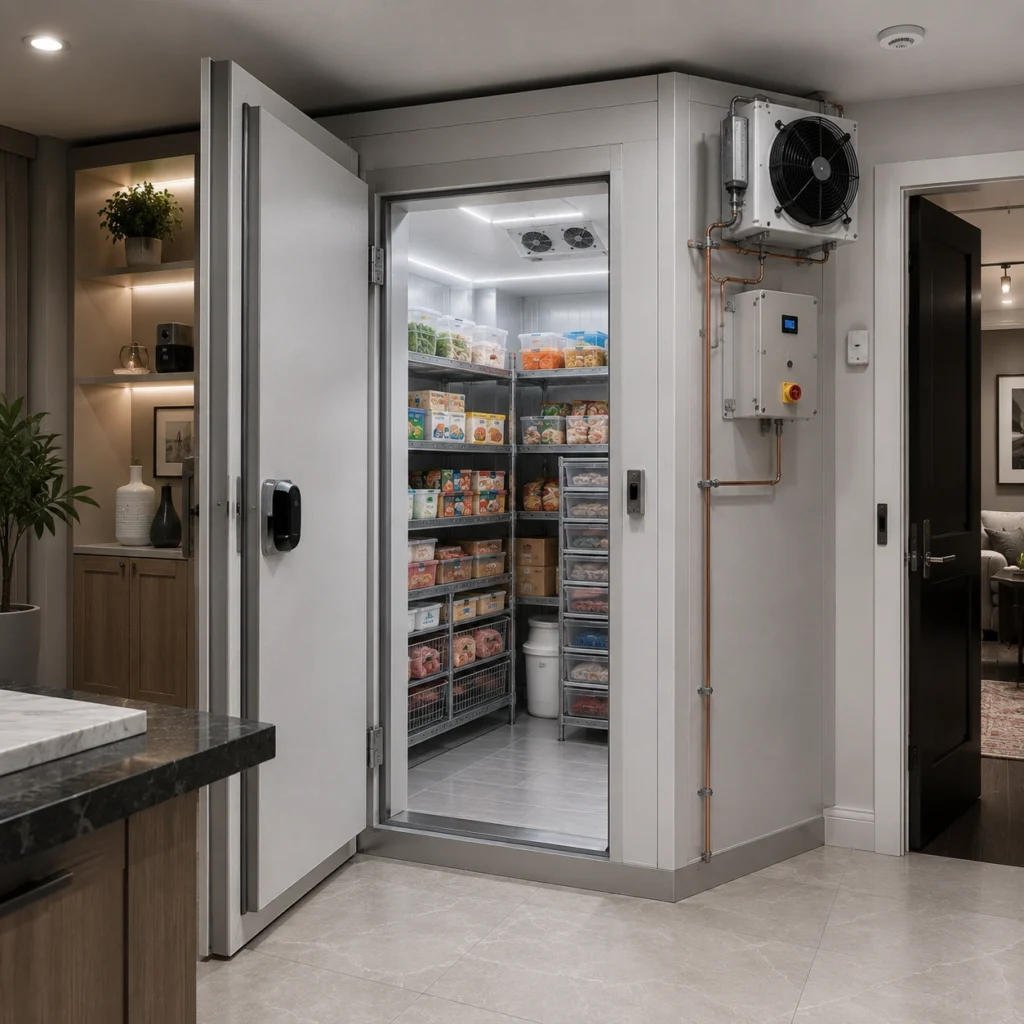
Although walk-in freezers are traditionally associated with commercial refrigeration, residential demand is increasing steadily across the UK.
Luxury homes, outdoor kitchens, country estates, and large family properties increasingly install compact freezer rooms for convenience and bulk food storage.
Domestic customers often use walk-in freezers for:
- Meal preparation
- Bulk grocery storage
- Entertaining
- Garden kitchen refrigeration
- Home catering setups
Residential installations are generally faster than large commercial projects because systems are smaller and less complex.
However, refrigeration planning still matters significantly for energy efficiency and long-term performance.
Energy Efficiency Has Become a Major Priority
Installation speed is important, but long-term operating efficiency matters even more.
UK electricity prices remain considerably higher than historical averages, making inefficient refrigeration systems expensive to operate long term.
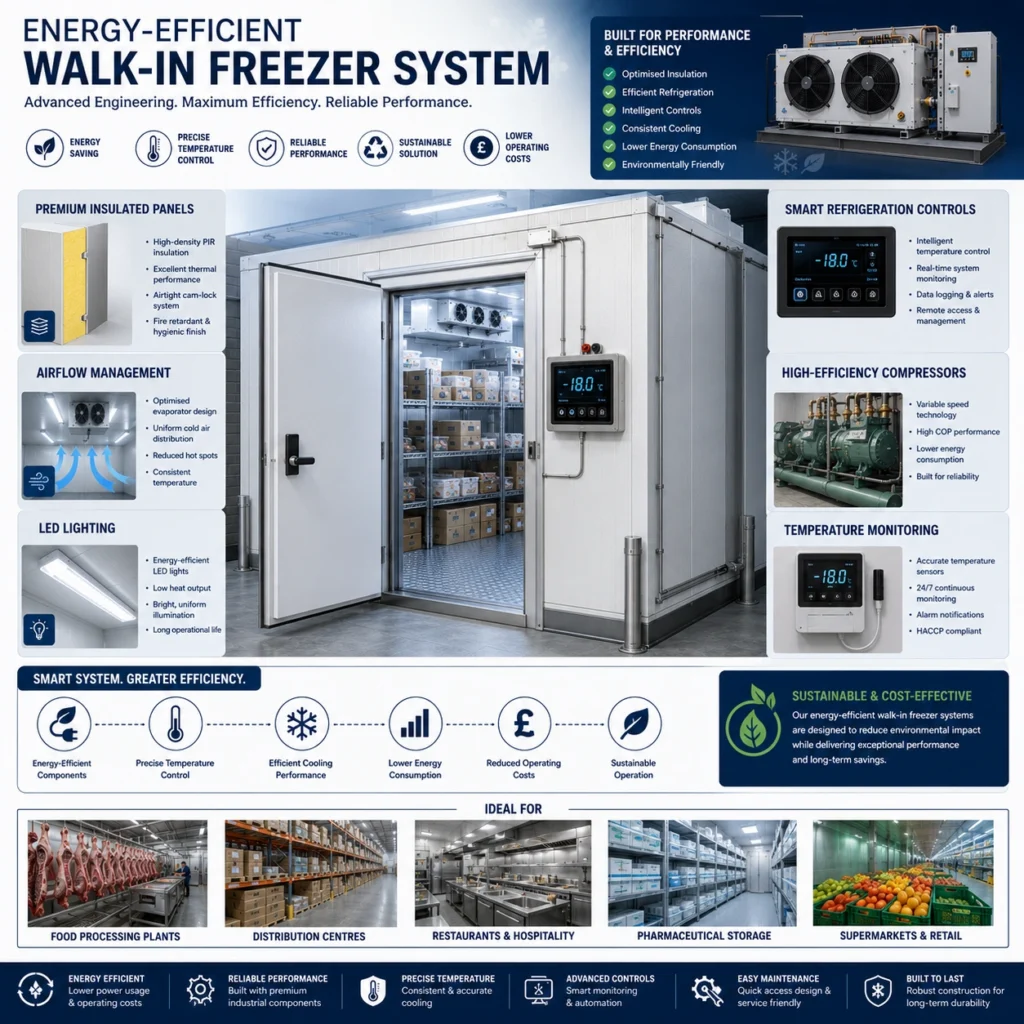
Modern freezer installations now focus heavily on reducing operating costs through:
- Better insulated panels
- Efficient compressors
- Smart monitoring systems
- LED lighting
- Improved airflow management
- Variable-speed refrigeration technology
According to the Carbon Trust, refrigeration efficiency improvements can significantly reduce operating costs in food businesses.
This is why experienced refrigeration engineers spend time properly sizing systems rather than simply installing the largest possible unit.
Oversized systems often waste energy and increase unnecessary compressor cycling.
What Businesses Across Leeds Are Prioritising Today
Businesses throughout Leeds are increasingly focusing on refrigeration systems that combine installation efficiency, operational reliability, and lower long-term energy costs.
Restaurants, florists, supermarkets, pharmaceutical facilities, and food production companies all rely on stable frozen storage to protect stock quality and maintain operational consistency.
As frozen storage demand grows across the UK, businesses are paying closer attention to:
- Installation timelines
- Refrigeration efficiency
- Energy costs
- Temperature reliability
- Smart monitoring systems
- Preventative maintenance planning
For many companies, understanding how long it takes to install walk-in freezer systems properly is now part of wider operational and financial planning rather than simply an equipment purchase decision.
Want a tailored recommendation or quick quote? Reach out today
FAQs – Walk-In Freezer Installation
1. How long does it take to install a walk-in freezer?
Most standard walk-in freezer installations in the UK take between 1 and 5 days once equipment arrives on site. Larger industrial freezer facilities or custom refrigeration systems may take several weeks depending on complexity and site preparation requirements.
2. What affects walk-in freezer installation time?
Several factors affect installation time including freezer size, building access, electrical requirements, refrigeration system complexity, ventilation setup, drainage preparation, and whether structural modifications are needed.
3. Can a walk-in freezer be installed in one day?
Yes. Smaller modular walk-in freezer systems can sometimes be installed and commissioned within a single day if the site is fully prepared and access is straightforward.
4. Does walk-in freezer installation require planning?
Yes. Professional walk-in freezer installation usually begins with a site survey, heat load calculations, electrical assessment, airflow planning, and refrigeration system sizing to ensure long-term performance and efficiency.
5. Can businesses stay open during walk-in freezer installation?
In many cases, businesses can continue operating during installation, especially for smaller projects. Larger commercial freezer installations may require temporary operational adjustments depending on the work involved.
6. Why is refrigeration commissioning important?
Commissioning ensures the walk-in freezer operates safely and efficiently. Engineers test refrigerant pressures, airflow, temperature stability, electrical systems, and control settings to prevent future performance issues and energy waste.
7. How much disruption does walk-in freezer installation cause?
Disruption depends on the project size and location. Smaller installations usually create minimal disruption, while larger systems involving structural work, electrical upgrades, or complex refrigeration setups may require phased installation planning.
8. Can walk-in freezers be installed in residential properties?
Yes. Domestic walk-in freezer installations are becoming more popular in luxury homes, country estates, and large residential kitchens for bulk food storage and home entertaining.
9. How long do walk-in freezers last after installation?
A professionally installed and properly maintained walk-in freezer can typically last between 15 and 25 years depending on usage, maintenance quality, and refrigeration system efficiency.
10. Does poor installation affect freezer performance?
Absolutely. Incorrect installation can lead to air leaks, temperature fluctuations, excessive energy consumption, compressor strain, ice build-up, and reduced freezer lifespan.
11. What temperature does a walk-in freezer operate at?
Most commercial walk-in freezers operate at approximately -18°C, which is the standard recommended temperature for safe frozen food storage.
12. How can businesses reduce walk-in freezer running costs?
Businesses can reduce freezer operating costs by using efficient insulation panels, maintaining door seals, scheduling regular servicing, improving airflow management, and installing modern energy-efficient refrigeration systems.