Walk-In Freezers for Fish & Seafood: Temperature Requirements
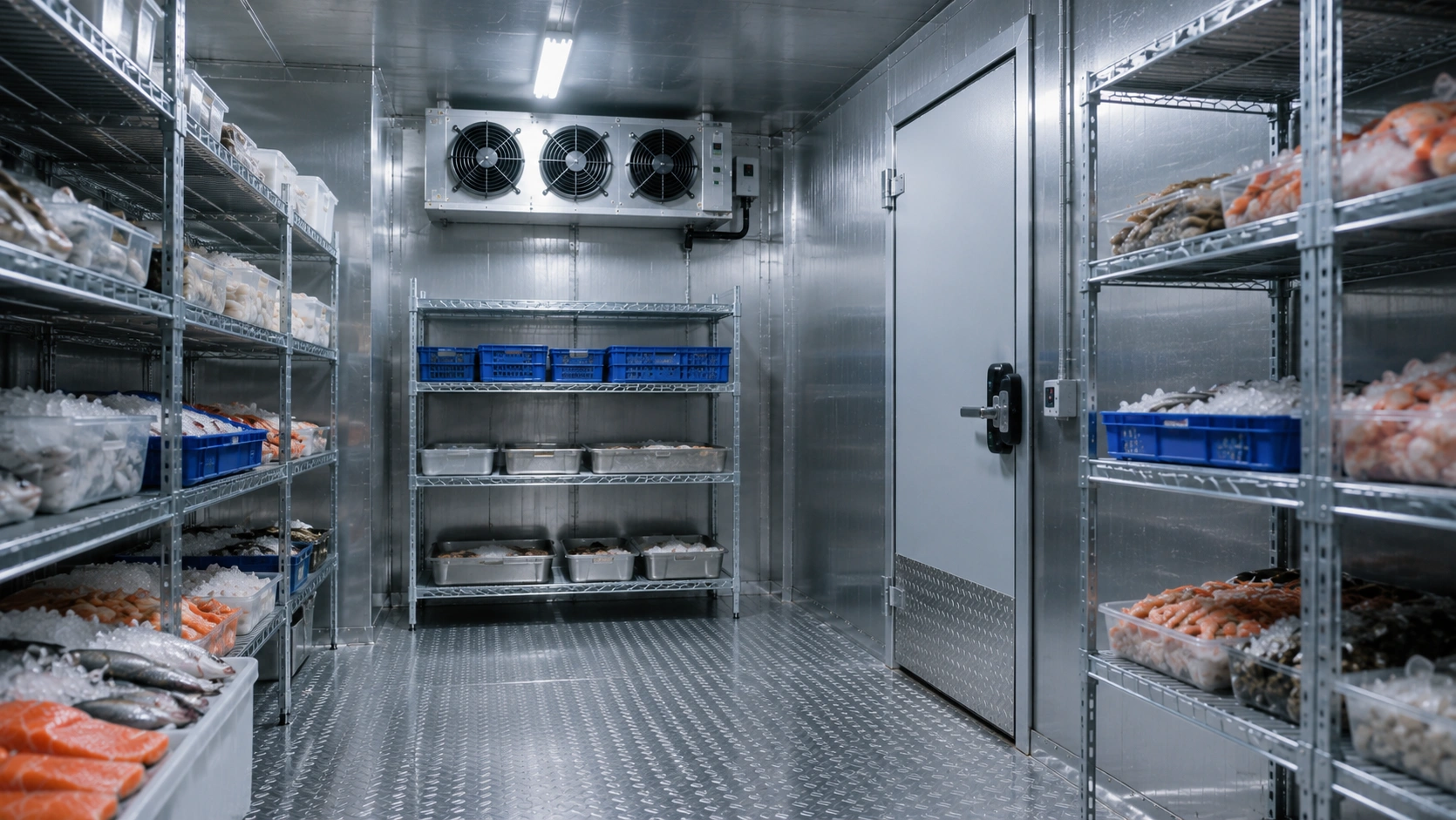
Fish and seafood are among the most sensitive food products in the world. Even a small temperature change can affect quality, safety, texture, and shelf life. That’s why businesses that handle seafood cannot treat cold storage as an afterthought. Proper seafood walk in freezers are essential for preserving freshness, preventing bacterial growth, and reducing expensive product losses.
Whether you operate a restaurant, seafood processing facility, hospital kitchen, supermarket, or warehouse, understanding the correct freezer temperatures can protect both your customers and your profits. A well-managed cold chain doesn’t just keep seafood frozen—it preserves taste, texture, and food safety standards from delivery to serving.
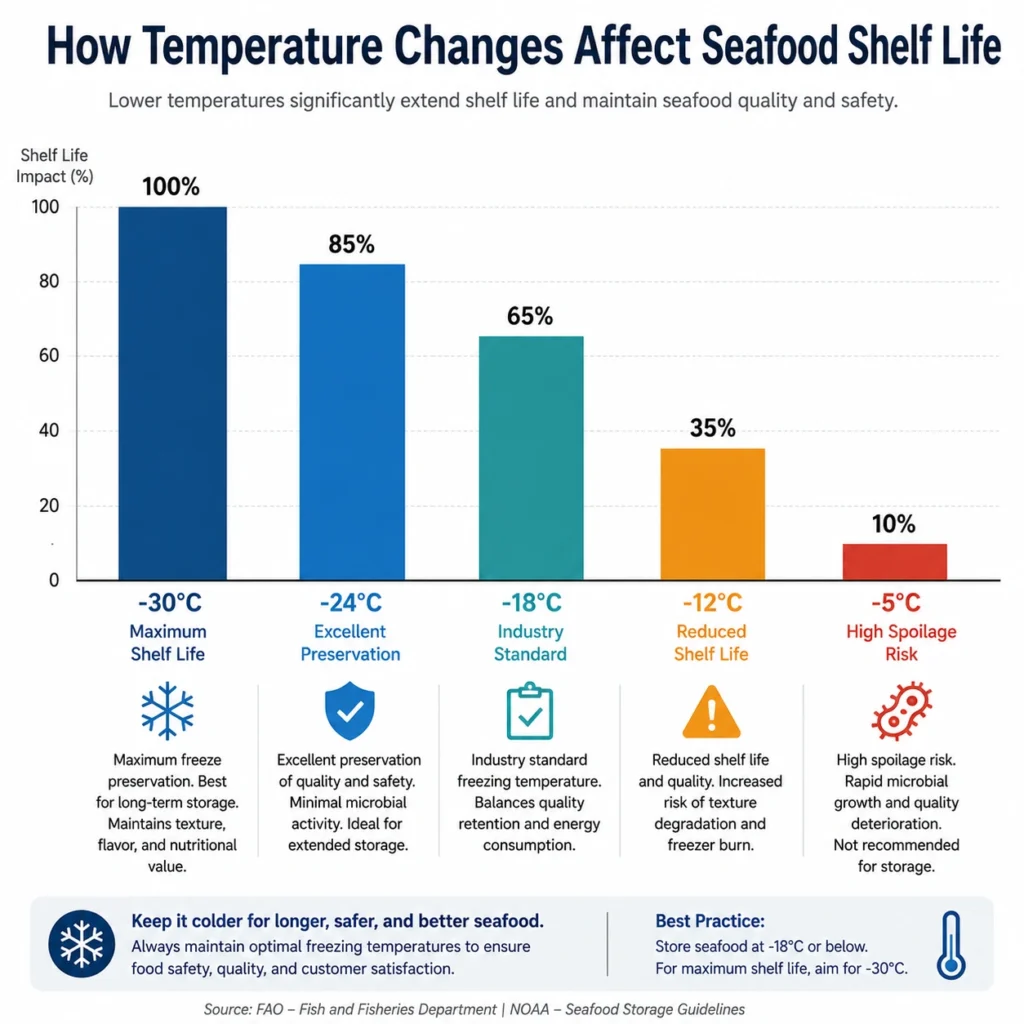
According to the Food and Agriculture Organization (FAO), maintaining frozen fish at -18°C (0°F) or below is the global benchmark for safe long-term storage. Temperature fluctuations can significantly reduce product quality and shorten shelf life.
Why Temperature Control Matters for Fish and Seafood
Seafood naturally contains enzymes and microorganisms that become active when temperatures rise.
Unlike many other proteins, fish starts deteriorating quickly once the cold chain is broken. Even short exposure to warmer temperatures can lead to:
- Faster bacterial growth
- Histamine formation in certain fish species
- Texture damage
- Freezer burn
- Loss of flavor and nutrients
The FDA states that maintaining proper temperature controls is one of the most important ways to reduce food safety risks in seafood processing and storage.
Businesses using commercial freezers should focus on consistency rather than simply reaching a target temperature.
Recommended Temperature Requirements for Different Seafood Products
Not all seafood products have identical storage needs.
The table below provides general guidelines.
Comparison Table: Ideal Seafood Storage Temperatures
| Seafood Type | Recommended Temperature | Maximum Storage Duration |
|---|---|---|
| White fish (cod, haddock) | -18°C | 8–12 months |
| Fatty fish (salmon, mackerel, tuna) | -24°C to -30°C | 4–8 months |
| Shrimp and prawns | -18°C | 6–12 months |
| Lobster | -18°C | 9–12 months |
| Crab | -18°C | 6–10 months |
| Squid and octopus | -18°C | 6–10 months |
| Mixed seafood products | -18°C | 6–8 months |
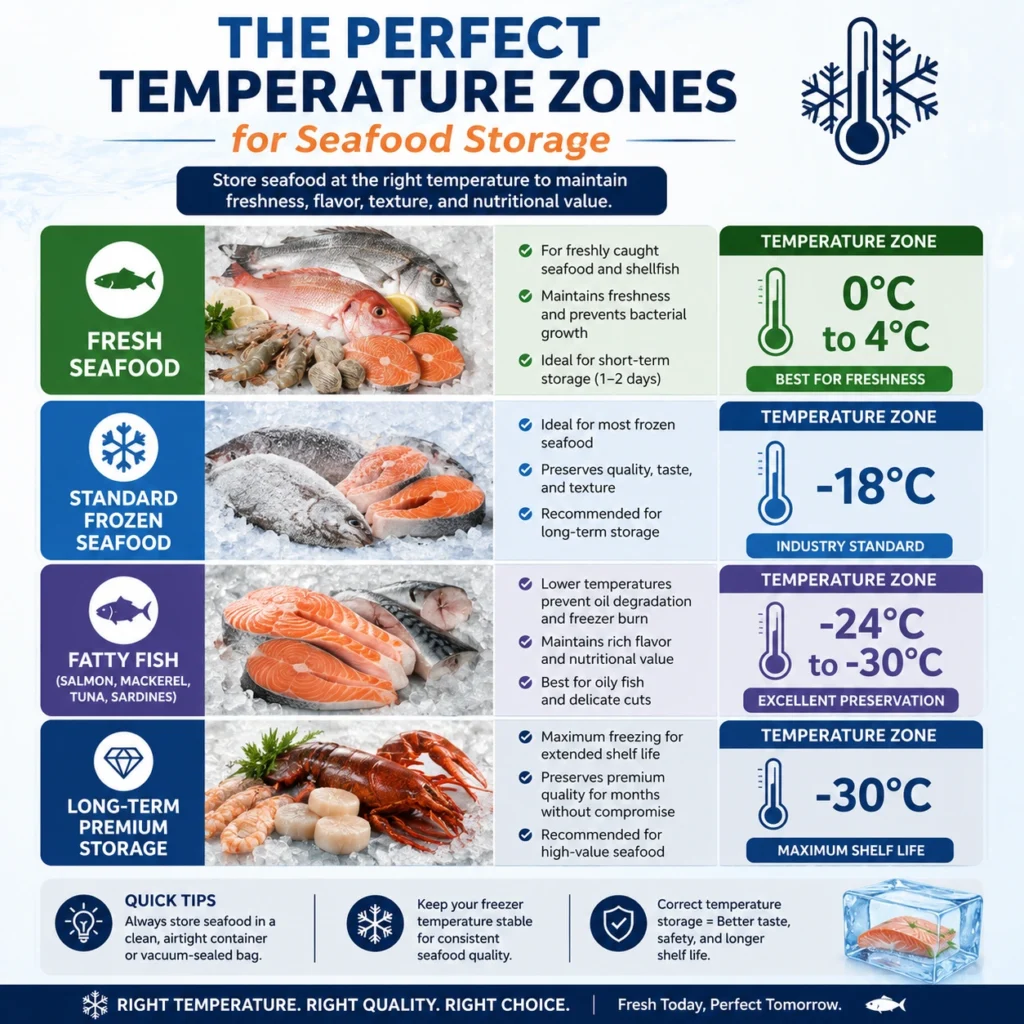
The International Institute of Refrigeration recommends -24°C for fatty fish species because their higher oil content makes them more vulnerable to oxidation and flavor changes. Lean fish can safely remain at -18°C.
Why -18°C Is the Global Standard
You may wonder why so many guidelines mention -18°C.
This temperature became the international benchmark because it significantly slows microbial activity and preserves product quality for extended periods.
FAO and international food safety organizations continue to recognize -18°C as the reference temperature for frozen food storage and distribution.
However, some large seafood warehouses choose lower temperatures such as -30°C for premium products because it extends shelf life even further.
According to FAO, operating at -30°C may only increase operating costs by around 4% compared to -20°C while delivering noticeably longer storage life.
Common Mistakes Businesses Make with Seafood Freezers
Many businesses invest in equipment but overlook daily operational habits.
These mistakes often cause product waste.
1. Frequent Door Openings
Every time the freezer door opens, warm air enters the room.
Repeated temperature fluctuations can damage seafood quality.
Installing air curtains and training staff can reduce this problem.
2. Overloading the Freezer
Air circulation is critical.
Boxes stacked too tightly prevent even cooling.
3. Manual Temperature Checks Only
Human checks can miss sudden temperature spikes.
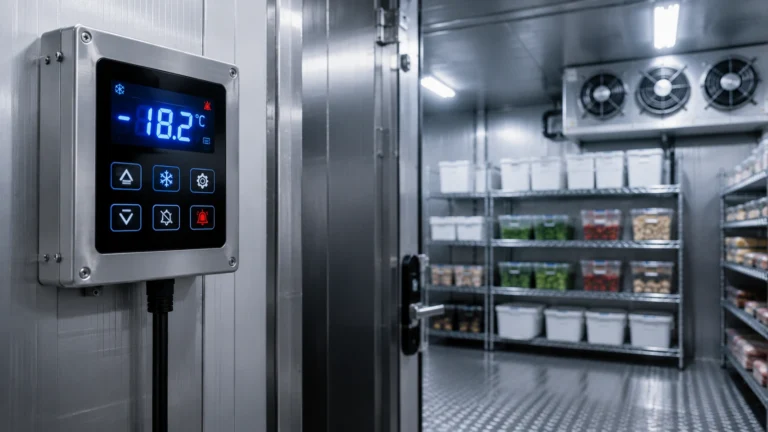
Continuous digital monitoring is much more reliable.
FDA guidance encourages continuous temperature monitoring for seafood facilities.
4. Poor Product Rotation
Businesses should always use a FIFO system (First In, First Out).
Older products should be used before newer inventory.
How Long Can Seafood Stay Frozen?
Storage time depends on species, fat content, packaging, and temperature stability.
Here’s a general rule:
- Lean fish: Up to 12 months
- Fatty fish: 4-8 months
- Shellfish: 6-12 months
Temperature consistency matters more than maximum duration.
Even premium seafood can deteriorate quickly if temperatures fluctuate.
Research published in the National Library of Medicine shows frozen storage between -18°C and -40°C helps maintain seafood quality while slowing oxidation and spoilage processes.
The Role of Temperature Monitoring Technology
Modern seafood facilities are moving away from manual systems.
Smart technology offers better protection.
Today’s seafood walk in freezers often include:
- Digital temperature sensors
- Remote monitoring apps
- Automated alerts
- Data logging systems
- Cloud reporting
These systems help businesses react immediately before expensive inventory losses occur.
Seafood Storage Compliance Calculator
Audit your sub-zero seafood storage parameters against statutory food safety and cold-chain quality preservation standards.
Cold-Chain Compliance Audit Report
Cold Room Plus Cold-Chain Engineering Assessment:
Want a tailored recommendation or quick quote? Reach out today
Why Proper Walk In Freezers Installation Matters
Even the best freezer equipment can fail if installed incorrectly.
Professional walk in freezers installation ensures:
- Consistent airflow
- Proper insulation
- Accurate refrigeration capacity
- Correct door sealing
- Efficient energy use
Poor installation often causes temperature inconsistencies that increase electricity consumption and product loss.
Businesses handling seafood should prioritize temperature performance over simply choosing the biggest unit.
Different Businesses That Need Seafood Walk In Freezers
Several industries depend on stable freezer temperatures.
These include:
Restaurants
Restaurants often store multiple seafood products daily.
Reliable freezing reduces food waste.
Hospitals
Hospitals require strict food safety compliance.
Temperature control protects vulnerable patients.
Seafood Warehouses
Warehouses manage large inventory volumes.
Advanced monitoring systems become essential.
Supermarkets
Retailers must maintain product quality from delivery to sale.
Catering Businesses
Event caterers rely on proper storage to handle bulk inventory safely.
Want a tailored recommendation or quick quote? Reach out today
HACCP and Food Safety Requirements
Seafood businesses should follow HACCP principles.
HACCP stands for Hazard Analysis and Critical Control Points.
Temperature monitoring is one of the most important control points.
FDA guidance recommends businesses:
- Identify hazards
- Monitor temperatures continuously
- Keep accurate records
- Establish corrective actions
Processors handling fish and seafood must develop documented procedures to maintain food safety compliance.
How to Build a Daily Temperature Monitoring Routine
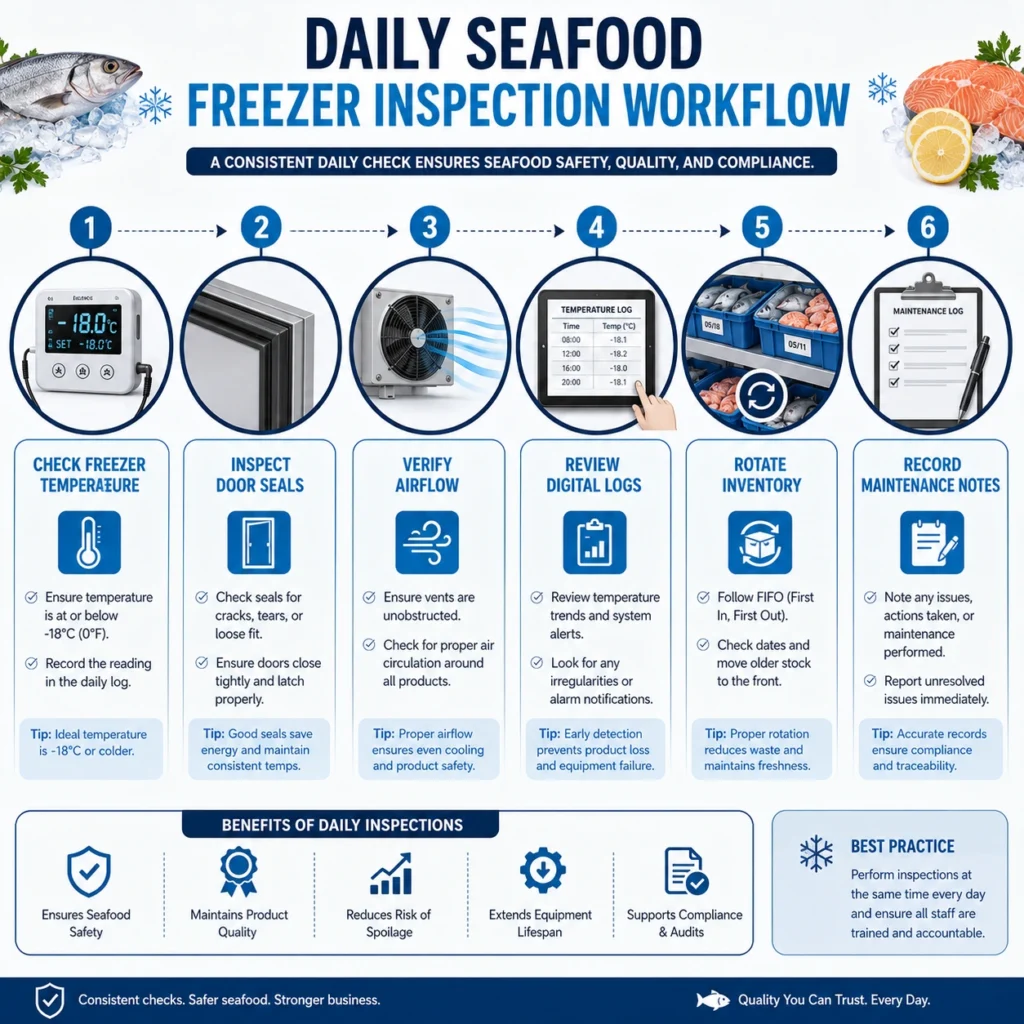
Creating a simple routine improves consistency.
Daily checks should include:
Morning Inspection
Verify temperatures before operations begin.
Mid-Day Check
Inspect doors, seals, and airflow.
End-of-Day Review
Review digital logs and inventory rotation.
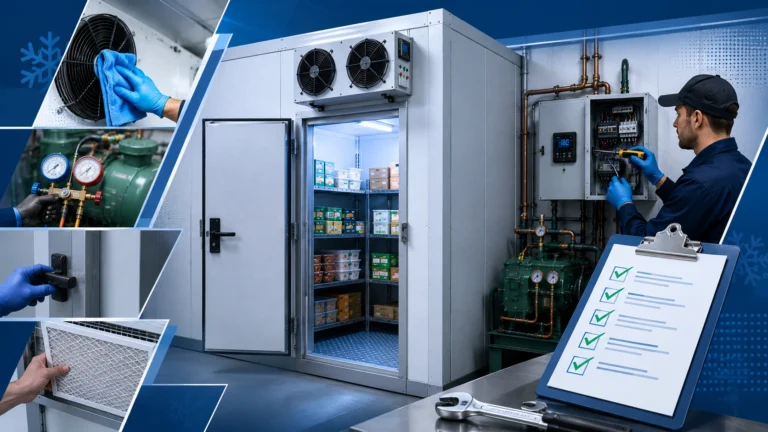
Weekly Maintenance
Inspect evaporators, fans, and sensors.
Businesses that build these habits experience fewer temperature-related issues.
Frequently Asked Questions (FAQs)
1. What is the ideal temperature for seafood walk in freezers?
The ideal temperature for seafood walk in freezers is -18°C (0°F) or lower. This temperature slows bacterial growth, preserves texture, and maintains seafood quality for long-term storage. Fatty fish such as salmon and tuna often require colder temperatures between -24°C and -30°C for better preservation.
2. How long can fish and seafood be stored in a walk-in freezer?
Storage time depends on the type of seafood. Lean fish can be stored for 8 to 12 months, while fatty fish typically last 4 to 8 months. Shellfish such as shrimp, crab, and lobster can remain safe for 6 to 12 months when stored at a consistent -18°C.
3. Why is temperature consistency important in seafood storage?
Temperature fluctuations can cause freezer burn, texture damage, moisture loss, and faster spoilage. Maintaining a stable temperature helps preserve freshness, reduce waste, and comply with food safety regulations.
4. What size seafood walk in freezer does my business need?
The ideal size depends on your daily inventory, business type, and future growth plans. Restaurants may need smaller units, while seafood warehouses and processing facilities often require larger capacity systems with advanced temperature monitoring.
5. How often should seafood walk in freezers be serviced?
Commercial seafood freezers should undergo professional maintenance every 3 to 6 months. Regular servicing helps maintain energy efficiency, prevents breakdowns, and ensures consistent temperature performance.
6. What are the signs that a seafood walk in freezer is not working properly?
Common warning signs include temperature fluctuations, ice buildup, unusual noises, excessive energy bills, water leaks, and inconsistent cooling. Addressing these issues early can prevent costly seafood losses.
7. Are digital temperature monitoring systems necessary for seafood storage?
Yes. Digital monitoring systems provide real-time alerts, automated temperature logs, and remote access. These systems help businesses quickly respond to temperature changes and maintain food safety compliance.
8. What industries benefit most from seafood walk in freezers?
Restaurants, hospitals, seafood processing plants, supermarkets, catering businesses, hotels, and commercial warehouses all rely on seafood walk in freezers to preserve product quality and meet food safety standards.
9. Why is professional walk in freezers installation important?
Proper walk in freezers installation ensures accurate cooling performance, efficient airflow, proper insulation, and lower energy consumption. Poor installation can lead to uneven temperatures and increased operating costs.
10. How can businesses reduce energy costs for seafood walk in freezers?
Businesses can reduce energy consumption by keeping doors closed, maintaining proper insulation, servicing equipment regularly, installing digital monitoring systems, and avoiding overloading the freezer.