Walk-In Freezer Stale Smell: Causes, Fixes & Prevention Tips
Open your walk-in freezer door and a strange stale odor hits you immediately. It may seem harmless at first, but a stale smell in walk in freezer units is often a warning sign that something deeper is wrong.
That smell could point to hidden mold, blocked drains, poor airflow, food spills, or a failing refrigeration component. Ignoring it can affect food quality, hygiene standards, employee safety, and even your energy bills.
For businesses like hospitals, restaurants, warehouses, and commercial kitchens, solving freezer odor issues quickly is essential. The good news is that most causes are easy to identify when you know where to look.
According to the USDA, regular cleaning and proper temperature control are among the most important steps for preventing contamination and spoilage in refrigeration equipment. Poor maintenance can allow bacteria, moisture, and odors to build up over time.
Why Does a Walk-In Freezer Develop a Stale Smell?
A freezer should not smell bad.
Cold temperatures slow bacterial growth, but they do not stop moisture, food particles, and mold from creating unpleasant odors.
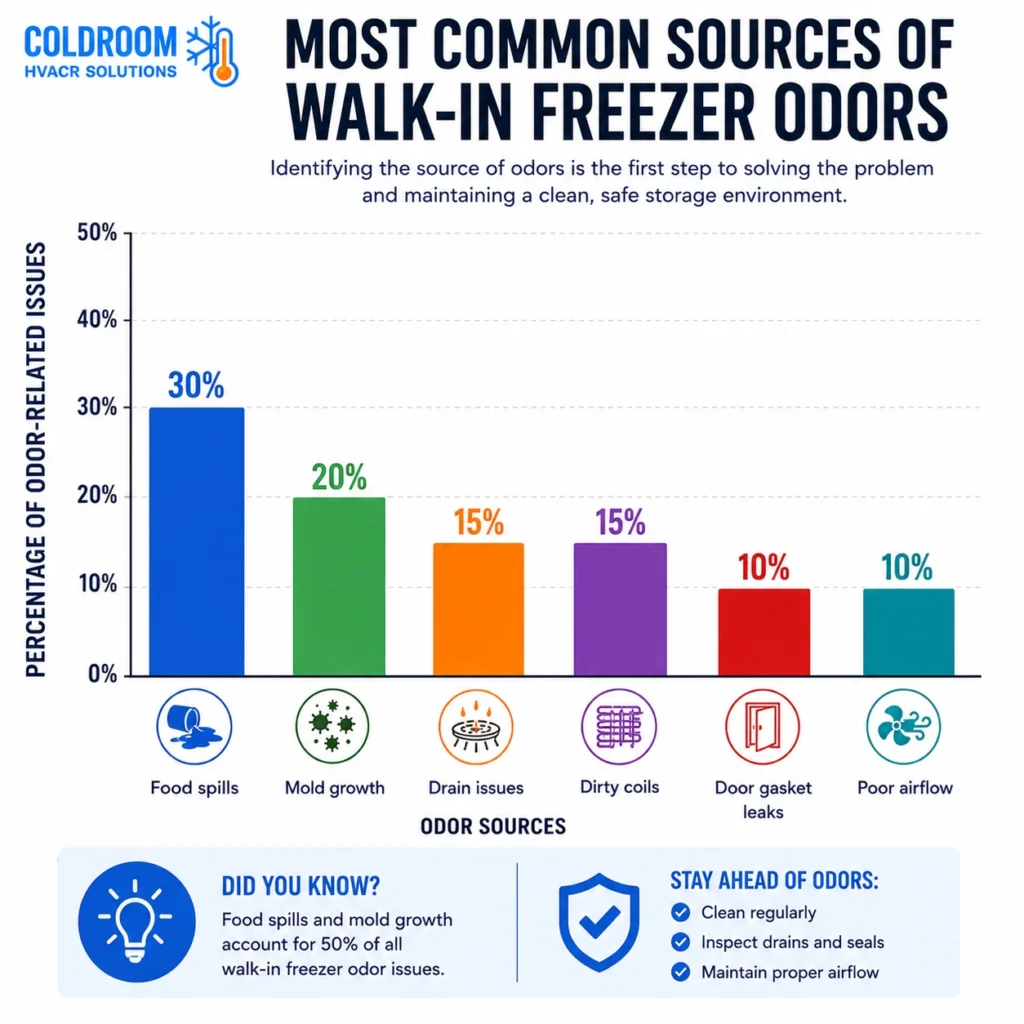
Usually, the problem comes from one or more of these issues.
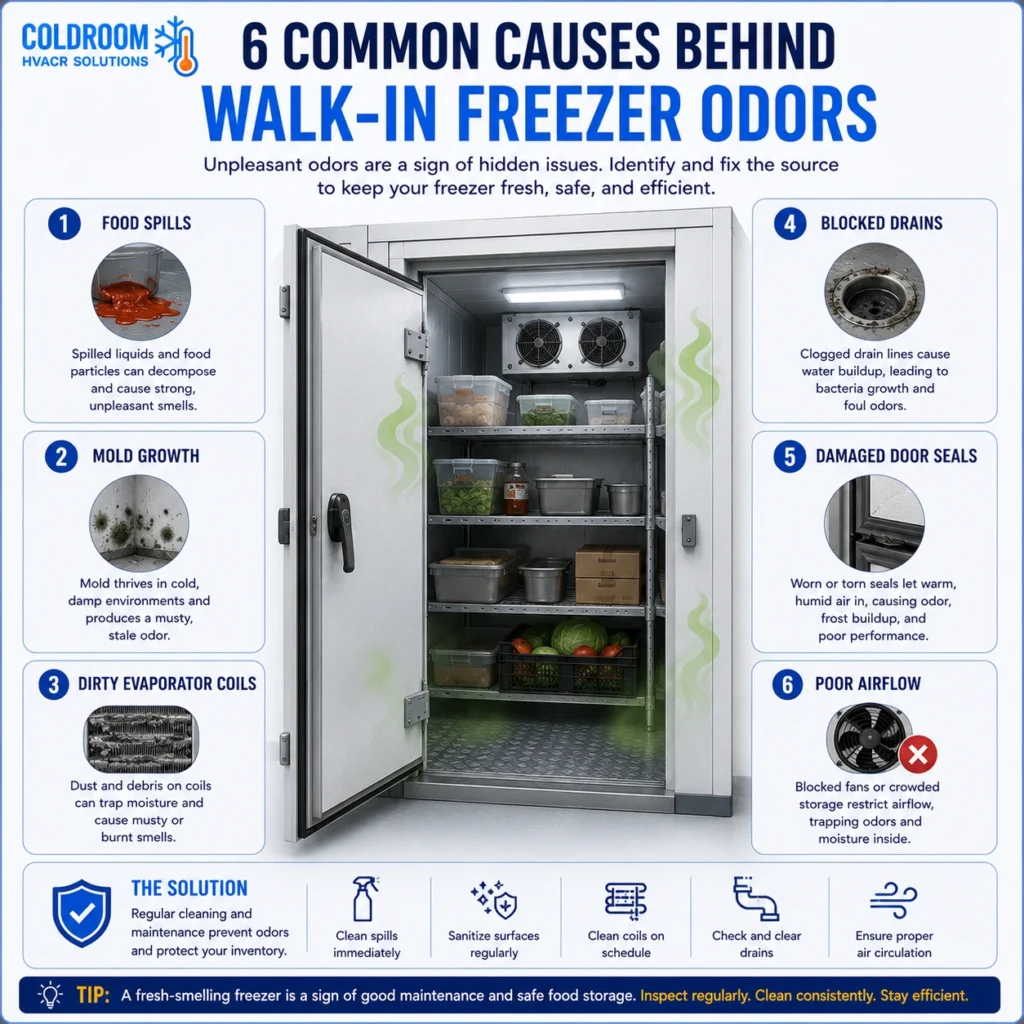
1. Hidden Food Spills
Small spills often go unnoticed beneath shelving or in corners.
Over time, meat juices, dairy products, and food packaging residue can freeze, thaw slightly during defrost cycles, and create odors.
Even tiny spills can become a breeding ground for bacteria.
2. Mold and Mildew Growth
Mold loves moisture.
If condensation forms around door seals, drains, or walls, mold can develop quickly.
The CDC says if you can see or smell mold, it should be removed immediately because moisture problems will only worsen over time.
3. Dirty Evaporator Coils
Evaporator coils circulate cold air throughout the freezer.
Dust, grease, and moisture buildup can create musty odors and reduce airflow.
This forces the system to work harder.
4. Clogged Drain Lines
Walk-in freezers produce condensation during defrost cycles.
If drains become blocked, stagnant water sits inside the unit and creates a stale odor.
5. Damaged Door Gaskets
Door seals keep warm air outside.
When gaskets crack or loosen, warm humid air enters the freezer, causing condensation and odor problems.
6. Poor Air Circulation
Overloaded shelves can block airflow.
Without proper circulation, certain areas trap moisture and develop unpleasant smells.
Why You Should Never Ignore a Stale Smell
Odors are not just unpleasant.
They can become expensive.
The U.S. Department of Energy continues to strengthen energy standards for walk-in coolers and freezers because inefficient systems waste significant amounts of energy.
When freezer components become dirty or damaged, equipment efficiency drops.
Potential risks include:
- Food contamination
- Higher energy costs
- Equipment breakdowns
- Failed health inspections
- Shorter equipment lifespan
In many cases, persistent odors are an early sign you may soon need walk in freezer repair.
The earlier you act, the cheaper the fix usually is.
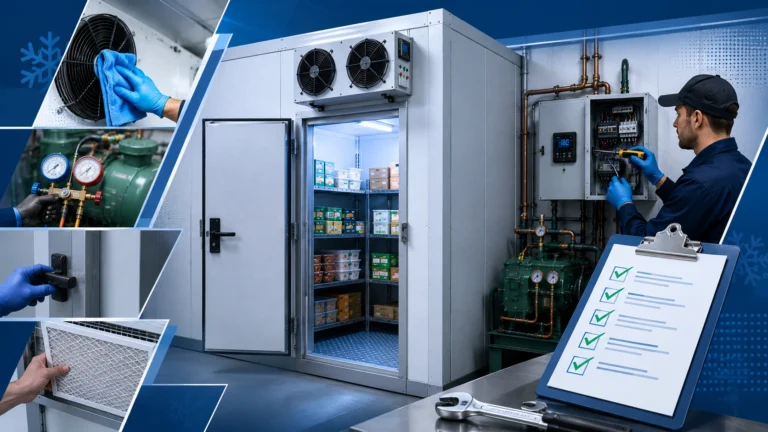
How to Remove Stale Smell in Walk In Freezer Units
Here’s a step-by-step process.
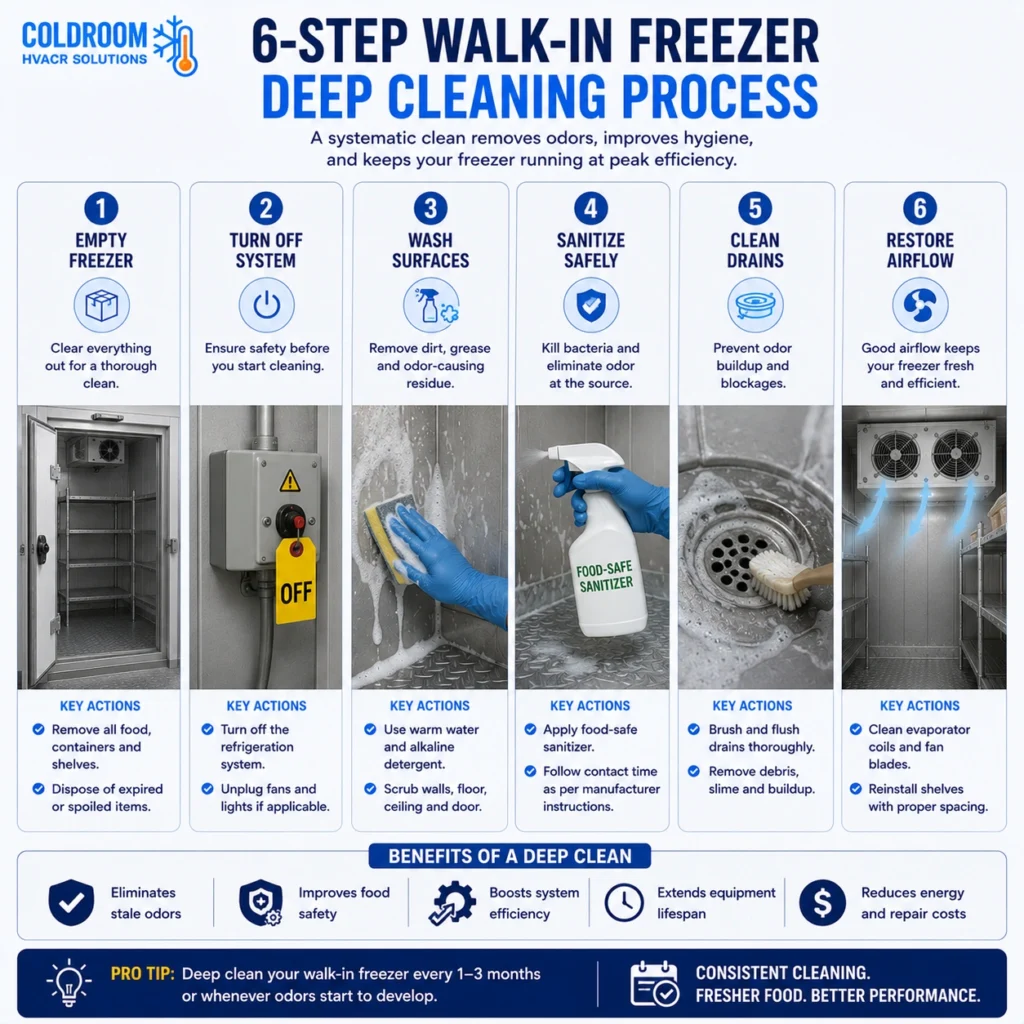
Step 1: Empty the Entire Freezer
Remove everything.
Inspect food packaging carefully.
Throw away any items that:
- Smell unusual
- Have damaged packaging
- Show signs of freezer burn
- Have passed their storage date
Step 2: Turn Off the Unit Safely
Allow the freezer to warm slightly before cleaning.
Never pour hot water directly onto frozen surfaces.
This may damage components.
Step 3: Clean All Surfaces Thoroughly
The CDC recommends cleaning surfaces before sanitizing because dirt and residue can stop disinfectants from working properly.
Clean:
- Walls
- Floors
- Shelves
- Corners
- Door handles
- Gaskets
Use warm water and mild detergent first.
Dry every surface completely.
Step 4: Sanitize Properly
CDC guidance suggests sanitizing after cleaning.
Use approved food-safe sanitizers according to manufacturer instructions.
Avoid mixing chemicals.
Never mix bleach with ammonia because it creates dangerous gases.
Step 5: Clean Drain Lines
Inspect the drain.
If you see standing water, remove debris carefully.
Persistent blockages may require professional service.
Step 6: Check Airflow
Leave enough space between products.
Avoid stacking boxes against evaporator fans.
Proper airflow prevents moisture buildup.
Walk-In Freezer Health Check Calculator
Perform a quick structural and mechanical self-assessment to find hidden vulnerabilities before they turn into expensive emergency call-outs.
Your Equipment Health Diagnostic Report
Recommended Maintenance Schedule:
Cold Room Plus Engineering Assessment Summary:
When Does a Bad Smell Mean You Need Walk In Freezer Repair?
Sometimes cleaning is not enough.
Call for walk in freezer repair if you notice these warning signs.
The Smell Returns Within Days
Recurring odors often indicate hidden mechanical problems.
Temperature Fluctuations
If temperatures rise unexpectedly, your refrigeration system may be struggling.
Excessive Ice Build-Up
Too much ice can signal:
- Defrost system failures
- Air leaks
- Sensor issues
Water Pooling
Standing water should never be ignored.
Strange Noises
Buzzing, clicking, or rattling sounds may indicate compressor or fan problems.
Professional technicians can identify the root cause before major failures happen.
Preventing Future Odors: A Weekly Maintenance Routine
Consistency is the key.
Create a simple schedule.
Daily Tasks
- Remove spills immediately
- Check temperatures
- Inspect packaging
Weekly Tasks
- Wipe down shelves
- Inspect door seals
- Check drain lines
Monthly Tasks
- Inspect evaporator fans
- Deep clean corners
- Check airflow patterns
Quarterly Tasks
Schedule professional inspections.
Preventative maintenance reduces unexpected breakdowns.
Comparison Table: What Different Freezer Smells Mean
| Type of Smell | Most Likely Cause | Risk Level | What You Should Do |
|---|---|---|---|
| Light food smell | Recently stored food or minor food residue | Low | Clean shelves and check for small spills during routine cleaning. |
| Musty or stale smell | Mold, mildew, or excess moisture buildup | Medium | Deep clean the freezer and inspect door seals, drains, and corners for hidden mold. |
| Sour smell | Spoiled food, leaking packaging, or expired products | High | Remove affected products immediately and sanitize all surfaces. |
| Rotten odor | Clogged drain line or standing water | High | Inspect and clear drain lines. If the smell persists, arrange professional servicing. |
| Burning smell | Electrical component failure, overheating fan motor, or wiring issue | Critical | Turn off the unit and schedule immediate walk-in freezer repair. |
| Chemical smell | Refrigerant leak or cleaning chemical residue | Critical | Stop using the freezer and contact a qualified technician immediately. |
| Wet cardboard smell | Excess humidity and poor airflow | Medium | Rearrange stored items and ensure evaporator fans are not blocked. |
| Fishy smell | Hidden food contamination or electrical issues | High | Inspect food inventory and electrical components as soon as possible. |
Want a tailored recommendation or quick quote? Reach out today
What Businesses Are Most at Risk?
Any business with heavy freezer use can experience odor issues.
This includes:
- Hospitals
- Restaurants
- Commercial kitchens
- Food warehouses
- Catering businesses
- Supermarkets
High door traffic creates more opportunities for moisture and contaminants to enter the freezer.
The best approach is to combine routine cleaning with scheduled inspections before problems become expensive repairs.
Have you checked the hidden corners, drain lines, and door seals of your walk-in freezer recently, or are you waiting until a stale smell becomes a costly emergency?
Frequently Asked Questions
1. Why is there a stale smell in my walk in freezer?
A stale smell in walk in freezer units is usually caused by hidden food spills, mold growth, clogged drain lines, dirty evaporator coils, poor airflow, or damaged door seals. If the odor keeps coming back after cleaning, it may indicate a mechanical issue that requires professional inspection.
2. Is a stale smell in a walk-in freezer dangerous?
Yes. A persistent stale smell can be a sign of bacteria, mold, or moisture buildup. Over time, this may increase the risk of food contamination, poor indoor air quality, and equipment damage, especially in commercial environments like restaurants, hospitals, and food warehouses.
3. How do I get rid of a stale smell in a walk-in freezer?
Start by removing all products, cleaning every surface, sanitizing shelves and walls, inspecting drain lines, checking door gaskets, and improving airflow. If the smell returns within a few days, you may need professional walk in freezer repair.
4. Why does my walk-in freezer smell bad even after cleaning?
If odors return after cleaning, hidden issues may be causing the problem. Common causes include blocked drains, dirty evaporator coils, failing defrost systems, excess moisture, or damaged door seals that allow warm air inside.
5. How often should a commercial walk-in freezer be deep cleaned?
Most commercial walk-in freezers should be deep cleaned at least once every month. High-traffic businesses, such as restaurants and hospitals, may need more frequent cleaning to prevent odor buildup and maintain food safety standards.
6. Can a clogged drain cause a stale smell in a walk-in freezer?
Yes. During defrost cycles, condensation drains away through a drainage system. If the drain becomes blocked, standing water can develop and create unpleasant stale or rotten odors.
7. When should I call for walk in freezer repair?
Schedule walk in freezer repair if you notice any of these signs:
- Persistent bad odors
- Temperature fluctuations
- Excessive ice buildup
- Water pooling on the floor
- Strange noises
- Rising energy bills
Early repairs can prevent expensive breakdowns.
8. Can mold grow inside a walk-in freezer?
Yes. Mold can grow around door seals, drains, corners, and areas where moisture collects. Even though temperatures are low, condensation during defrost cycles can create ideal conditions for mold growth.
9. How can I prevent bad smells from returning to my walk-in freezer?
Create a regular maintenance schedule that includes daily spill cleanup, weekly drain inspections, monthly deep cleaning, and quarterly professional servicing. Proper airflow and temperature monitoring also help prevent odors.
10. Does a bad smell mean my walk-in freezer is failing?
Not always, but recurring odors can be an early warning sign. A persistent smell may indicate hidden mechanical problems that could eventually lead to equipment failure if left untreated.