Walk-In Freezer Not Cooling? Here’s What to Do First
A walk in freezer not cooling is one of those problems that can turn into a business emergency within hours. Whether you run a restaurant, hospital, warehouse, supermarket, or food production facility, every minute matters. Rising temperatures can spoil thousands of pounds worth of inventory and even create food safety risks.
The good news is that not every cooling issue means the entire system has failed. Sometimes the fix is simple, while other situations require urgent professional attention. Knowing what to check first can save time, money, and prevent costly downtime.
According to the U.S. Department of Energy, refrigeration can account for up to 50% of a grocery store’s total electricity use, making it one of the most critical systems inside a commercial facility.
Why Is Your Walk-In Freezer Not Cooling?
Several components work together to keep a walk-in freezer operating correctly. When one part fails, the entire system can struggle to maintain temperature.
Common causes include:
- Dirty condenser coils
- Faulty evaporator fans
- Refrigerant leaks
- Damaged door seals
- Thermostat issues
- Ice buildup
- Electrical problems
- Compressor failure
Before scheduling a walk in freezer repair, there are a few important checks you can safely perform.
Step 1: Check the Temperature Display
Start with the simplest thing first.
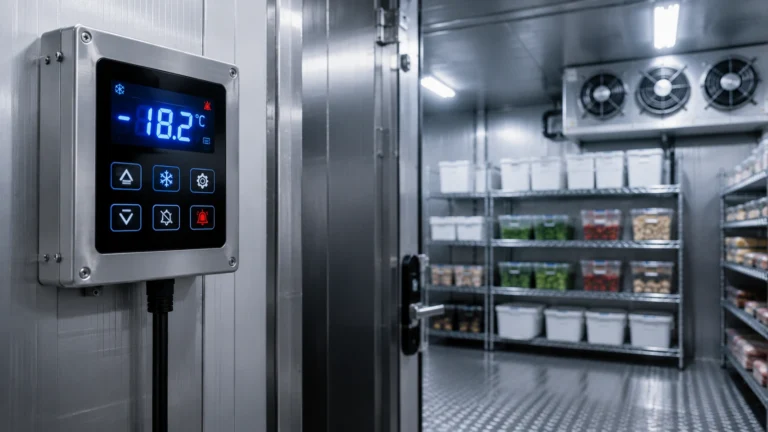
Look at the thermostat or control panel. Sometimes the temperature settings are accidentally changed during cleaning, stocking, or maintenance.
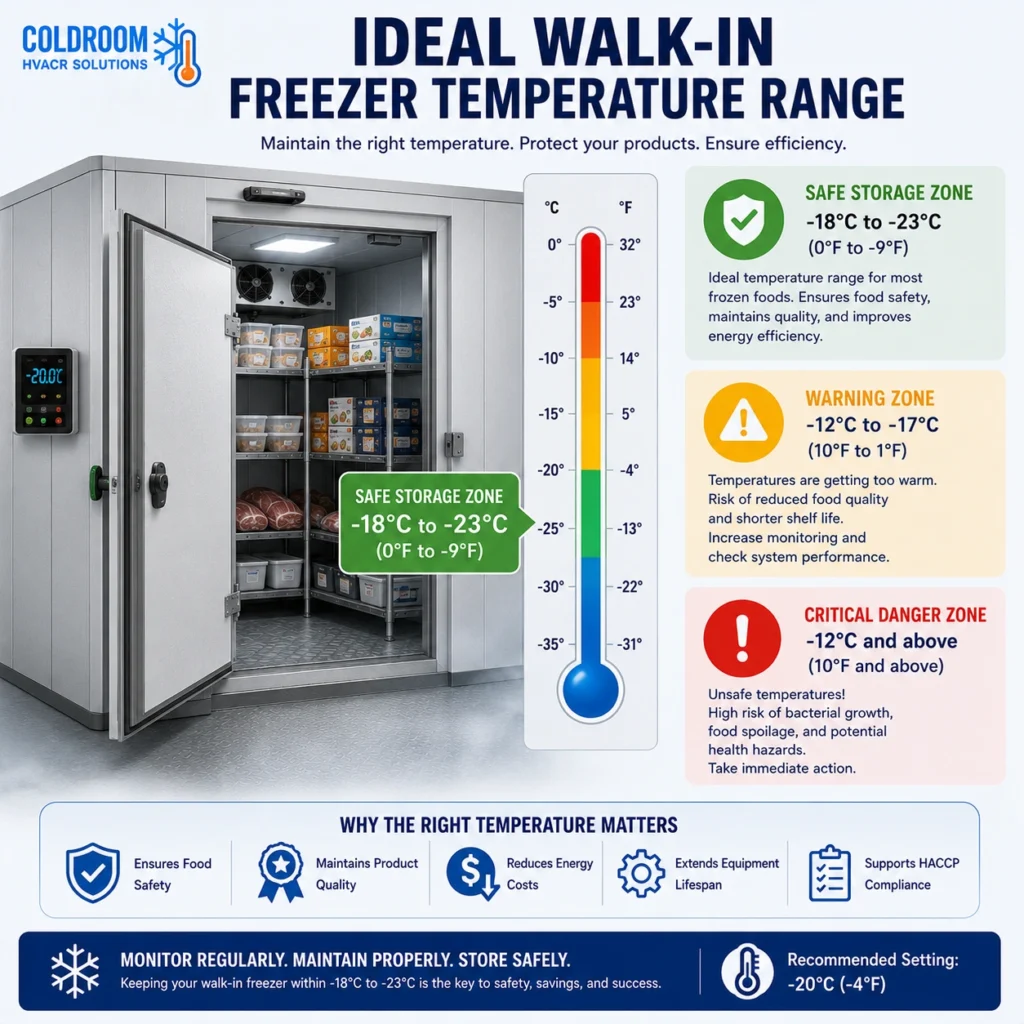
Commercial walk-in freezers should generally operate between -18°C and -23°C (0°F to -10°F), depending on the products being stored.
If the display is flashing error codes, write them down before resetting anything. Those codes help technicians diagnose problems faster.
Step 2: Inspect the Door Seal
A damaged door gasket is one of the most overlooked issues.
If warm air constantly enters the freezer, the system must work much harder to maintain temperature.
Signs of gasket problems include:
- Cracks or tears
- Moisture around the door
- Frost buildup
- Difficulty closing the door
Even a small gap can significantly reduce efficiency.
According to energy experts, refrigeration is among the largest energy consumers in commercial buildings, representing approximately 7% of total commercial building energy use in the U.S.
Walk-In Freezer Cost Savings Calculator
Calculate the hidden electrical overheads and maintenance drains of your aging freezer, and map out your exact lifetime upgrade ROI.
Your Projected Efficiency Reclaim Summary
Cold Room Plus Thermal Audit Profile:
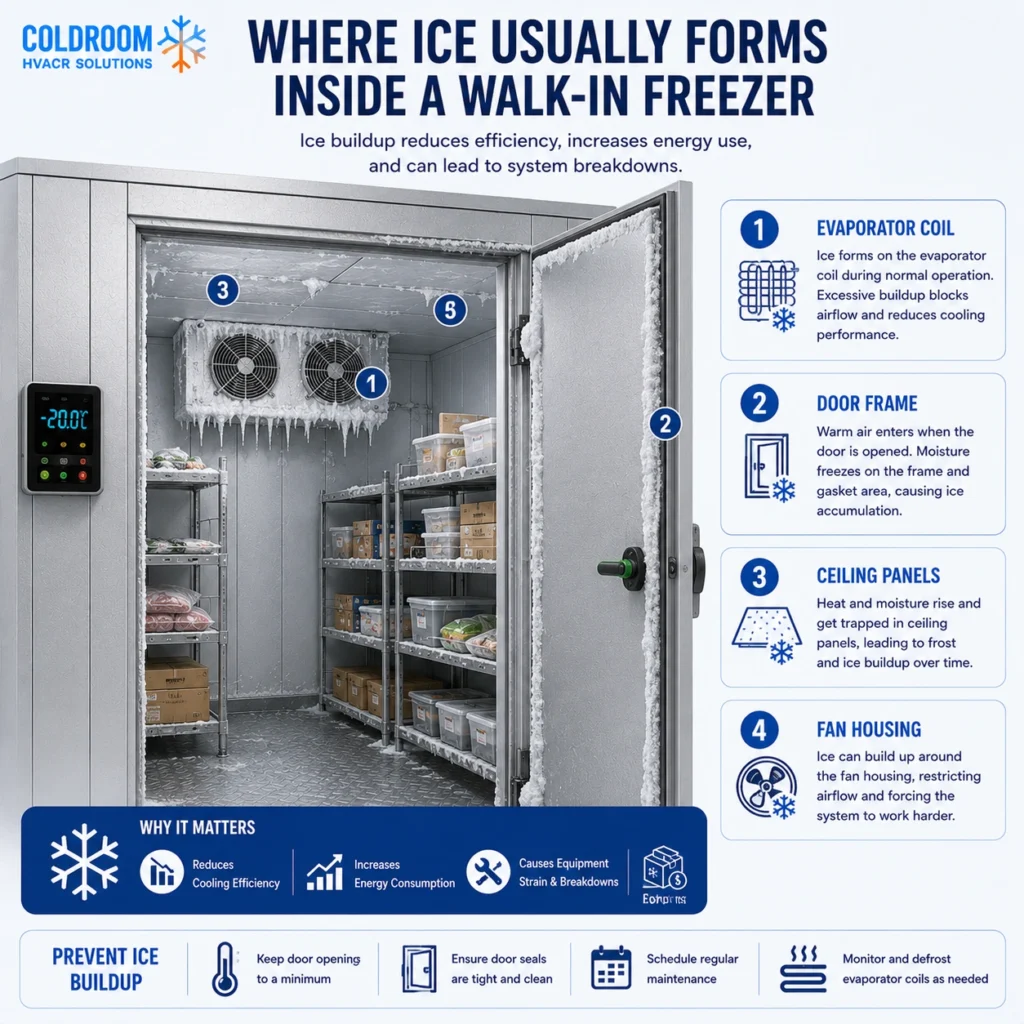
Step 3: Look for Ice Buildup
Excessive ice is often a warning sign.
Check these areas:
- Evaporator coils
- Ceiling panels
- Fan areas
- Around doors
Heavy frost may indicate:
- Defrost system failure
- Warm air entering the unit
- Faulty fan motors
Do not aggressively chip away ice with sharp tools. You could damage expensive components.
Step 4: Check Whether the Fans Are Running
Your freezer has multiple fans that circulate cold air.
If you don’t hear airflow, open the unit and inspect the evaporator fans.
Signs of fan problems:
- Loud grinding noises
- No airflow
- Intermittent operation
- Excessive vibration
When fans stop working, temperature distribution becomes uneven.
You may notice some products remain frozen while others begin thawing.
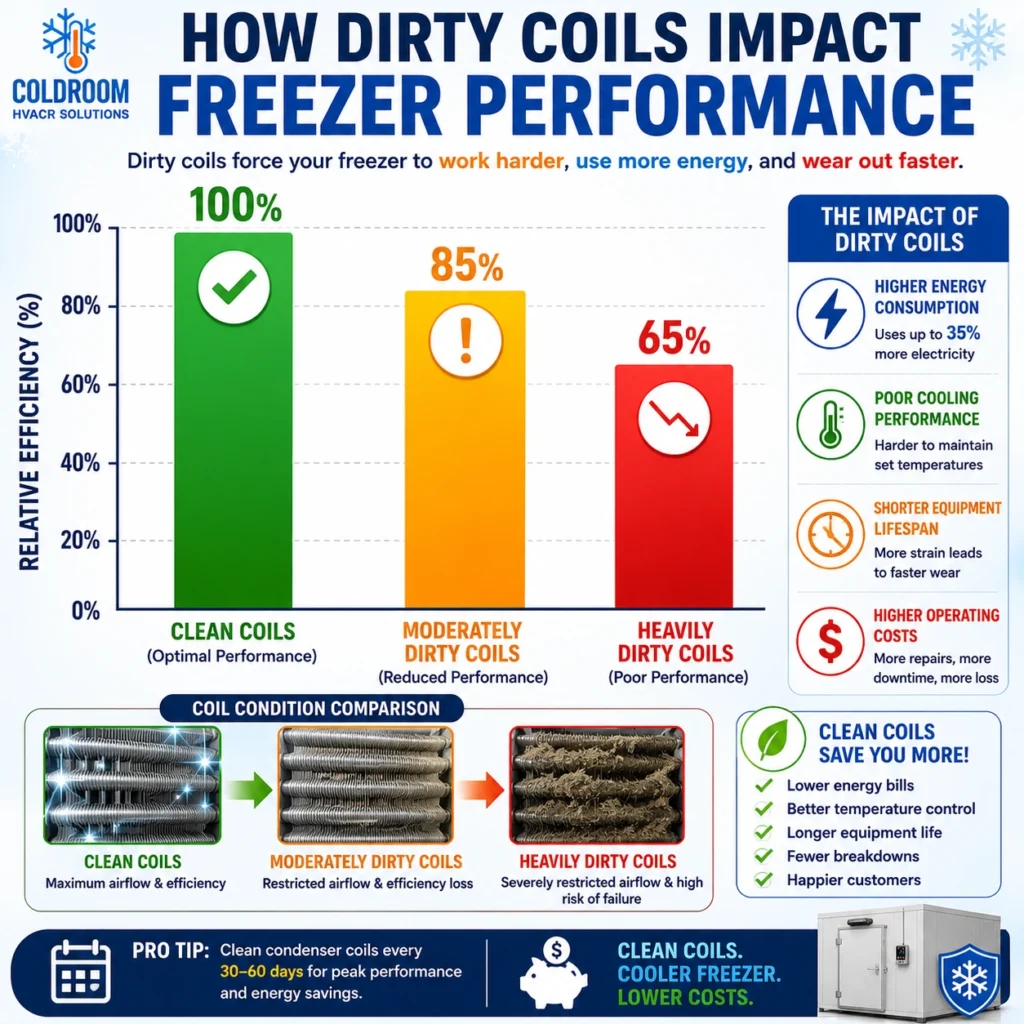
Step 5: Clean the Condenser Coils
Dirty condenser coils are one of the most common causes of cooling failure.
Dust, grease, and debris prevent heat from escaping properly.
This forces the system to work harder and increases energy consumption.
You can safely:
- Turn off power.
- Remove surface debris.
- Use a soft brush or vacuum.
- Avoid pressure washing electrical components.
If the coils are heavily clogged, contact a professional.
Want a tailored recommendation or quick quote? Reach out today
Step 6: Check the Circuit Breaker
Sometimes the issue is electrical.
Inspect the electrical panel for:
- Tripped breakers
- Burn marks
- Loose switches
If breakers continue tripping, stop troubleshooting and call a technician immediately.
Repeated trips may indicate:
- Compressor failure
- Electrical short circuits
- Overloaded systems
Never attempt electrical repairs yourself.
Want a tailored recommendation or quick quote? Reach out today
Step 7: Listen to the Compressor
The compressor is essentially the heart of your freezer.
If it’s not running, cooling stops.
Symptoms include:
Normal sounds:
- Low humming
- Occasional clicks
Warning sounds:
- Loud buzzing
- Repeated clicking
- Complete silence
Compressor repairs are not DIY jobs.
Professional diagnosis is required.
When Should You Call For A Professional Walk In Freezer Repair?
If you’ve completed the basic checks and temperatures continue rising, it’s time to call an expert.
Seek immediate walk in freezer repair if you notice:
| Problem | Urgency Level | Action Required |
|---|---|---|
| Freezer temperature above -12°C | High | Call immediately |
| Refrigerant leak | Critical | Shut down and call technician |
| Burning smell | Critical | Turn off power |
| Compressor failure | High | Professional repair |
| Repeated breaker trips | High | Electrical diagnosis |
| Excessive ice buildup | Medium | Service appointment |
Businesses should never delay professional intervention.
A small problem today can become a complete system replacement tomorrow.
The Hidden Cost Of Ignoring Cooling Problems
Many businesses wait too long before acting.
That decision can become expensive very quickly.
Research from Sustainable Energy for All estimates that poor cold chain systems contribute to 526 million tons of food production losses every year worldwide.
Another Australian government-backed study found cold chain failures cost the economy nearly $4 billion annually due to food waste.
For businesses, the consequences include:
- Lost inventory
- Health code violations
- Business interruptions
- Increased energy bills
- Customer dissatisfaction
Hospitals, restaurants, and food warehouses are especially vulnerable.
Walk-In Freezer Downtime Cost Calculator
Calculate the true financial exposure of a sudden cooling breakdown, including spoiled stock, idle labor, and interrupted operations.
Your Projected Breakdown Cost Audit
Recommended Maintenance Frequency:
Cold Room Plus Preventative Risk Assessment:
Preventive Maintenance Tips To Avoid Future Breakdowns
The best repair strategy is prevention.
Schedule professional inspections every 3 to 6 months.
Create a simple maintenance routine.
Monthly Tasks
- Inspect door seals
- Clean condenser coils
- Check temperatures
- Remove debris
- Inspect drain lines
Quarterly Tasks
- Professional refrigerant inspection
- Electrical inspection
- Fan motor testing
- Defrost system testing
Annual Tasks
- Full system servicing
- Performance optimization
- Component replacement if necessary
Businesses that maintain their equipment consistently experience fewer emergency breakdowns.
Is Your Business Prepared For The Next Freezer Breakdown?
If your walk-in freezer suddenly stopped cooling today, would your staff know exactly what to do in the first 15 minutes?
Having an emergency action plan can make the difference between a quick fix and thousands of pounds worth of spoiled inventory. What is the biggest freezer challenge your business has faced so far?
Frequently Asked Questions
1. Why is my walk-in freezer not cooling properly?
A walk-in freezer may stop cooling due to dirty condenser coils, a faulty thermostat, damaged door seals, refrigerant leaks, ice buildup, fan motor issues, electrical problems, or compressor failure. Regular maintenance can help prevent most of these issues.
2. What should I check first when my walk-in freezer stops cooling?
Start by checking the thermostat settings, temperature display, door seals, condenser coils, fan operation, and circuit breakers. If the temperature continues to rise after these checks, contact a professional walk in freezer repair technician.
3. Can a dirty condenser coil cause a walk-in freezer to stop cooling?
Yes. Dirty condenser coils prevent heat from escaping properly, forcing the freezer to work harder and reducing cooling efficiency. Cleaning the coils regularly can improve performance and reduce energy consumption.
4. How often should a walk-in freezer be professionally serviced?
Most commercial walk-in freezers should be professionally serviced every 3 to 6 months. Businesses with heavy daily usage, such as restaurants, hospitals, and warehouses, may require more frequent inspections.
5. What temperature should a commercial walk-in freezer be set to?
A commercial walk-in freezer should generally operate between -18°C and -23°C (0°F to -10°F) to safely store frozen products and comply with food safety standards.
6. Is it safe to keep using a walk-in freezer that is not cooling properly?
No. Continuing to use a malfunctioning freezer can lead to food spoilage, inventory loss, higher energy bills, and potential health code violations. It is important to address the issue immediately.
7. How do I know if my walk-in freezer compressor is failing?
Common signs of compressor failure include loud buzzing noises, repeated clicking sounds, overheating, inconsistent temperatures, or the freezer not cooling at all. A qualified technician should inspect the compressor.
8. How long can a walk-in freezer stay warm before products become unsafe?
The timeframe depends on the type of products stored and how much the temperature rises. Perishable items can become unsafe within a few hours if temperatures exceed safe storage levels. Immediate action is recommended.
9. How much does professional walk in freezer repair cost?
The cost of walk in freezer repair varies depending on the issue. Minor repairs such as replacing door gaskets may cost a few hundred pounds, while compressor or refrigerant repairs can cost significantly more. Early intervention usually reduces repair costs.
10. How can I prevent my walk-in freezer from breaking down?
Preventive maintenance is the best way to avoid breakdowns. Regularly inspect door seals, clean condenser coils, monitor temperatures, check fan operation, and schedule professional servicing every few months.