How to Find Reliable Commercial Freezer Room Maintenance Canterbury
Finding reliable commercial freezer room maintenance Canterbury businesses can depend on is essential for protecting stock, controlling running costs and avoiding unexpected breakdowns. Whether you manage a restaurant, hotel, supermarket or food warehouse, a freezer room that fails to maintain its temperature can disrupt operations and put stored products at risk. The right maintenance provider helps you identify problems early and keep refrigeration equipment working safely.
Why Regular Freezer Room Maintenance Matters
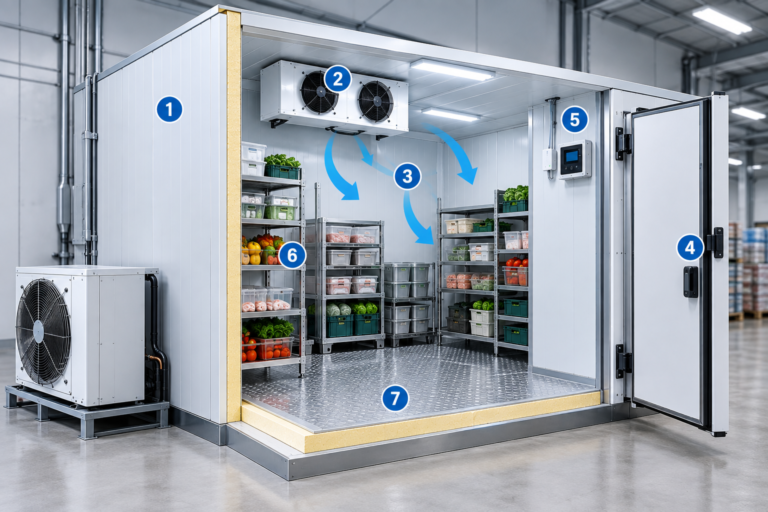
Commercial freezer rooms work hard, often running continuously throughout the year. Dusty condenser coils, damaged door seals, blocked drains and failing fans can reduce performance and increase energy consumption.
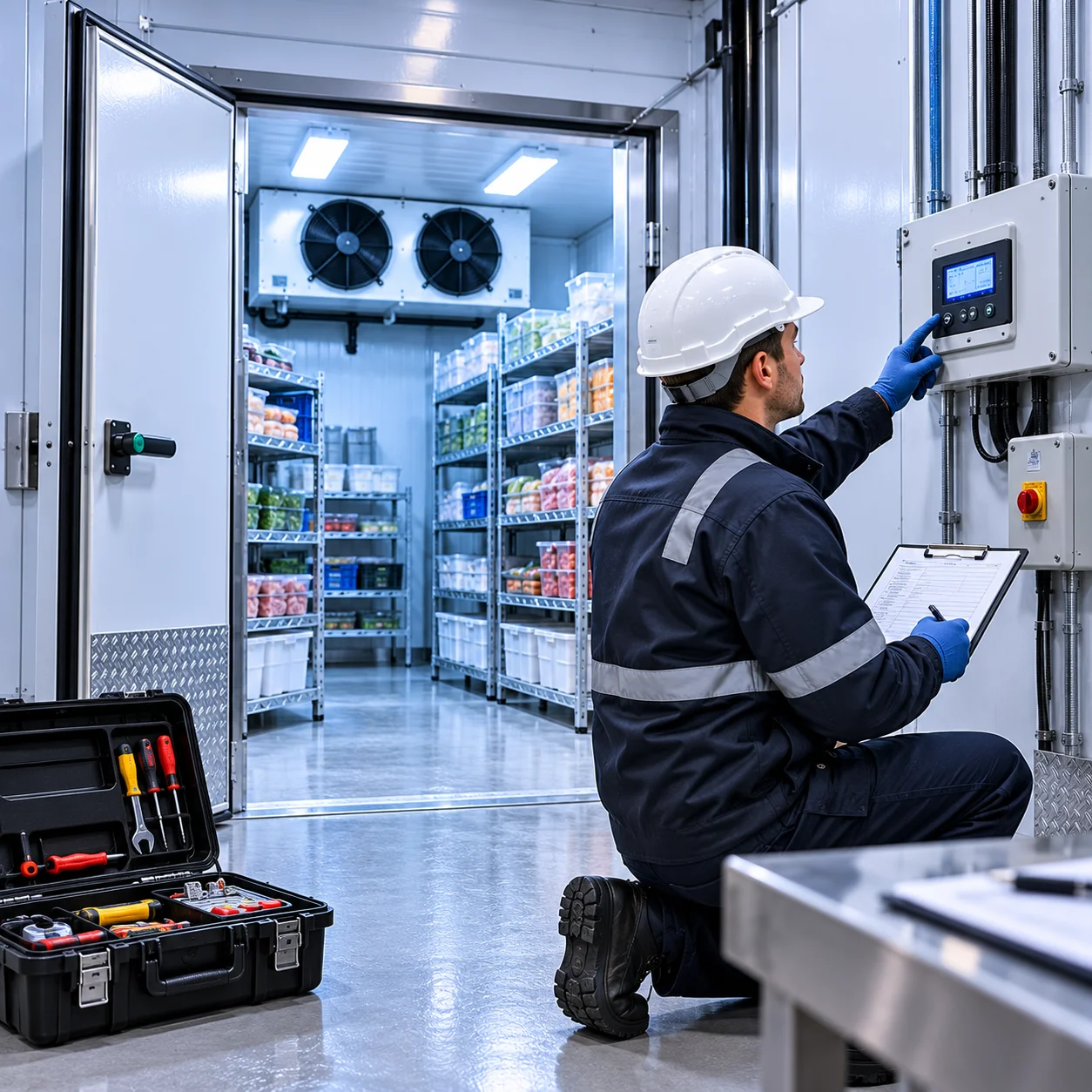
Routine servicing helps identify these issues before they develop into expensive repairs. It also supports consistent temperature control, which is important for food safety and reducing stock losses.
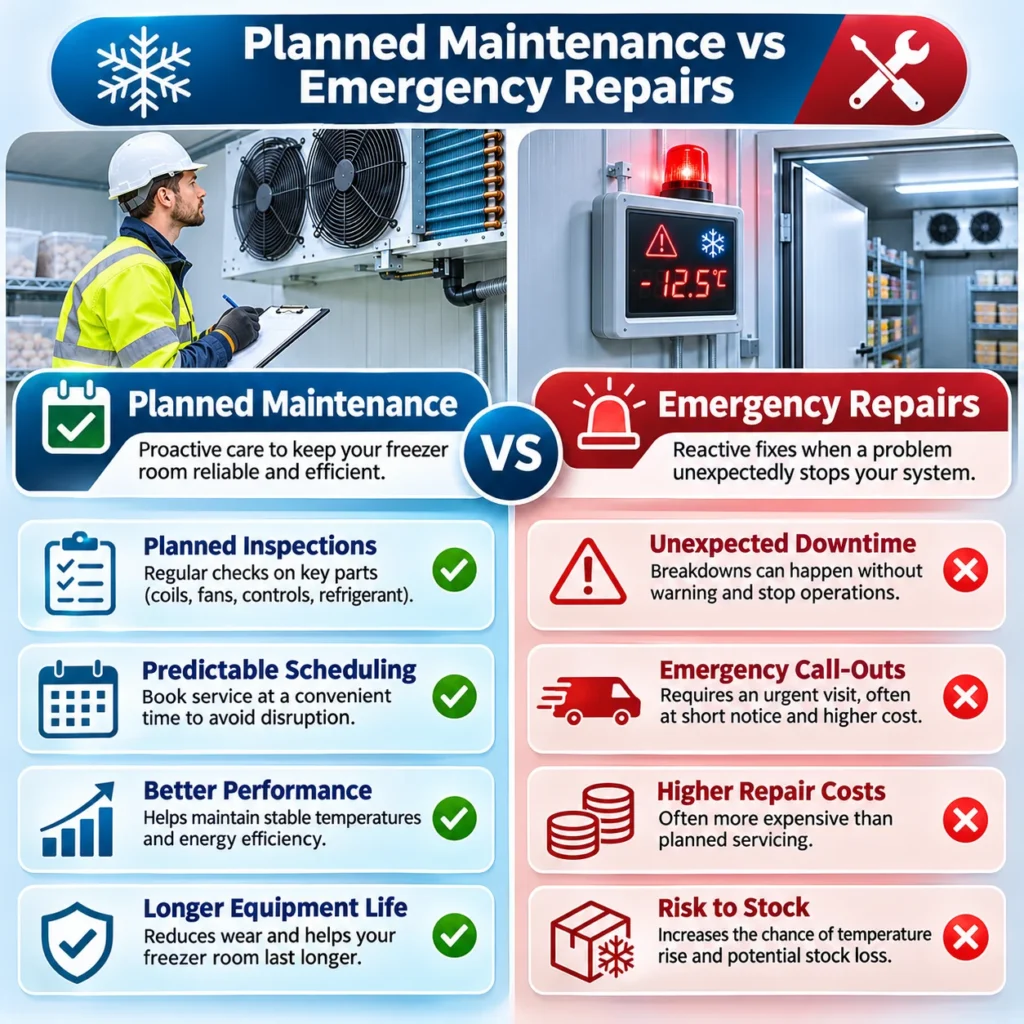
Consider a restaurant that discovers its freezer room is warming up shortly before a busy weekend. Without regular inspections, a minor refrigeration fault could become an urgent repair, with potential food waste and service disruption. Planned maintenance makes these surprises less likely, although it cannot eliminate every breakdown.
How to Choose Reliable Commercial Freezer Room Maintenance Canterbury
Choosing a contractor involves more than comparing prices. You need a provider with relevant refrigeration experience, suitable qualifications and a clear approach to preventing repeat faults.
Check qualifications and relevant experience
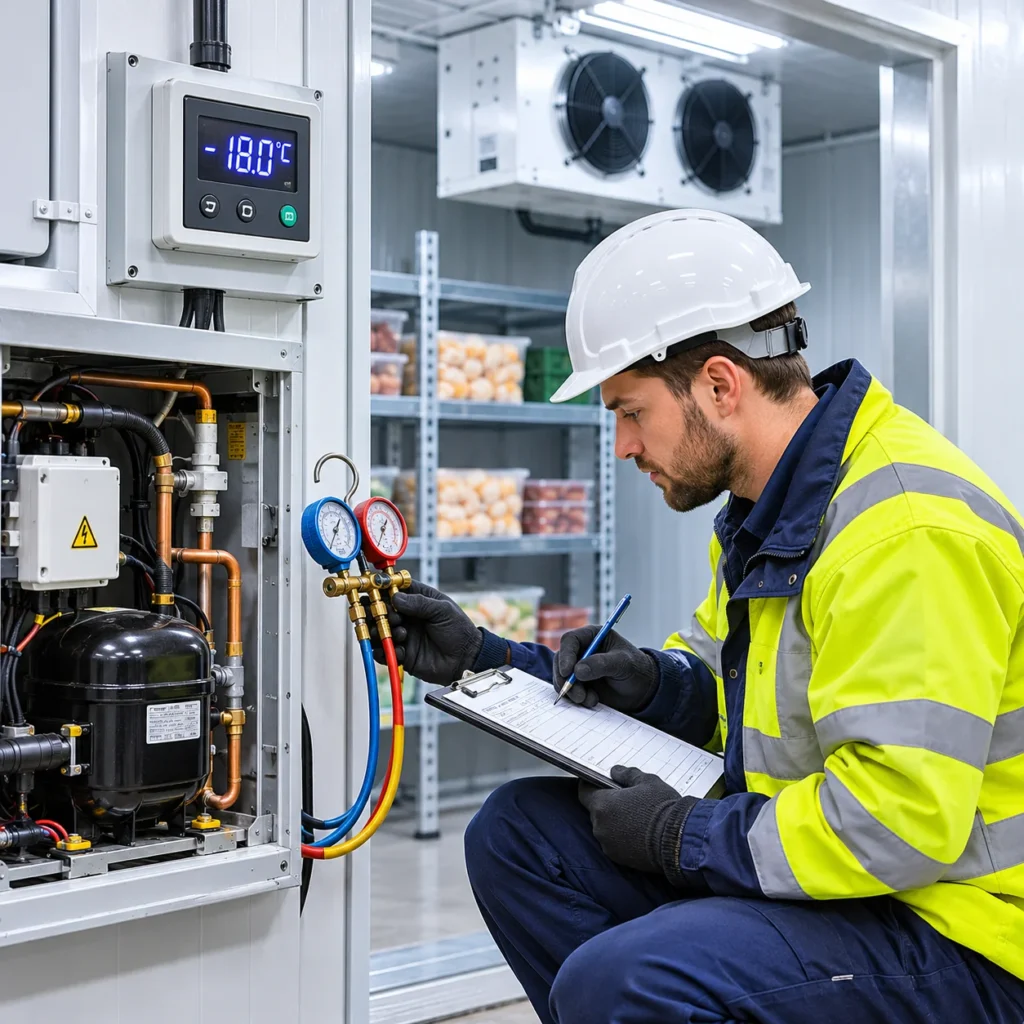
Ask whether the engineers have experience maintaining walk-in freezer rooms, commercial refrigeration systems and the equipment installed at your premises. Where work involves regulated F-gases, verify that the contractor and technicians hold the required certifications.
The UK government’s F-gas guidance explains the requirements for businesses that install, repair or maintain covered refrigeration equipment.
Ask what the maintenance contract includes
A useful agreement should explain the inspection schedule, components covered, call-out arrangements, labour charges and exclusions. Check whether emergency visits, replacement parts and follow-up inspections cost extra.
Ask for sample service reports, references from similar commercial customers and confirmation of how faults are prioritised. A contractor who records findings and explains recommended repairs gives you a clearer picture of your equipment’s condition.
Compare value, not just the quote
The cheapest quotation may exclude important checks or charge extra for common repairs. Compare the scope of work, response arrangements, engineer qualifications and documentation before making a decision.
For businesses looking at commercial cold room servicing UK providers, confirm that the company actually covers Canterbury and can meet your required response times.
What Should Professional Freezer Room Servicing Include?
A proper service should be tailored to the system, its age, operating conditions and the manufacturer’s recommendations. A quick visual inspection alone may not identify developing refrigeration faults.
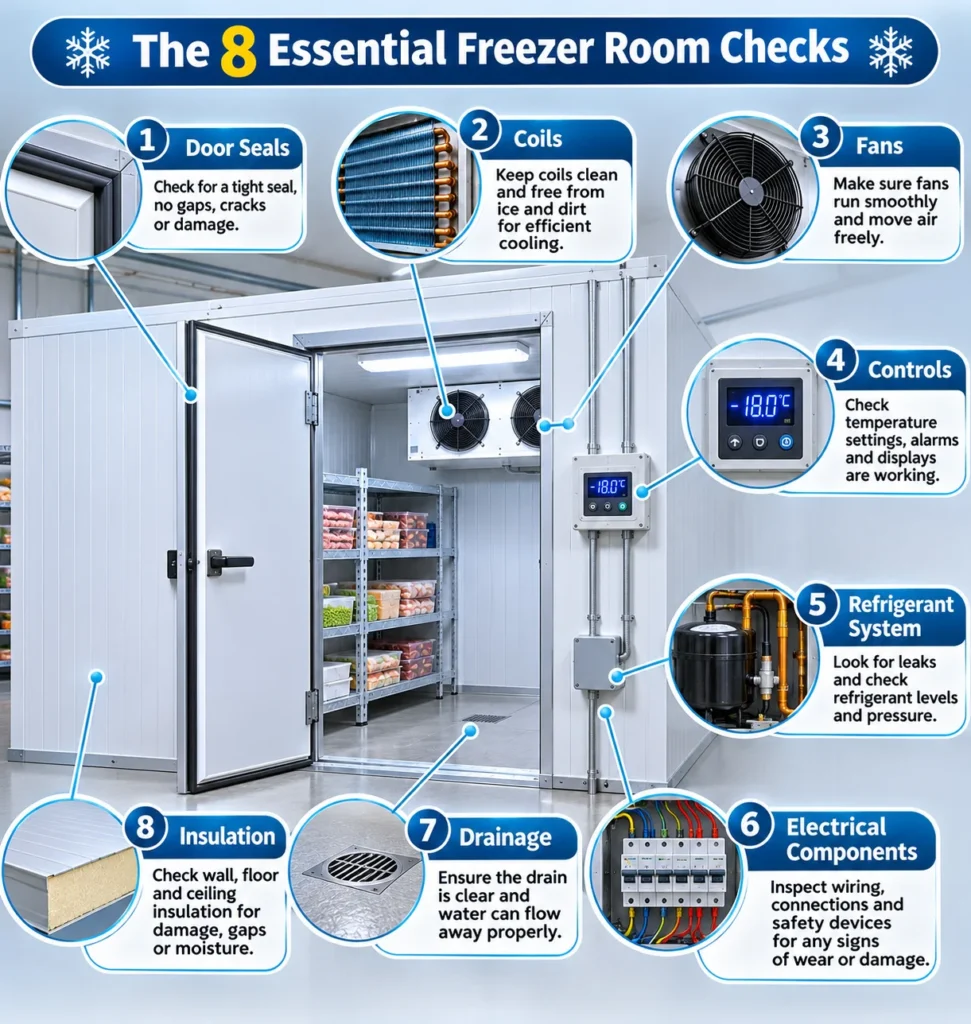
Component | What the engineer should check |
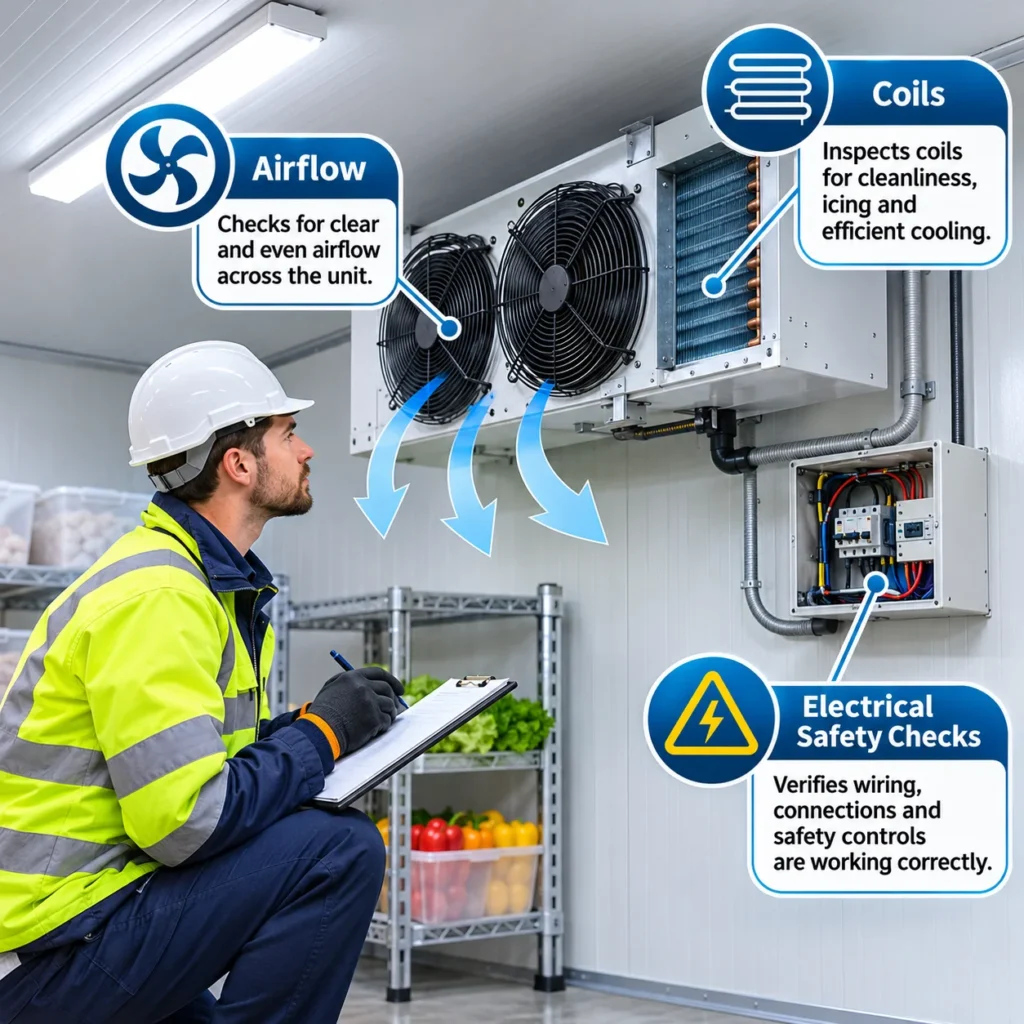
Condenser and evaporator | Dirt, airflow, condition and heat exchange |
Door seals and hinges | Gaps, damage, closing action and warm-air entry |
Fans and motors | Unusual noise, vibration and operation |
Temperature controls | Setpoints, sensor readings and alarms |
Refrigerant system | Leaks, operating pressures and performance where appropriate |
Electrical components | Connections, controls and visible signs of damage |
Drainage and defrost | Blockages, ice build-up and drainage problems |
Insulation and panels | Damaged joints, gaps and condensation |
The engineer should explain any defects, identify urgent issues and provide a written report. Where repairs are needed, request a separate quotation if they are not covered by the service agreement.
Warning Signs That Your Freezer Room Needs Attention
A freezer room does not always stop working completely before a problem becomes serious. Changes in performance can be early warnings.
Watch for temperatures rising above the setpoint, unusually long compressor running times, excessive ice around the evaporator, water leaks, damaged seals or unfamiliar mechanical noises. Repeated alarms and unexplained increases in energy use also deserve investigation.
Do not assume that heavy frost is normal. It can indicate frequent door opening, humid air entering the room, a faulty door seal or a defrost problem.
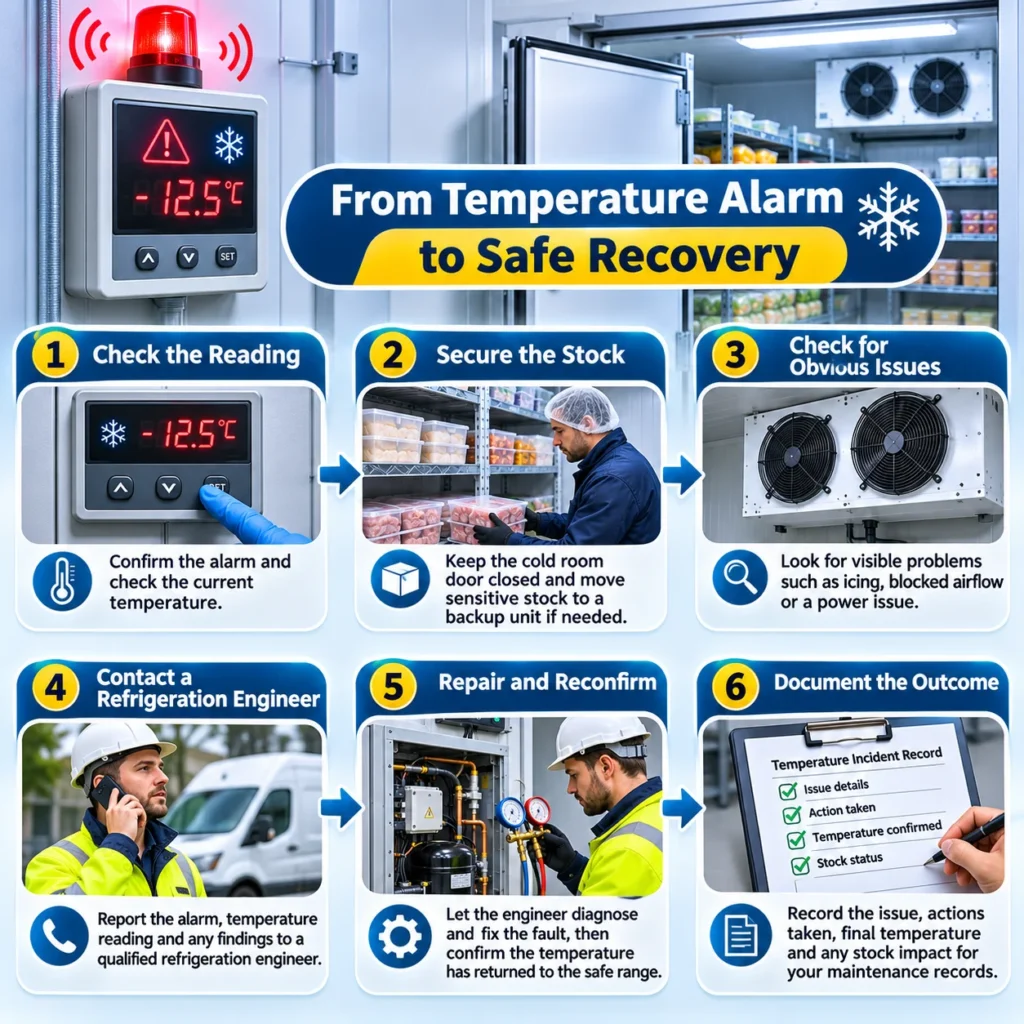
If the temperature rises unexpectedly, check the display and any independent temperature monitor, keep the door closed and follow your business’s contingency plan. Move stock only when it is safe to do so and suitable alternative storage is available. Do not reset alarms repeatedly or attempt electrical or refrigerant repairs yourself.
How Much Does Commercial Freezer Room Maintenance Cost?
There is no single price for commercial freezer room maintenance in Canterbury. Costs depend on room size, refrigeration capacity, equipment condition, access, the number of systems and the level of service required.
A straightforward planned inspection will generally involve less work than diagnosing a refrigerant leak or replacing a compressor. Emergency call-outs, out-of-hours attendance, replacement parts and specialist access can also increase the bill.
When requesting quotations, provide the freezer’s make and model, approximate room dimensions, current temperature, known faults and previous service history. Ask each provider to separate routine servicing from additional repairs so you can compare like for like.
A planned maintenance agreement may make budgeting easier and help reduce avoidable downtime. However, it is not a guarantee that every component will last longer or that emergency repairs will never be needed.
UK Regulations and Food Safety Considerations
Food businesses must manage food storage temperatures in line with applicable food safety requirements. The Food Standards Agency provides guidance for food businesses on safe handling and storage.
For frozen food, −18°C is the commonly recommended storage temperature. Always consider the food’s requirements, product labelling and any applicable rules for your operation. Monitor actual temperatures rather than relying only on the freezer’s control panel.
F-gas obligations also matter. Depending on the refrigerant and equipment, operators may need scheduled leak checks and records. The government’s official leak-check guidance explains that required inspection intervals depend on the system’s carbon dioxide equivalent and other applicable conditions.
Choose a contractor who understands the requirements relevant to your equipment and provides the records needed for compliance.
Worker safety matters, too. The Health and Safety Executive‘s guidance on working in chilled and frozen environments highlights suitable clothing, appropriate breaks and arrangements for escaping from walk-in units. Make sure freezer doors can be opened from inside and that staff know the emergency procedure.
Simple Maintenance Between Professional Visits
Daily care helps support professional servicing. Staff should check and record temperatures at the frequency set by the business’s food safety procedures, report unusual noises or alarms, and ensure doors close properly.
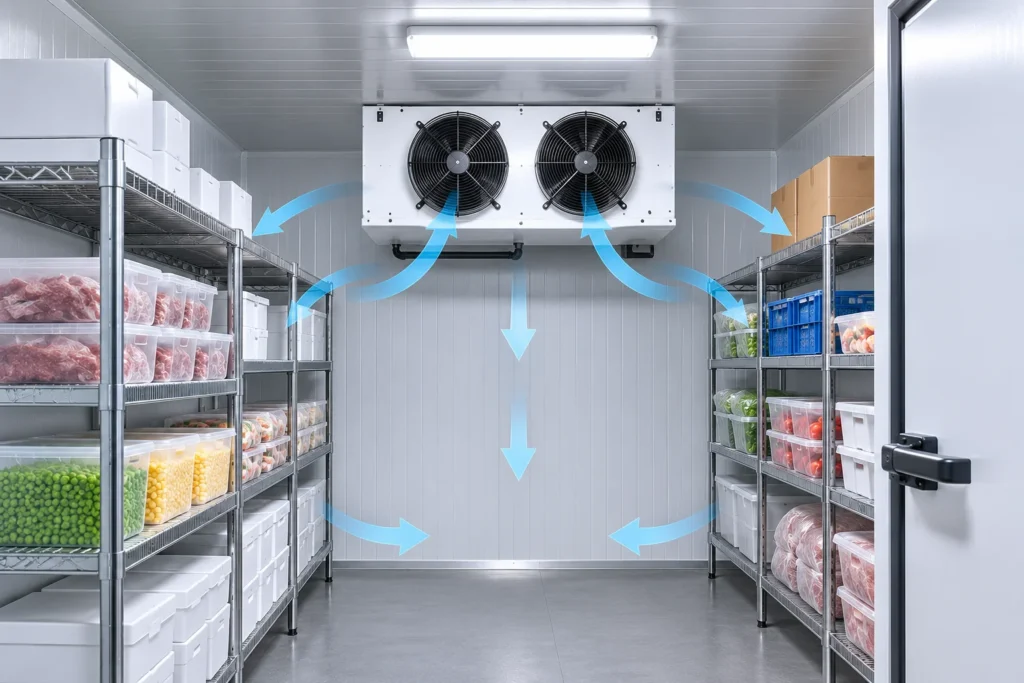
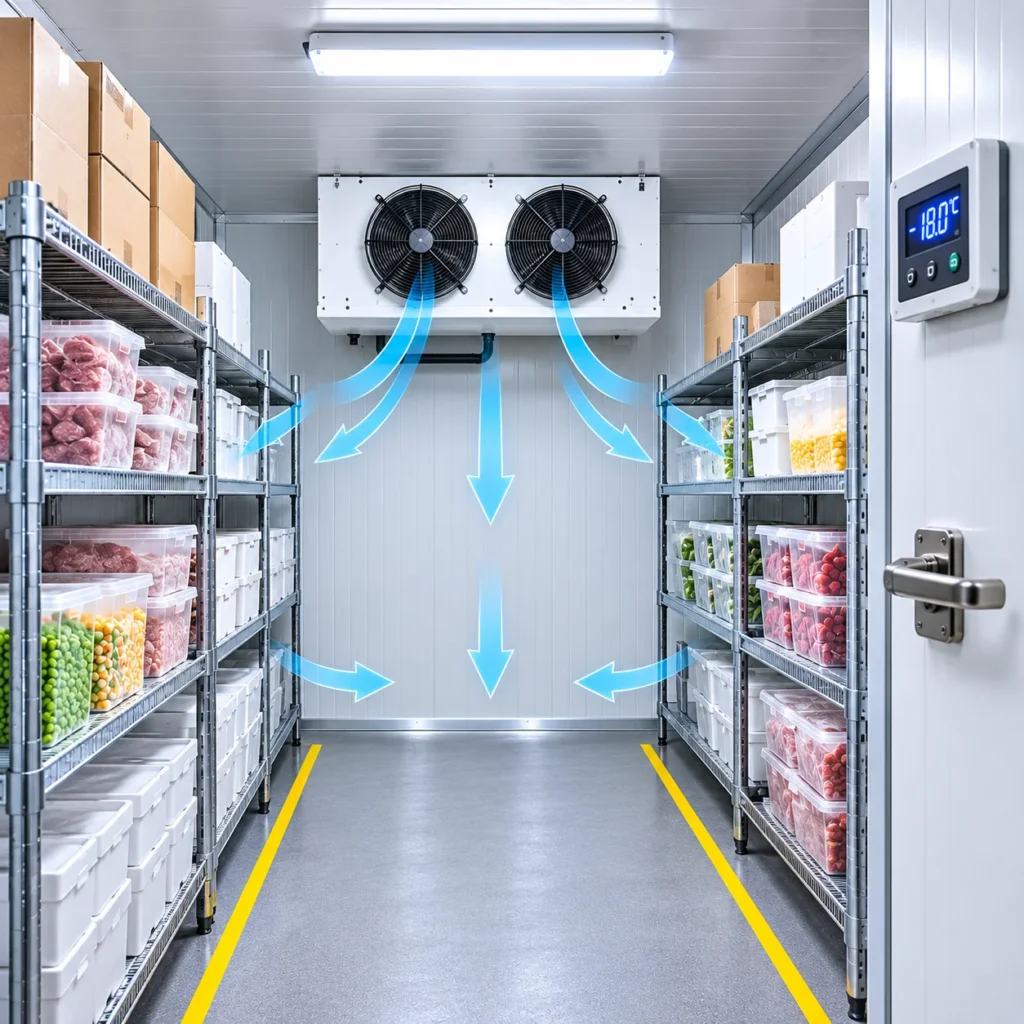
Keep evaporator airflow clear by avoiding overcrowded shelving. Clean accessible areas according to the manufacturer’s instructions, and arrange professional attention for persistent ice, temperature fluctuations or damaged components.
Never chip ice from evaporator coils with sharp tools, bypass safety controls or work on electrical equipment without appropriate training. These actions can cause injuries or damage that makes the original problem more expensive to fix.
Finding a Maintenance Partner for Your Business
For businesses seeking commercial refrigeration support in Canterbury, look for a provider that combines planned maintenance, fault diagnosis and clear communication. Confirm its service area, availability, qualifications and ability to work with your specific freezer system before signing an agreement.
Is your commercial freezer room in Canterbury due for a service, or have you noticed temperature fluctuations that need investigating? A professional assessment can help you determine the next steps before a small fault becomes a costly disruption.
Frequently Asked Questions
1. How often should a commercial freezer room be serviced?
The correct interval depends on the equipment, operating conditions, manufacturer’s instructions and consequences of a failure. Agree on a suitable preventative maintenance schedule with a qualified refrigeration contractor.
2. What are the signs that a commercial freezer room needs maintenance?
Warning signs include temperature fluctuations, excessive ice, damaged door seals, unusual noises and persistent alarms. Arrange an inspection if these problems continue or the equipment cannot maintain its required temperature.
3. What temperature should a commercial freezer room maintain?
Many commercial frozen-food storage operations use −18°C as their target. Confirm the required temperature against the product, applicable food safety requirements and the operating procedures for your business.
4. How much does freezer room servicing cost in Canterbury?
The price depends on the equipment, inspection requirements, access and whether repairs are needed. Request an itemised quotation that distinguishes routine maintenance from replacement parts and emergency call-outs.
5. Can regular maintenance prevent freezer room breakdowns?
Preventative maintenance can identify wear, dirty coils, damaged seals and other developing problems before they cause a major failure. It reduces avoidable risks but cannot eliminate every breakdown.
6. What should a commercial freezer room maintenance checklist include?
It should cover temperature records, alarms, door seals, airflow, visible ice build-up, unusual noises and signs of damage. Professional inspections should also address the refrigeration system, controls, electrical components and other equipment-specific checks.
7. Are F-gas checks required for commercial freezer rooms?
Certain refrigeration systems containing regulated F-gases require leak checks at legally specified intervals. The requirements depend on factors including the refrigerant charge’s carbon dioxide equivalent and the type of equipment.
8. What should I do if my freezer room stops cooling?
Keep the door closed, check the temperature display and alarm status, and contact a qualified refrigeration engineer. Follow your food safety contingency plan to assess stock and arrange suitable alternative storage where necessary.
9. Can I maintain a commercial freezer room myself?
Staff can perform routine visual checks, monitor temperatures and keep the storage area organised. Refrigerant handling, electrical repairs and other specialist work should be undertaken by appropriately qualified personnel.
10. How do I choose a commercial refrigeration maintenance company?
Check relevant experience, required certifications, service coverage, response times, reporting standards and contract terms. Compare quotations based on the work included rather than choosing solely on price.